.webp)
The First 5 Product Decisions in 2026
Most early-stage founders think the first product decision is about features. In reality, features come later. Before you build anything serious, you need to decide what problem you are solving, who you are solving it for, what proof you need first, what version one should include, and how you will measure whether it worked. This article breaks down the first five product decisions founders should make in 2026 so the MVP starts with focus instead of turning into an expensive guess.
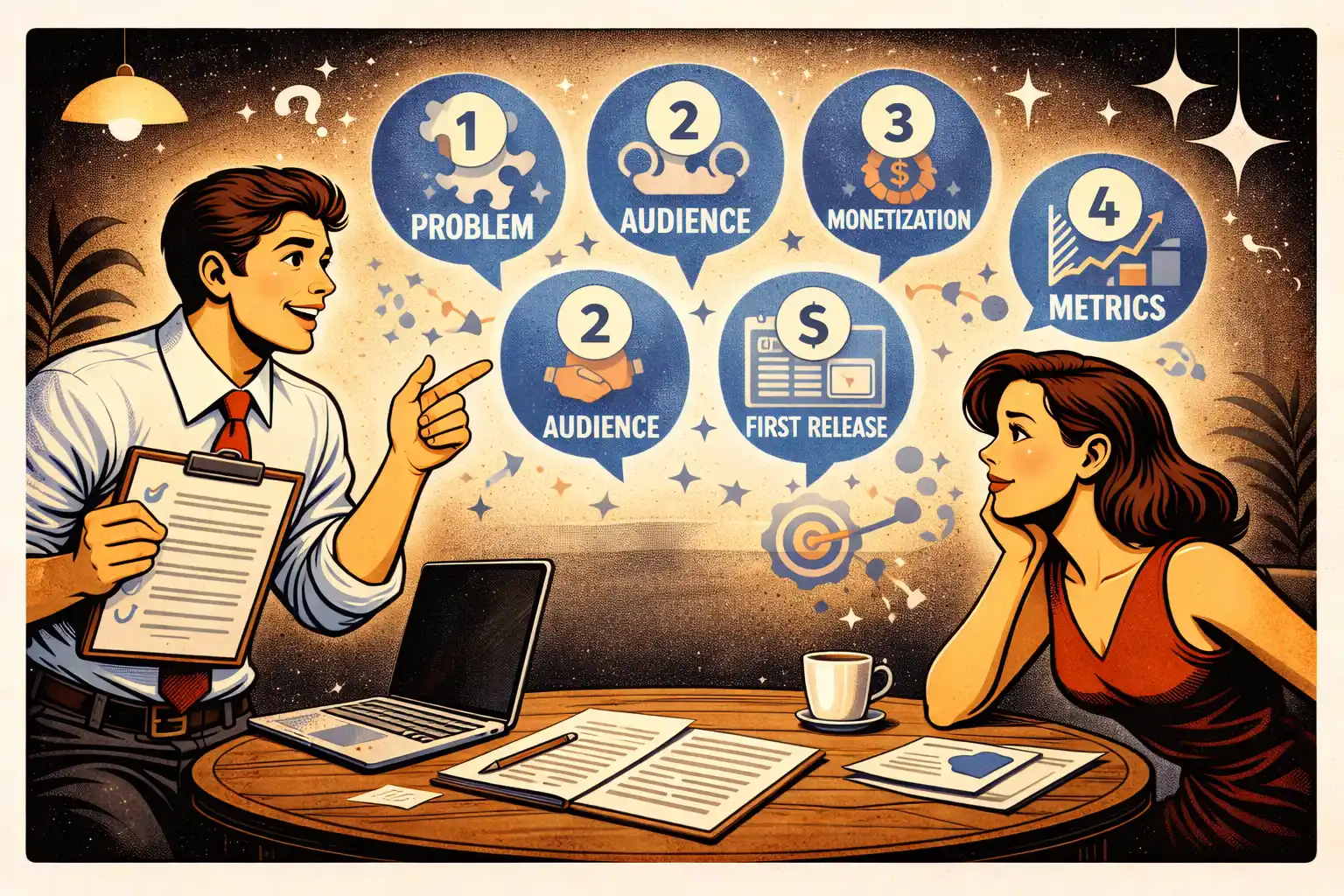
TL;DR: The first product decisions in 2026 are not about choosing every feature or picking the most impressive tech stack. They are about problem, audience, proof, first release, and metrics.
Why product decisions matter before development
Founders often want to move quickly into design and development because that feels like progress.
The problem is that development only becomes useful when the product decisions behind it are clear. If the problem is vague, the audience is too broad, or the first version is trying to prove too much, the team can build quickly and still build the wrong thing.
That is why early product decisions matter so much. They reduce waste before it becomes expensive. They also help founders communicate better with designers, developers, investors, and early users.
A strong MVP does not start with a long feature list. It starts with a few clear decisions that make the feature list smaller.
That is why What a Good MVP Looks Like in 2026 is such an important starting point.
Decision 1: What exact problem are you solving?
The first decision is the problem.
Not the industry. Not the app category. Not the broad opportunity. The specific problem.
A founder might say they are building a healthcare app, a marketplace, a SaaS platform, or an AI tool. But those labels do not explain the product. They only describe the category.
The real product starts when the founder can say what painful situation the user is in, why current options are not good enough, and what meaningful outcome the product should create.
If the problem is still vague, building features will not fix it. It will only create a more polished version of uncertainty.
This connects naturally to Validate a Startup Idea Before Development: 5 Experiments That Work.
Decision 2: Who is the first user group?
The second decision is the first user group.
Many founders want the first version to work for too many people. They want it to serve small businesses and enterprises, beginners and advanced users, buyers and sellers, admins and partners, B2B and B2C audiences.
That usually makes version one harder than it needs to be.
The first user group should be narrow enough that you can understand their workflow, language, urgency, and decision process. A narrow first audience does not mean the product can never expand. It means the first version has a real chance to be useful.
The best early products often feel small from the outside because they are sharp on the inside.
That is especially important for non-technical founders who need a clear product direction before they spend money on development.
This is where What Non-Technical Founders Should Know in 2026 fits well.
Decision 3: What proof do you need first?
The third decision is proof.
Before building, the founder should know what kind of evidence would make the next step worth taking.
For some startups, proof means people join a waitlist or book calls from a landing page. For others, proof means users complete a workflow inside the product. For others, proof means someone pays for a manual version before software is built.
These are different kinds of proof, and they lead to different first builds.
If the founder does not know what proof matters, the MVP can become a pile of features with no clear learning goal.
The better question is simple: what must happen for us to say this idea is worth the next investment of time and money?
That connects directly to What to Build First in 2026: Website, MVP, or Manual Service.
Decision 4: What belongs in version one?
The fourth decision is the first release scope.
This is where many MVPs start to break.
Founders often include features because they are useful, not because they are necessary for version one. But useful is not the same as essential.
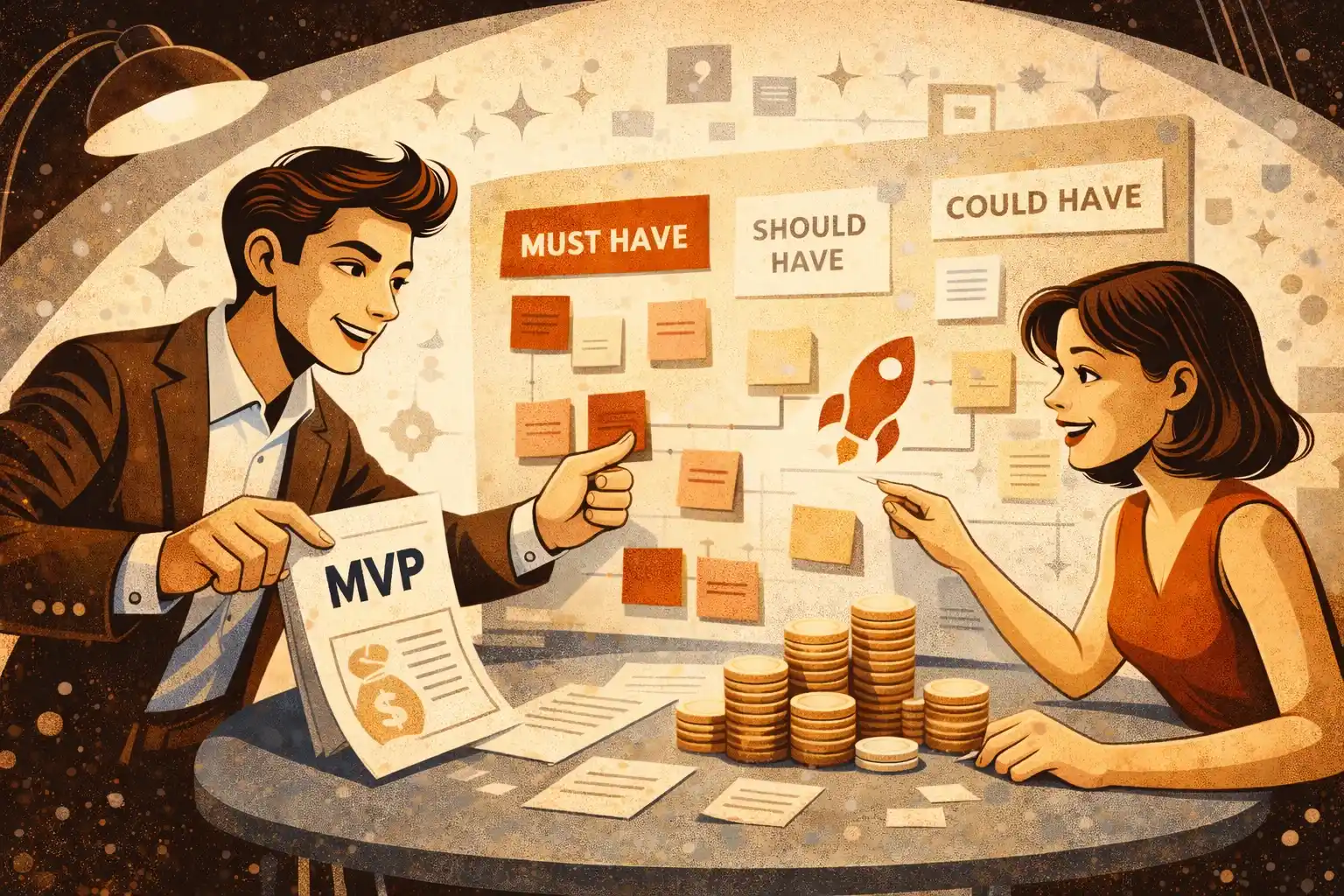
A feature belongs in version one only if it helps test the core value path. If it supports future comfort, advanced use cases, internal convenience, or edge cases, it may belong later.
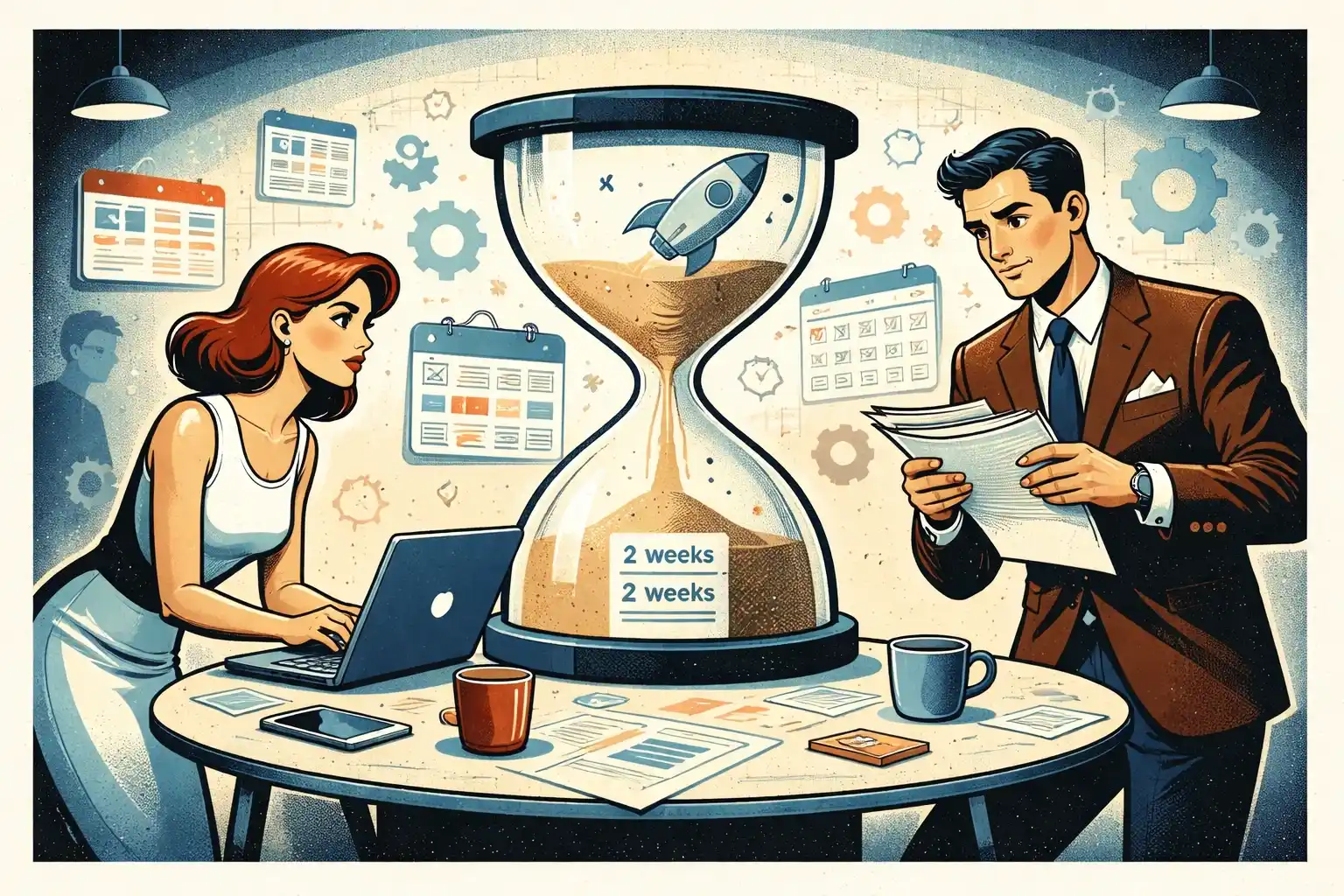
The first release should be small enough to launch quickly and clear enough to learn from. If the team cannot explain what the MVP is testing in a few sentences, the scope is probably too broad.
This is why How to Know Your MVP Is Too Big in 2026 and MVP Scope and Focus in 2026 belong in the same conversation.
Decision 5: What will you measure after launch?
The fifth decision is metrics.
A founder should not wait until launch to decide what success looks like.
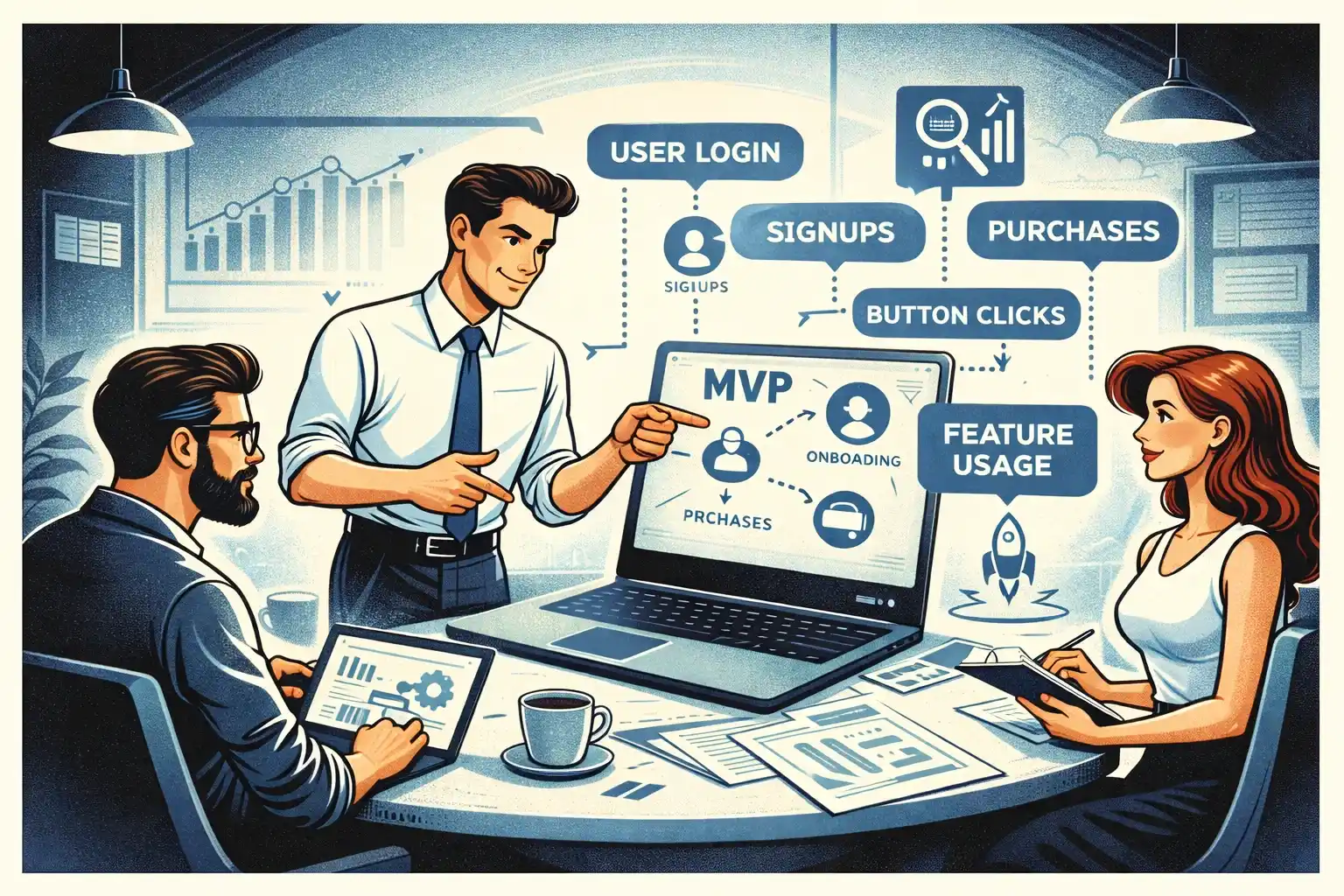
The first MVP does not need a complex analytics setup, but it does need a clear view of user behavior. Did people sign up? Did they complete the main flow? Did they return? Did they reach the first valuable outcome? Did they ask for the thing you expected, or something else entirely?
Without basic metrics, the team ends up relying on opinions, scattered feedback, or the founder’s hope.
Good metrics do not make the product successful by themselves. But they help the founder see what is actually happening instead of guessing.
That is why MVP Analytics in 2026: Events to Track Early and Your First Product Metrics Dashboard: What Early-Stage Investors Want to See are useful next reads.
Why these decisions should happen before feature planning
Feature planning feels productive, but it can easily hide weak thinking.
A team can spend hours debating onboarding, dashboards, notifications, AI features, admin tools, and payment flows before agreeing on the user, the proof, or the first success metric.
That is backwards.
The first five decisions create the filter for every feature discussion. Once the problem, audience, proof, version one, and metrics are clear, feature prioritization becomes much easier.
A feature either supports the core path or it does not. It either helps answer the first proof question or it can wait.
That is how founders avoid turning every good idea into version-one scope.
This connects well with How to Prioritize Features When You’re Bootstrapping Your Startup.
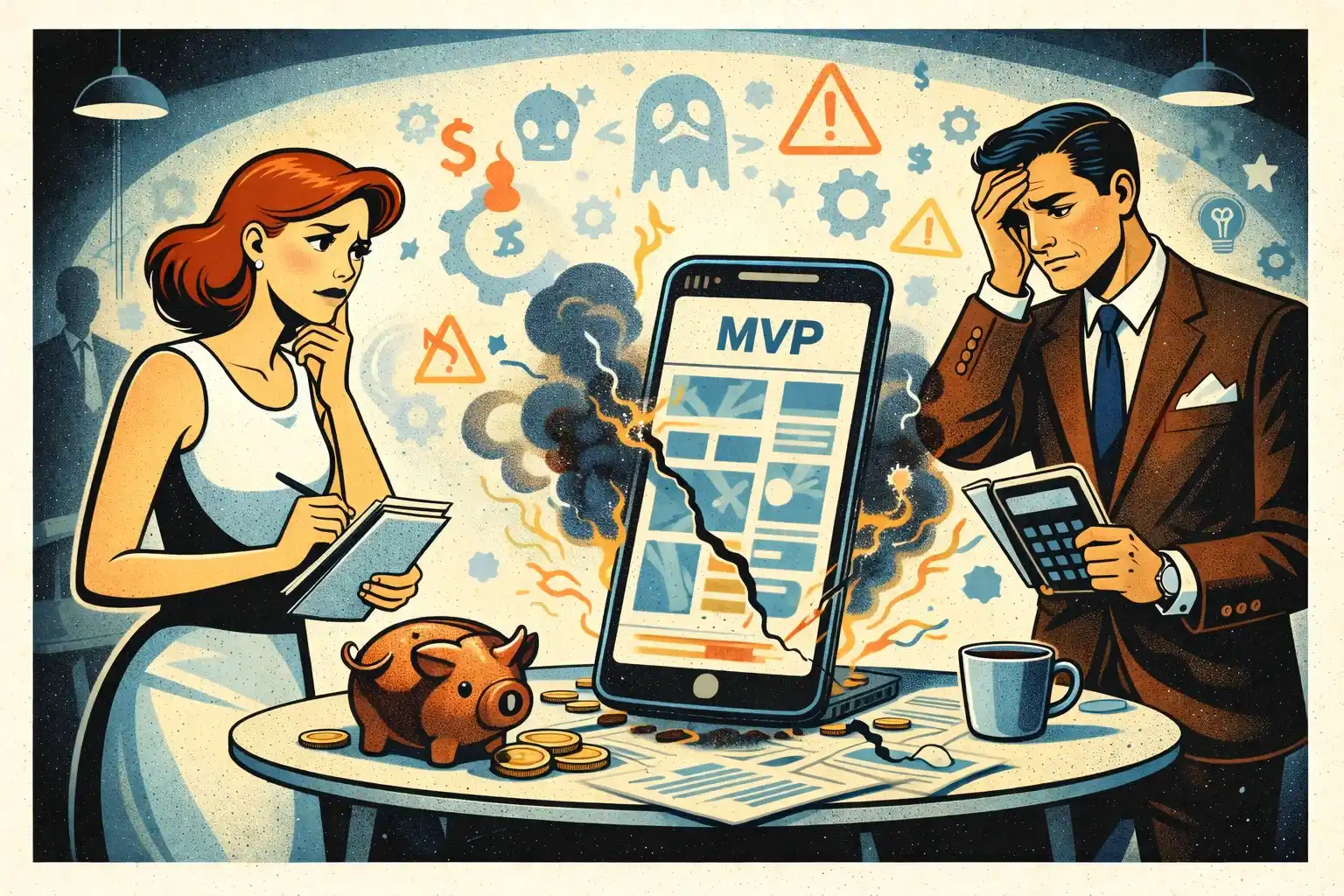
How bad early decisions create expensive rework
Weak product decisions rarely hurt immediately. They usually hurt later.
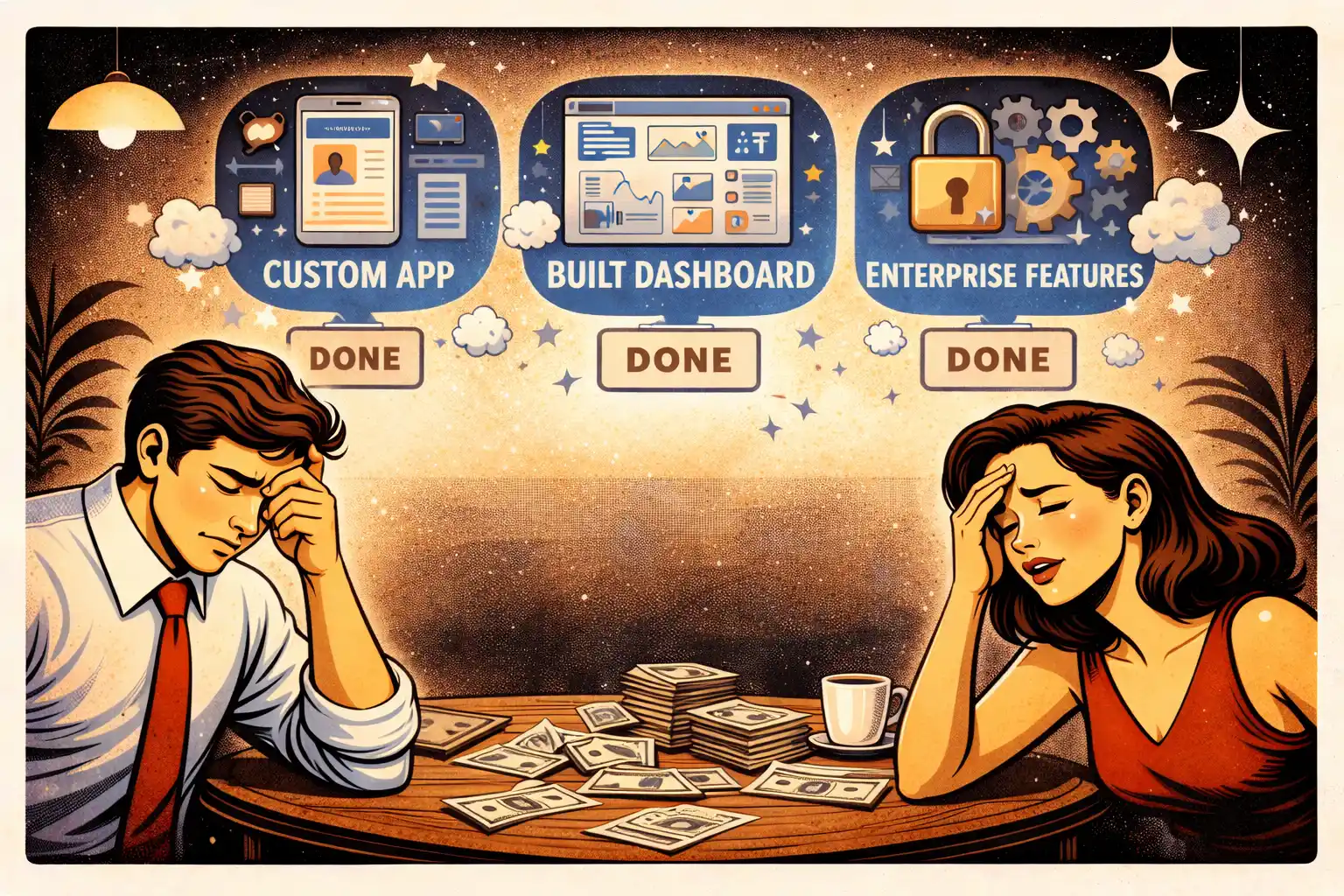
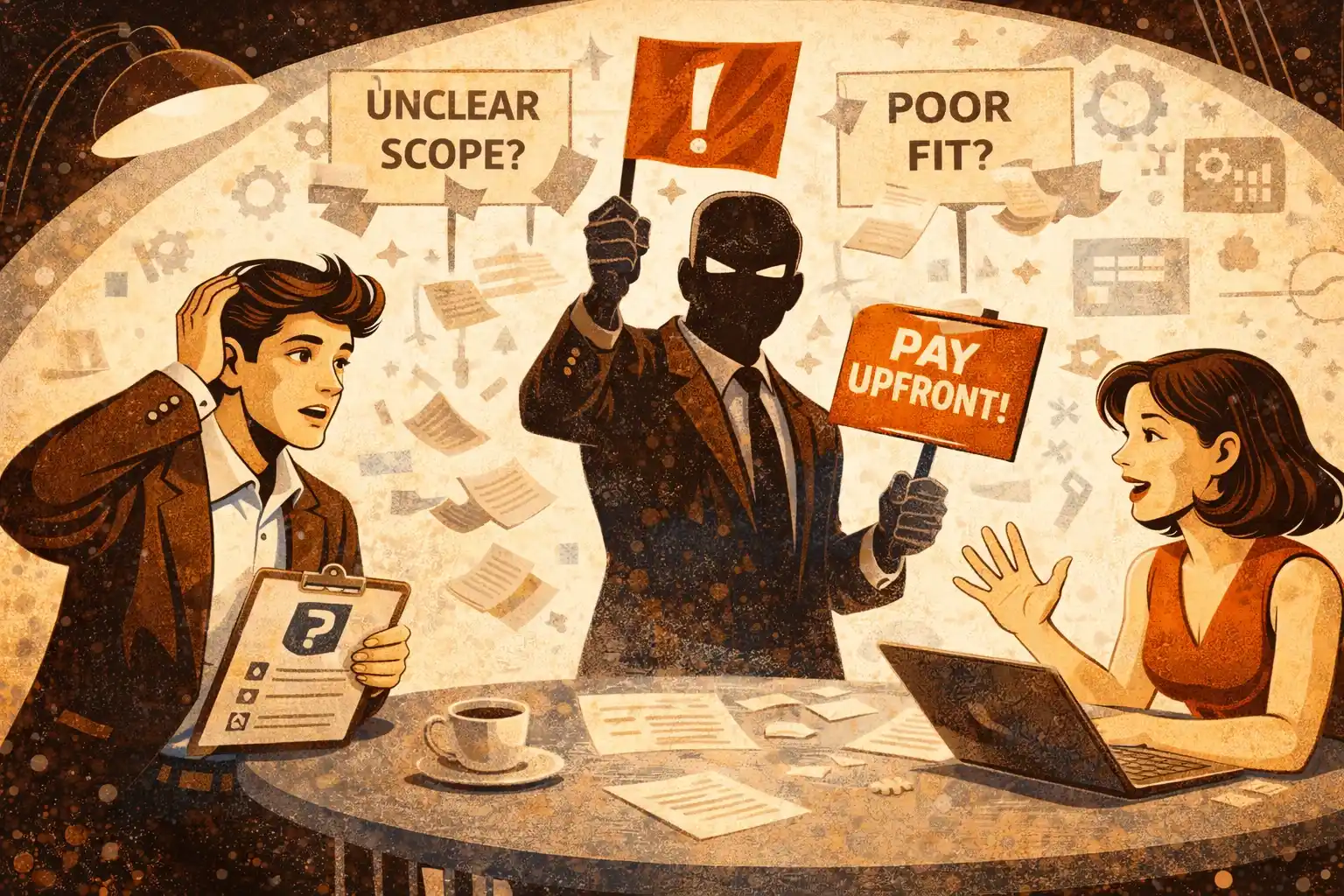
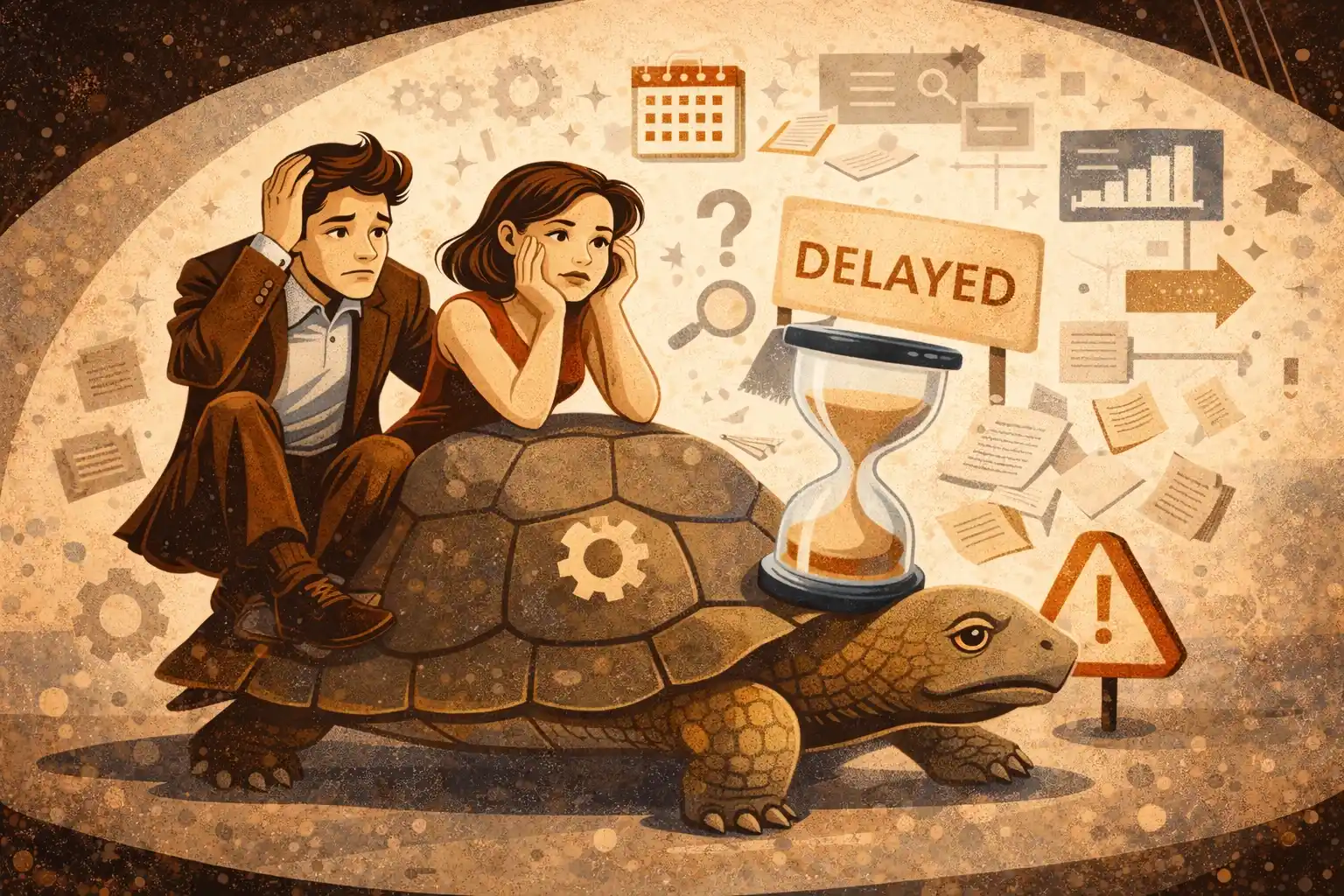
The MVP launches late because the scope was too broad. Users do not respond because the target audience was too vague. The team cannot interpret feedback because the product tried to test too many things at once. The founder starts changing direction mid-build because the proof goal was never clear.
That is how rework happens.
Rework is not always caused by bad development. Very often, it comes from unclear product decisions made before development started.
That is why early clarity is not a luxury. It is one of the cheapest ways to reduce waste.
This is where Reducing MVP Rework in 2026: Key Decisions becomes especially relevant.
A practical founder framework
Before you start building, answer five questions.
What specific problem are we solving?
Who is the first user group?
What proof do we need first?
What is the smallest version that can create that proof?
What will we measure after launch?
If these answers are clear, development becomes more focused. If they are not clear, moving into development may only make the uncertainty more expensive.
That is also why Tech Decisions for Founders in 2026 matters, but only after the product direction is clear enough to support technical decisions.
Final thought
The first product decisions in 2026 are not glamorous, but they shape everything that follows.
Founders do not need a perfect roadmap before they build. They do need enough clarity to avoid turning version one into a confusing, expensive, overbuilt product.
Decide the problem, audience, proof, first release, and metrics first. Then build.
That sequence gives the MVP a much better chance to teach you something real.
Thinking about turning your idea into a focused MVP in 2026?
At Valtorian, we help founders clarify the first product decisions, define the smallest useful version, and launch modern web and mobile products with real user focus.
Let’s look at your idea, your first user group, and what version one should actually prove.
FAQ
What is the first product decision founders should make?
The first decision is the specific problem the product is solving. Without that, every feature decision becomes weaker.
Should founders decide features first?
No. Features should come after the problem, audience, proof goal, first release scope, and launch metrics are clear.
How narrow should the first user group be?
Narrow enough that you can understand their workflow, pain, language, and buying or usage behavior clearly.
What does proof mean for an early MVP?
Proof means the evidence that makes the next step worth taking. It could be signups, completed workflows, paid demand, retention, or strong user feedback.
How small should version one be?
Small enough to test the core value path without building comfort features, advanced settings, or edge cases too early.
What metrics should an MVP track first?
Track the main user journey: signup, activation, key action completion, return behavior, and the first valuable outcome.
Why do early product decisions reduce rework?
They make the scope clearer before design and development begin, which lowers the chance of building features that do not support the core proof goal.









































.webp)




.webp)