.webp)
Does Your Startup Need a Dashboard in 2026?
Many founders assume a dashboard belongs in version one because it makes the product feel more complete, more serious, and more scalable. But in 2026, that is still one of the easiest ways to add complexity too early. Some startups genuinely need a dashboard from the start. Many do not. This article explains when a dashboard is essential, when it is premature, what founders usually confuse with a real need, and how to decide whether this part of the product belongs in the MVP or later.

TL;DR: Your startup needs a dashboard in 2026 only if the core product value actually depends on users seeing, managing, or acting on structured information inside one central interface. If the dashboard is mainly there to make the product look more complete, it probably belongs later.
Why founders assume a dashboard is required
Dashboards have a psychological advantage.
They look like product. They look sophisticated. They look like something investors, clients, or internal teams should expect from a serious startup. Because of that, founders often add them to the roadmap before they have proved that a dashboard is actually part of the core value.
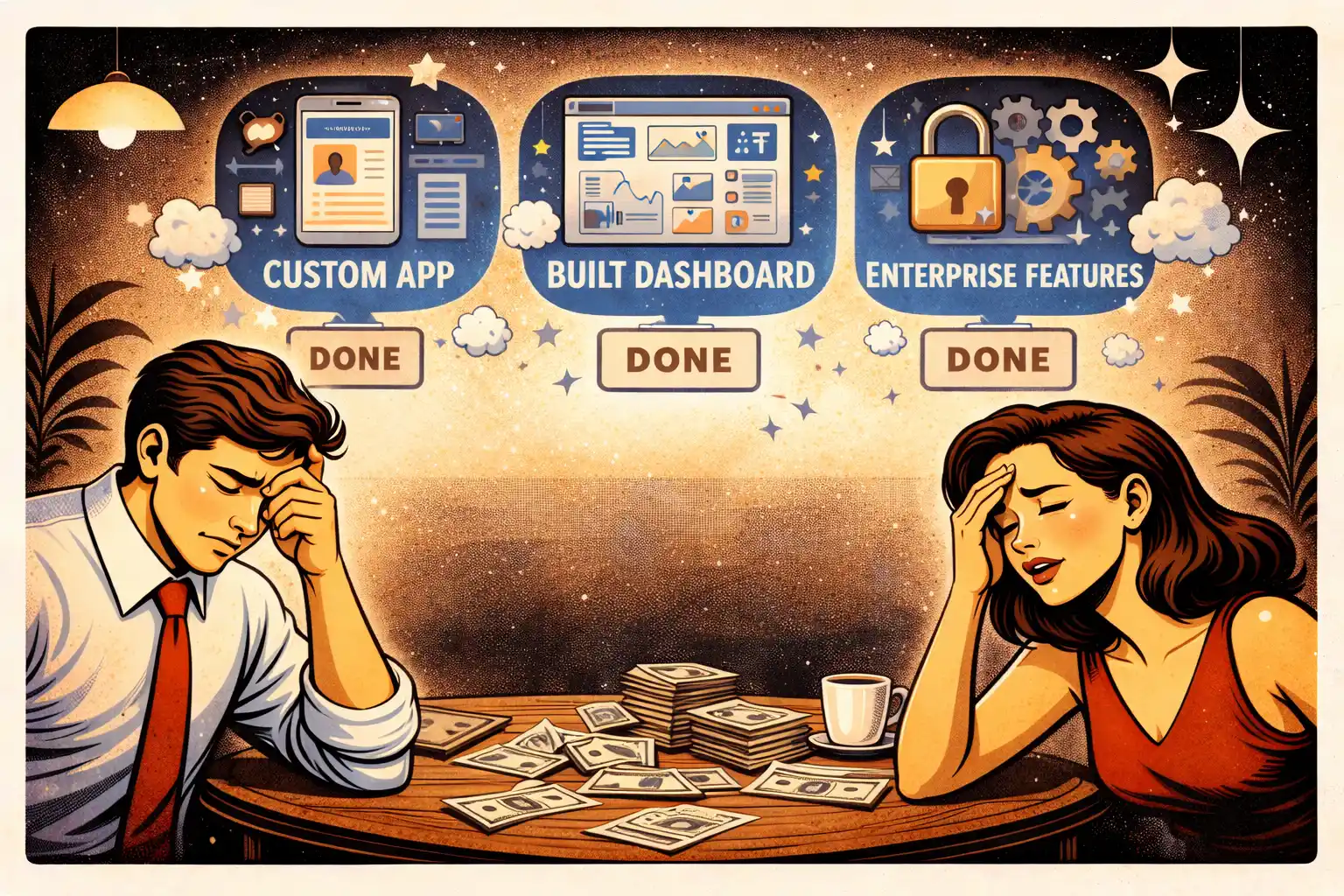
In reality, many dashboards get built for comfort rather than necessity. They organize information that the product does not yet need to expose, or they support internal certainty more than user outcomes.
That is why this question matters early. A dashboard can be useful, but it can also quietly turn a focused MVP into a broader product system before the startup has earned that complexity.
What a real dashboard need looks like
A startup usually needs a dashboard when the user must regularly monitor, compare, manage, or act on changing data in one place.
That often happens in SaaS products, admin tools, operations software, analytics products, back-office systems, marketplaces with active management tasks, and B2B workflows where the interface is not just a one-time flow but an ongoing work surface.
In those cases, the dashboard is not decoration. It is the product surface.
If removing the dashboard would break the main user value, then the dashboard likely belongs in version one.
That is why SaaS MVP Development Trends in 2026 and B2B SaaS MVP in 2026: The Real Minimum are useful related reads here.
What founders often mistake for a dashboard need
Sometimes founders do not need a dashboard. They need a clearer flow.
Other times they need a status page, a basic account area, a single reporting screen, or an internal admin view that can stay simple for now.
But because “dashboard” sounds like the right startup word, those simpler needs get expanded into sidebars, modules, filters, widgets, charts, role logic, permissions, and multiple views long before the user has enough activity to justify any of it.
That is where trouble begins.
A dashboard is not automatically the answer just because the product deals with data. The better question is whether the user needs a persistent work surface or just one or two clear actions.
This connects naturally to How to Know Your MVP Is Too Big in 2026.
When a dashboard belongs in the MVP
A dashboard belongs in the MVP when it is central to how the user receives value.
If the startup helps users manage tasks, monitor business performance, review workflows, track records, control team actions, or work with changing information over time, then a dashboard may be the minimum useful product surface.
The key is that the dashboard should still be narrow.
A version-one dashboard does not need every chart, every filter, every role, every settings layer, or every future reporting block. It only needs the pieces that support the core user decision or action.
That is why a dashboard can belong in an MVP and still remain small.
This logic overlaps well with What a Good MVP Looks Like in 2026.
When a dashboard should wait
A dashboard should usually wait when the startup is still proving a simpler value path.
If the first thing you need to validate is whether users sign up, complete a workflow, book a service, request something, or receive one clear output, the product may not need a dashboard yet.
The same is true when founders are building for imagined future internal needs. Moderation views, internal analytics, partner portals, operational control centers, and advanced client views often appear too early because the founder wants the system to feel complete.
But early completeness is rarely the right goal. Early proof is.
That is exactly why What Founders Regret Building Too Early in 2026 fits so well here.
Why dashboards become expensive fast
Dashboards tend to expand quickly because they attract support features.
Once a dashboard exists, founders start adding sorting, filters, role logic, empty states, reporting, exports, permissions, charts, activity histories, settings, alerts, and multiple views. Each piece sounds small on its own. Together, they create a much heavier product than the team intended.
This is why dashboards are one of the easiest ways to overscope an MVP.
The cost is not just extra build time. It is also weaker learning. The more interface weight the startup launches with, the harder it can be to see what users actually care about.
That is why Reducing MVP Rework in 2026: Key Decisions matters here.
What founders should build instead sometimes
Sometimes the better move is not a dashboard but a much smaller alternative.
A single status page may be enough.
A simple account area may be enough.
A lightweight admin view may be enough.
A clear email report, generated output, or manual internal process may be enough.
These options may feel less impressive, but they often create faster learning with less product weight.
That is especially relevant for non-technical founders, since one of the biggest early wins is not sophistication. It is keeping the product simple enough to launch before the runway starts hurting.
A practical founder filter
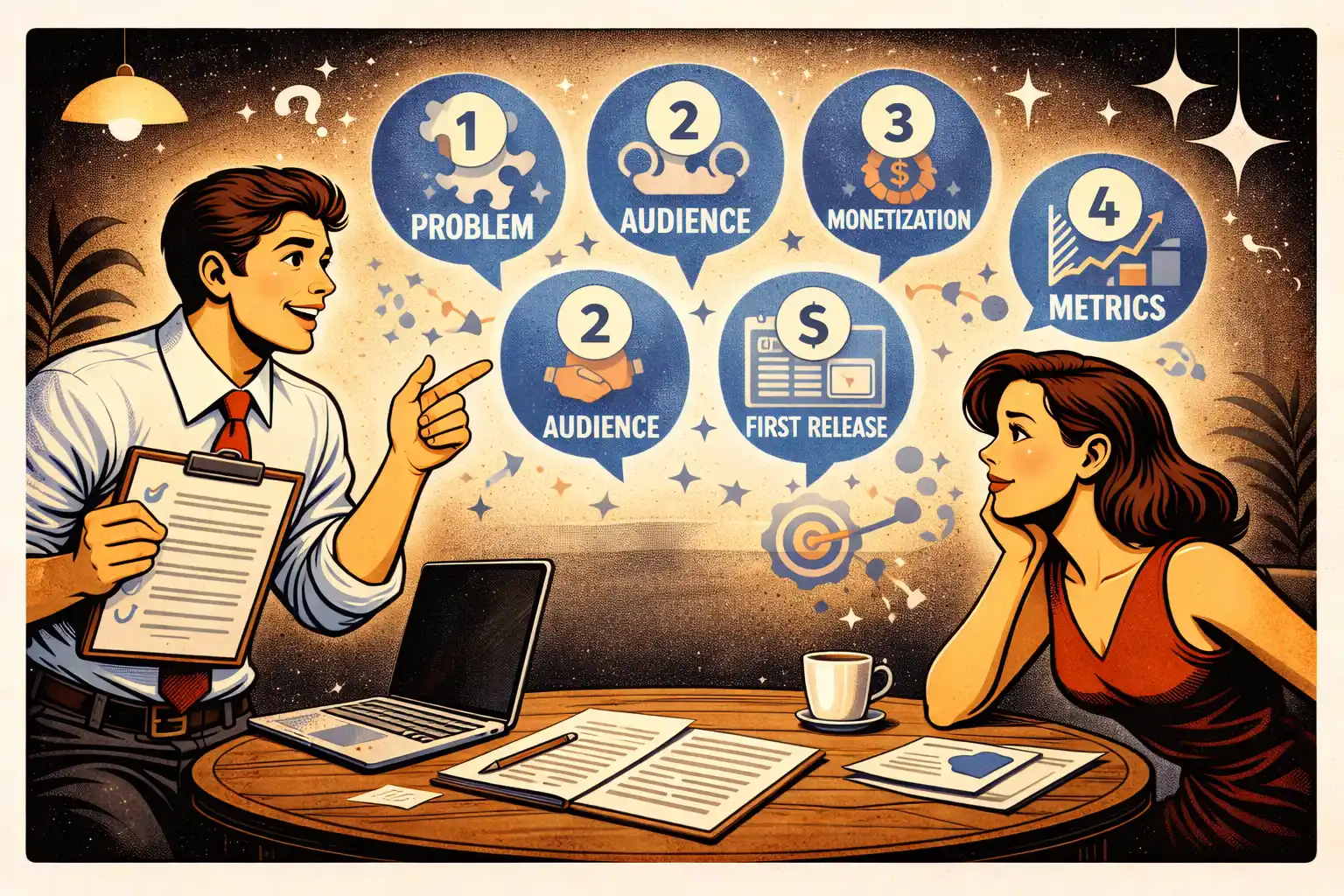
Ask four questions.
Does the core value depend on users regularly seeing and managing structured information in one place?
Would the product still work if the dashboard were replaced by a simpler flow or one focused screen?
Are we building this for current user value or future operational comfort?
If we cut the dashboard from version one, would we still learn something meaningful about the product?
If the last answer is yes, the dashboard may not belong yet.
That is why The First 5 Product Decisions in 2026 is a useful companion read.
What to track before building a full dashboard
Even if the startup does not need a full dashboard, it still needs visibility.
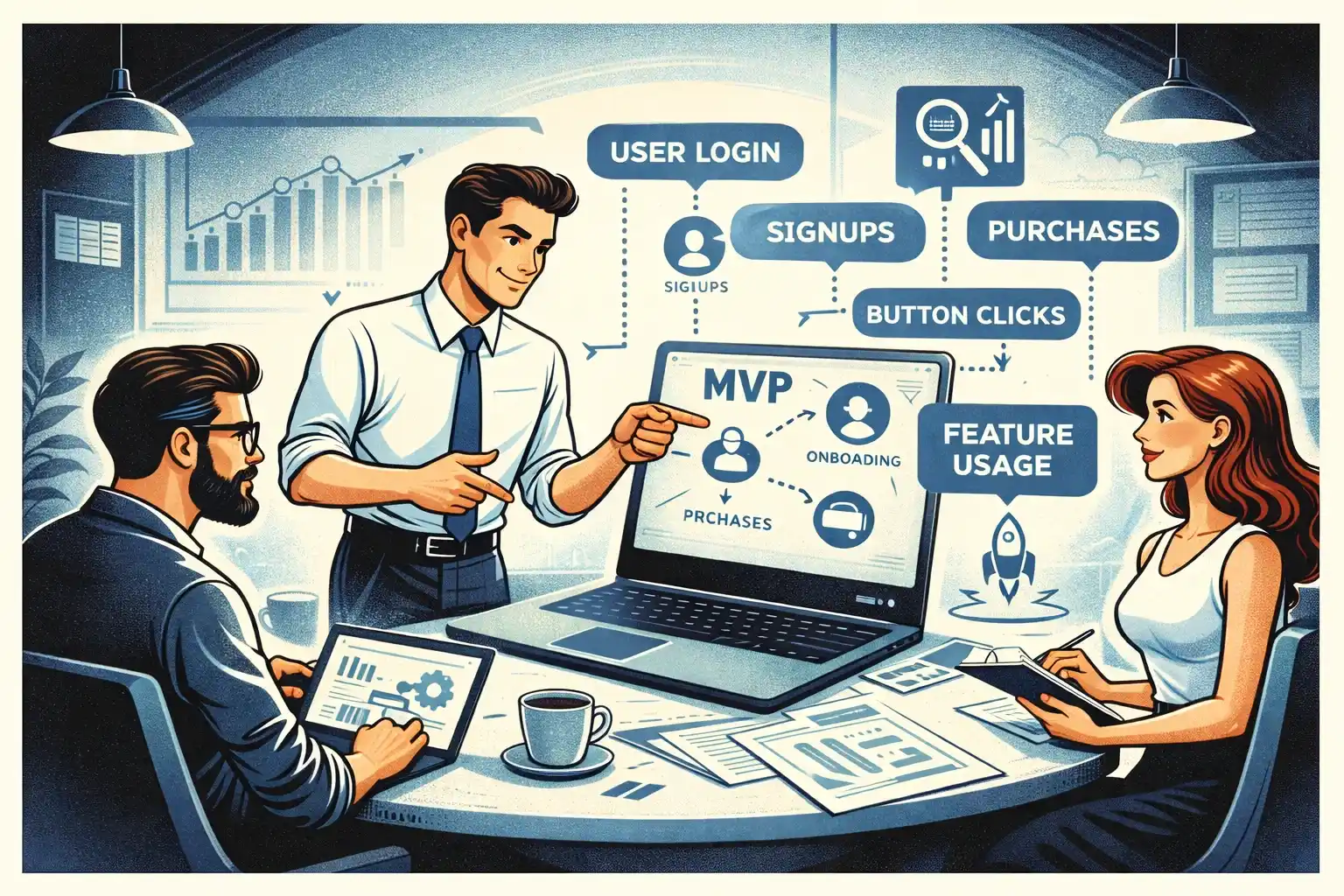
Founders should usually know what happens across signup, activation, core actions, return behavior, and first meaningful outcomes. But that does not mean all of that has to be exposed inside a polished product dashboard.
In many cases, internal analytics, lightweight reports, and a small set of operational views are enough to guide early decisions.
The startup should build the product surface users need, not the reporting surface the team imagines it may want later.
Final thought
Does your startup need a dashboard in 2026? Sometimes yes. Often no.
The right answer depends on whether the dashboard is the product or just an early symbol of completeness.
If it is central to how users get value, build the smallest version that supports that job. If it is mainly there to make the startup feel more mature, it probably belongs later.
The best early products are not the ones with the biggest interface. They are the ones that keep only what the user and the learning goal truly require.
Wondering whether your product really needs a dashboard in version one?
At Valtorian, we help founders define the smallest useful release, cut scope that belongs later, and launch products that create real traction instead of extra product weight.
Let’s look at your idea, your core user flow, and whether a dashboard belongs in your MVP or should wait.
FAQ
Does every SaaS startup need a dashboard?
No. Some do, especially when the dashboard is the main work surface. Others can validate core value through a much simpler flow first.
What is the biggest mistake founders make with dashboards?
They build them because dashboards look like product maturity, not because users actually need them yet.
When should a dashboard be part of the MVP?
When users must regularly review, manage, or act on structured data in one central interface to get value from the product.
When should a dashboard wait?
When the startup is still validating a simpler flow, a single action, or a basic output that does not require a full interface layer.
Are dashboards expensive to build?
They often become expensive quickly because they attract extra features like filters, charts, permissions, exports, and role complexity.
What can founders build instead of a dashboard?
Sometimes a status page, a simple account area, a lightweight admin view, or internal analytics is enough for the early stage.
How do I decide whether my startup needs one now?
Ask whether the dashboard is essential to the user’s core outcome or mainly serving future comfort, internal control, or product image.





















































.webp)




.webp)