.webp)
MVP Retention in 2026: The Real Minimum
Retention is the difference between an MVP that “launched” and an MVP that can become a business. In 2026, it’s easy to ship features fast, but most early products still fail because users don’t come back after the first try. This article explains the real minimum you need for retention (without overbuilding), how to define “repeat value,” and which early signals matter more than vanity metrics. You’ll also get a simple retention checklist you can apply this week.
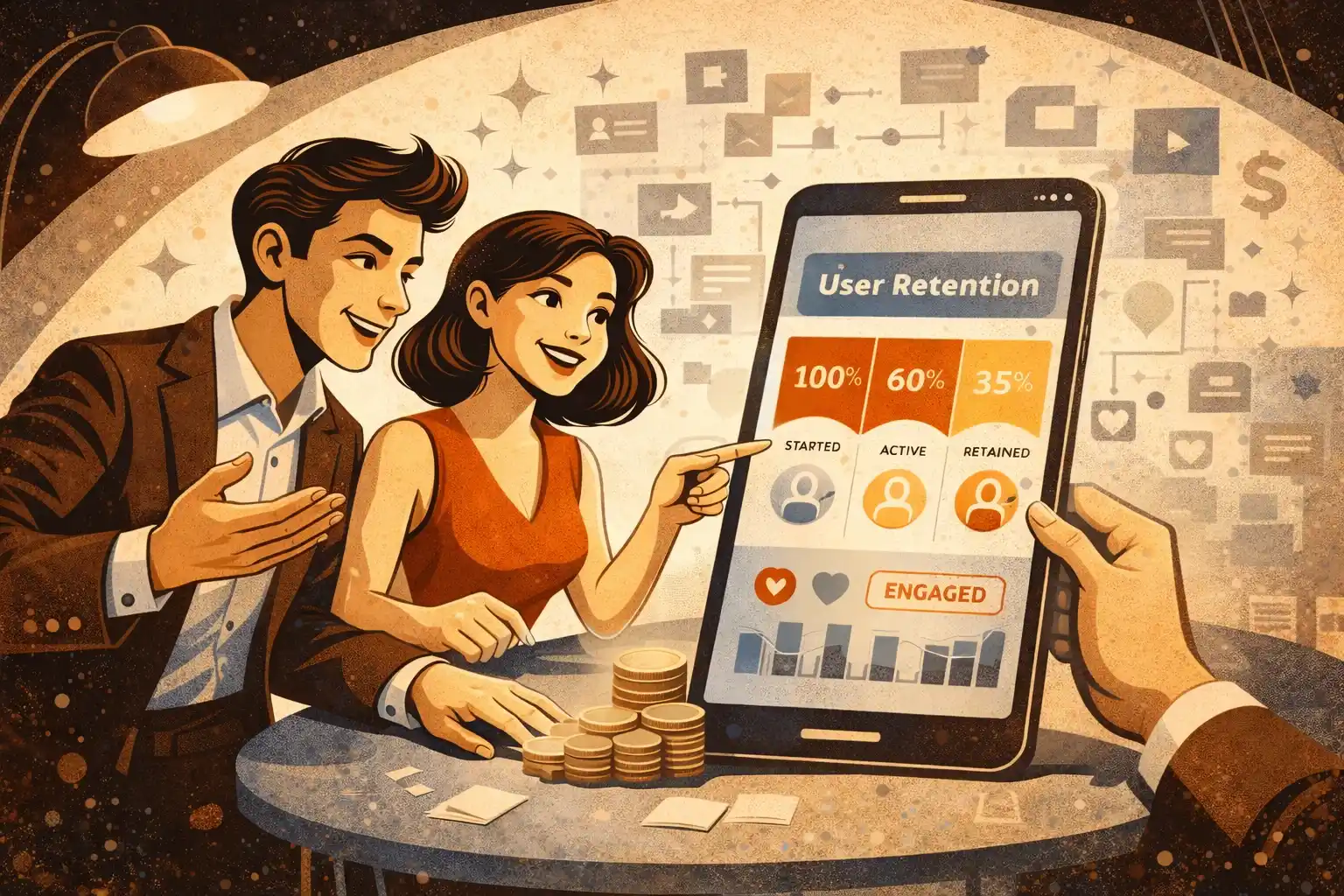
TL;DR: Retention isn’t about adding more features — it’s about making the core value repeatable.Your “real minimum” is one clear loop users can complete again and again, with just enough triggers, reminders, and friction removal to make returning feel natural.
What retention actually means for an MVP
In early-stage products, retention is often misunderstood as “users didn’t churn.”
A better definition for 2026: Retention is evidence that users repeatedly reach the core outcome without you pushing them every time.
That’s why retention is different from:
- sign-ups (interest)
- onboarding completion (compliance)
- one-time activation (a first win)
Retention is: “I came back because I still need this.”
If you’re still defining what your MVP should be, start with What a Good MVP Looks Like in 2026.
The retention ladder (so you don’t aim too high too early)
Most founders accidentally try to jump to “product-market fit retention” right away.
A realistic early ladder looks like this:
Level 1: Assisted retention
Users return because you remind them personally or guide them (calls, DMs, manual follow-ups).
Level 2: Product-led retention
Users return because the product itself nudges them at the right moment (notifications, email, in-app cues).
Level 3: Habitual retention
Users return without prompts because the product becomes part of a routine.
Your MVP goal is usually Level 1 - Level 2.If you aim for Level 3 too early, you’ll overbuild.
The real minimum: one repeatable loop
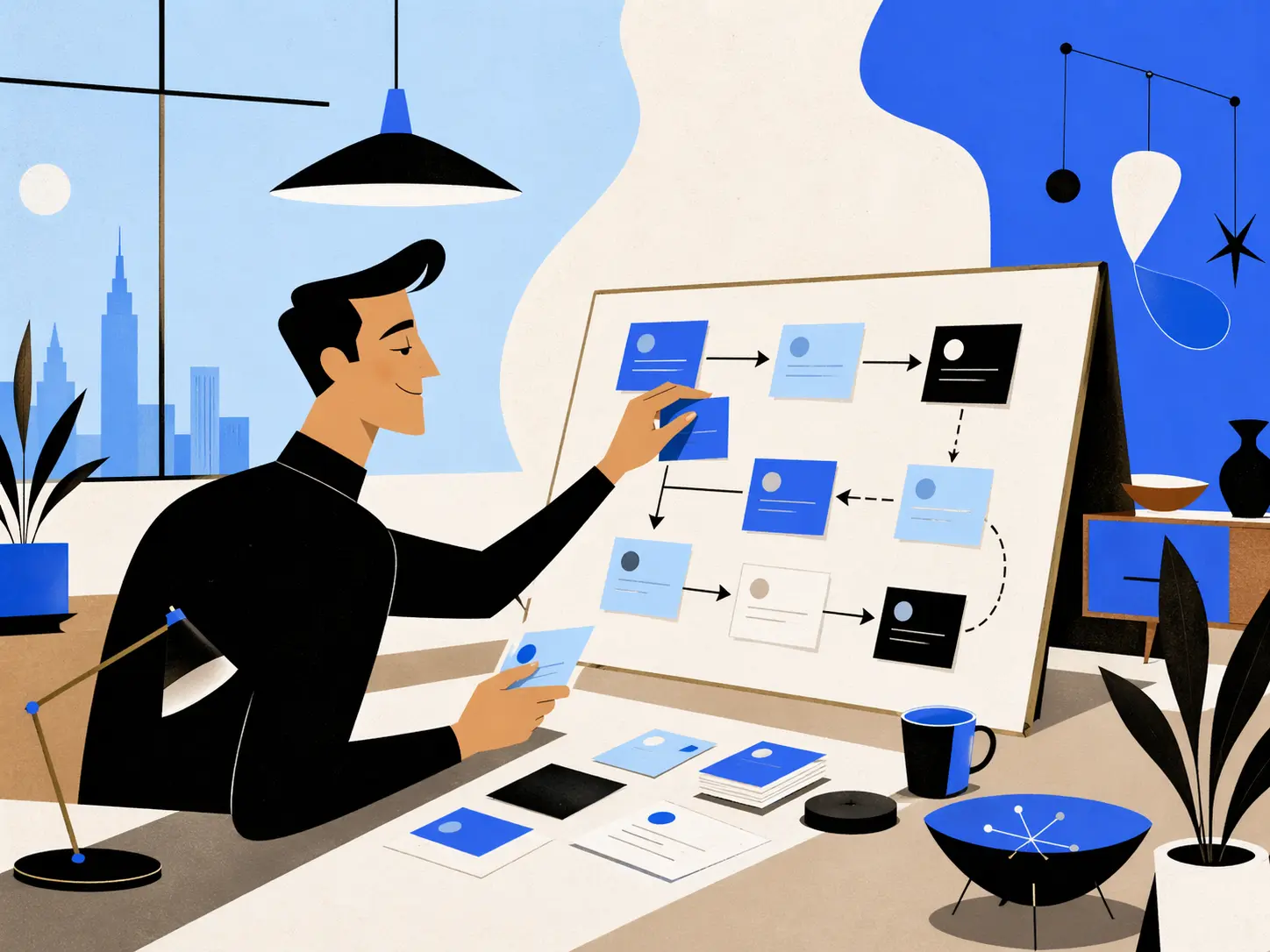
If you want retention, you need a loop.
A loop has four parts:
- Trigger — why the user starts
- Action — what they do
- Reward — what they get
- Reason to return — why it makes sense again later
In an MVP, the “reason to return” should be simple:
- the problem repeats (weekly reporting, daily planning, recurring tasks)
- the user’s state changes (new inputs, new opportunities)
- the output improves over time (history, saved work, personalization)
If your product can’t explain the loop in plain language, retention won’t happen.
Where retention breaks most often
These are the failure points we see repeatedly in early products.
1) Users hit the first win, then there’s no “next session” path
They get value once… and the product doesn’t tell them what to do next.
2) The second session is harder than the first
If returning requires re-entering data, re-learning the UI, or repeating setup, people won’t bother.
3) The product relies on motivation, not convenience
Motivation is fragile. Convenience is durable.
4) The user doesn’t trust the product yet
If the user is unsure the product is reliable, they won’t build it into their workflow.
5) You’re measuring the wrong thing
If you only track sign-ups and page views, retention problems look like “marketing problems.”
If you want a clean way to track the right signals early, use Your First Product Metrics Dashboard: What Early-Stage Investors Want to See.
What to build for retention (without overbuilding)
Retention doesn’t require a huge feature set.It requires removing friction from repeating the core loop.
1) Save progress by default
If users do work in your product, make sure they can pick up where they left off.
Minimum patterns:
- drafts
- recent activity
- “last used” context
2) Make the second session faster than the first
This is the simplest retention principle.
Examples:
- prefilled inputs
- templates
- recent choices
- shortcuts to the core action
3) Add one “return trigger” that fits your product
Pick just one at first:
- email summary
- push notification
- calendar reminder
- in-app “next step” prompt
Don’t add five channels. Add one that matches the loop.
4) Build one lightweight “reason to come back” artifact
A reason to return is often a stored outcome:
- a saved plan
- a history log
- a dashboard snapshot
- a shared link
- a personal workspace
5) Add support visibility
Early users return when they feel “someone is there.”That can be as simple as:
- a help email
- an in-app chat link
- a “report an issue” button
The retention metrics that matter early
You don’t need perfect analytics. You need clarity.
Start with these three:
- Activation: did users reach the first meaningful outcome?
- Repeat action: did they do the core action again?
- Time between loops: how long until the second use?
Then add:
- cohort retention (users grouped by signup week)
- drop-off after first session (where it breaks)
A helpful rule: if you can’t name the repeat action, you can’t measure retention.
If your onboarding is currently the bottleneck, start here: MVP Onboarding in 2026: Flows That Drive Activation.
How to improve retention fast (in 1–2 weeks)
Retention can move quickly with small changes.
High-leverage improvements:
1) Design a “second session” explicitly
After the first win, show:
- what happens next
- when to come back
- what they’ll get next time
2) Remove one decision from the repeat path
If users must choose between many options every time, returning becomes tiring.
3) Add one reminder tied to the user’s timing
Not “daily reminders.”A reminder that matches the product rhythm (weekly, after an event, after a deadline).
4) Tighten the loop, don’t widen the product
When retention is weak, the instinct is “add more features.”Usually the fix is “make the core loop easier to repeat.”
If you’re unsure what to validate first before building retention features, use MVP Testing in 2026: What to Validate First.
Retention and revenue: the uncomfortable truth
Pricing before retention is possible.But scaling revenue without retention is painful.
A simple sequence that works well:
- prove repeat value
- then push pricing harder
If your goal is first revenue while you’re still early, pair this with MVP Pricing in 2026: Getting First Paying Users.
A simple retention checklist
Use this to sanity-check your MVP.
- Can users reach the core outcome again without redoing setup?
- Is the second session faster than the first?
- Do users have a stored artifact (plan/history/dashboard) that makes returning useful?
- Do you have one trigger that matches the product rhythm?
- Can you name (and track) the repeat action?
If you can’t answer these, your MVP may be “working”… but it’s not retaining.
Thinking about building a retention-ready MVP in 2026?
At Valtorian, we help founders design and launch modern web and mobile apps — including AI-powered workflows — with a focus on real user behavior, not demo-only prototypes.
Book a call with Diana
Let’s talk about your idea, scope, and fastest path to a usable MVP.
FAQ
What’s a “good” retention rate for an MVP in 2026?
There isn’t one universal number. Focus on whether users repeat the core action and whether the second session happens naturally (without heavy founder pushing).
How do I define the core repeat action?
Name the smallest action that delivers the main outcome (the reason they signed up) and can logically happen more than once.
Do I need push notifications for retention?
Not always. Start with one trigger that fits your product rhythm — email or in-app prompts can be enough early.
What’s the minimum feature set for retention?
A repeatable loop, saved progress, a faster second session, and one clear “next step” after the first win.
Why do users return once and then disappear?
Usually because the second session is unclear, harder than the first, or the product doesn’t store anything valuable that makes returning feel worth it.
Should I focus on retention before monetization?
If you’re selling B2B pilots, you can monetize early. But long-term growth is much easier once repeat value is proven.































.webp)




.webp)