.webp)
MVP Development Cost Breakdown for Early-Stage Startups
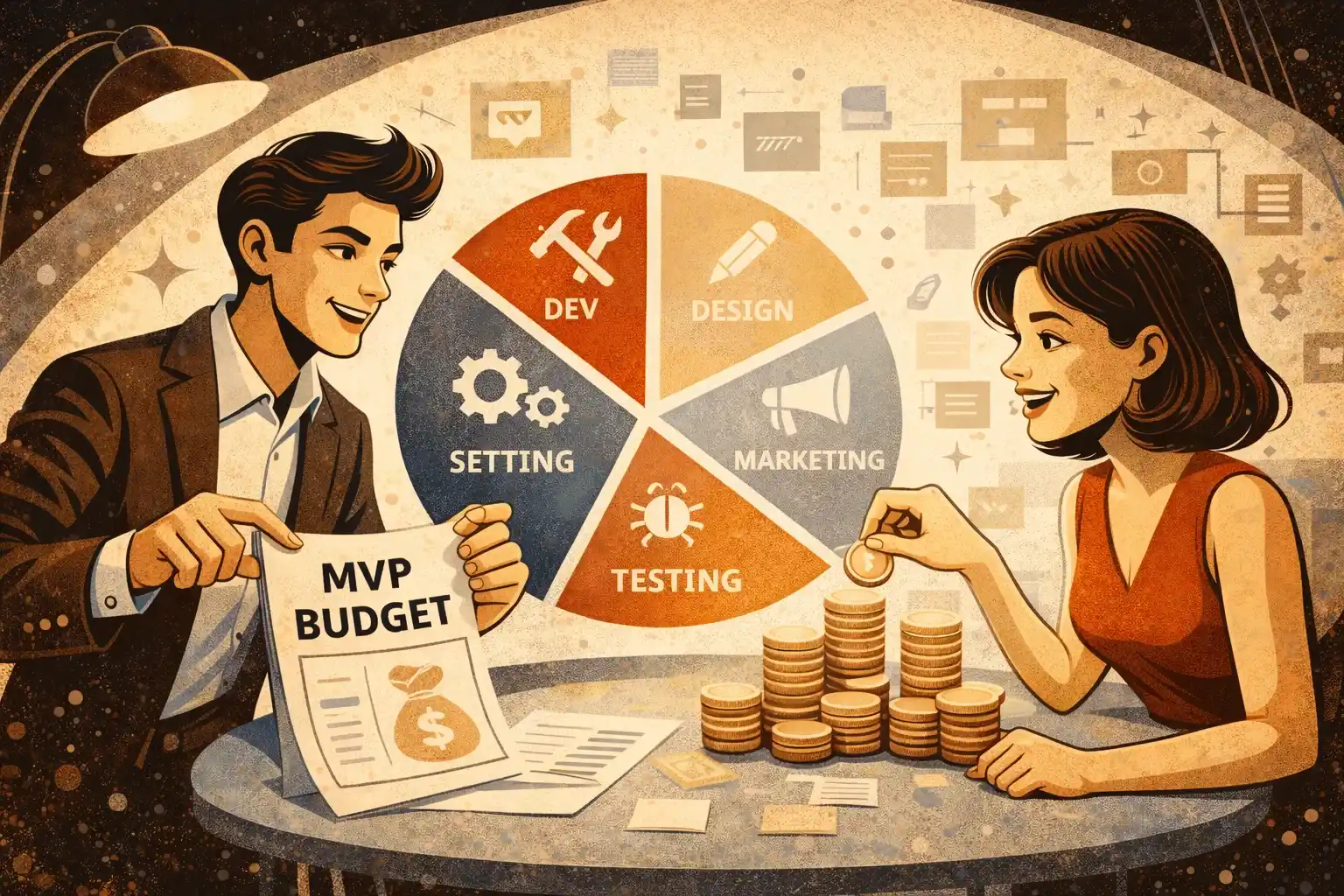
Understanding how MVP development costs are structured helps early-stage founders plan realistically, avoid overspending, and make better decisions about what belongs in version one. This guide breaks down each component of MVP pricing — from discovery and UX to infrastructure, QA, and ongoing maintenance — so non-technical founders can see where the money actually goes and how to control it. By the end, you’ll understand how agencies calculate cost and how to avoid paying for features you don’t need in v1.

TL;DR: Most early-stage MVPs cost $15,000–$40,000, depending on scope, design depth, integrations, complexity, and team seniority. Costs are driven not by the number of screens, but by the number of user flows, the complexity of backend logic, and any compliance/security requirements. The fastest way to control cost is to reduce surface area — one core workflow, clear UX, and a small senior team.
Why founders struggle to understand MVP pricing
Most estimates feel inconsistent because agencies use different pricing models and founders compare numbers without understanding what's inside.
The real question isn’t “How much does an MVP cost?”
It’s “What exactly is included?”
If you still aren’t confident defining what belongs in version one, read “App Development for Non-Technical Founders: A Step-by-Step Guide” — it helps you structure your idea so costs become predictable.
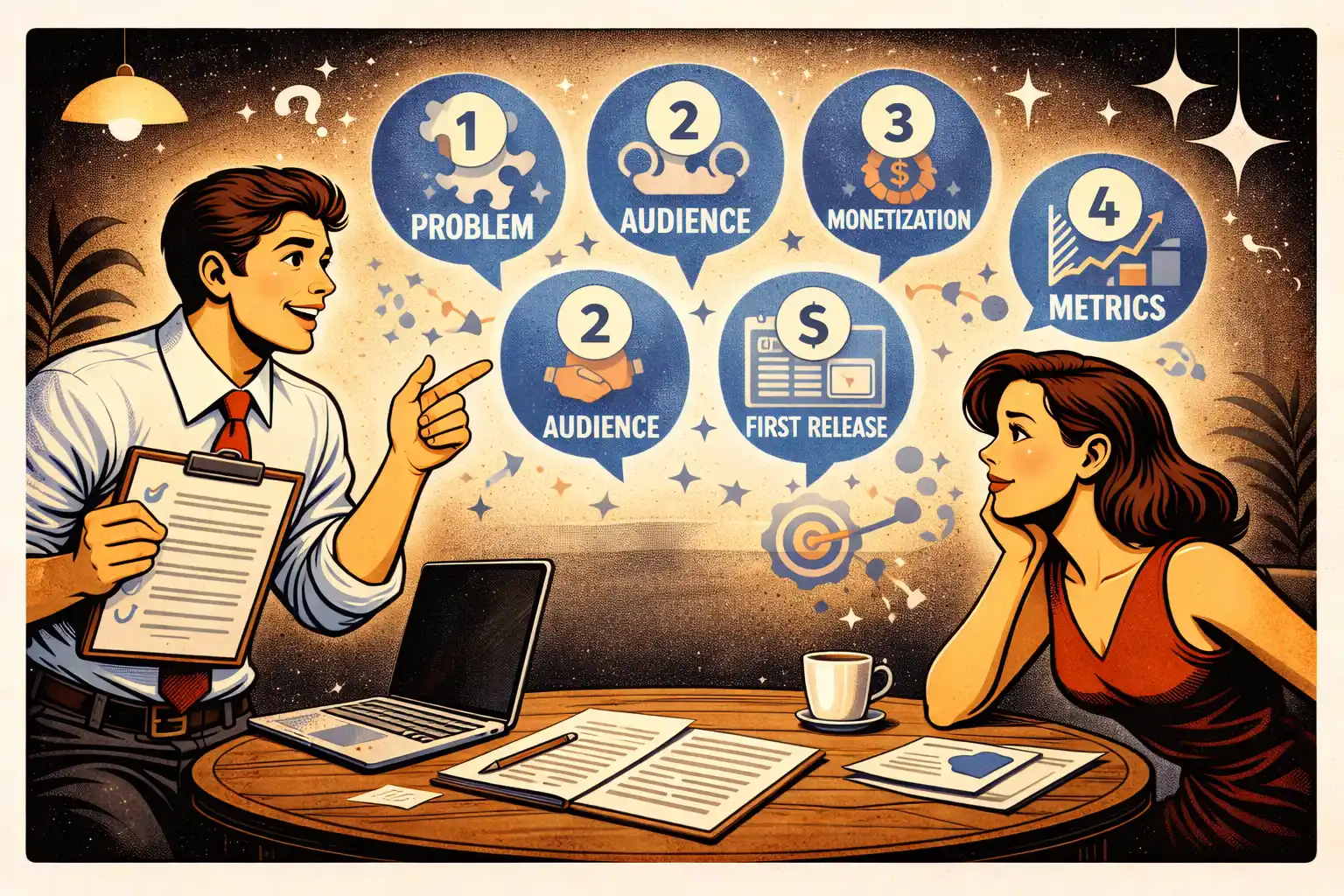
Discovery & Scoping (5–15% of cost)
This stage determines the entire budget trajectory.
What’s included:
- defining user roles
- clarifying core flows
- creating feature list by priority
- mapping constraints
- identifying risks (compliance, integrations, complexity)
Why it matters:
A weak discovery → inflated budget, unclear expectations, rework.
If you want to understand what a full discovery-to-launch service should look like, see “MVP Development Services for Startups: What’s Actually Included”.
UX Design (10–20% of cost)
UX is not decoration — it is the actual structure of your product.
What UX includes:
- user flow mapping
- low-fidelity wireframes
- early prototypes
- usability logic
What affects cost:
- number of flows (not number of screens)
- complexity of roles
- conditional logic & states
Good UX dramatically reduces development time because it prevents miscommunication.
UI Design (10–20% of cost)
UI sets the visual language.
What UI includes:
- full visual design of screens
- typography & colors
- components, states, interactions
- clickable prototype
Factors that affect UI cost:
- complexity of visuals
- custom vs minimalistic design
- number of unique screens
UI is where many founders overspend because they want future-v3 polish in MVP-v1.
Frontend Development (20–30% of cost)
Frontend is everything users interact with.
What drives cost here:
- number of screens
- complexity of behavior
- animations or UI polish
- cross-platform work (web / iOS / Android)
- state management
Using frameworks like React Native or Flutter keeps MVP budgets reasonable — but complexity still matters.
If you’re comparing stacks, the article “React Native vs Flutter for Startup App Development in 2025” can help clarify trade-offs.
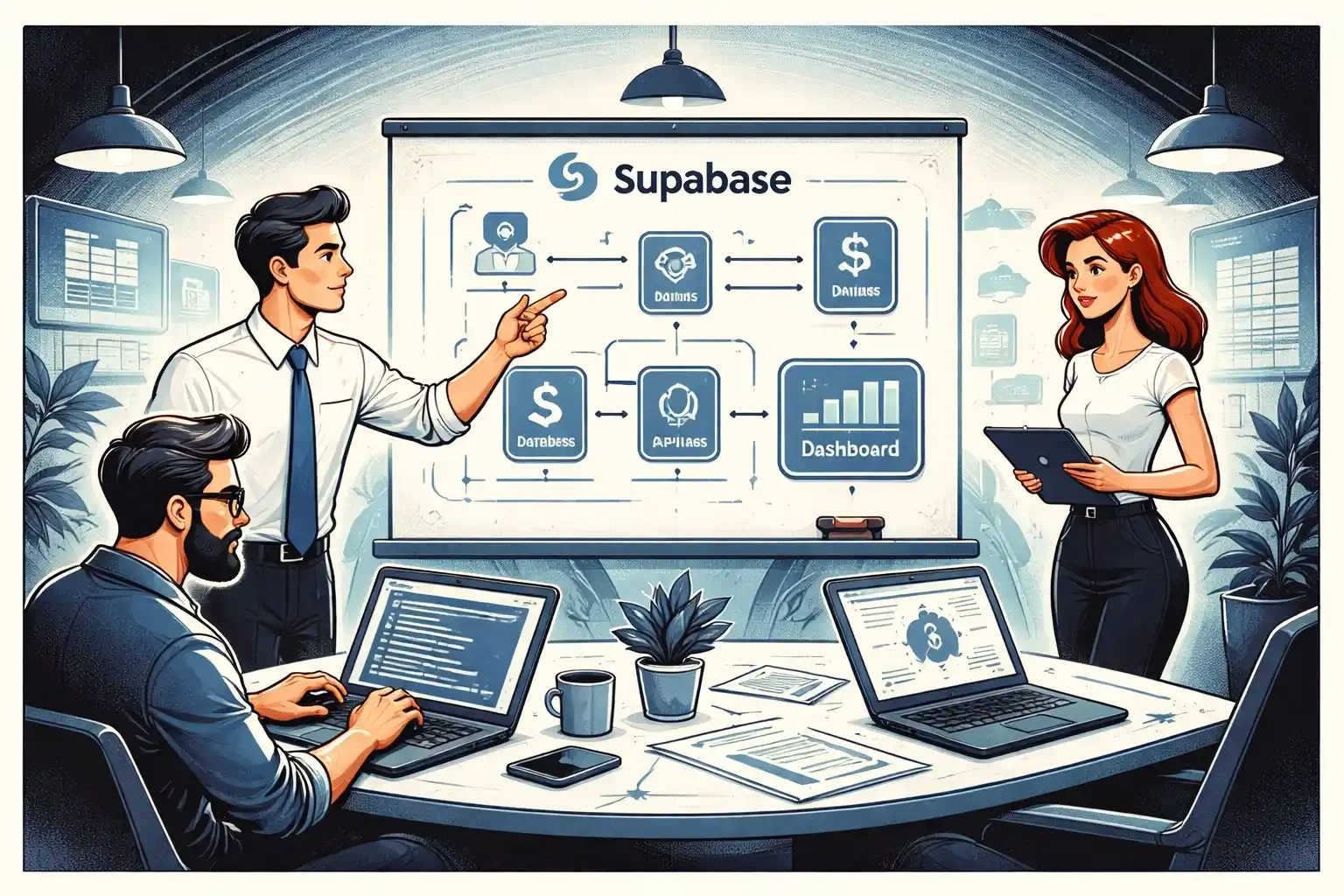
Backend Development (20–35% of cost)
Backend is the “invisible half” of your product… and often the most expensive.
Includes:
- database schema
- authentication & access control
- business logic
- APIs
- integrations
- notifications
- dashboards
What increases cost:
- multi-role systems
- complex data relationships
- real-time functionality
- third-party integrations (Stripe, calendars, KYC, AI APIs)
- complex security requirements
Backend is where founders underestimate cost the most.
QA & Testing (5–10% of cost)
Without QA, the MVP is unreliable — and early users will feel it immediately.
QA includes:
- functional testing
- regression testing
- edge-case testing
- bug reporting
- ensuring flows match design
A clean MVP reduces iteration costs and accelerates early traction.
Infrastructure & DevOps (3–8% of cost)
Not large for MVPs, but necessary.
Includes:
- hosting configuration
- database setup
- API gateways
- security rules
- staging environment
- analytics installation
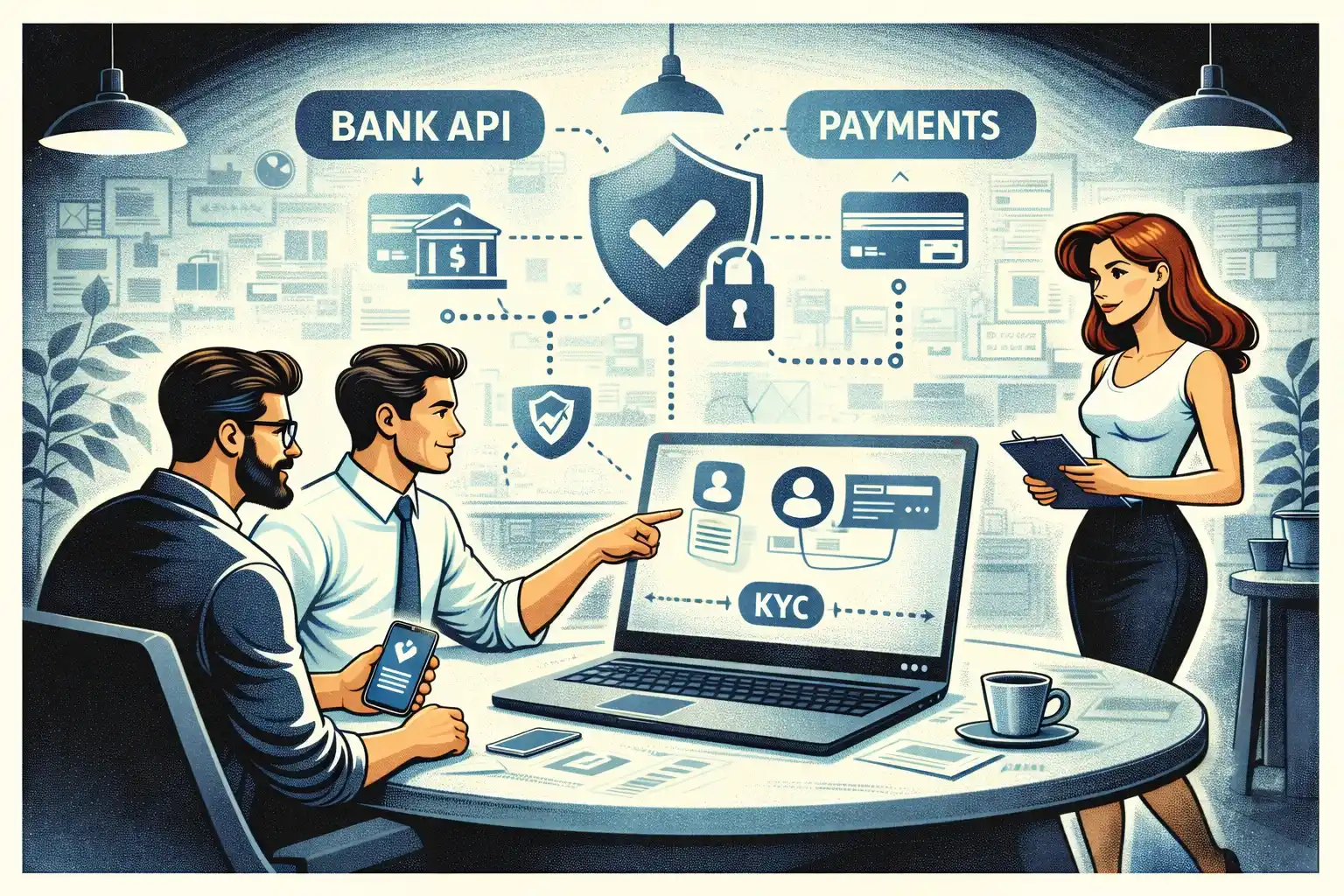
For regulated industries like fintech and healthcare, infrastructure effort increases significantly — if this applies to you, read “Fintech and Healthcare MVP Development: How Compliance Changes the Plan”.
Compliance (varies — 5–30% depending on industry)
Only relevant for certain sectors.
Adds cost when:
- handling PHI (healthcare)
- processing money (fintech)
- requiring KYC/AML
- needing audit logs
- requiring encryption standards
Compliance shapes the architecture more than the design.
Project Management (5–12% of cost)
Overlooked but essential for non-technical founders.
PM ensures:
- scope discipline
- clear communication
- weekly demos
- predictable timelines
- alignment between design and development
Small, founder-led teams usually require less PM overhead — which is why they often feel faster and more personal.
Post-Launch Costs (ongoing)
Founders often forget these:
Monthly:
- hosting ($30–$150)
- analytics ($0–$50)
- small fixes ($200–$1,000 depending on usage)
Future phase:
- new features
- optimizations
- UX improvements
- scaling architecture
MVP is not the finish line — it’s the beginning.
Cost Ranges by MVP Type
Lean MVP: $10,000–$15,000
Single flow, minimal UI, one user role, simple backend.
Standard Startup MVP: $15,000–$30,000
Most common: roles, auth, basic dashboard, 1–2 integrations.
Complex or Multi-Platform MVP: $30,000–$60,000
Dashboards, multiple flows, multiple platforms, heavier backend.
Regulated MVP (Fintech/Healthcare): $40,000–$80,000+
Compliance, audit logs, encryption, KYC/AML, PHI security.
If you want deeper context behind these numbers, see “MVP Development Cost in 2025: How Much Does It Really Cost?”.
Where founders accidentally overspend
Overly complex UI
Too many features in v1
Multiple roles before traction
Custom dashboards instead of simple admin tools
Building automation instead of doing things manually
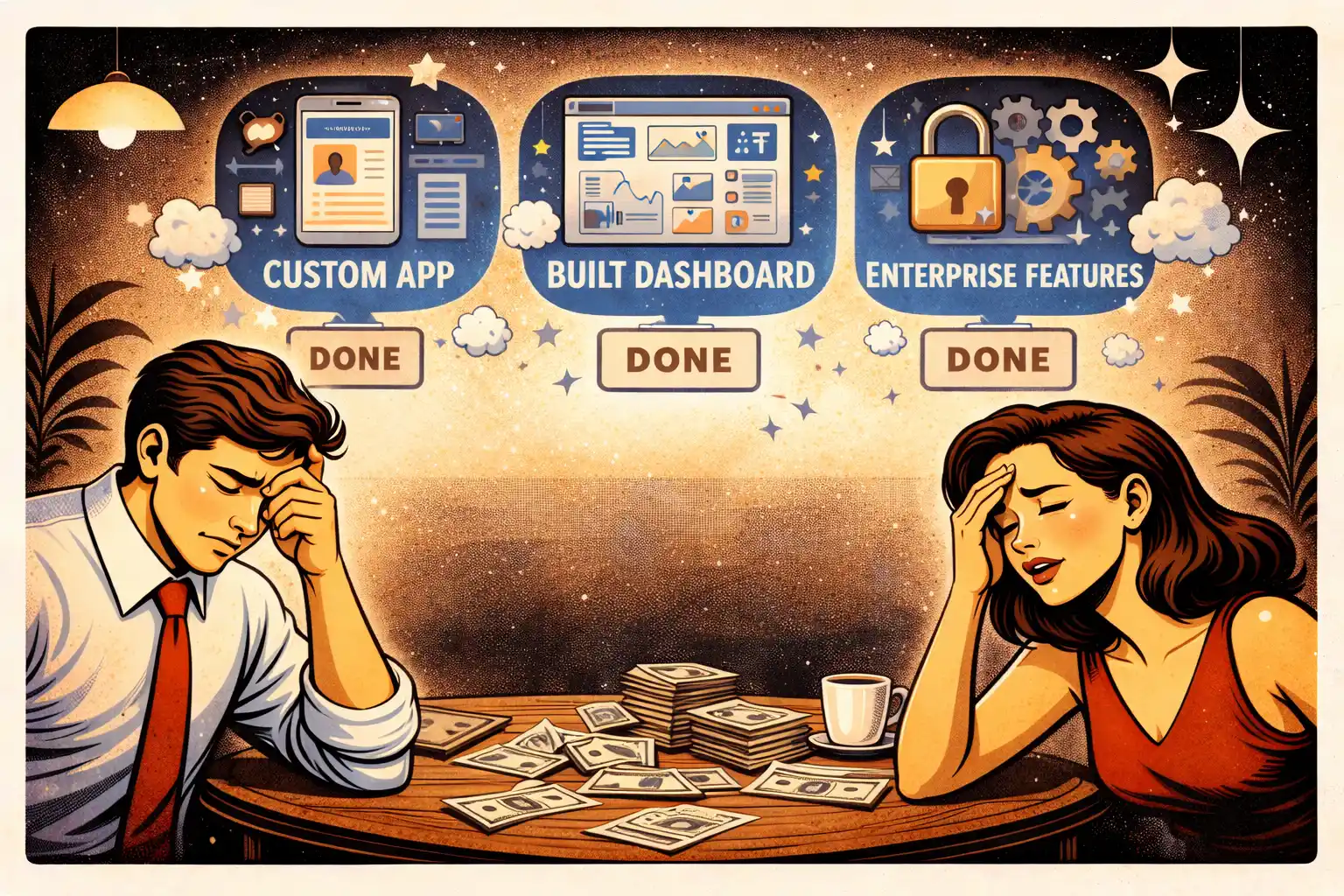
Not defining scope before requesting estimates
Overbuilding is the #1 budget killer.
Where founders can save without losing quality
Reduce number of flows
Start with one platform
Keep design minimal
Avoid unnecessary integrations
Validate with prototypes before coding
Use senior boutique teams instead of big agencies
A focused MVP is always cheaper — and faster.
Want a clear, predictable MVP estimate — without surprises or inflated scope?
At Valtorian, you work directly with the founders — a designer and a developer who’ve built 70+ MVPs for early-stage founders. We help you define a lean scope, reduce unnecessary complexity, and build a production-ready MVP in 4–6 weeks.
Book a call with Diana
We’ll break down your idea, plan your user flows, and give you a transparent cost structure.
FAQ — MVP Development Cost Breakdown
What drives MVP cost the most?
Number of flows, backend complexity, integrations, and scope clarity.
What’s the biggest mistake founders make?
Trying to build too much in v1.
Is design or development more expensive?
Development — especially backend. UI becomes expensive only when founders over-polish.
Can I build an MVP for under $10k?
Yes, but only for very simple single-flow products.
Does tech stack affect cost?
Slightly — but scope affects cost far more.
Are regulated industries more expensive?
Yes. Compliance adds architecture, security, and integrations.
Should I choose an agency or freelancers?
For early-stage MVPs, small senior studios deliver the best ratio of speed, clarity, and reliability.






















































.webp)




.webp)