.webp)
B2B SaaS MVP in 2026: The Real Minimum
Most B2B SaaS MVPs don’t fail because founders lack features — they fail because the “first version” is bloated, slow to ship, and hard to sell. In 2026, AI and modern stacks make building faster, but they also make it easier to overbuild the wrong thing. This article explains the real minimum a B2B SaaS MVP needs to reach paying conversations: the core user loop, the essential admin controls, and the few trust and billing basics that reduce sales friction.

TL;DR: A B2B SaaS MVP in 2026 is not a smaller version of an enterprise product. It’s one clear workflow for one clear buyer, with just enough onboarding, permissions, and reporting to support real usage. If you can’t onboard a user, deliver value in one session, and prove outcomes with simple metrics, you don’t need more features — you need a tighter MVP.
The real goal of a B2B SaaS MVP
A B2B SaaS MVP has one job: get you to repeatable sales and usage signals.
Not “a complete platform.” Not “all integrations.” Not “a perfect dashboard.”
What you want to learn fast:
- Who buys (and who doesn’t)
- What they pay for (the value unit)
- What blocks adoption inside an account
- What makes them stick after week 1
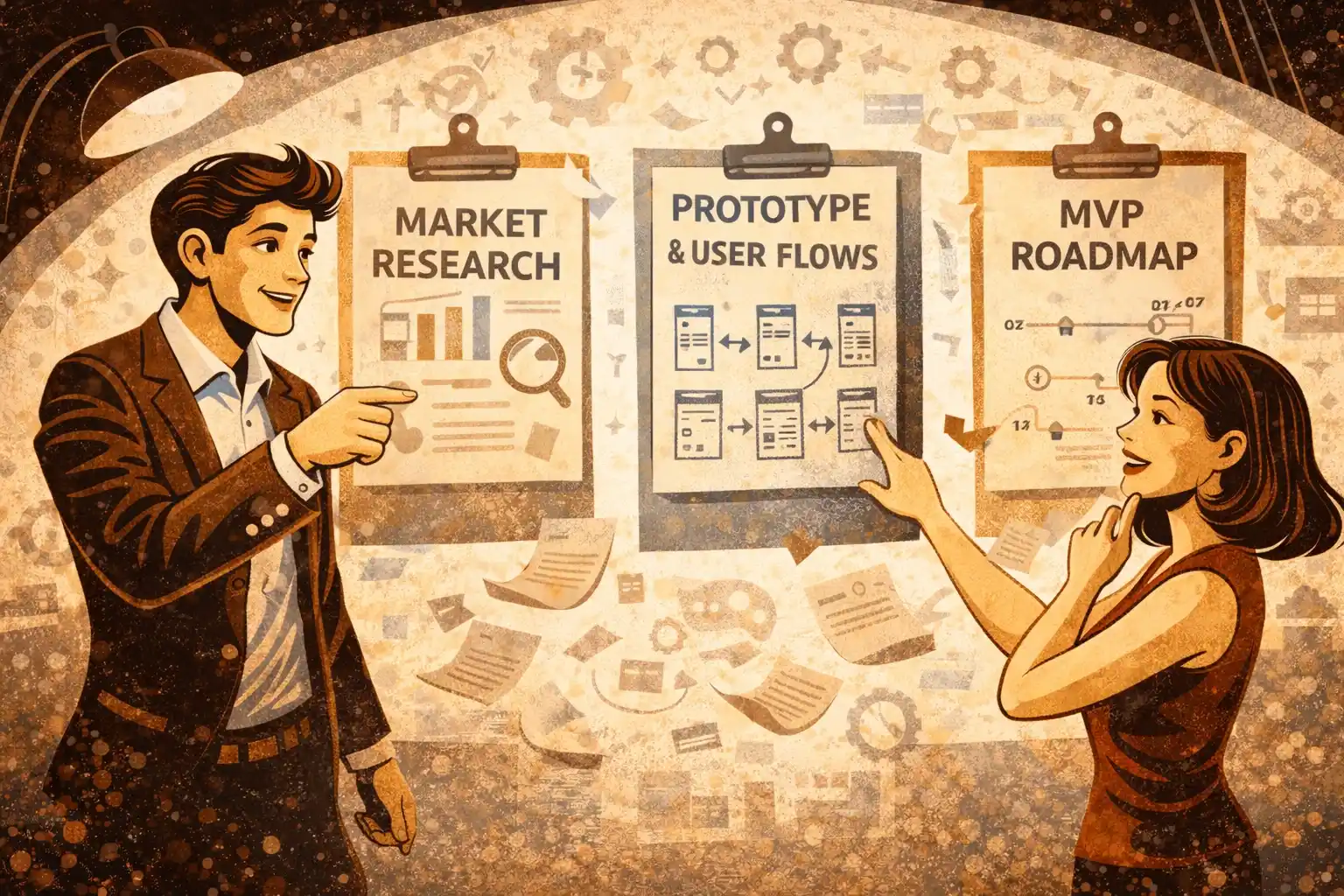
If you want a fuller roadmap view from discovery to first paying users, read Full-Cycle MVP Development: From Discovery to First Paying Users.
Define your “buyer + user” pair (B2B gets messy fast)
Many B2B products have at least two personas:
- The buyer (approves payment)
- The user (gets daily value)
Your MVP should be designed around one primary pair.
If you try to satisfy multiple departments and roles in MVP, you’ll ship late and sell slower.
The minimum B2B SaaS MVP components
No tables — so here’s the “real minimum” as a focused list.
1) One core workflow that ends in an outcome
Your MVP needs one workflow that produces an outcome a user cares about.
Examples:
- A report they can act on
- A task they can complete faster
- A process they can run consistently
MVP rule: if the workflow can’t be completed end-to-end, it’s not a workflow.
2) A fast onboarding path (time-to-value beats “nice onboarding”)
Your onboarding should do only what’s needed to reach value.
Minimum onboarding usually means:
- Account created
- A single setup step (or none)
- First successful run of the core workflow
Avoid onboarding that asks for “everything” up front. That’s a conversion killer.
3) Basic roles and access control (only what you truly need)
Most B2B MVPs need at least:
- An owner/admin role
- A standard user role
If your product is multi-tenant (accounts/organizations), permissions must be correct from day one. Bad access control kills trust instantly.
If you want a founder-friendly explanation of why this matters, read Web App Development for Startups: Architecture Basics for Non-Tech Founders.
4) A minimal admin view (so you can operate the product)
Founders often forget: you will need to run the product manually early.
Your MVP should include at least:
- View of accounts and users
- Basic ability to reset access / change plan / handle support issues
- A simple “audit” view for key actions if your product is sensitive
This is not an enterprise admin panel. It’s a control room.
5) A “proof” layer (simple metrics that support selling)
B2B buyers ask: “How do we know this worked?”
Your MVP should expose a small set of outcomes:
- Usage frequency of the core workflow
- A simple before/after signal (time saved, steps reduced, completion rate)
- Activation and week-1 retention proxy
You don’t need complex BI. You need clarity.
A good starting point is Your First Product Metrics Dashboard: What Early-Stage Investors Want to See.
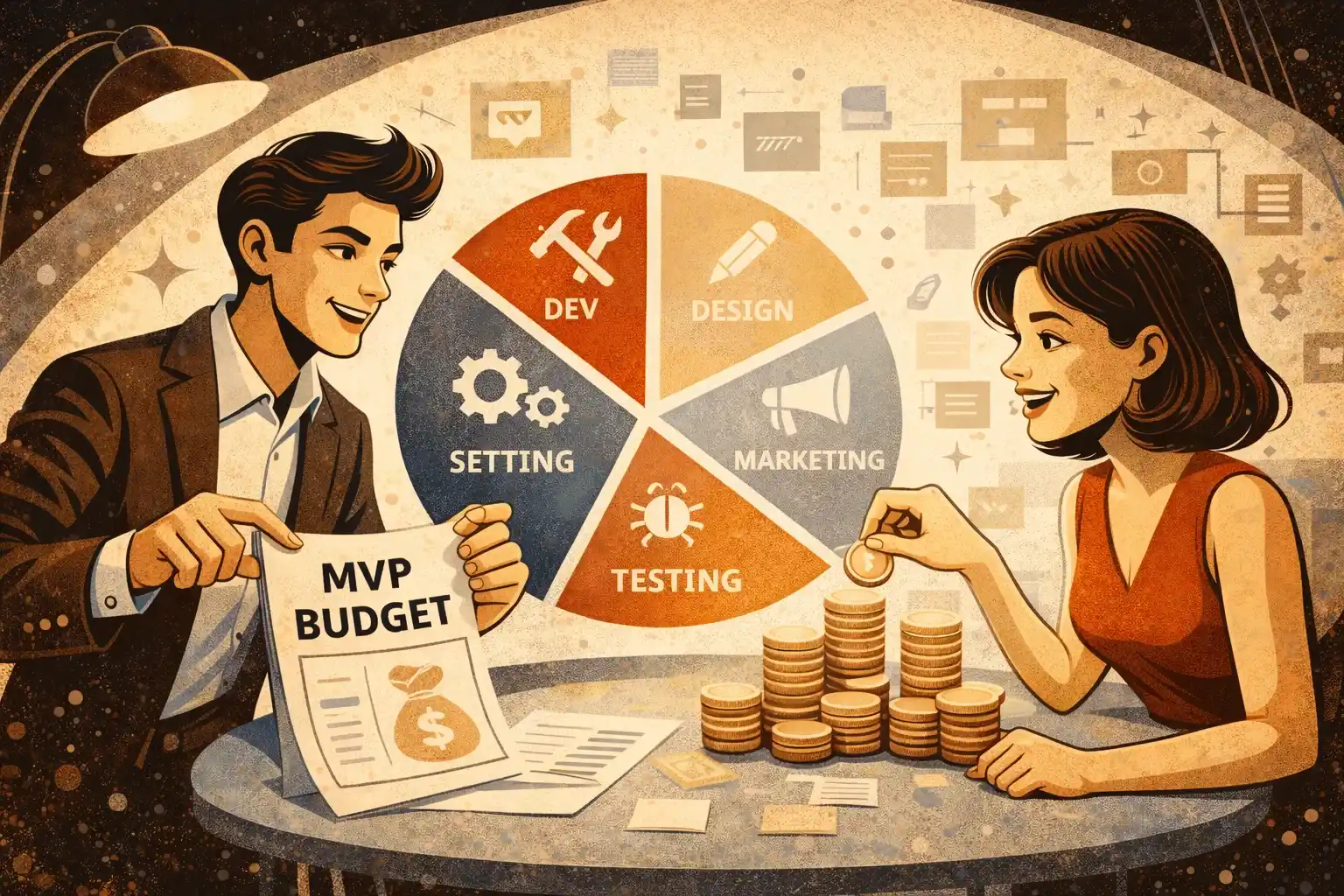
6) A pricing gate (even if it’s simple)
B2B SaaS MVPs often overcomplicate billing. Don’t.
Minimum viable billing is:
- One plan (or two at most)
- A clear limit that matches your value unit (seats, usage, features)
- A way to talk pricing and collect payment when ready
If you’re integrating payments early, keep the decisions tight and avoid building a custom billing universe. See App Development Cost for Startups: Web vs Mobile vs SaaS for the practical tradeoffs that affect effort and iteration.
7) Trust basics (security posture without enterprise theater)
You don’t need a full compliance program for MVP. But you do need to avoid looking careless.
Minimum trust signals:
- Clear data ownership: who can see what
- Reliable login and password reset
- Safe handling of invites and access
- Basic logging for sensitive actions
If you outsource, trust is also about process and accountability. See Outsource Development for Startups: Pros, Cons, and Red Flags.
What you should cut from a B2B SaaS MVP (even if it feels important)
These are classic “MVP killers”:
- 10 integrations before you have real usage
- Custom dashboards for every persona
- Full role matrix (admin, manager, analyst, viewer, etc.)
- Advanced permission engines
- Multi-workspace complexity before you sell one workflow well
- Polished automation “builders” before the underlying workflow is proven
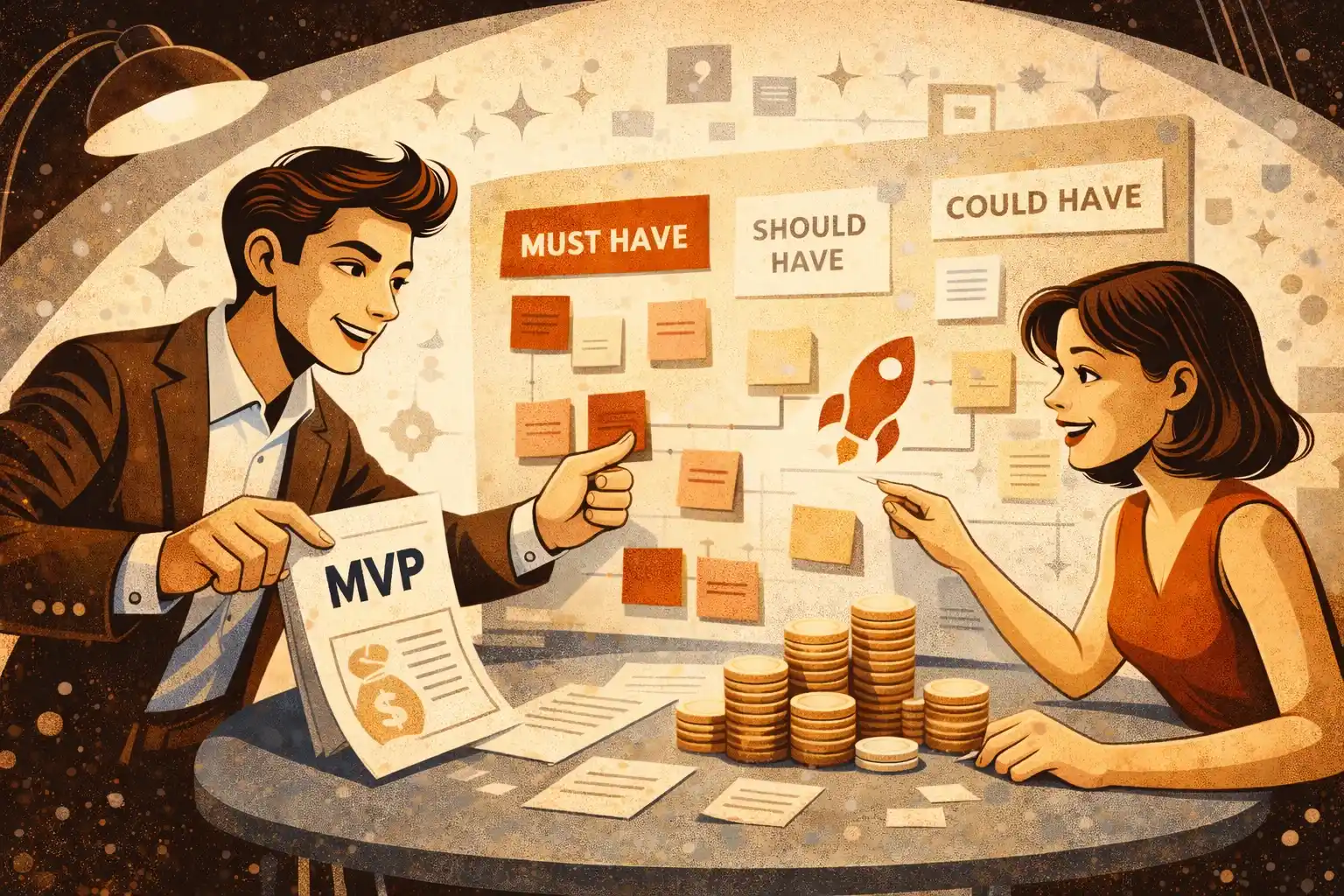
Cutting is not lowering ambition. It’s choosing the fastest path to proof.
If you feel the scope exploding, you’re not alone — this is exactly where founders burn months. Read MVP Development for Non-Technical Founders: 7 Costly Mistakes.
The founder framework: how to know if your MVP is “minimum”
Your B2B SaaS MVP is minimum if:
- A new user can reach value in one session
- You can demo the entire workflow in under 5 minutes
- You can explain the value unit in one sentence
- You can support early customers without custom development for each one
If you can’t, the MVP is too vague or too broad.
A practical delivery approach in 2026
In 2026, speed is possible — but only with discipline.
A realistic approach:
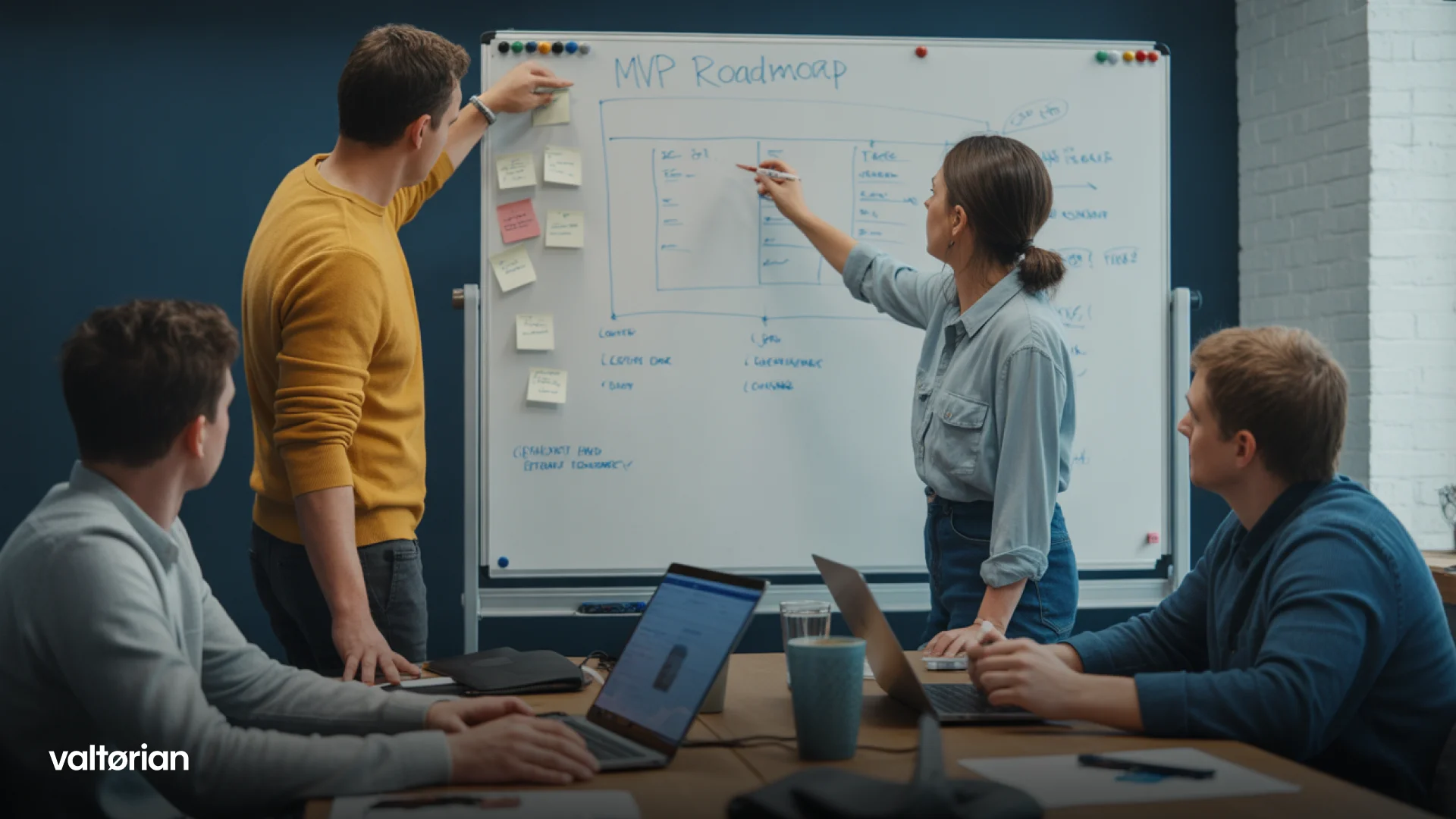
- Week 1: define the core workflow and MVP boundary
- Weeks 2–4: design + build the workflow end-to-end
- Weeks 4–6: harden, add minimal admin + metrics, launch to real users
This is not a promise of timeline. It’s a pattern that works when decisions are fast and scope is tight.
If you want a fresh view of what’s changing in SaaS MVPs specifically, see SaaS MVP Development Trends in 2026.
Thinking about building a B2B SaaS MVP in 2026?
At Valtorian, we help founders design and launch modern web and mobile apps — including AI-powered workflows — with a focus on real user behavior, not demo-only prototypes.
Book a call with Diana
Let’s talk about your idea, scope, and fastest path to a usable MVP.
FAQ
What is the real minimum for a B2B SaaS MVP?
One core workflow that produces a clear outcome, fast onboarding to reach that outcome, basic roles, a minimal admin view, and a small set of metrics that prove usage and value.
Do I need multi-tenant organizations in MVP?
Only if your buyer truly needs teams/accounts from day one. If your product can start single-tenant per customer (or even single-user), it may ship faster.
Should I build integrations in MVP?
Only the one integration that unlocks core value. Everything else can wait until you see repeat usage and real demand.
Do I need a full dashboard for B2B buyers?
Not at MVP stage. Start with simple reporting tied to the core workflow outcome. Build advanced dashboards after you know what buyers actually care about.
How many roles should my B2B SaaS MVP support?
Usually two: admin/owner and user. Add more roles only when you have real customers asking for them and you understand the permission model.
When should I add subscriptions and self-serve billing?
After you’ve proven retention and a repeatable value unit. Early on, simple pricing and manual invoicing can be enough to validate willingness to pay.
What’s the biggest mistake founders make with B2B SaaS MVPs?
Building a “mini-enterprise” product before proving one workflow and one buyer. It delays launch and makes selling harder.







































.webp)




.webp)