.webp)
MVP Budget in 2026: Where Money Should Go
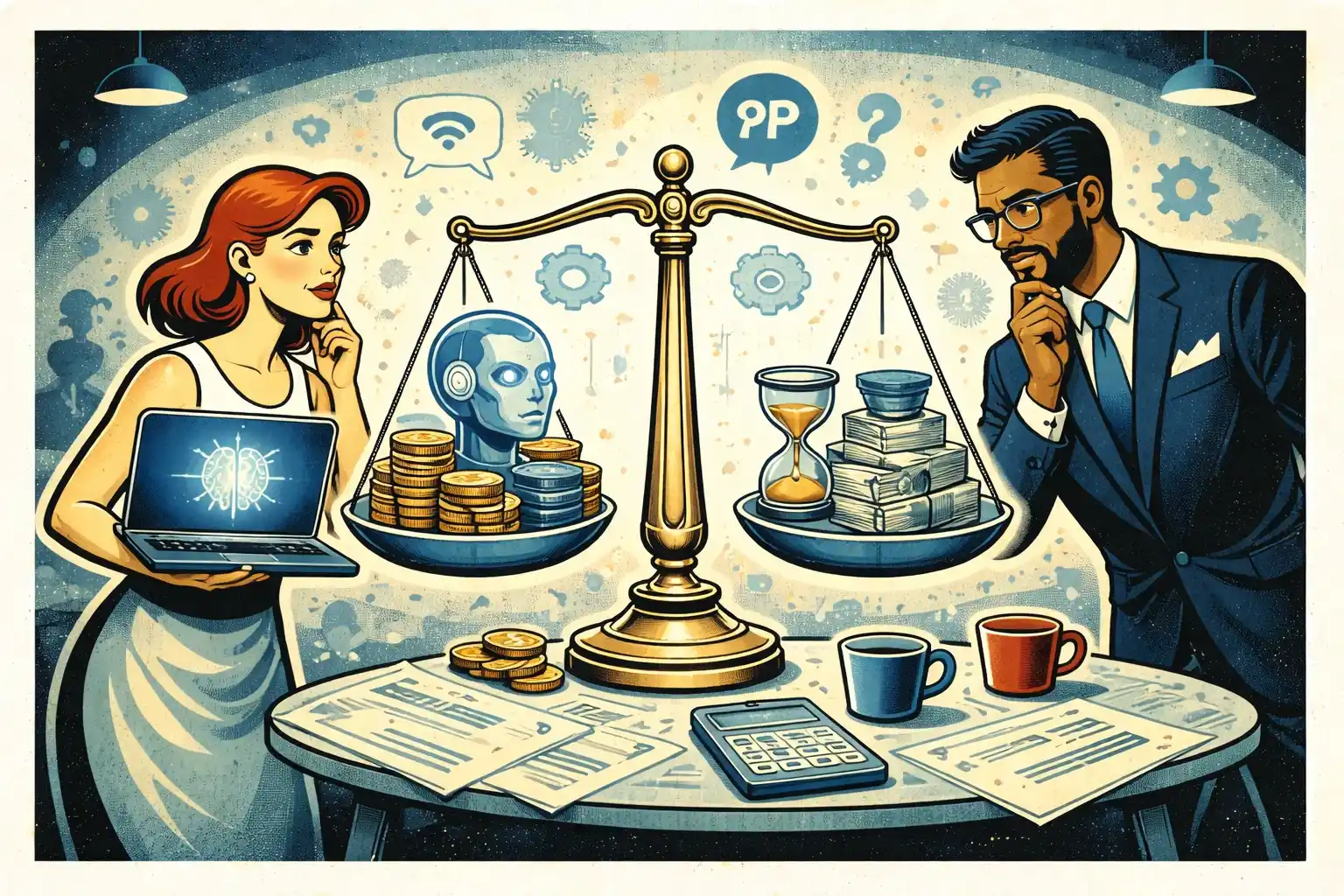
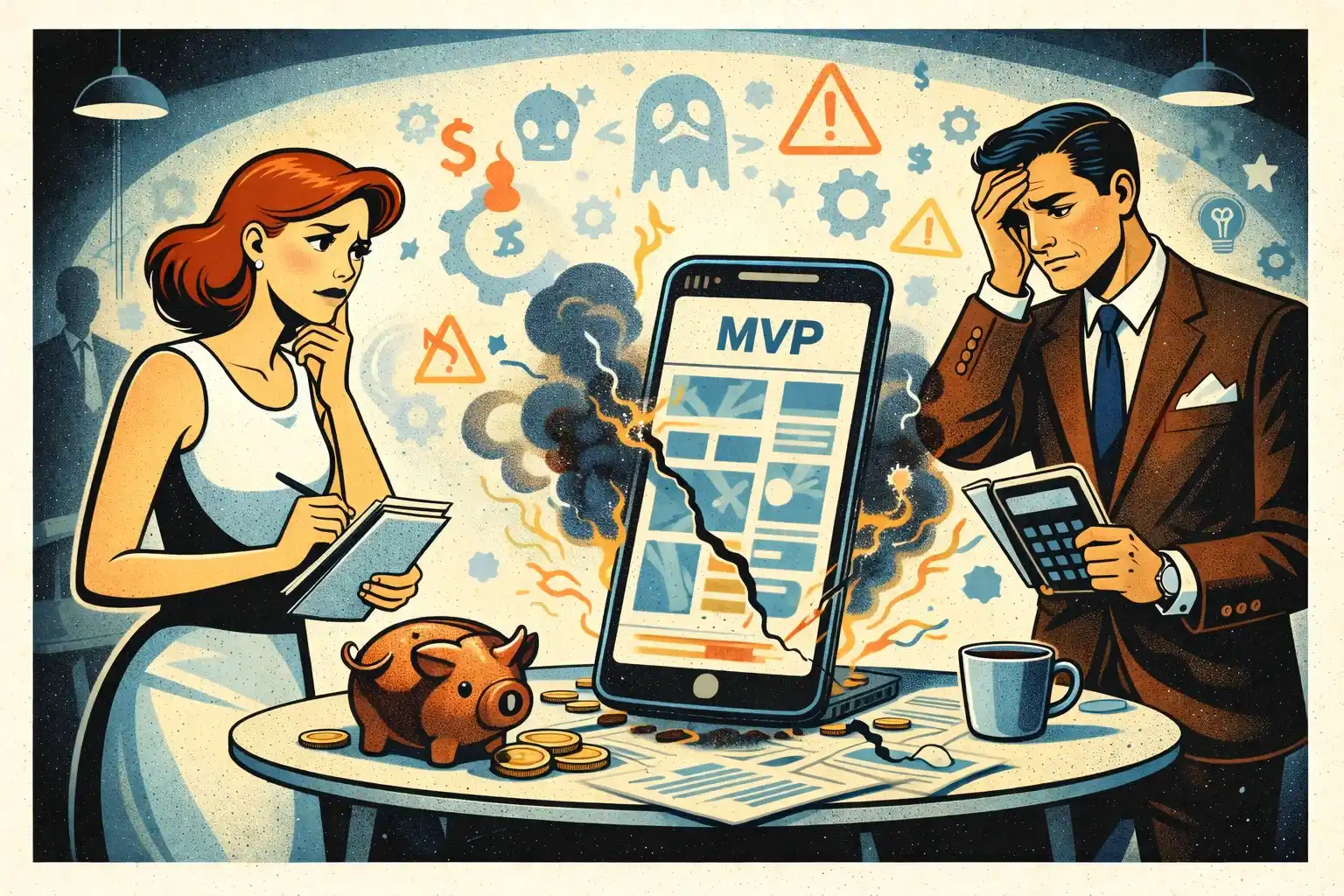
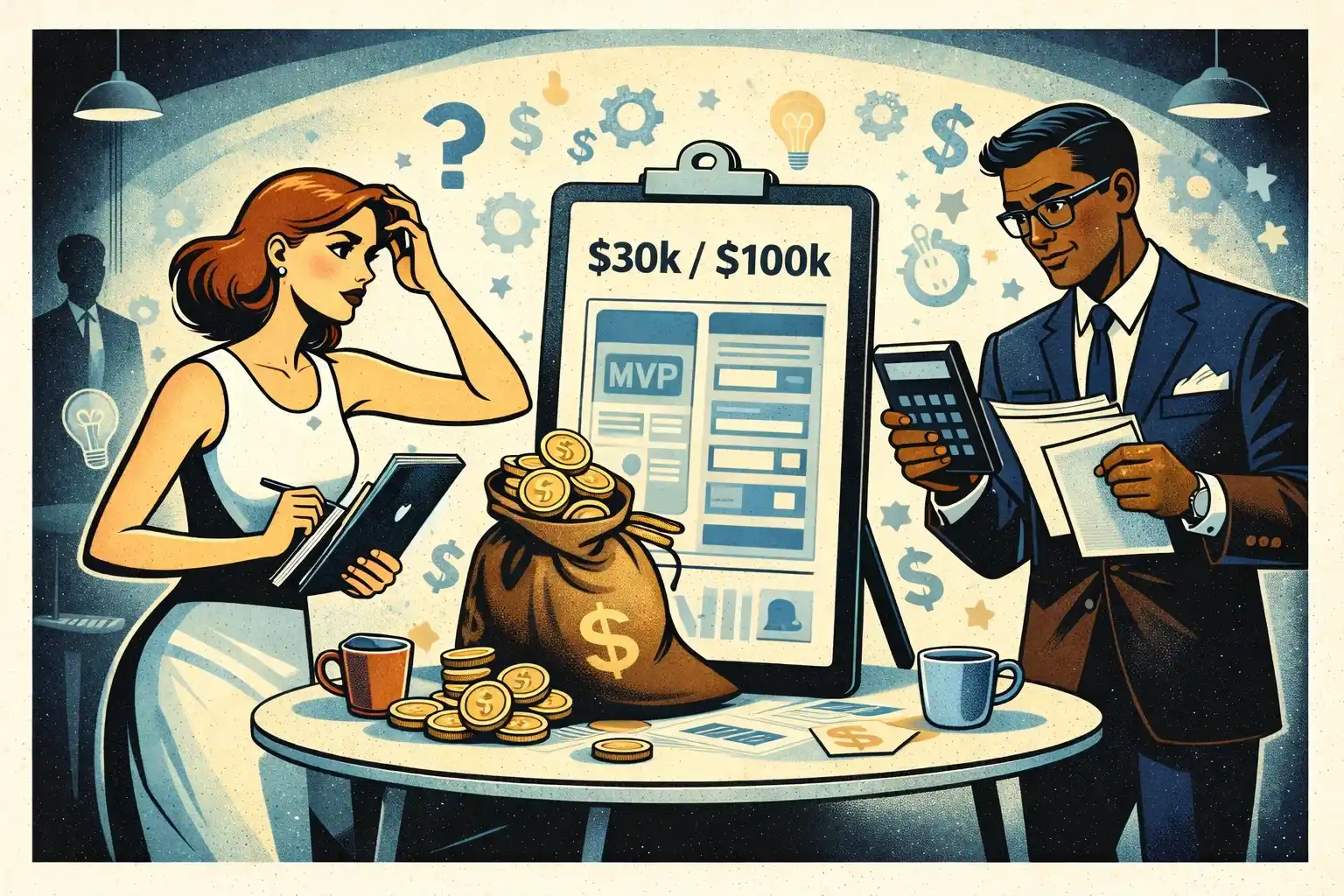
Most MVP budgets don’t fail because they’re “too small.” They fail because the money goes into the wrong buckets: too many features, not enough clarity, weak onboarding, and zero learning loops. In 2026, you can build faster, but you can also burn faster—especially if you pay for polish before you pay for proof. This article breaks down where MVP money should go, what you can safely postpone, and how to make every dollar buy learning, not just code.
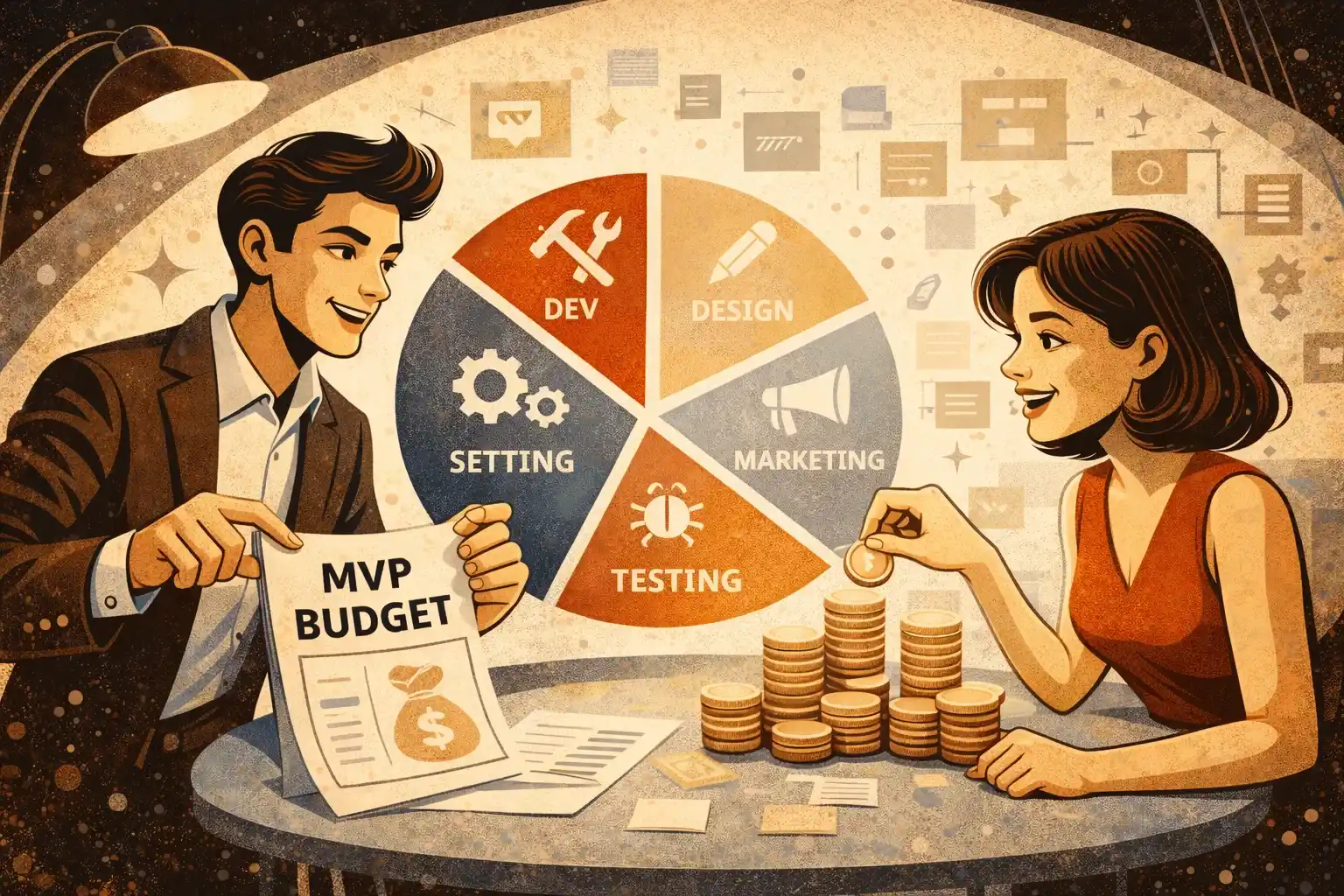
TL;DR: Your MVP budget should prioritize a repeatable value loop, basic quality, and measurement — then distribution.Spend less on “nice-to-have” features and more on clarity, onboarding, QA, analytics, and a plan to reach real users.
The biggest MVP budget myth: “Development is the budget”
Most founders treat the MVP budget as a single line item: “build the app.”
But MVP spending isn’t about output (screens shipped). It’s about outcomes (signals from real users). If you only fund coding, you often end up with a product that technically works — but doesn’t convert, doesn’t retain, and doesn’t teach you what to build next.
If you’re unsure what a healthy first release actually looks like, start with What a Good MVP Looks Like in 2026.
The goal of MVP spending in 2026
A good MVP budget buys three things:
- Clarity — what you’re building, for whom, and why it matters.
- A real loop — users can reach value, come back, and you can see it.
- Learning speed — you can ship, measure, and adjust without rebuilding everything.
When your budget supports those three, you can be “small” and still win.
Where money should go first (in priority order)
Below is a practical order of operations. It’s not a universal rule, but it’s a reliable default for most non-technical founders.
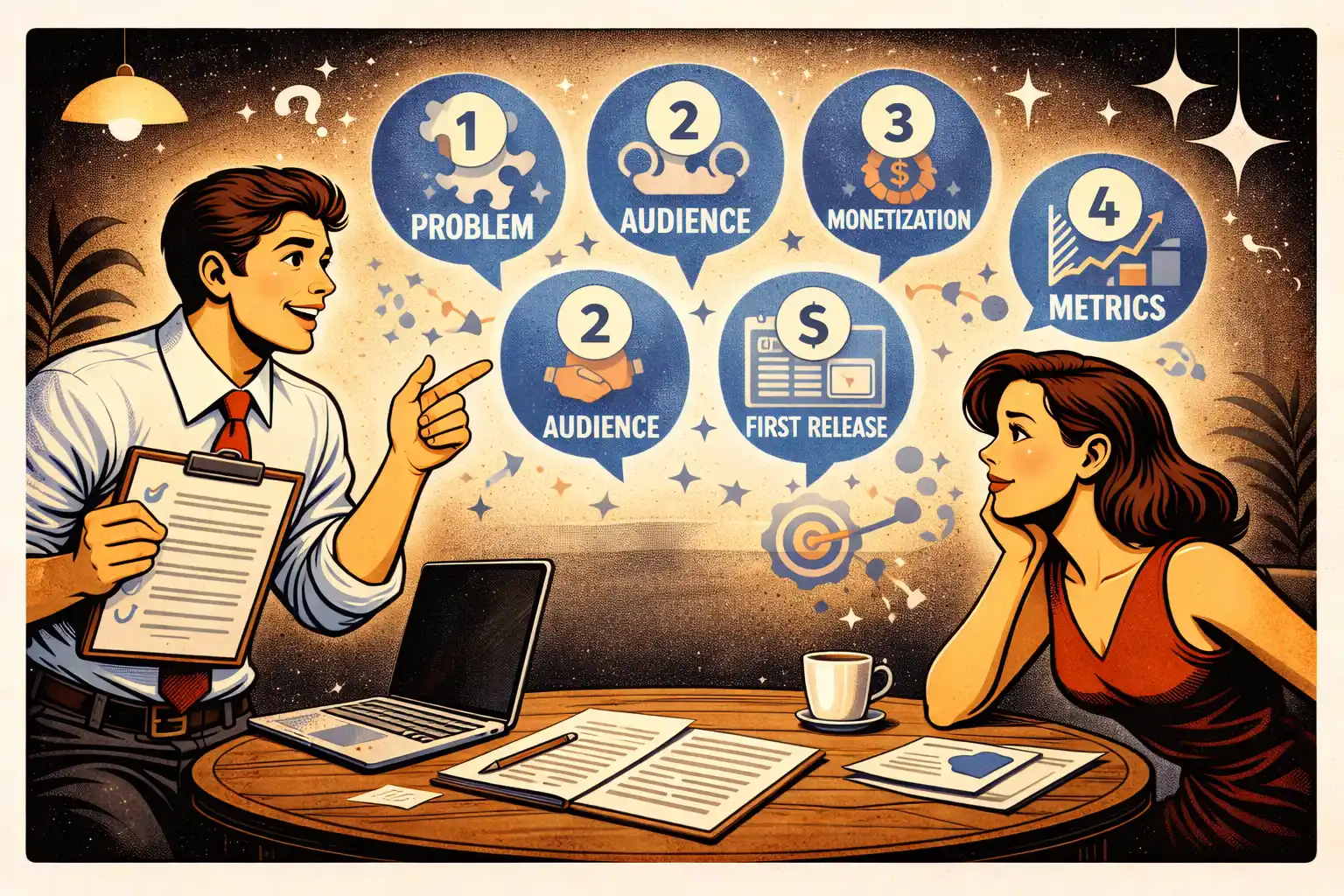
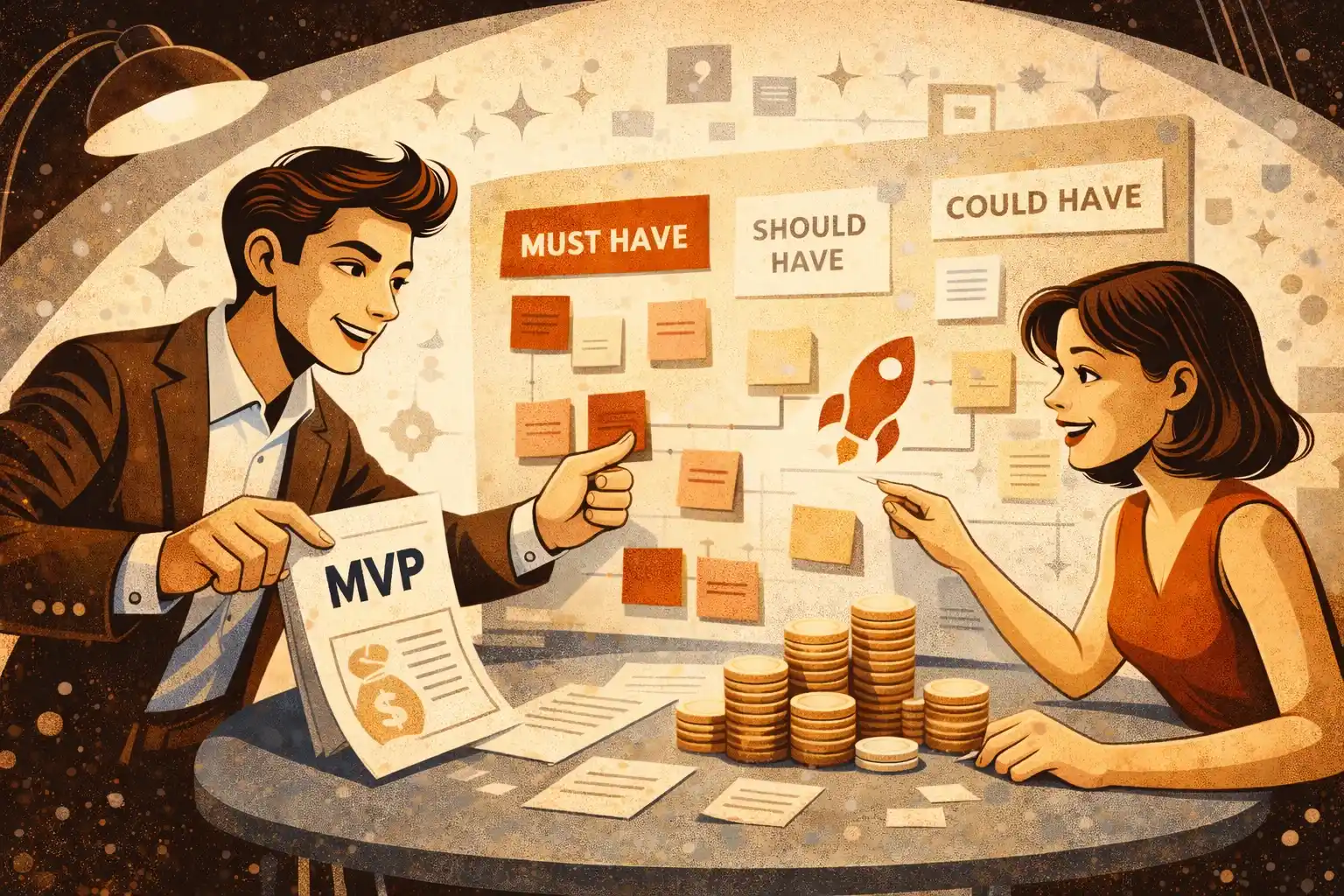
1) Scope discipline (before you write a single line of code)
The cheapest MVP is the one you don’t overbuild.
Budget time for:
- defining one core user and one core workflow
- writing down what’s out of scope (on purpose)
- choosing a single success metric for the first 7–30 days
If scope keeps expanding, reset with MVP Scope and Focus in 2026.
2) UX that reduces friction (not “beauty design”)
Early UX spending should aim at:
- clear first-time flow
- fewer decisions per screen
- obvious next step after first value
Great MVP UX is mostly about removing confusion.
If you’re building an early product and want activation to happen without hand-holding, read MVP Onboarding in 2026: Flows That Drive Activation.
3) The core build (end-to-end loop)
This is the “product” part:
- one value loop that works end to end
- the smallest set of features required to deliver the outcome
The budget mistake here is building breadth instead of loop depth.
4) QA and reliability (the hidden retention lever)
Founders underfund QA because it feels like “not shipping.”In reality, early bugs kill trust and sabotage retention — especially when users are still deciding whether to return.
At minimum, fund:
- critical path testing (signup - first value - repeat)
- device/browser sanity checks
- basic error handling and empty states
If your retention is weak, it’s rarely fixed by new features alone. See MVP Retention in 2026: The Real Minimum.
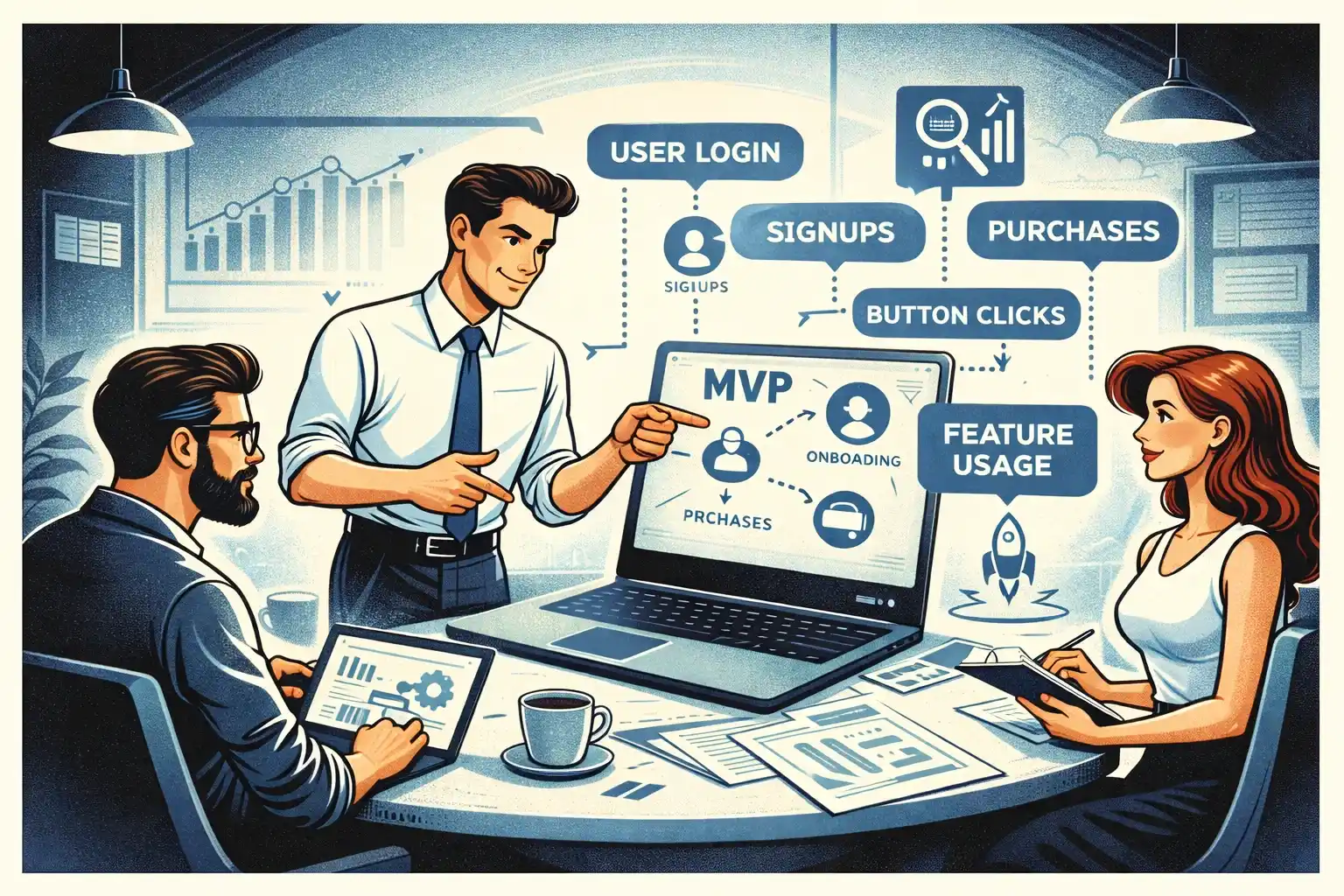
5) Analytics (so your MVP can teach you)
If you can’t measure behavior, every opinion will sound equally true.
A minimal analytics budget should cover:
- activation event tracking
- funnels (where users drop)
- cohorts (who comes back)
- a simple dashboard you actually look at weekly
A straightforward way to set this up is in Your First Product Metrics Dashboard: What Early-Stage Investors Want to See.
6) Distribution (don’t pretend “launch” is free)
A lot of MVPs fail because they never reach enough users to learn.
Distribution spending can be small, but it must exist:
- landing page and positioning
- outreach time (B2B) or store readiness (B2C)
- a feedback loop (email, calls, in-app support)
If you’re still pre-build, map quick experiments first using Validate a Startup Idea Before Development: 5 Experiments That Work.
A simple “rule-of-thumb” allocation (use as a starting point)
This is not a fact and not a promise — it’s a practical baseline many early teams use to avoid the common traps.
- 60–70% core build + QA (shipping something stable enough to trust)
- 15–25% UX + onboarding (making the loop easy to complete)
- 10–20% analytics + distribution (learning + reaching users)
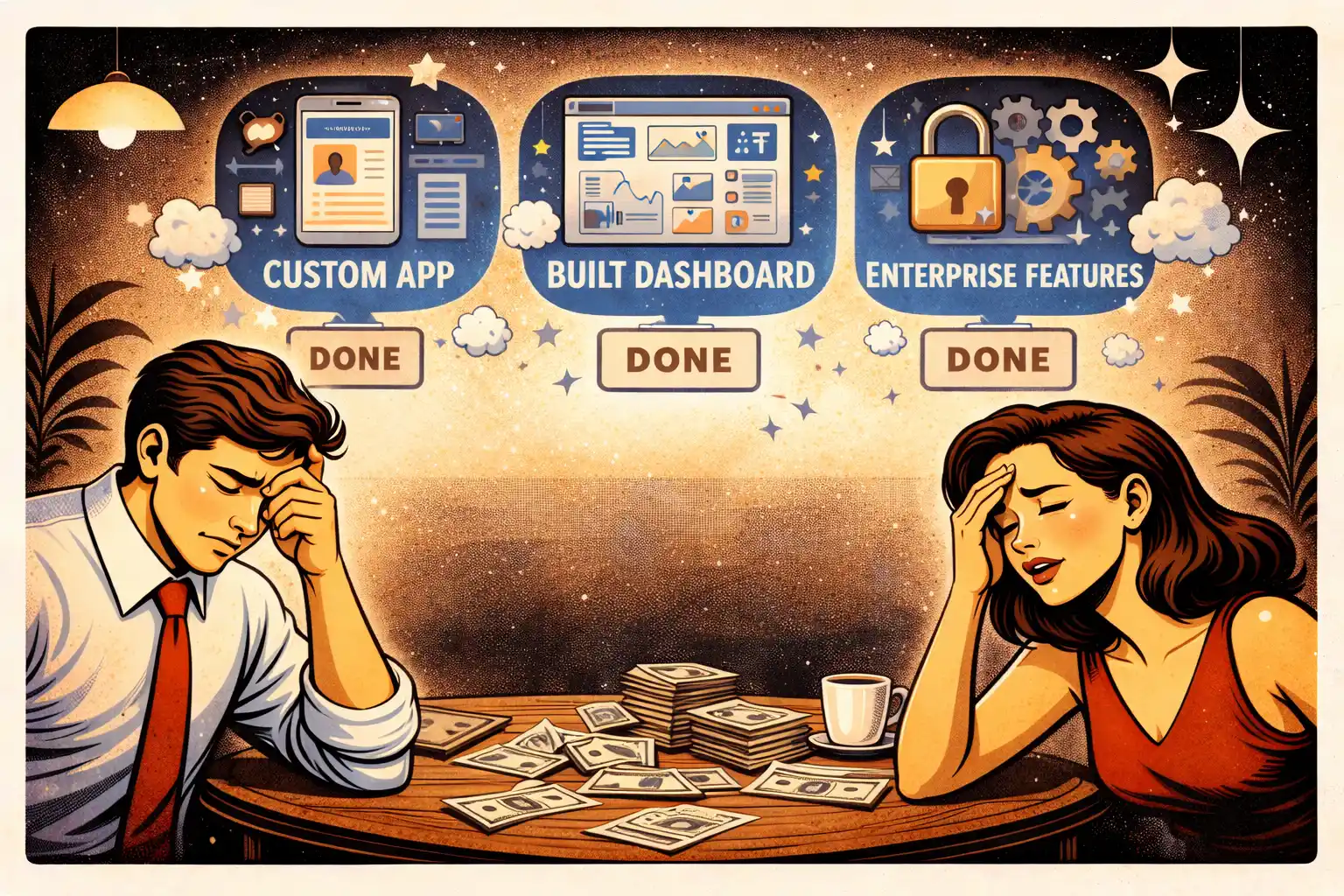
If you’re currently spending 90% on features and 0% on measurement or distribution, you’re likely buying “a product” without buying “traction.”
What you can postpone (and save real money)
These are common budget drains that can wait until you have signals.
Advanced roles, permissions, and admin dashboards
Unless your product is literally admin-first, delay it.
Fancy brand work
You need clarity and trust, not a premium rebrand.
Multiple integrations
Integrations are expensive, fragile, and easy to justify emotionally. Add them after you see repeated usage.
Perfect scalability planning
Build solid foundations, yes. But don’t budget for scale you haven’t earned.
A good way to avoid “surprise” spending here is to review Hidden App Development Costs in 2026.
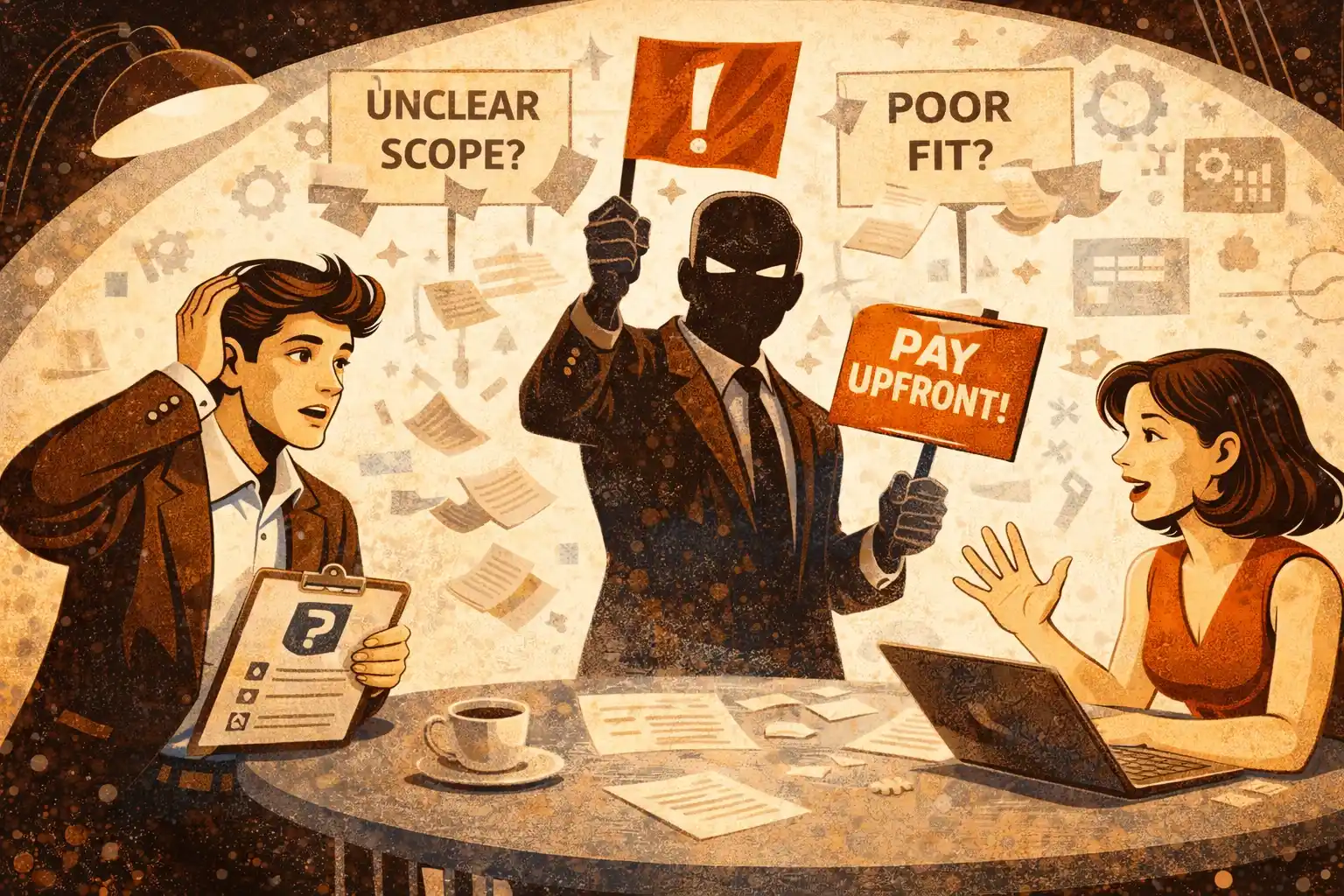
The budget red flags (when you’re about to waste runway)
If you see these patterns, pause.
- You can’t describe the core loop in one sentence.
- You keep adding features to “make it worth paying for.”
- You’re building a second user role before the first role retains.
- You don’t know what you’ll measure after launch.
- You’re relying on “we’ll market later.”
If your budget is tight, cheap work that forces a rebuild is the most expensive outcome. Why Cheap MVPs Fail in 2026 is worth reading before you sign a contract.
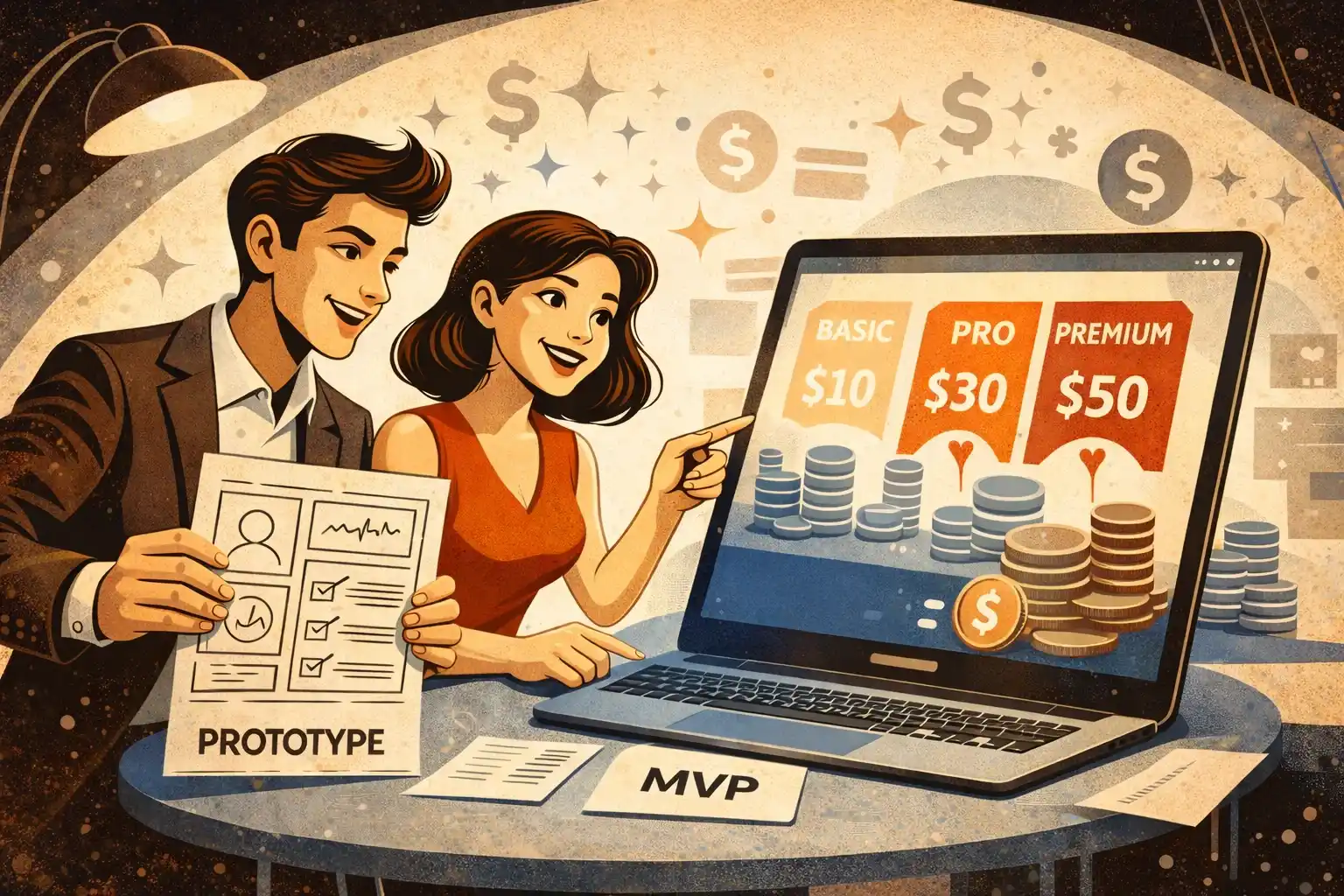
The one budget move that helps you get paying users faster
If your goal is revenue, don’t just “finish the product.”Fund the path to payment:
- a clear offer
- an obvious moment of value
- a way to talk to serious users
If you want a clean approach to early monetization without overcomplicating pricing, start with MVP Pricing in 2026: Getting First Paying Users.
Thinking about building a startup MVP in 2026?
At Valtorian, we help founders design and launch modern web and mobile apps — including AI-powered workflows — with a focus on real user behavior, not demo-only prototypes.
Book a call with Diana
Let’s talk about your idea, scope, and fastest path to a usable MVP.
FAQ
What’s the minimum MVP budget in 2026?
There isn’t one universal number. A “minimum” budget depends on scope, platform (web vs mobile), and how much you can do manually. What matters most is funding a working loop + QA + measurement.
Should I spend more on design or development?
Spend on whatever reduces risk first. Early design should reduce friction and clarify the loop, not add polish. Development should focus on end-to-end value, not feature breadth.
What should I never cut from an MVP budget?
QA on the critical path and basic analytics. If users can’t trust the product or you can’t learn from it, you’ll waste the rest of the spend.
Do I need to budget for marketing before the MVP is live?
Yes — at least for distribution prep: positioning, a landing page, outreach plan, and a feedback loop. Otherwise you’ll launch into silence.
How do I avoid blowing the budget with “just one more feature”?
Lock the MVP loop, define out-of-scope items, and set a 7–30 day learning plan. If a feature doesn’t improve activation, retention, or payment tests, postpone it.
When should I add integrations and scalability work?
After you see repeat usage and clear demand. Before that, integrations often increase cost without increasing learning.










































.webp)




.webp)