.webp)
Outsource Development for Startups: Pros, Cons, and Red Flags
Outsourcing development can help startups launch faster, reduce hiring risks, and access senior talent without building a full in-house team. But it can also introduce communication challenges, quality issues, and misaligned expectations if not approached carefully. This guide breaks down the real benefits, potential pitfalls, and warning signs founders must watch for when choosing an outsourced development partner. By the end, you’ll know how to outsource safely — and whether it’s the right move for your MVP.

TL;DR: Outsourcing is often the best option for early-stage founders who want speed, predictable cost, and senior talent without hiring internally. But choosing the wrong team can cost months and tens of thousands in rework. Look for clear processes, direct communication with senior members, and avoidance of overpromising.
Why outsourcing is so common among startups
Startup founders — especially non-technical ones — outsource because they need:
- speed
- clarity
- predictable cost
- flexibility
- senior expertise
- low commitment
Building an in-house team is slow and expensive. Freelancers are cheap but unreliable.
Outsourcing offers the middle ground — if you choose correctly.
If you’re still defining what your MVP should include, begin with “App Development for Non-Technical Founders: A Step-by-Step Guide” — it gives you a clear foundation before speaking with agencies.
Pros of Outsourcing Development for Startups
1. Faster time-to-market
An experienced outsourced team already has:
- workflows
- communication structure
- design standards
- engineering practices
This allows you to launch in 4–8 weeks instead of 4–8 months.
2. Access to senior talent at a fraction of the cost
Instead of hiring:
- a designer
- 1–2 developers
- QA
- PM
…you get a full team for the cost of one full-time engineer.
3. No long-term hiring commitment
After MVP, you can:
- pause
- pivot
- switch teams
- hire internally
This flexibility is ideal for pre-traction startups.
4. Predictable pricing
Boutique teams usually offer fixed-scope pricing — something in-house teams cannot match.
If you want to understand what affects cost, refer to “MVP Development Cost in 2025: How Much Does It Really Cost?” — it breaks down the true cost drivers.
5. Better structure than freelancers
Freelancers execute tasks.
Outsourced teams execute products.
They bring:
- product thinking
- UX consistency
- QA
- communication rhythm
This reduces founder oversight.
Cons of Outsourcing Development
No model is perfect. Outsourcing has its risks.
1. Miscommunication
If the agency lacks a structured process, this leads to:
- unclear expectations
- missed details
- scope creep
- slow iterations
This is why structured MVP studios outperform generic outsourcing firms.
2. Potential misalignment
Some agencies want to maximize billable hours — not maximize startup outcomes.
If you want to know what a transparent MVP process looks like, see “MVP Development Services for Startups: What’s Actually Included” — it helps distinguish real partners from “dev factories.”
3. Quality varies dramatically
There is a huge difference between:
- senior boutique studios
- large outsourcing companies
- cheap offshore teams
Price alone doesn’t indicate competency.
4. Dependence on the external team
Your startup becomes reliant on their availability — so you must choose a long-term-stable partner.
Red Flags When Outsourcing Development
These are the warning signs founders must never ignore.
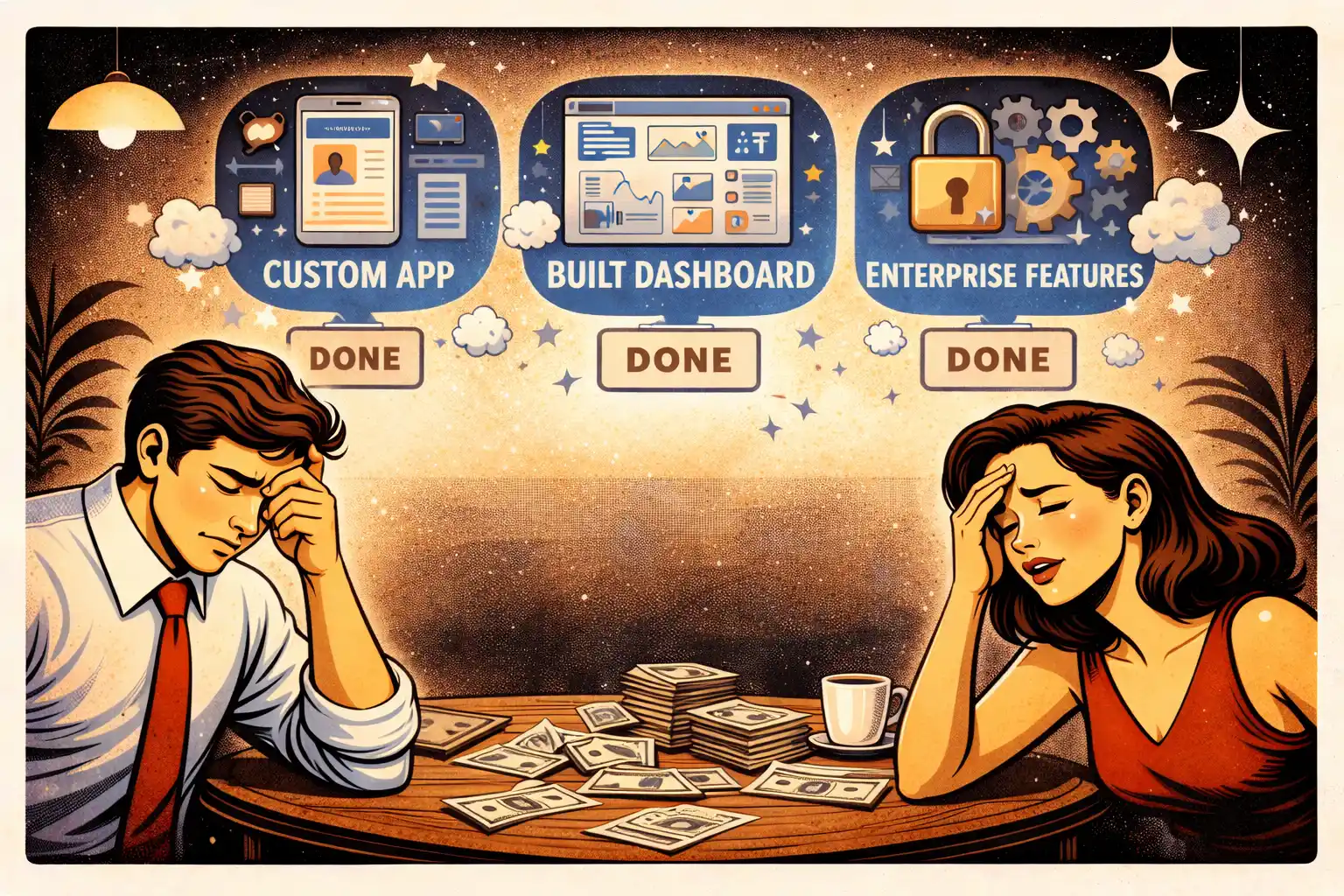
Red Flag 1 — They say “yes” to everything
A good team challenges your assumptions.
A weak team agrees instantly, creating bloated, unrealistic MVPs.
Related reading: “MVP Development for Non-Technical Founders: 7 Costly Mistakes” — mistake #3 explains overbuilding.
Red Flag 2 — You never speak with the actual senior team
If you only meet sales reps, not the people doing the work — run.
You should meet:
- the developer
- the designer
- the PM
- ideally the founders
Red Flag 3 — No clear process
If they can’t explain:
- discovery
- UX
- UI
- development
- QA
- launch
…in simple terms, they don’t have a real process.
Red Flag 4 — Vague pricing
If the estimate is unclear or “it depends,” you will overpay.
A strong team explains:
- what’s included
- what's excluded
- what changes cost
- timelines for each phase
Red Flag 5 — Too many active projects
If the team is juggling 15+ projects simultaneously, your MVP will get no attention.
Red Flag 6 — Overly complex tech stack recommendations
If your simple MVP “needs microservices” or a “multi-layered architecture,”
that's not expertise — that’s upselling.
If you’re comparing technical stacks, “React Native vs Flutter for Startup App Development in 2025” offers a simple explanation of how to choose.
Red Flag 7 — No QA
Teams that skip QA deliver unstable apps.
QA is not optional — even for MVPs.
When outsourcing is the best choice
Choose outsourcing if:
- you want to launch in under 2 months
- you don’t want to manage developers
- you don’t have a CTO
- you want senior execution without full-time hires
- your startup is pre-traction
- budget and speed matter
Outsourcing = the most common and healthiest path for early-stage founders.
When outsourcing is the wrong choice
Avoid outsourcing if:
- you already validated and now need long-term iteration
- you raised enough to hire internally
- your product requires deep real-time optimization at scale
- your product requires highly specialized in-house expertise
In these cases, an internal team makes more sense.
How to outsource safely
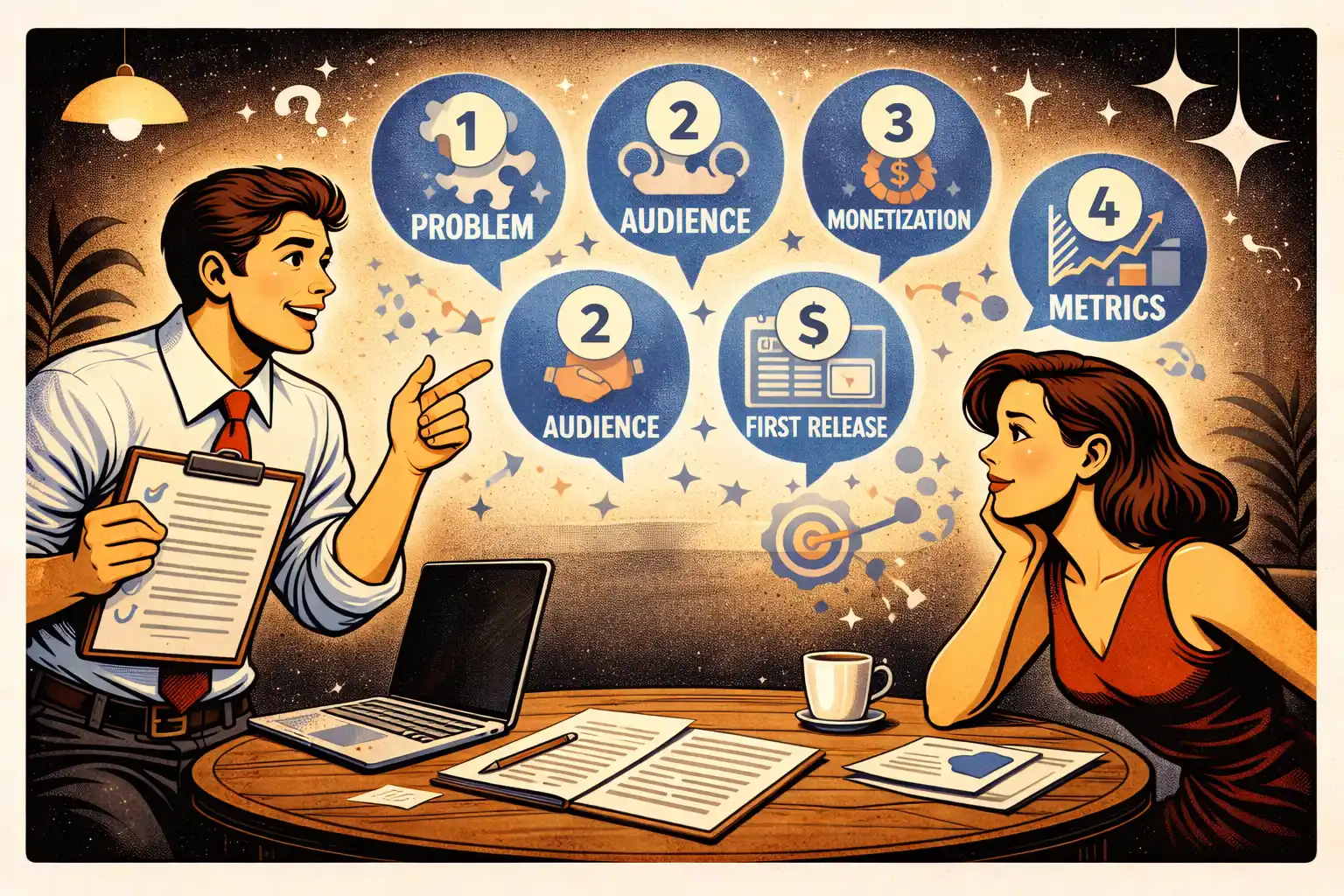
Define your scope clearly
If unclear, revisit “App Development for Non-Technical Founders: A Step-by-Step Guide”.
Choose small senior teams
Avoid giant outsourcing companies.
Demand transparency
The team should show real work weekly.
Keep communication structured
Weekly demos - written updates - small iterations.
Validate continuously
Don’t wait until launch to test your app.
Want to outsource your MVP safely — without overpaying or wasting months?
At Valtorian, you work directly with the founders — a designer and a developer who’ve built 70+ MVPs for early-stage founders. We help you define scope, avoid red flags, and launch a stable MVP in 4–6 weeks with zero chaos.
Book a call with Diana
We’ll map out your MVP, outline the safest outsourcing model, and provide a clear timeline.
FAQ — Outsourcing Development for Startups
Is outsourcing good for MVP development?
Yes. It’s ideal for early-stage founders who need speed, clarity, and predictable pricing.
What’s the biggest outsourcing red flag?
Teams that say “yes” to everything or can’t explain their process.
Should I outsource if I don’t have a CTO?
Yes — a senior boutique team can act as your temporary technical partner.
How do I avoid overpaying?
Define scope early and choose a team that works with fixed or semi-fixed pricing.
What’s better: freelancers or outsourcing?
For multi-role MVPs, freelancers are risky. Outsourced teams offer structure and accountability.
When should I stop outsourcing?
Once you have traction, a clear roadmap, and enough budget to build an internal team.
Does outsourcing work for fintech/healthcare?
Yes — but only with teams experienced in compliance and regulated architecture.




























































.webp)




.webp)