.webp)
Fintech MVP Integrations in 2026: Safer Patterns
Fintech MVPs often break not because the UI is wrong, but because integrations are treated like “just APIs.” In 2026, founders can connect payments, KYC, and bank data quickly — but small mistakes in secrets, webhooks, and access rules can create real security and compliance pain. This guide explains safer integration patterns for early-stage fintech: how to structure flows, reduce blast radius, and ship a working MVP without overbuilding a banking-grade system. You’ll learn what to decide early, what to postpone, and where most MVP teams get burned.
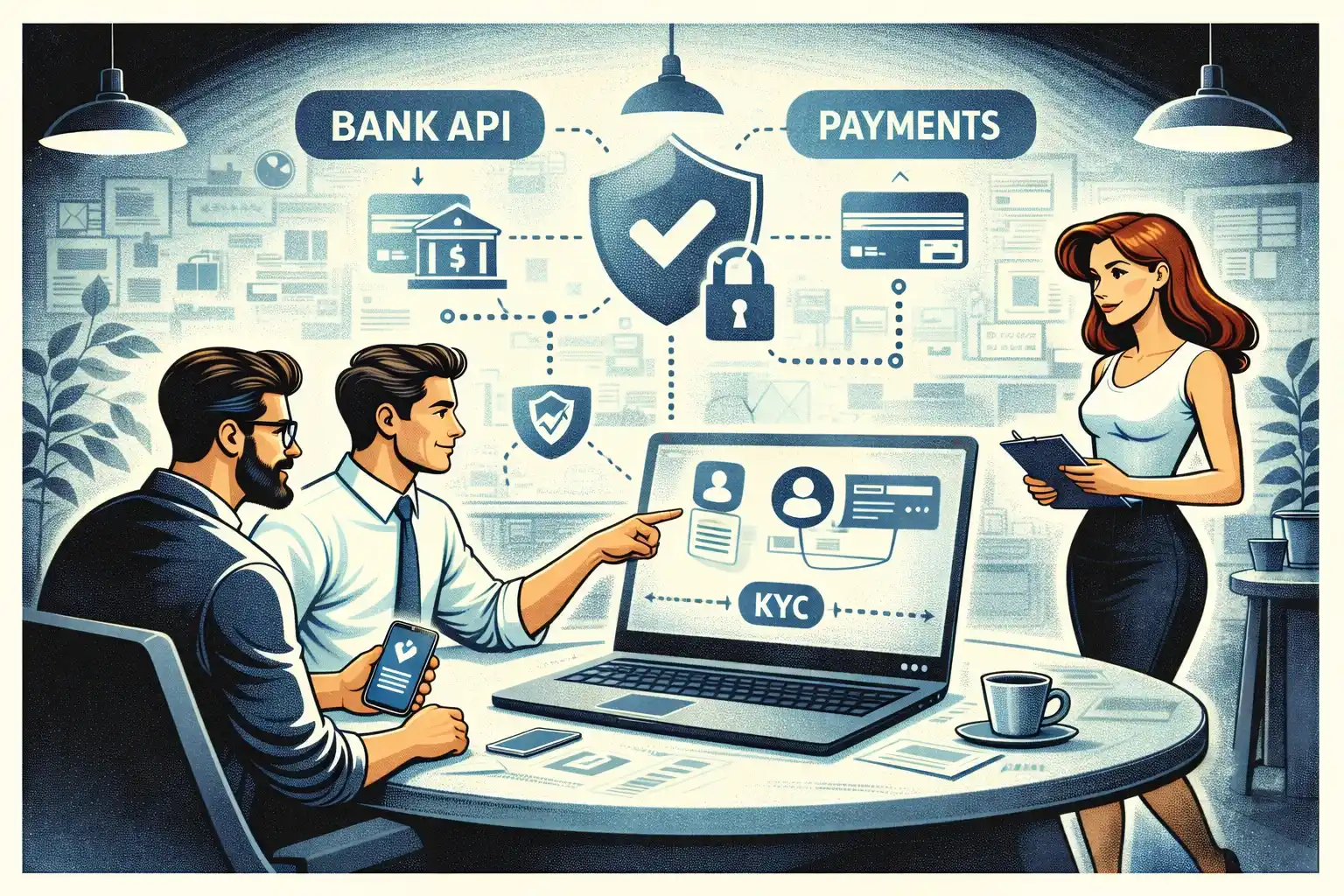
TL;DR: Build fintech integrations around isolation and verification: keep secrets server-side, make webhooks idempotent, store minimal sensitive data, and design clear state machines for “pending/verified/failed.” Start with one integration per category (payments, KYC, bank data) and only expand after you see real usage. In fintech, a safe MVP is usually a simpler MVP — not a more complex one.
Why fintech integrations feel easy in 2026 (and why that’s dangerous)
Tooling is better. Providers ship great SDKs. AI helps scaffold boilerplate.
So teams assume: “We can plug it in fast.”
You often can — but the risk is that you plug it in incorrectly, then spend weeks patching:
- access control leaks
- mismatched states (paid vs not paid)
- webhook double-processing
- users stuck in verification limbo
- fraud vectors you accidentally created
If you want a founder-level reminder of what actually kills MVPs even when building is fast, read Why MVPs Still Fail in 2026.
The fintech MVP integration rule: reduce blast radius
For MVP stage, your job is not to build the perfect system.
Your job is to ensure one failure doesn’t compromise everything.
That means:
- isolate providers (don’t mix logic across integrations)
- keep secrets out of the client
- treat every external callback as untrusted
- store only what you must
Pattern 1: “Thin client, trusted server” for anything sensitive
If your fintech MVP uses any of these, treat it as server-side:
- secret API keys
- payment confirmation
- KYC decisioning callbacks
- bank account linking tokens
Client-side should do only:
- collect user intent
- show status
- submit non-sensitive inputs
Server-side should do:
- create sessions/tokens
- verify events
- update authoritative status
If your team is building a thick client that talks directly to sensitive provider endpoints, pause.
Pattern 2: State machines over “boolean flags”
Fintech integrations create states. Use explicit states.
Examples:
- kyc_status: not_started - pending - verified - failed - manual_review
- payment_status: initiated - requires_action - paid - refunded - disputed
- bank_link_status: started - linked - expired - revoked
This is safer than a single “is_verified = true/false.”
Why it matters:
- it prevents impossible combinations
- it makes support and debugging faster
- it reduces silent edge-case bugs
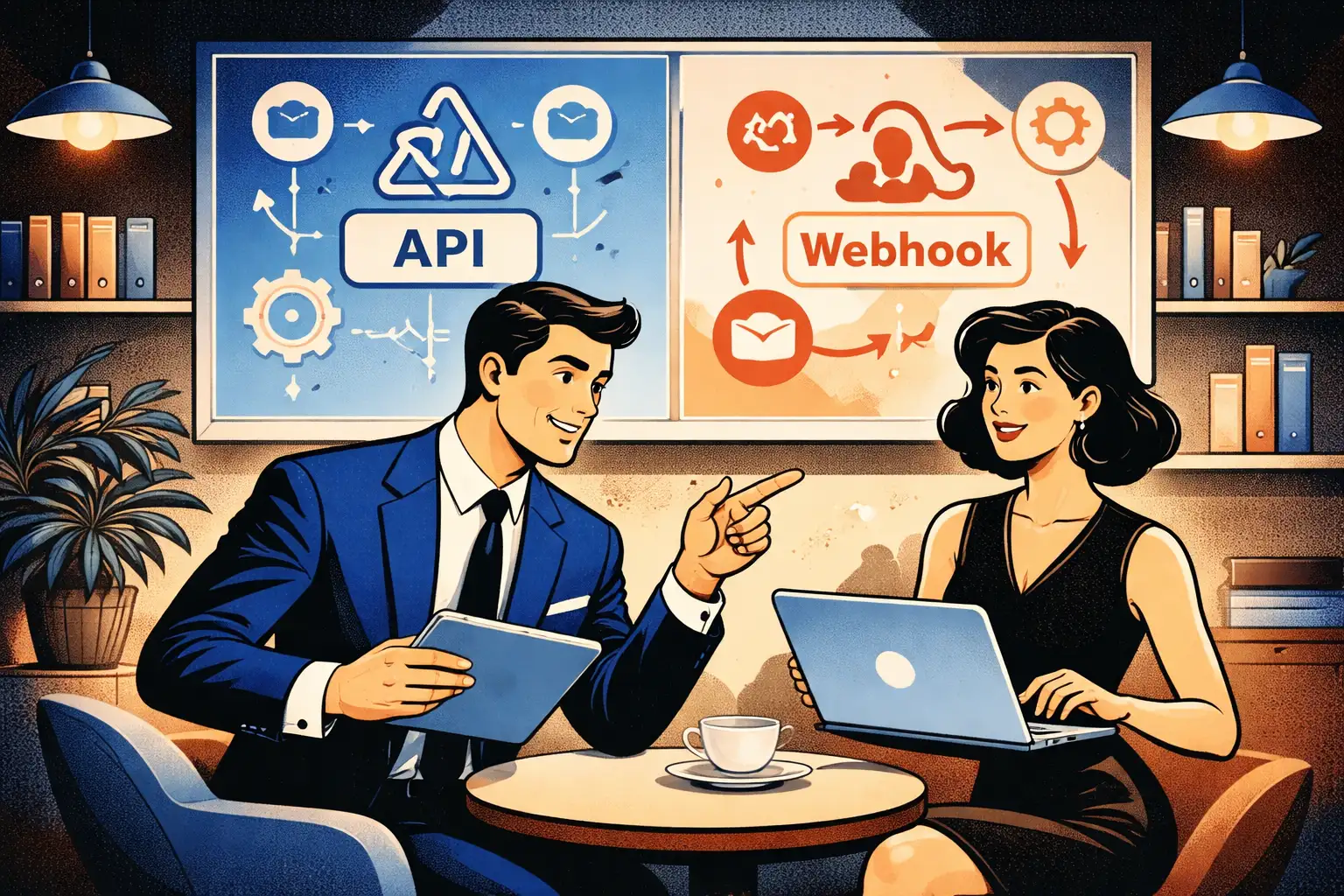
Pattern 3: Webhooks as the source of truth (and make them idempotent)
In fintech, the UI is never the source of truth.
Webhooks and provider events are.
Safer MVP baseline:
- verify webhook signatures
- store raw event IDs
- process each event once (idempotency)
- log processing outcomes
Common MVP failure:
- “Payment succeeded” shown in UI, but webhook didn’t update access
- webhook retries create duplicate records
- a refund/dispute happens and your product never reacts
If you’re using Stripe, the key decisions and the safest MVP baseline are covered here: Payments for MVPs in 2026: Stripe Decisions That Matter.
Pattern 4: Tokenization and data minimization
Your MVP usually doesn’t need to store sensitive raw data.
Prefer:
- provider customer IDs over card data
- last4 + brand over full PAN (never store full card data)
- verification result + reference ID over document images
- bank connection IDs over raw banking credentials
MVP principle: if the provider already stores it safely, don’t duplicate it.
Pattern 5: Separate “decision services” from “data services”
Fintech MVPs often have two kinds of integrations:
- Decision services (KYC/AML, fraud signals) that produce outcomes
- Data services (bank data, transactions) that provide information
Safer approach:
- treat decision outcomes as inputs to your state machine
- store only the minimum data needed to support your product promise
- avoid building a massive “data lake” early
Pattern 6: Progressive verification (don’t block the whole MVP)
A lot of fintech MVPs fail because verification becomes a hard wall.
Better pattern:
- allow limited functionality before verification
- unlock higher-risk actions only after verification
- communicate clearly what changes and why
Example:
- browsing and saving is open
- payouts/withdrawals require verified status
- higher limits require extra checks
This preserves conversion while keeping risk controlled.
Pattern 7: Manual review as a product feature (yes, in MVP)
You don’t need full automation early.
You do need:
- a place to see “pending/manual review” cases
- clear actions: approve, reject, request info
- an audit trail of who changed what
In early fintech, manual review is often the safest bridge between “nothing” and “automation.”
Pattern 8: Integration sandbox ≠ real-world behavior
Sandboxes are useful, but they lie by omission.
Plan for:
- webhook delivery delays
- provider downtime
- user abandonment mid-flow
- retries and duplicate events
- verification that takes hours (or fails for non-obvious reasons)
Your MVP must handle “user stuck” gracefully:
- status screens
- retry links
- support contact
Pattern 9: Vendor contracts and compliance boundaries (founder decisions)
Even if you’re not doing “enterprise compliance,” you must decide:
- what jurisdictions you support at MVP stage
- what categories of users you accept or reject
- what data you store and for how long
- who can access sensitive records (support, admins)
If you’re building in regulated territory, don’t treat this as a future policy.
For a broader fintech overview (MVP + compliance basics), read Fintech App Development for Startups: MVP and Compliance Basics.
A practical MVP integration stack (keep it small)
A safe “early fintech” stack often looks like:
- Payments: one provider (e.g., Stripe) with Checkout + webhooks
- KYC: one provider with a clear state machine + manual review path
- Bank data (if needed): one aggregator, limited scopes
- Backend: strict access rules, secrets server-side, logs
As a founder, your job is to protect scope. One of each category is usually enough to validate.
If you’re choosing backend and permission patterns, this helps you avoid messy access rules early: Supabase MVP Architecture in 2026: Practical Patterns.
The biggest integration mistakes we see (and how to avoid them)
Mistake 1: Integrations drive the product instead of the user workflow
Fix: start from the workflow, then add the minimum integration to support it.
Mistake 2: “We’ll add webhooks later”
Fix: no webhooks = no real integration.
Mistake 3: Too many providers too early
Fix: add a second provider only when you have a clear reason (coverage, pricing, reliability).
Mistake 4: Overbuilding security theatre
Fix: build real access controls, logs, and state handling — not just a “security page.”
If you’re outsourcing fintech development, process quality matters as much as code. See Outsource Development for Startups: Pros, Cons, and Red Flags.
Thinking about building a fintech MVP in 2026?
At Valtorian, we help founders design and launch modern web and mobile apps — including AI-powered workflows — with a focus on real user behavior, not demo-only prototypes.
Book a call with Diana
Let’s talk about your idea, scope, and fastest path to a usable MVP.
FAQ
What’s the safest way to start fintech integrations in an MVP?
Start with one provider per category (payments, KYC, bank data), keep secrets server-side, and drive all “truth” from verified webhooks or provider callbacks.
Do I need KYC in the MVP?
Only if your product allows higher-risk actions like payouts, withdrawals, or regulated flows. Many MVPs can start with progressive verification and limits.
Why are webhooks non-negotiable in fintech?
Because payments, refunds, disputes, and verification results can happen asynchronously. Without webhooks, your system will drift out of sync with the provider.
How do I avoid storing sensitive fintech data?
Use provider IDs, tokens, and references. Store outcomes and minimal metadata, not raw documents or credentials, unless you truly need them for the workflow.
What should my “manual review” MVP include?
A queue of pending cases, approve/reject actions, notes, and an audit trail. Manual review often prevents fraud and reduces early automation mistakes.
When should I add a second provider (payments or KYC)?
After you have real usage data and a clear reason: geographic coverage, approval rate issues, costs, or reliability concerns.
What’s the most common integration failure in MVPs?
Bad state handling: users stuck in pending, paid users not getting access, or webhooks processed twice. Explicit state machines and idempotent processing prevent most of this.














































.webp)




.webp)