.webp)
Startup Building Without a Tech Team in 2026
In 2026, building a startup without a technical team is no longer unusual - it’s common. Modern tools, remote collaboration, and experienced product partners make it possible for non-technical founders to launch real products without hiring in-house developers. But this path still comes with trade-offs. In this article, we break down how startups are built without a tech team, what approaches work best today, and how founders can avoid the most common mistakes.

TL;DR: You don’t need an in-house tech team to build a startup in 2026.You do need clear ownership, realistic scope, and the right external partners.
Why more startups launch without a tech team
Hiring developers early is expensive and slow.For many founders, it’s also the wrong priority.
In 2026, early-stage startups often focus on:
- validating demand
- reaching first users
- showing traction
Owning a large internal team before that creates burn without certainty.
If you’re starting without technical skills, I Have a Startup Idea but No Developer: What to Do Next is a good place to begin.
The real options for non-technical founders
Building without a tech team doesn’t mean avoiding development.It means choosing how you access it.
Option 1: Outsourcing to a product-focused partner
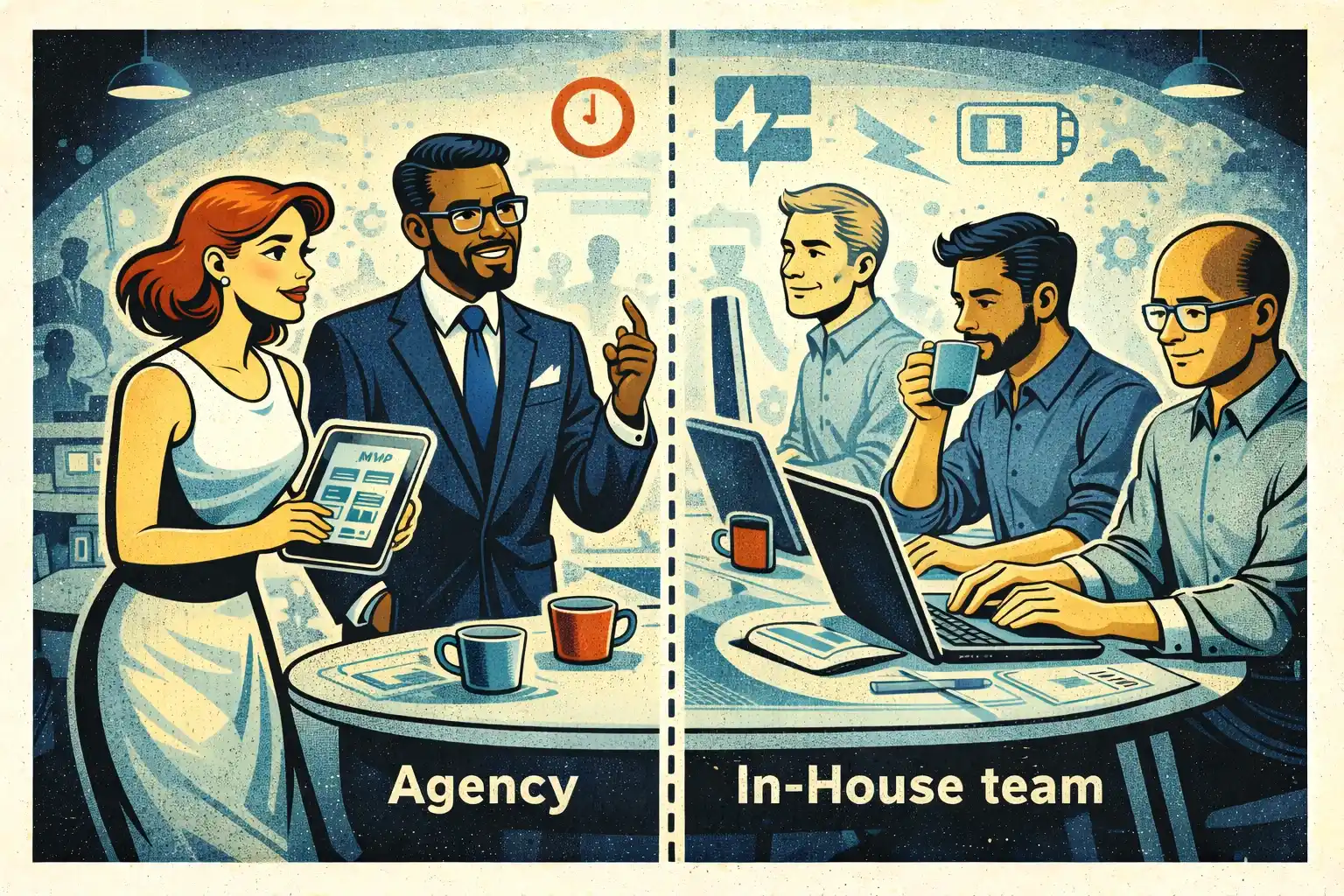
Many founders work with small studios that act as a temporary tech team.
This model works best when:
- scope is clearly defined
- speed matters
- founders stay involved in decisions
To compare models, read Startup App Development Company vs Freelancers vs In-House Team.
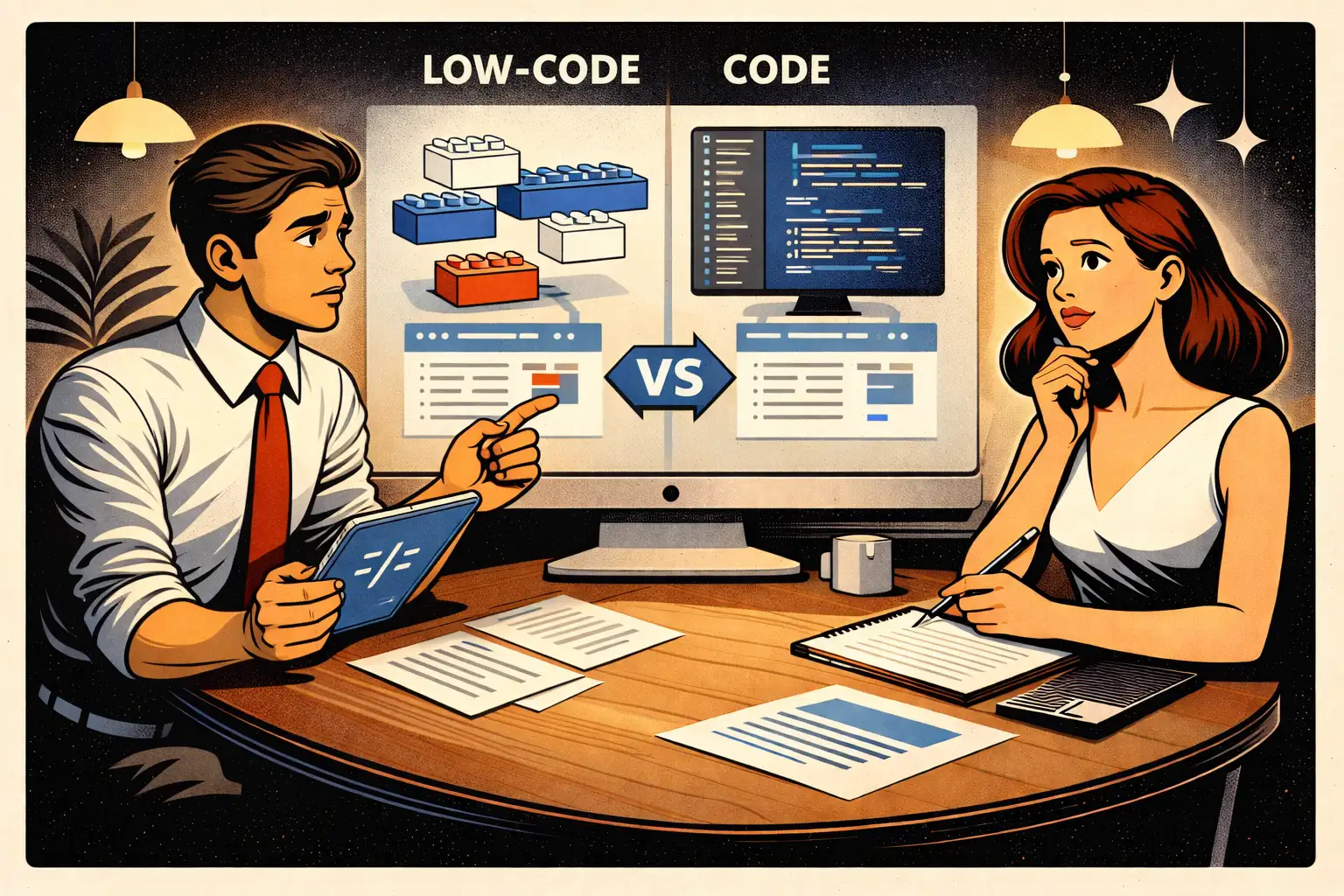
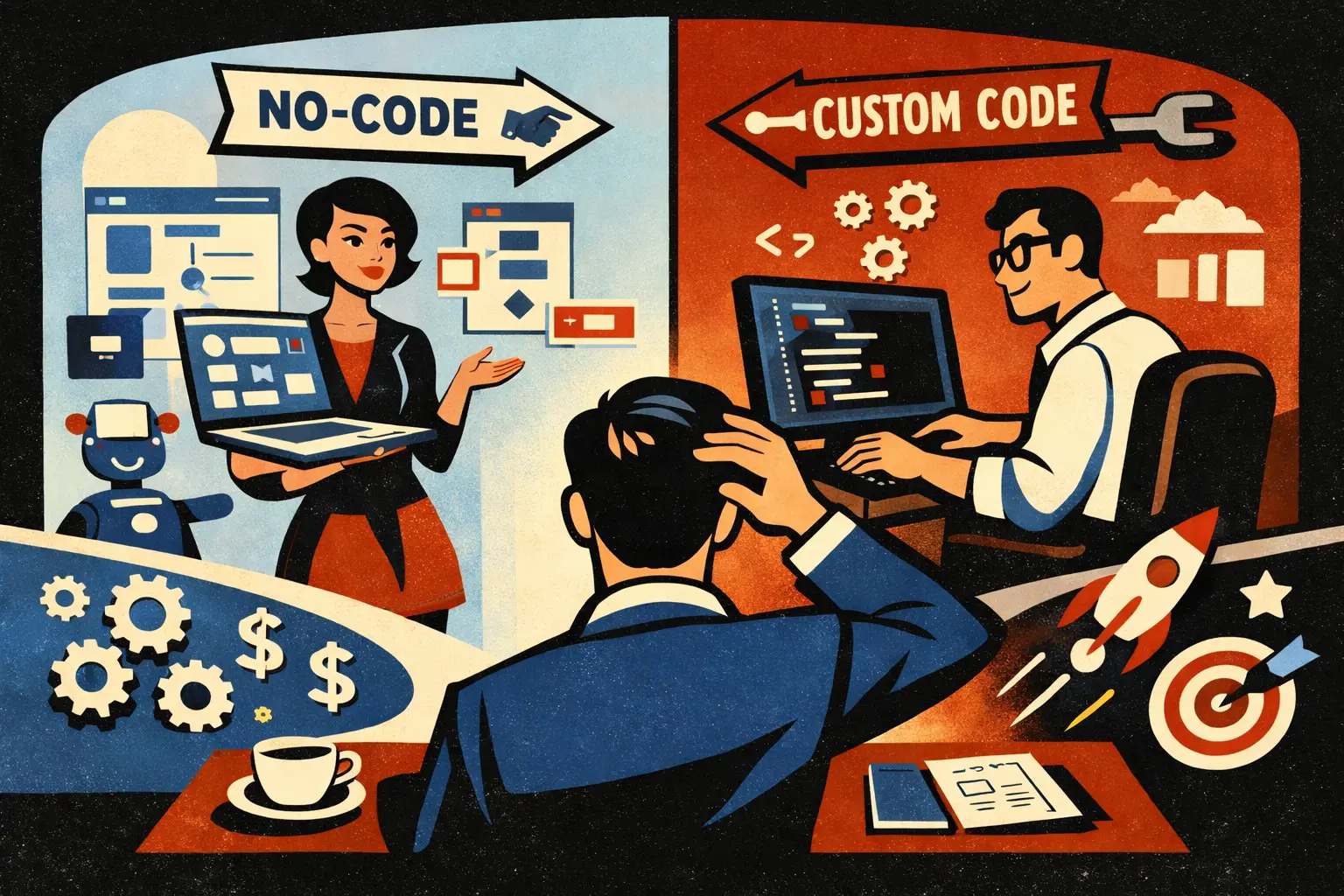
Option 2: Using no-code or low-code selectively
No-code can help validate flows or internal tools.
It struggles when:
- logic becomes complex
- scalability matters
- ownership and flexibility are required
Understanding its limits early prevents costly rewrites later.
For budget implications, see MVP Development Cost in 2025: How Much Does It Really Cost?.
Option 3: Hybrid approach (tools + external team)
Many startups combine:
- external development
- lightweight internal ownership
- AI-assisted workflows
This keeps costs manageable while preserving long-term control.
If you’re exploring this path, AI-Powered MVP Development: Save Time and Budget Without Cutting Quality offers useful context.
What founders must still own
Not having a tech team doesn’t remove responsibility.
Founders still need to own:
- product vision
- priorities
- user feedback loops
- go/no-go decisions
When this ownership is missing, projects drift—even with strong developers.
If you want to avoid early missteps, read MVP Development for Non-Technical Founders: Common Mistakes.
Common risks when building without a tech team
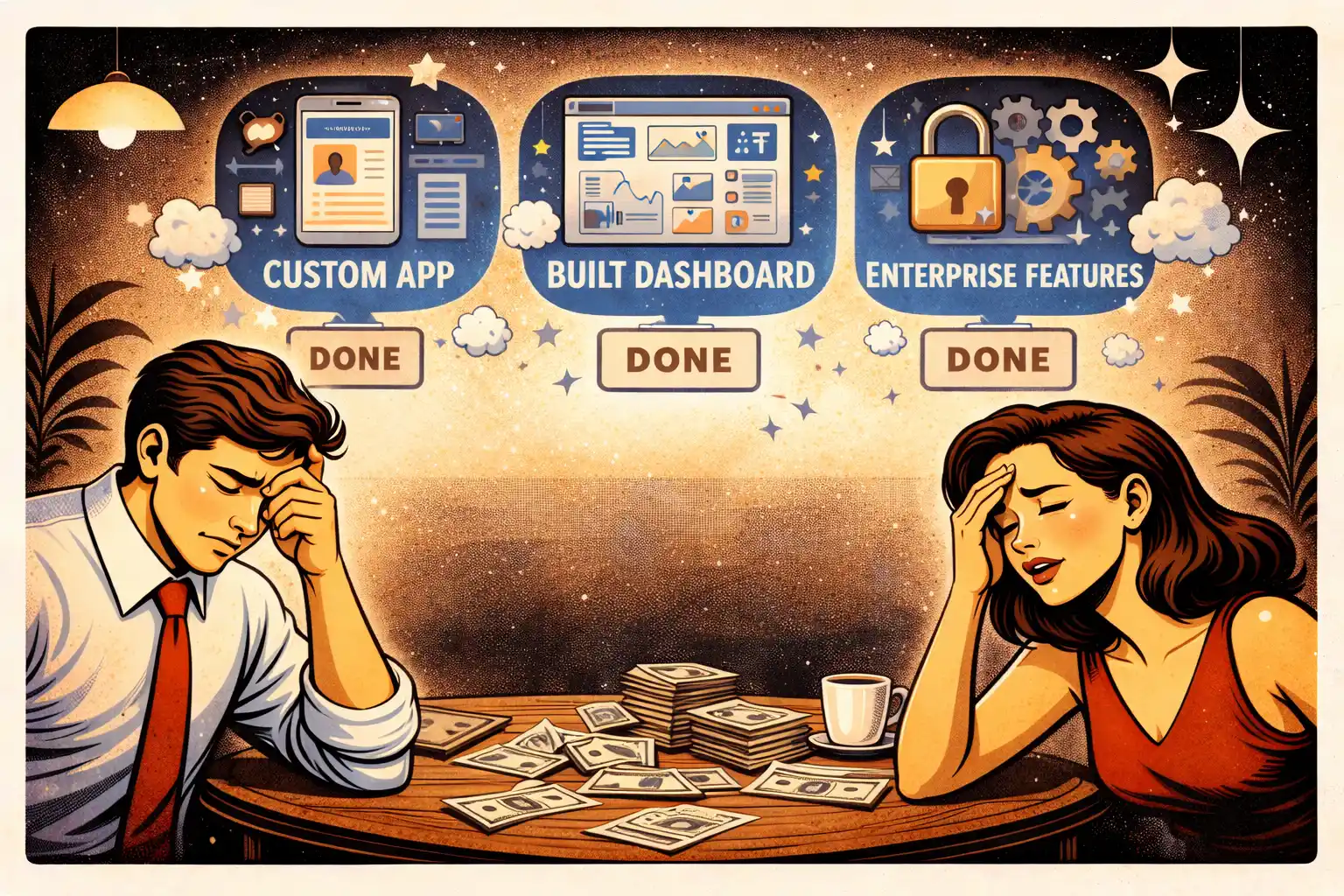
The most common failures come from:
- unclear decision-making
- overdelegation
- chasing features instead of learning
These issues are organizational, not technical.
To understand how these risks affect budgets, see Hidden App Development Costs in 2026.
When you actually need an in-house team
An internal tech team makes sense when:
- product direction is validated
- iteration speed becomes critical
- long-term differentiation depends on tech
Before that point, flexibility matters more than ownership.
For timing guidance, Pre-Seed MVP Development for Unfunded Startups on a Budget is helpful.
How successful founders approach this in 2026
They treat development as a partnership, not a black box.
That means:
- small, accountable teams
- short feedback loops
- transparent trade-offs
This mindset protects speed and reduces wasted spend.
Thinking about building your startup without a tech team?
At Valtorian, we work as a hands-on product partner for non-technical founders—helping you define scope, build the right MVP, and move toward real users without overhiring.
Book a call with Diana
Let’s talk about your idea, constraints, and the smartest path forward in 2026.
FAQ
Can I really build a startup without a tech team?
Yes. Many founders do - by partnering externally and staying closely involved in decisions.
Is outsourcing cheaper than hiring developers?
At early stages, yes. It avoids long-term commitments before validation.
Will investors accept a startup without an in-house tech team?
Early on, they care more about traction and clarity than org charts.
What’s the biggest risk of this approach?
Lack of ownership over product decisions - not the absence of developers.
When should I hire my first in-house developer?
After your MVP is live, validated, and iteration speed becomes a bottleneck.
How do I choose the right development partner?
Look for transparency, product thinking, and willingness to challenge assumptions.



























































.webp)




.webp)