.webp)
How Non-Technical Founders Can Hire App Developers for a Startup
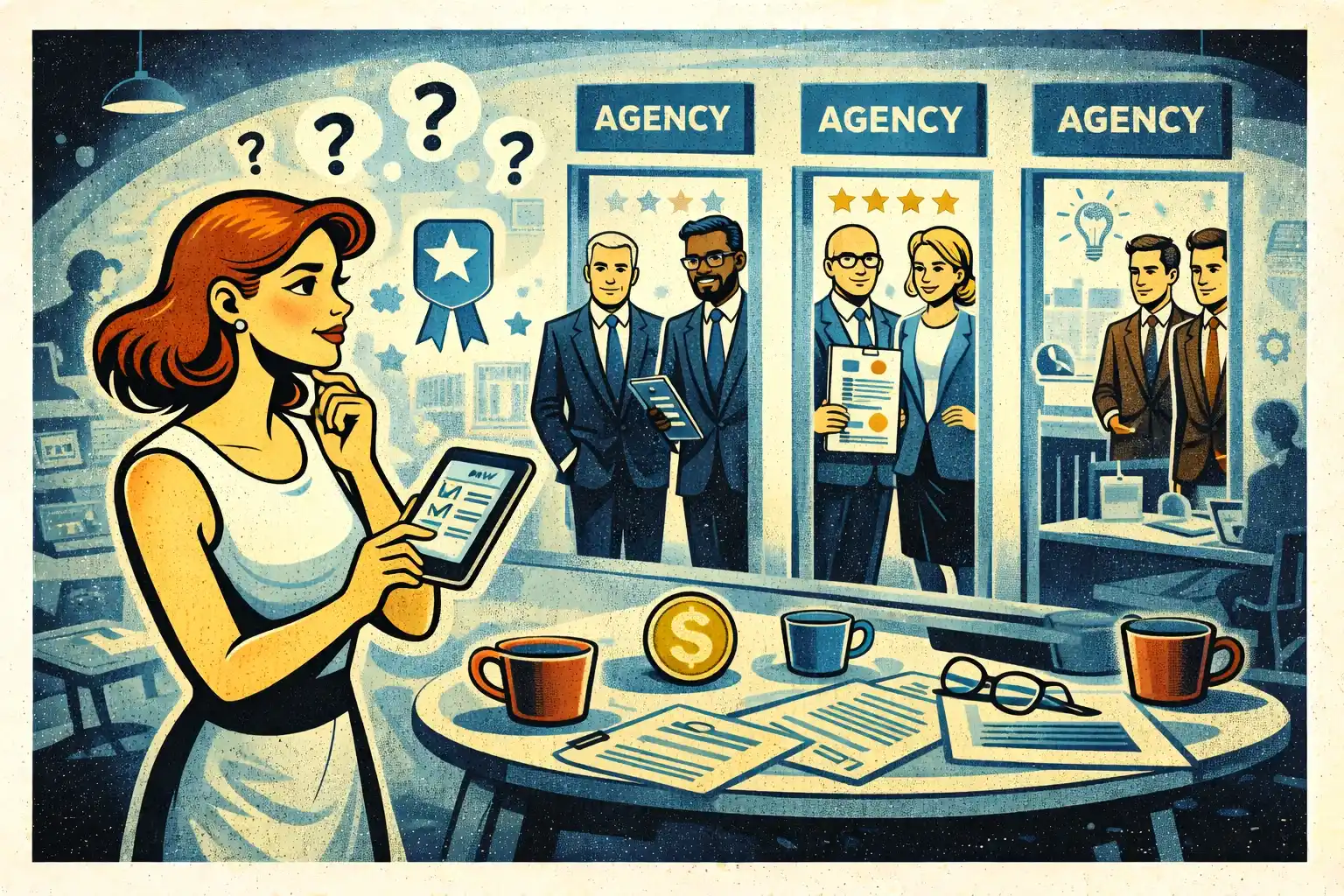
Hiring app developers is one of the most stressful steps for non-technical founders. Without technical background, it’s hard to evaluate skills, estimates, or architecture decisions — and one wrong hire can burn months of runway. This guide explains how non-technical founders can hire app developers for a startup, what hiring models exist, how to evaluate candidates without writing code, and how to avoid the most common and expensive mistakes.

TL;DR: Non-technical founders don’t need to become engineers to hire app developers — but they do need a clear process. The key is choosing the right hiring model, asking the right questions, and prioritizing product thinking over raw coding skills. Most early-stage startups fail not because of bad code, but because they hire the wrong type of team too early.
Why hiring developers feels so hard for non-technical founders
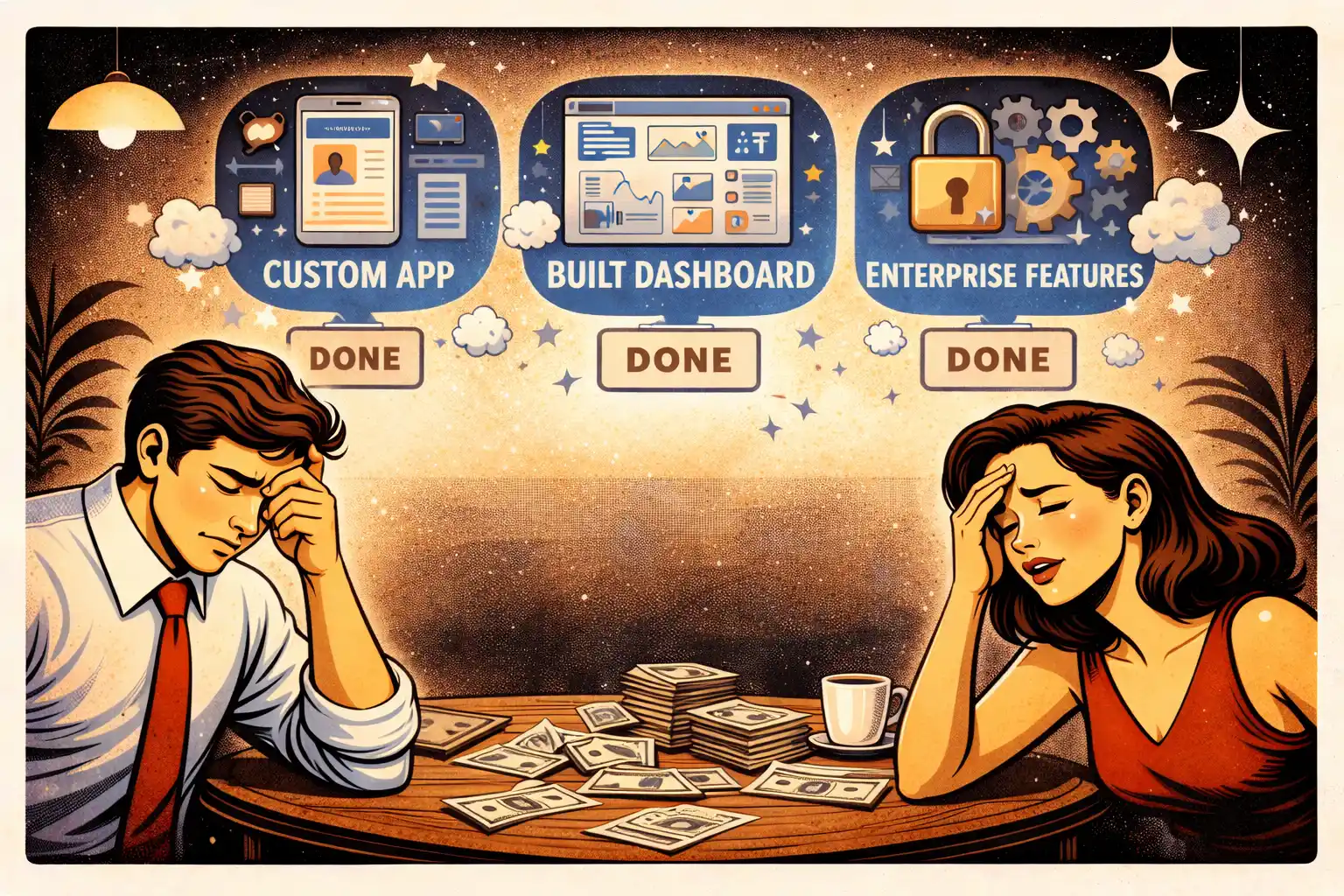
If you don’t code, every developer conversation can feel risky.
Common fears include:
- “How do I know they’re actually good?”
- “Is this estimate realistic or inflated?”
- “What if they build the wrong thing?”
These fears are valid. App development is expensive, and early mistakes compound quickly.
Before talking to anyone, make sure you understand what belongs in an MVP. “MVP Development Services for Startups: What’s Actually Included” helps frame what you’re actually hiring for.
Step 1: Decide how you want to hire developers
There is no single correct hiring model — only the right one for your stage.
Freelancers
Freelancers are individuals you hire for specific tasks or features.
They work best when:
- scope is very small and well-defined
- you can manage priorities and quality yourself
They become risky when:
- multiple roles are involved
- architecture decisions matter
In-house developers
Hiring full-time developers gives you long-term control.
However, for early-stage startups:
- hiring is slow
- costs are high
- technical leadership is required
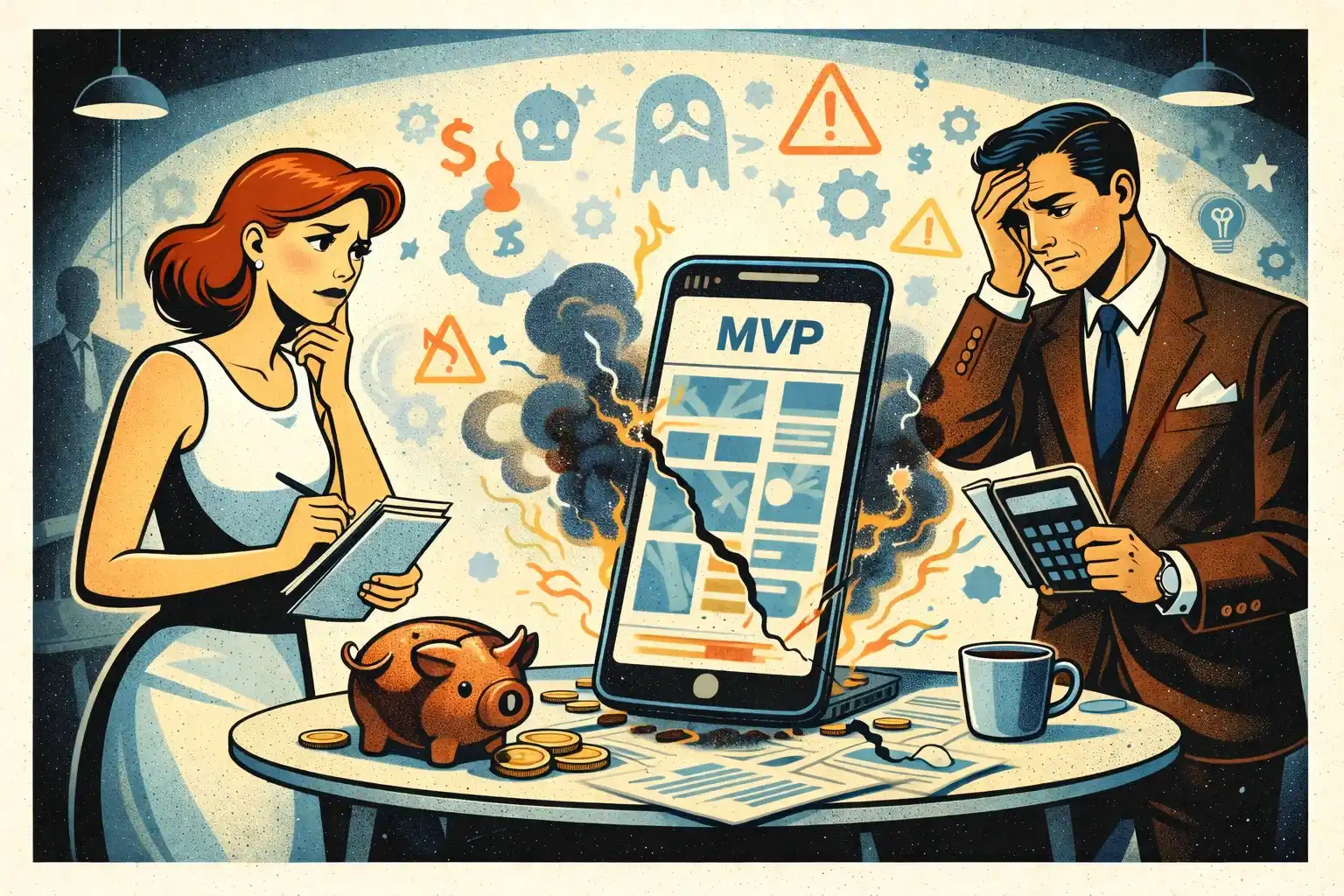
Many founders hire in-house too early and burn runway before validation.
App development company / studio
This model gives you:
- a ready-made team
- defined process
- shared responsibility for outcomes
For many non-technical founders, this is the safest MVP path.
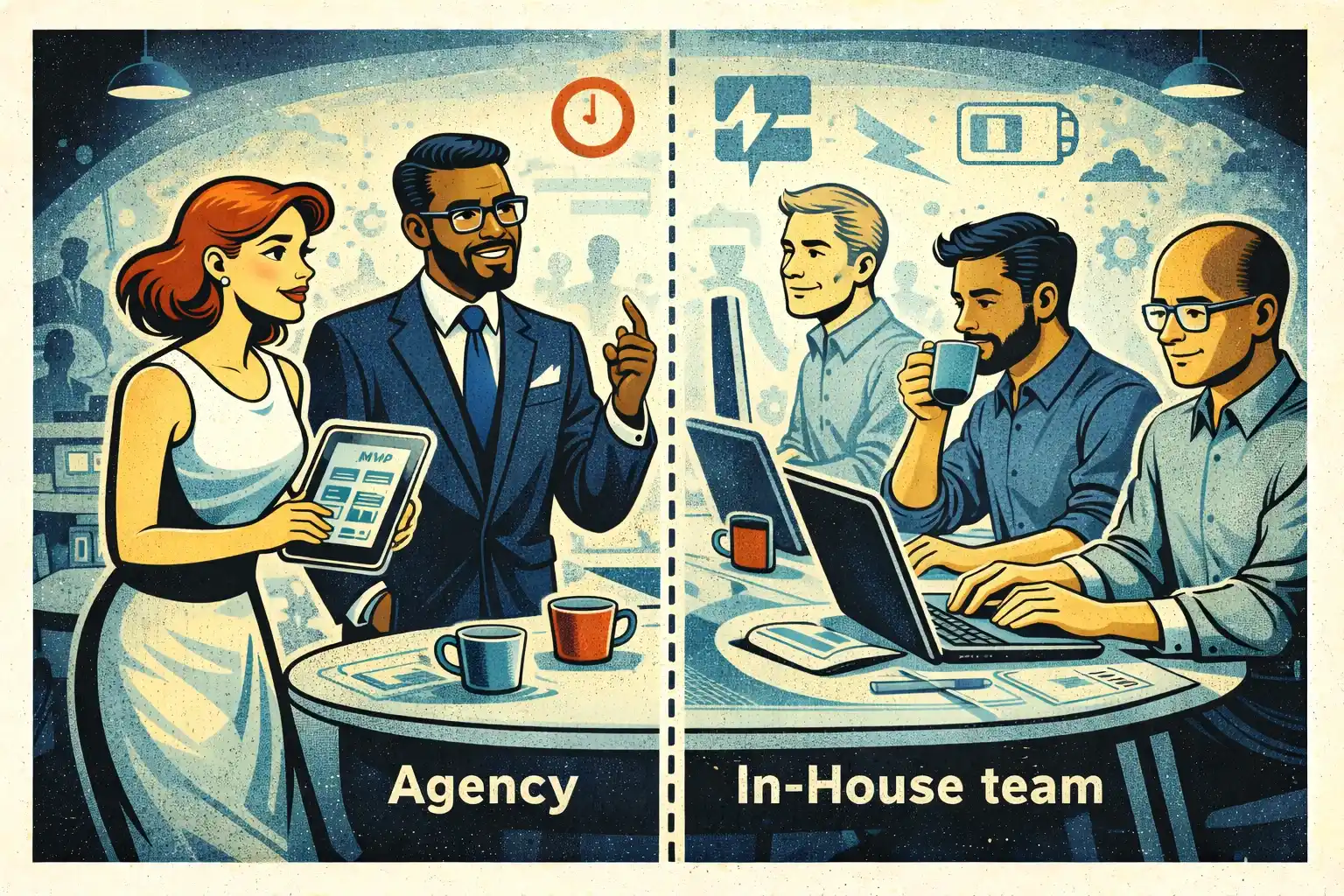
If you want a deeper comparison, “Startup App Development Company vs Freelancers vs In-House Team” breaks this down clearly.
Step 2: Evaluate developers without reading code
You don’t need to review GitHub commits.
Instead, focus on:
1. How they talk about your product
Good developers ask about:
- users
- edge cases
- trade-offs
Weak ones jump straight into tech stacks.
2. How they define scope
Strong teams push back and simplify.
If someone says “we can build everything,” that’s a red flag.
3. Past startup experience
Ask:
- What did you ship?
- What changed after launch?
- What failed — and why?
Startup experience matters more than years of coding.
Step 3: Ask the right questions in interviews
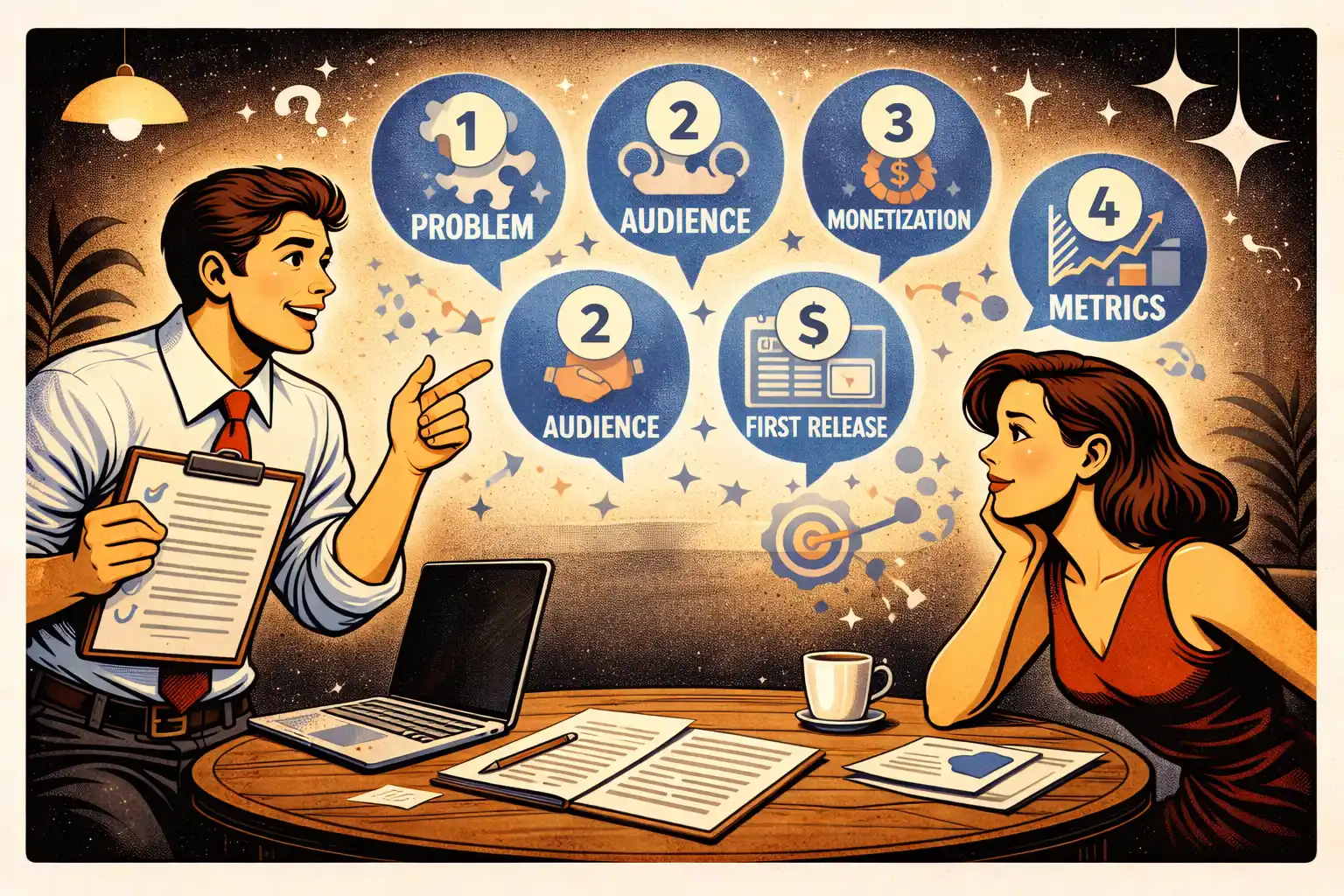
Instead of technical trivia, ask questions like:
- How do you decide what belongs in v1?
- What’s the riskiest part of this product?
- How do you handle scope changes?
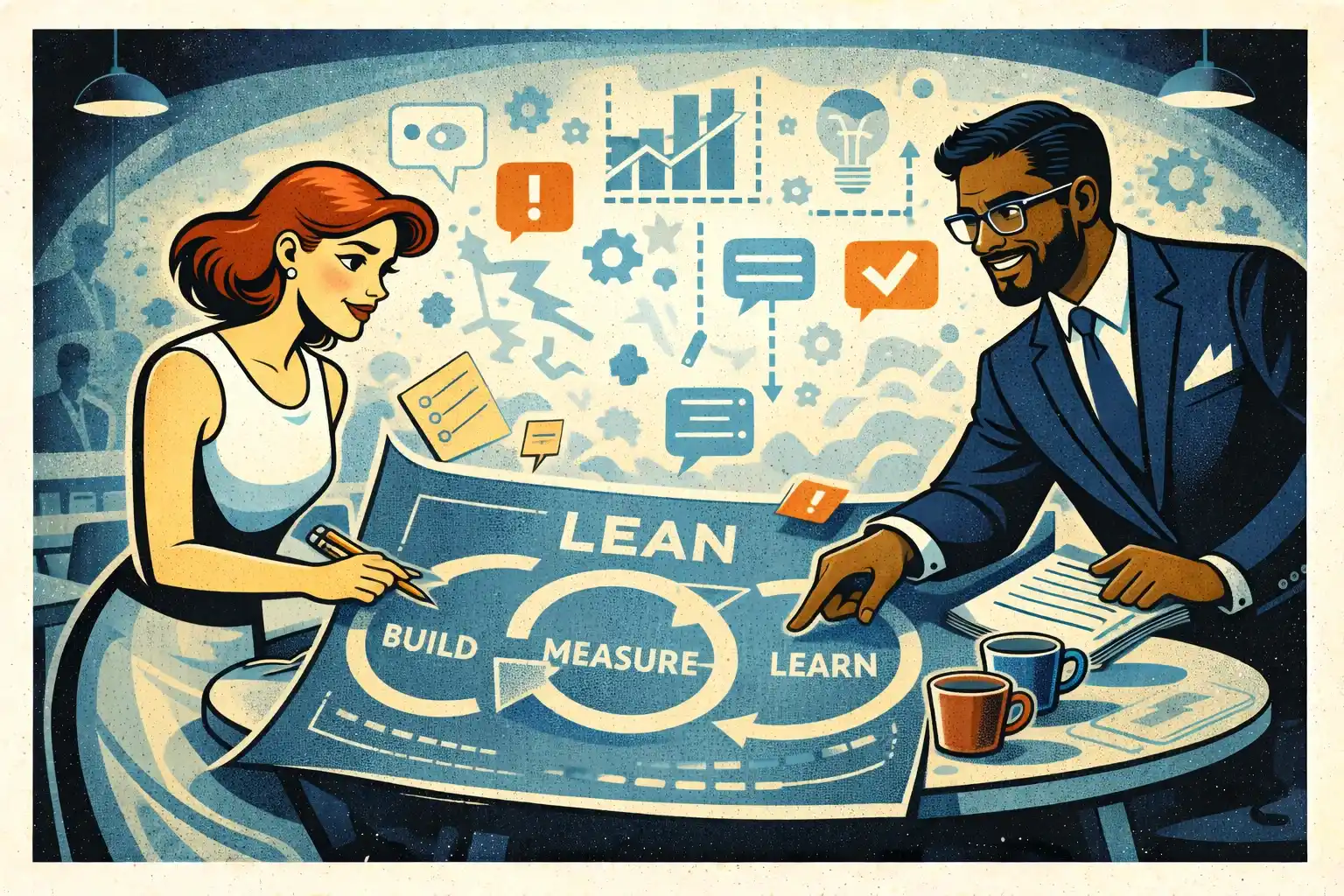
- How do you test early assumptions?
If you’re still shaping your idea, “App Development for Non-Technical Founders: A Step-by-Step Guide” helps structure these conversations.
Step 4: Understand realistic cost expectations
Hiring mistakes often come from unrealistic budgets.
Early-stage app development costs depend on:
- backend complexity
- integrations
- number of user roles
- quality expectations
If you want grounding numbers, “MVP Development Cost in 2025: How Much Does It Really Cost?” provides realistic benchmarks.
Common hiring mistakes non-technical founders make
1. Hiring based on the lowest price
Cheap teams often cost more due to rework and delays.
2. Hiring too many people too early
More developers ≠ faster progress.
3. Letting developers define the product
Your job is product vision, not architecture.
4. Skipping validation
Building before talking to users wastes time.
These mistakes are explored further in “MVP Development for Non-Technical Founders: Common Mistakes”.
How AI is changing developer hiring
AI tools in 2025 help with:
- faster prototyping
- code generation
- testing and QA
But AI doesn’t replace product judgment or senior engineering.
Teams that rely blindly on AI create fragile products.
For a balanced view, “AI-Powered MVP Development: Save Time and Budget Without Cutting Quality” is worth reading.
Final takeaway
Non-technical founders succeed when they hire thinking partners, not just coders.
The goal is not to find the “best developer,” but the right setup for your current stage.
Clarity beats technical depth.
Not sure who you should hire for your startup app?
At Valtorian, we help non-technical founders choose the right development model, avoid hiring mistakes, and ship a real MVP fast.
Book a call with Diana
Get an honest recommendation based on your stage and goals.
FAQ — Hiring App Developers
Can a non-technical founder really hire developers successfully?
Yes — with the right process and expectations.
Should I hire freelancers or a development company?
It depends on scope and your ability to manage.
How do I know if an estimate is realistic?
Compare multiple proposals and look for scope clarity.
Do I need to understand code to manage developers?
No. You need to understand product and priorities.
How long does hiring usually take?
From days (freelancers) to weeks (teams).
What’s the biggest hiring red flag?
Agreeing to build everything without validation.
When should I stop outsourcing and hire in-house?
After traction and a clear roadmap.










































.webp)




.webp)