.webp)
Healthcare App Development for Startups: MVP and Compliance Basics
Healthcare startups face a unique challenge: they must move fast to validate demand while navigating strict compliance, privacy, and data protection rules. Many early-stage founders either overbuild compliance too early or ignore it entirely — both paths create serious problems. This article explains how startups should approach healthcare app development at MVP stage, what compliance basics actually matter early on, and how to design a product that can scale safely after validation.

TL;DR: Healthcare MVPs require a careful balance between speed and safety. You don’t need enterprise-grade compliance on day one, but you do need the right architecture, data handling practices, and product boundaries. The goal is to validate the core healthcare use case while keeping future compliance achievable — without freezing progress.
Why healthcare MVPs are fundamentally different
Healthcare products deal with:
- sensitive personal data
- medical or wellness insights
- user trust at a higher bar than most apps
Mistakes in healthcare aren’t just UX issues — they can have legal, ethical, and reputational consequences.
That’s why healthcare MVPs demand more discipline than typical consumer startups.
What “compliance” really means at healthcare MVP stage
A common myth is that healthcare MVPs must be fully HIPAA- or GDPR-compliant from day one.
In practice, MVP-stage compliance is about:
- understanding regulatory boundaries
- designing systems that can become compliant
- avoiding regulated medical claims too early
You don’t skip compliance — you scope it correctly.
For a broader regulatory perspective, “Fintech and Healthcare MVP Development: How Compliance Changes the Plan” explains how regulated industries require different MVP thinking.
Core compliance areas healthcare founders should understand
You don’t need to become a legal expert — but you must know where risks exist.
1. Data privacy and protection
Healthcare apps often process:
- health-related information
- behavioral data
- personal identifiers
At MVP stage, this requires:
- secure authentication
- restricted data access
- encrypted data storage and transfer
Ignoring privacy early leads to expensive refactors.
2. Medical vs non-medical positioning
How you describe your product matters.
Many startups reduce compliance burden by:
- positioning as wellness or support tools
- avoiding diagnosis or treatment claims
This distinction directly affects regulatory exposure.
3. Auditability and traceability
Even early healthcare MVPs should support:
- basic activity logs
- clear data ownership
- permission-based access
These foundations enable future compliance upgrades.
How to reduce compliance risk without slowing down
Experienced healthcare teams design MVPs that respect regulation without being blocked by it.
Common strategies include:
- limiting initial data collection
- using compliant third-party services
- separating regulated and non-regulated features
If you’re unsure what belongs in v1, “MVP Development Services for Startups: What’s Actually Included” helps clarify safe scope boundaries.
Architecture basics for healthcare MVPs
Healthcare MVP architecture typically prioritizes:
- clear separation between frontend and backend
- role-based access control
- scalable data models
- minimal but structured audit trails
For non-technical founders, “Web App Development for Startups: Architecture Basics for Non-Tech Founders” provides a solid foundation.
Common healthcare MVP mistakes
1. Overbuilding compliance too early
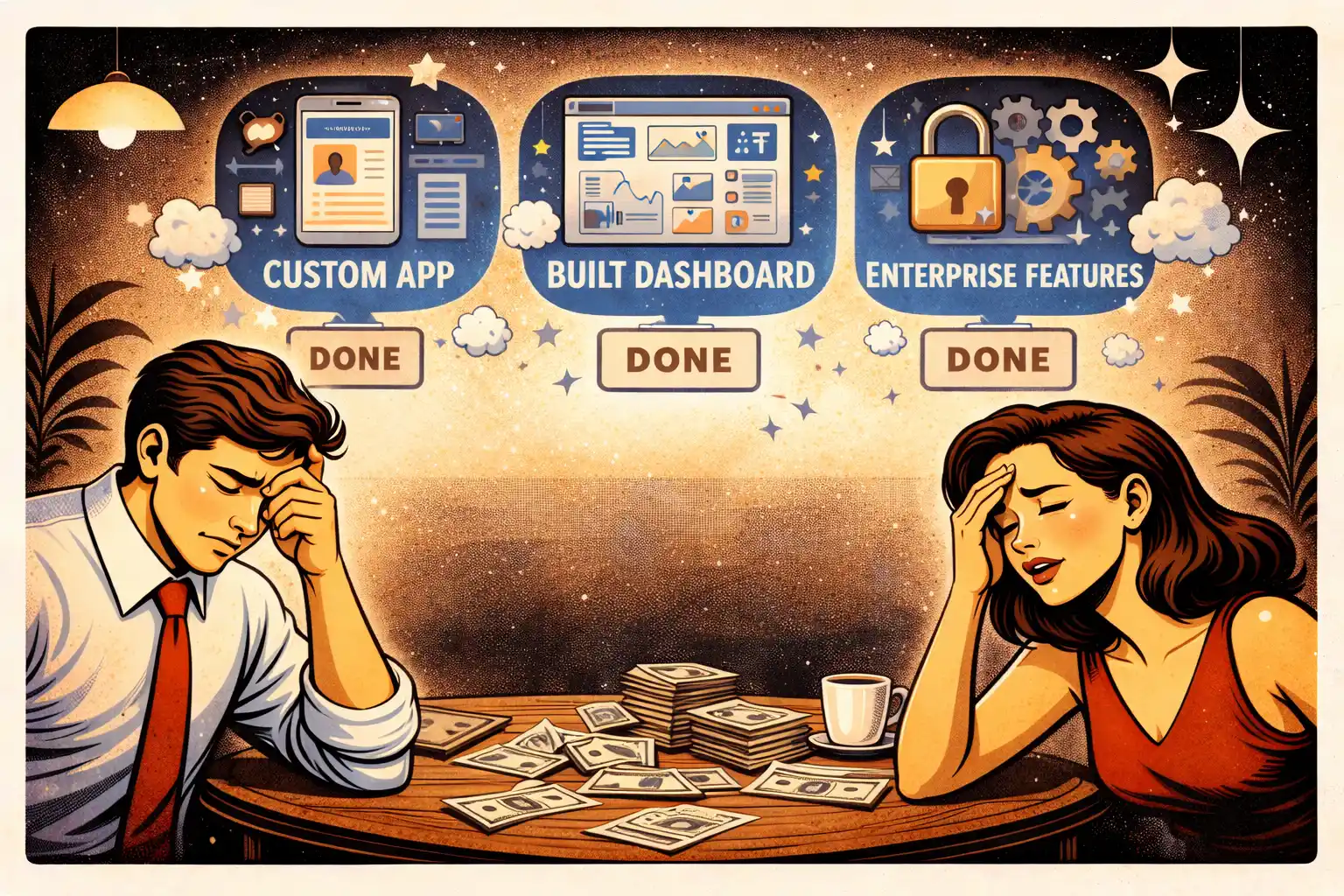
Months spent on certifications before validation often kill momentum.
2. Ignoring compliance completely
Skipping security and privacy decisions creates legal exposure and investor concerns.
3. Choosing teams without healthcare experience
Not every development partner understands healthcare constraints.
If you’re outsourcing, “Outsource Development for Startups: Pros, Cons, and Red Flags” highlights what to watch out for.
Cost expectations for healthcare MVP development
Healthcare MVPs often cost more than generic apps because of:
- security requirements
- backend complexity
- compliance-aware design
However, they can still be lean if scoped correctly.
For budgeting context, “MVP Development Cost in 2025: How Much Does It Really Cost?” provides realistic benchmarks.
When healthcare founders should slow down — and when not to
You should slow down if:
- sensitive data lacks protection
- medical claims are unclear
- legal exposure is uncertain
You should not slow down if:
- you’re validating user behavior
- features are non-diagnostic
- compliance boundaries are respected
Progress should be controlled, not frozen.
Final takeaway
Healthcare MVP development is about trust.
Move fast — but never carelessly.
The best healthcare startups validate early while building foundations that regulators, partners, and investors can trust.
Building a healthcare MVP and unsure how much compliance you really need?
At Valtorian, we help healthcare founders design safe, lean MVPs — balancing speed, compliance, and cost without overengineering.
Book a call with Diana
Get clarity on scope, compliance boundaries, and next steps.
FAQ — Healthcare MVP Development
Do healthcare MVPs need full compliance from day one?
No. They need the right level of compliance for their scope.
Can I launch a healthcare MVP without certifications?
Often yes, depending on positioning and data handling.
How do I avoid medical liability early?
Avoid diagnostic claims and focus on support or wellness.
Are healthcare MVPs more expensive?
Usually, but smart scoping keeps costs manageable.
How long does a healthcare MVP take to build?
Typically 6–10 weeks depending on scope.
Can compliance be added later?
Only if your architecture supports it.
What’s the biggest healthcare MVP mistake?
Overbuilding or ignoring compliance too early.




























































.webp)




.webp)