.webp)
Marketplace Startup Reality in 2026
Marketplaces are still one of the most attractive startup models—but also one of the easiest ways to burn time and money. In this article, we break down the real state of marketplace startups in 2026: what has changed, what hasn’t, and why most early failures are not technical at all. You’ll learn where founders usually misjudge scope, cost, and traction, how to approach MVP validation realistically, and what decisions matter most before you write the first line of code.

TL;DR: Building a marketplace in 2026 is less about features and more about solving the supply–demand problem early.The fastest way to fail is to overbuild before proving liquidity, pricing, and user behavior on both sides.
Marketplaces in 2026: still powerful, still unforgiving
On paper, marketplaces look perfect.They scale.They create network effects.They can dominate entire industries.
In practice, marketplaces remain one of the hardest startup models to execute—especially for first-time, non-technical founders.
The core challenge hasn’t changed in 2026:You must attract two (or more) user groups, convince them to show up at the same time, and give them a reason to come back.
Technology is rarely the main reason marketplace startups fail.Timing, incentives, and go-to-market decisions are.
If you want to understand why strong products still collapse early, start with Why MVPs Still Fail in 2026.
The biggest misconception: “We just need an MVP”
Many founders treat marketplace MVPs like single-user products.They are not.
A marketplace MVP must validate at least three things at once:
- demand is real on one side
- supply is willing to participate
- transactions can actually happen under real conditions
Skipping any of these validations leads to a false sense of progress.
This is why generic MVP advice often breaks down for marketplaces.If you’re thinking about features before incentives, you’re already late.
For a grounded view of what a marketplace MVP should include, read Marketplace MVP Development for Startups: Features You Actually Need.
Liquidity beats features every time
Founders often obsess over:
- matching algorithms
- advanced filters
- messaging systems
- dashboards and analytics
In early marketplaces, none of these matter without liquidity.
Liquidity means:
- users can find each other
- transactions happen quickly
- value is obvious after the first interaction
In 2026, the most successful marketplace MVPs often start with:
- manual matching behind the scenes
- limited geographies or niches
- controlled supply onboarding
If the marketplace works when it’s ugly, it will work when it’s polished.
Cost reality: marketplaces are never “cheap MVPs”
Marketplaces have more moving parts than typical apps:
- multiple user roles
- permissions and moderation
- payouts and dispute handling
- trust, safety, and verification
Even a lean marketplace MVP requires careful scope control.
Founders are often surprised when their estimates grow—not because developers are slow, but because reality introduces edge cases.
To understand where money actually goes, see MVP Development Cost Breakdown for Early-Stage Startups.
Why most marketplace MVPs overbuild too early
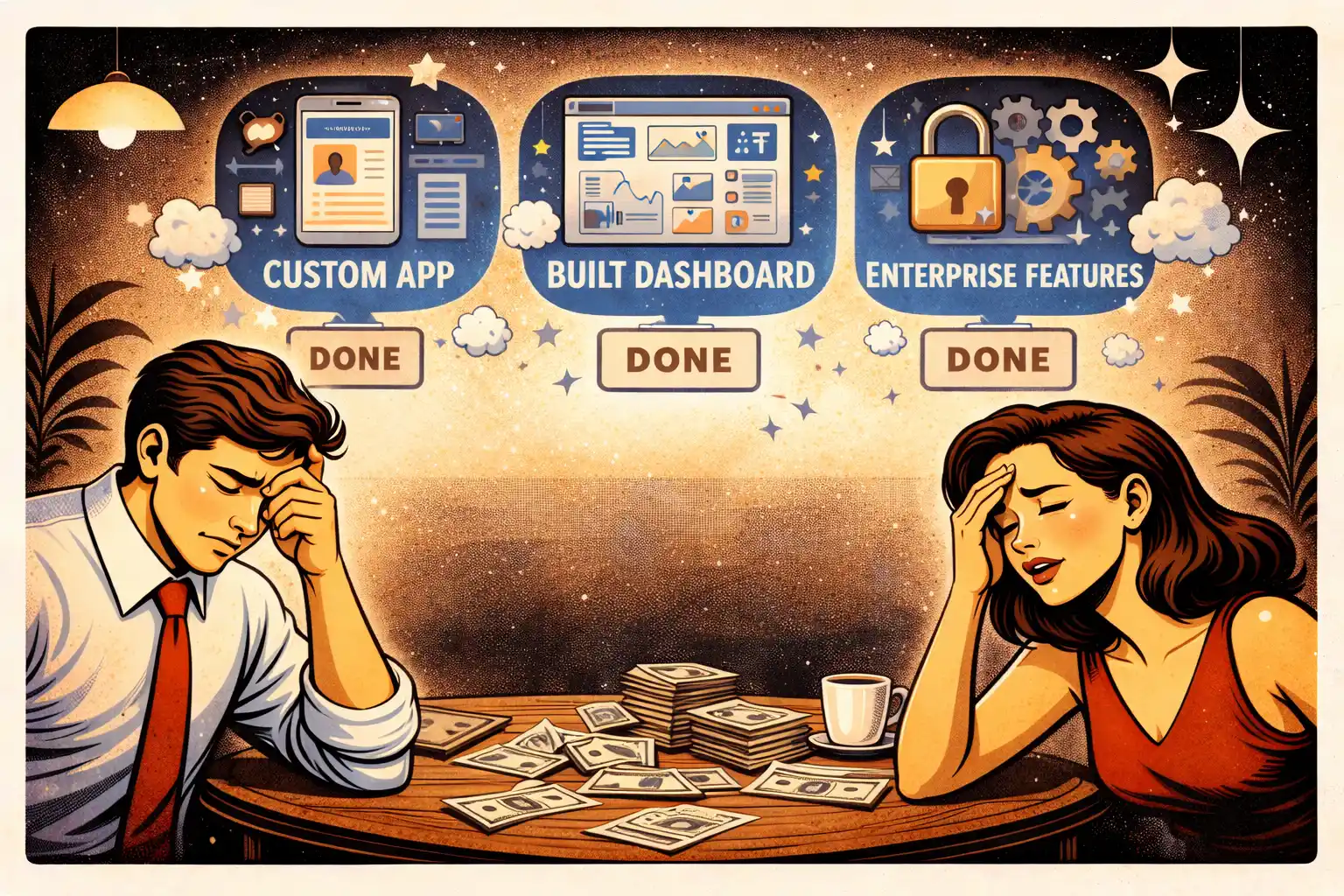
Overbuilding is a symptom, not the problem.The real issue is fear.
Founders overbuild because they worry:
- users won’t trust a simple product
- competitors look more polished
- investors expect complexity
In reality, early marketplace success depends on clarity, not completeness.
You don’t need every role automated.You need proof that strangers will transact.
If you want to avoid the most common early mistakes, read MVP Development for Non-Technical Founders: 7 Costly Mistakes.
Go-to-market matters more than architecture
In 2026, tooling is mature.Tech stacks are flexible.AI can speed up delivery.
None of this replaces distribution.
Strong marketplace founders answer these questions before scaling code:
- where do the first users come from?
- how do you seed one side before the other?
- what manual work are you willing to do early?
A technically perfect marketplace with no users is still zero.
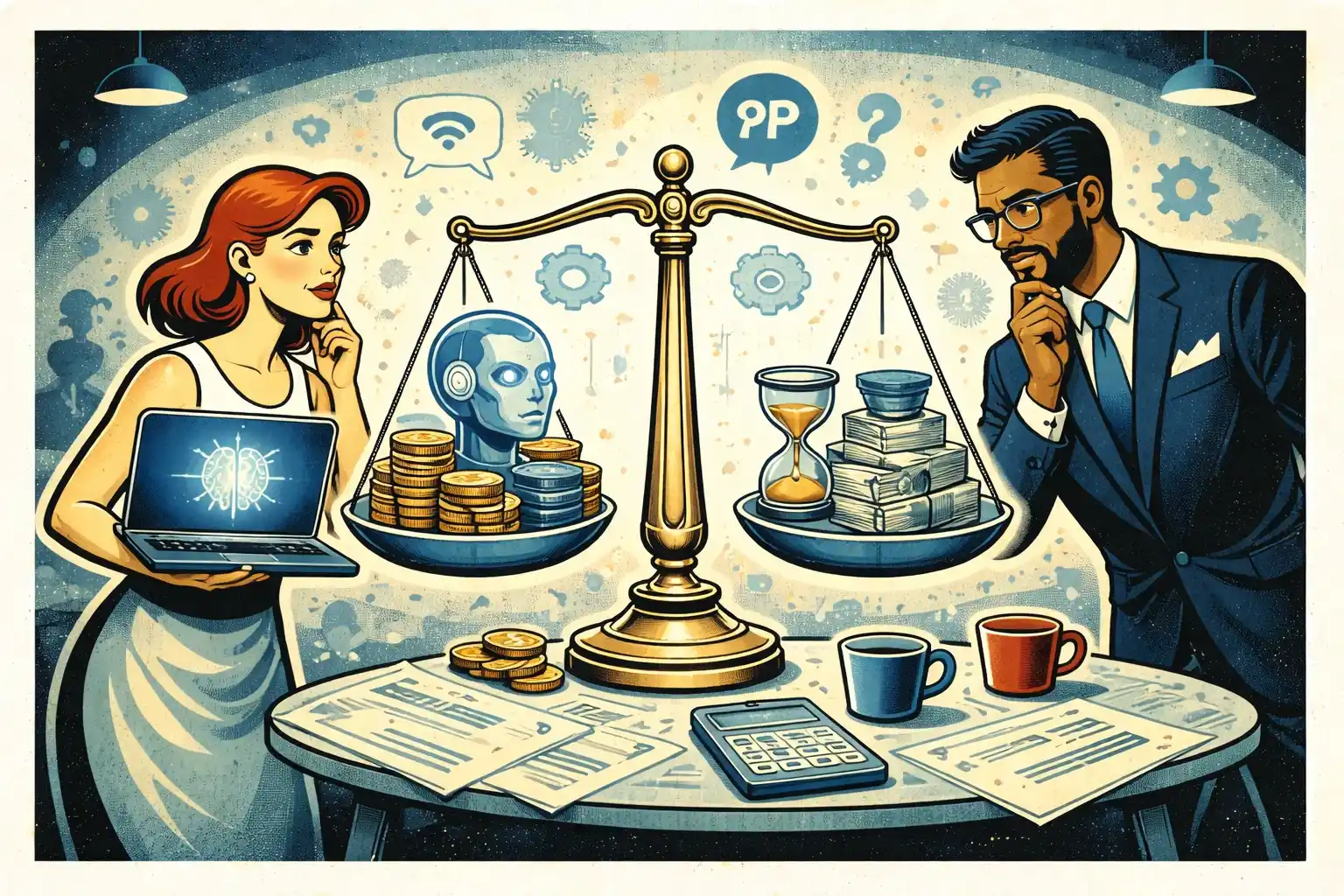
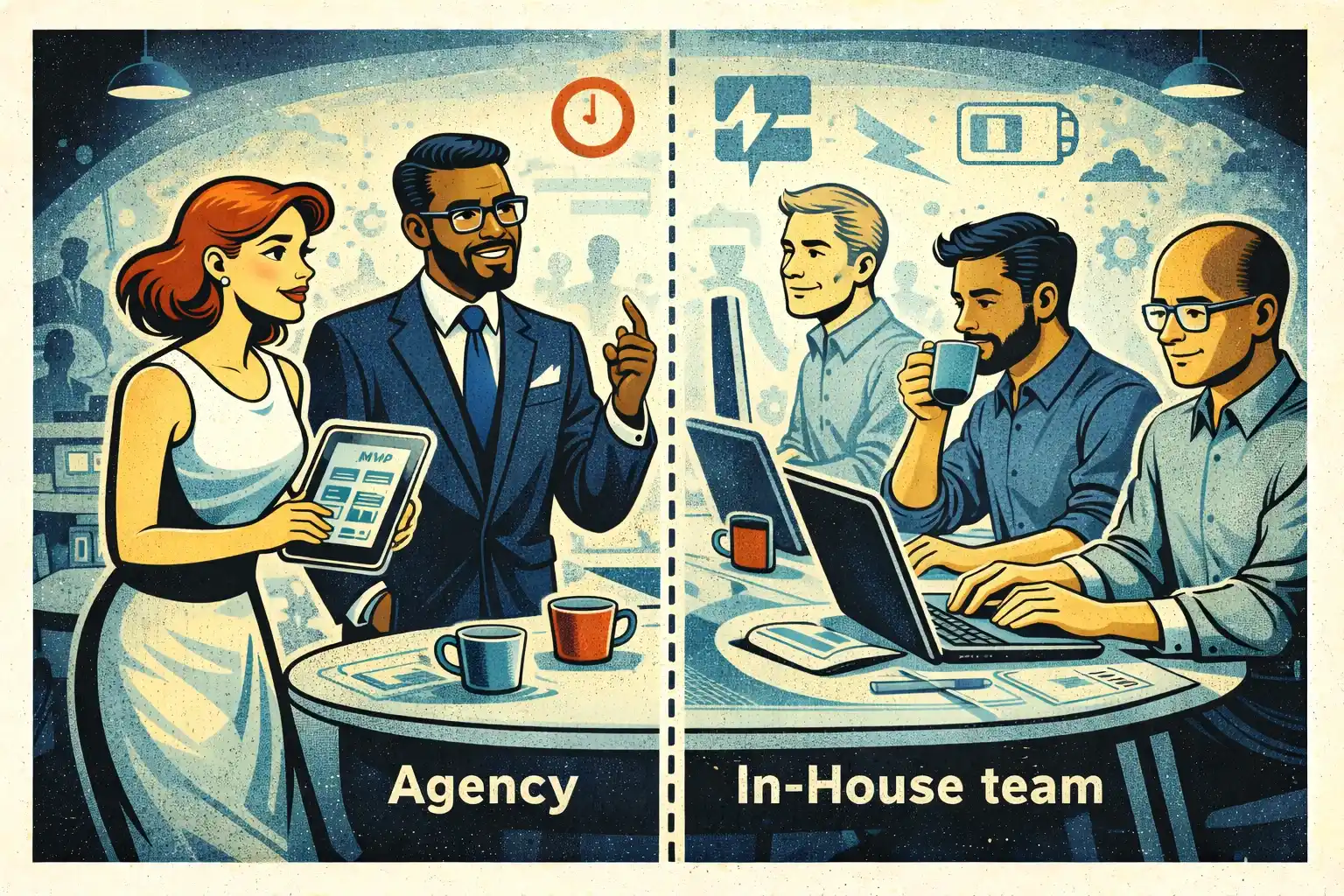
If you’re weighing build options, see Startup App Development Company vs Freelancers vs In-House Team.
Thinking about building a marketplace startup in 2026?
At Valtorian, we help founders design and launch marketplace MVPs with a focus on real liquidity, not theoretical features.
Book a call with Diana
Let’s talk about your idea, scope, and the fastest path to a marketplace that actually transacts.
FAQ
Is a marketplace still a good startup idea in 2026?
Yes—but only if you can realistically solve the early supply–demand problem. Marketplaces fail more often due to go-to-market issues than technology.
What is the biggest mistake first-time marketplace founders make?
Overbuilding features before proving liquidity and real transactions on both sides.
Can I start a marketplace without automation?
Yes. Many successful marketplaces begin with manual processes to validate behavior before investing in full automation.
How long does it take to validate a marketplace MVP?
Typically 2–4 months if the scope is focused and validation is prioritized over polish.
Are marketplaces more expensive than regular apps?
Almost always. Multiple roles, payments, moderation, and trust mechanisms increase complexity—even in lean MVPs.
Should I build both sides of the marketplace at once?
Not necessarily. Many teams seed one side first and simulate the other until real demand is proven.




















































.webp)




.webp)