.webp)
MVP Pricing in 2026: Getting First Paying Users
Pricing an MVP isn’t about finding the “perfect number.” It’s about proving that your product creates enough value for someone to commit —while you’re still learning what the product really is. In 2026, founders can ship faster than ever, but many still delay pricing until “later” and then wonder why traction feels weak. This article gives a simple, founder-friendly approach to MVP pricing, the tests that work early, and the signals that show you’re on the path to first paying users.
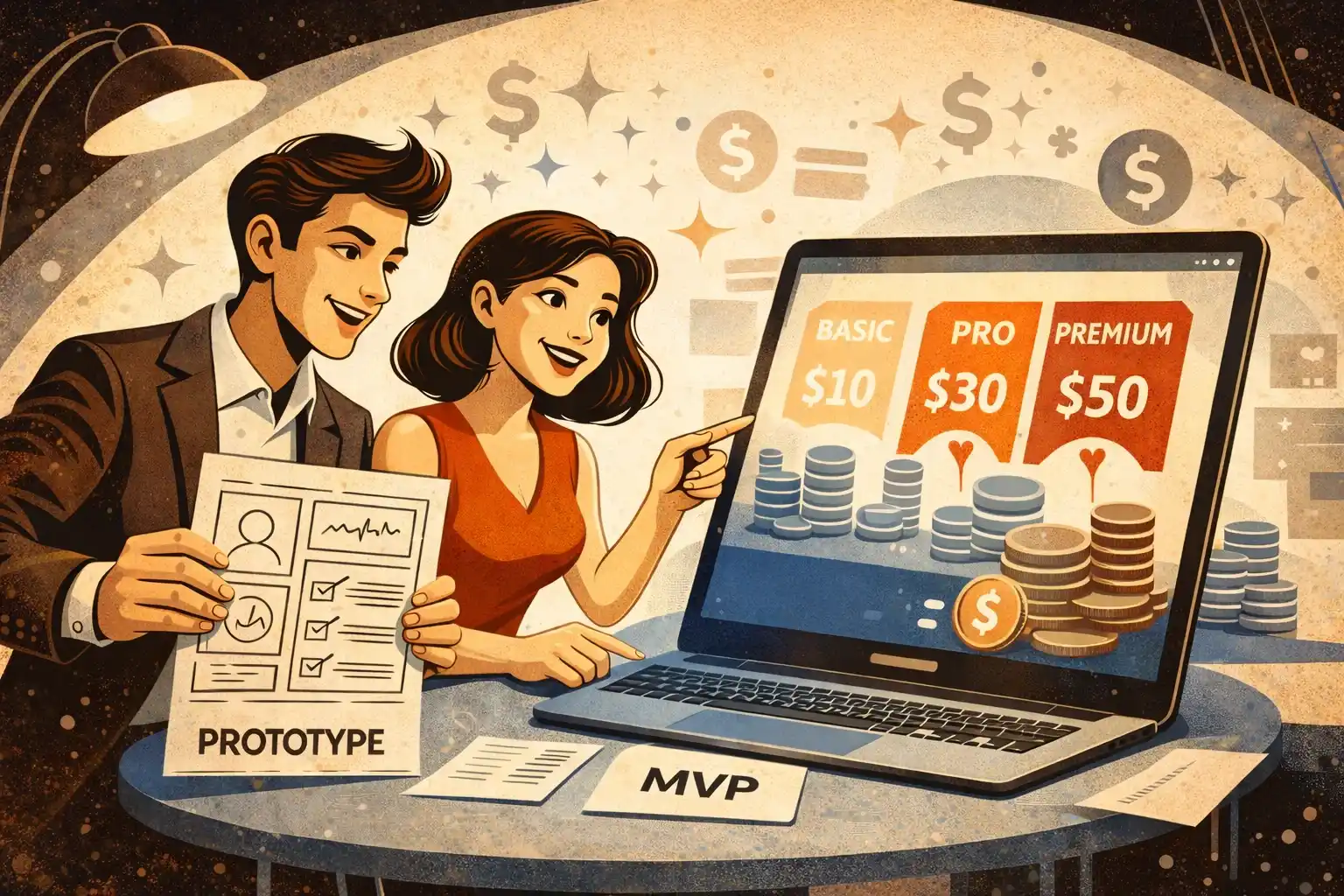
TL;DR: Price earlier than feels comfortable — because payment (or a real commitment) is one of the strongest validation signals.Start with a simple offer, test willingness to pay with small experiments, and only add pricing complexity after you see repeat usage.
Why MVP pricing matters earlier in 2026
If your MVP is free, you’ll often learn the wrong lessons:
- users say “nice” but don’t return
- feedback becomes feature wishlists
- you can’t tell who’s serious
Pricing forces clarity. It makes you answer:
- who this is really for
- what “value” means in one sentence
- which outcome is worth paying for
If you’re still shaping the product boundaries, read MVP Scope and Focus in 2026 first — pricing gets easier when scope is honest.
The three things you must validate before you pick a price
Pricing breaks when one of these is missing.
1) The buyer is clear
In B2C, the user and payer are usually the same.In B2B, they often aren’t.
If you can’t name the buyer, you can’t price.
2) The outcome is specific
“Saving time” is vague.“Cutting onboarding time from 30 minutes to 10” is specific.
Early pricing works when the value is easy to explain.
3) The value metric is stable
A value metric is the thing that scales with usage.Examples (pick one that fits your product):
- per seat
- per project
- per location
- per workflow
- per request
This is why general “best practices” pricing advice often fails — your metric must match your product.
If you need a clean way to define what success looks like in the first month, use What Investors Expect From MVPs in 2026.
Prototype pricing vs MVP pricing: don’t overthink it
Early pricing has one job: prove willingness to pay.
You’re not building a perfect billing system yet.You’re testing:
- whether the outcome is valuable
- whether the buyer trusts you enough to commit
If you’re unsure when it’s time to move from “testing” to “building,” see Prototype vs MVP in 2026: When to Start Building.
6 practical ways to get your first paying users
These work even when your product is still early.
1) Sell a paid pilot (B2B)
The simplest early monetization: a small paid pilot with clear scope.
What makes it work:
- one buyer
- one use case
- one success metric
- a clear timeline
2) Charge for setup, not the product
If your MVP needs configuration or onboarding help, pricing “implementation” can be easier than pricing “software.”
This is especially useful when the product value is real, but usage is still irregular.
3) Start with one paid tier
One paid tier reduces decision friction.You can add tiers later, once you see patterns.
4) Use an “early access” price (with a clear promise)
Early access can work if the promise is honest:
- limited scope
- direct founder support
- rapid iteration
No fake discounts. Just a clear reason.
5) Bundle outcomes into a simple offer
Founders often price features.Early buyers pay for outcomes.
Turn features into a single sentence:
- “Get X result in Y time, with Z support.”
6) Ask for commitment even if you’re not charging yet
If you’re not ready to charge, still ask for a meaningful commitment:
- book a call
- join a paid waitlist deposit
- sign an LOI for a pilot
If you’re not validating the market yet, start from the experiments in Validate a Startup Idea Before Development: 5 Experiments That Work.
Simple pricing tests that don’t require a billing system
You can learn a lot without shipping payments.
Test 1: Price conversation during onboarding
After someone reaches first value, ask one question:“What would you expect to pay for this per month?”
Listen for:
- confidence vs hesitation
- comparisons (“That’s like X tool”)
- budget language (“We can’t, but my manager can”)
Test 2: Three-offer preference test
Present three options in a call or email (not a full paywall):
- basic
- recommended
- premium
Your goal is not the exact number.It’s whether the buyer naturally anchors to a paid option.
Test 3: Paid pilot offer
Offer a paid pilot with a concrete deliverable.If they refuse, ask why:
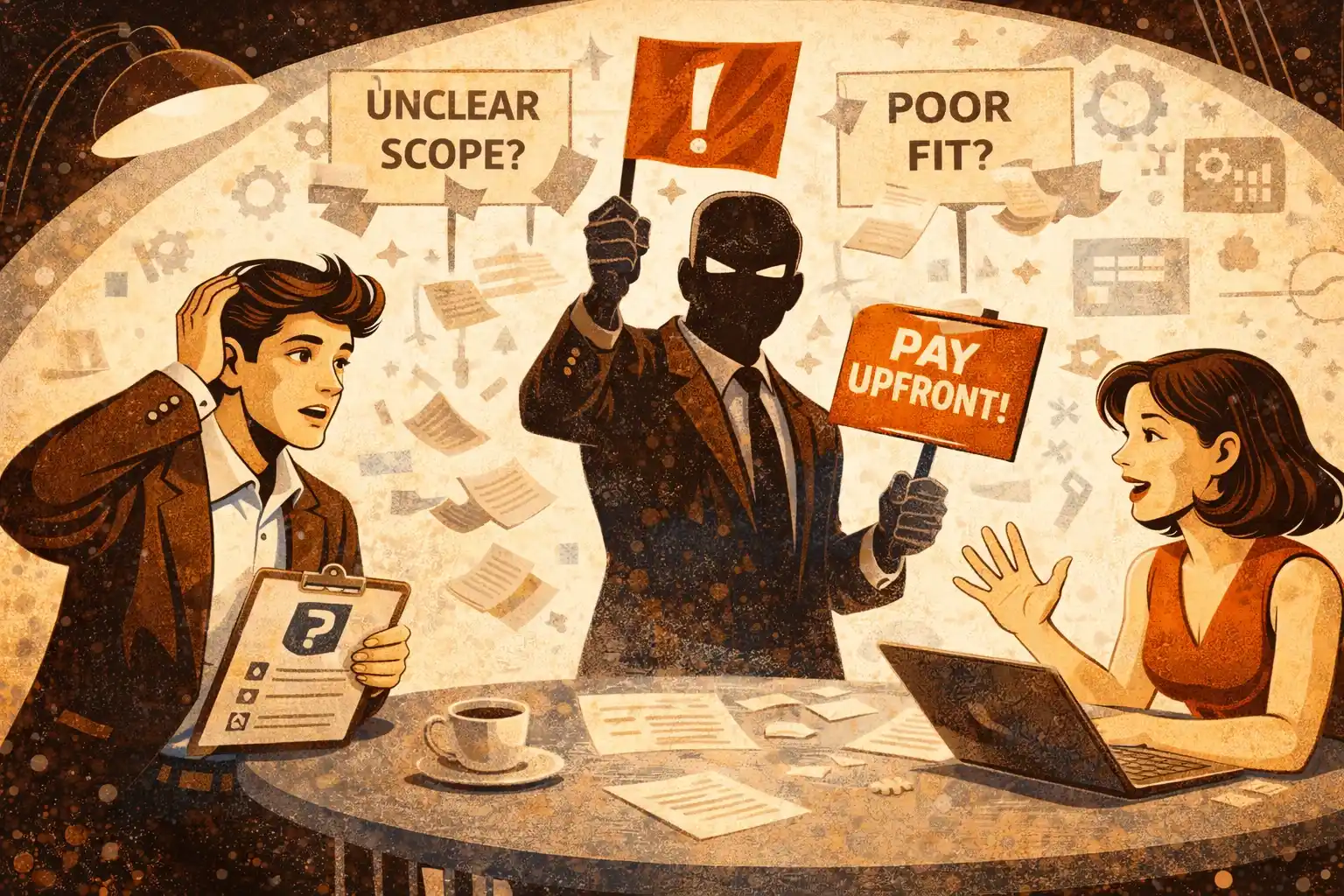
- price too high
- unclear value
- trust gap
- wrong buyer
Test 4: “Book a call to buy”
For early-stage B2B, the first payment often happens after a call.That’s fine — just make the offer real and time-boxed.
What to measure when pricing is your goal
If pricing is your current risk, measure behavior around commitment.
Track:
- % who reach first value
- % who ask “how much?” (strong signal)
- % who accept a call / pilot
- % who return within 7 days
If you want to structure this as a simple founder dashboard, start with Your First Product Metrics Dashboard: What Early-Stage Investors Want to See.
Common MVP pricing mistakes in 2026
- Waiting for “more features” before charging
- Pricing based on competitor lists instead of your outcome
- Adding tiers too early (choice overload)
- Treating discounts as strategy (instead of clarity)
- Trying to optimize revenue before you have retention
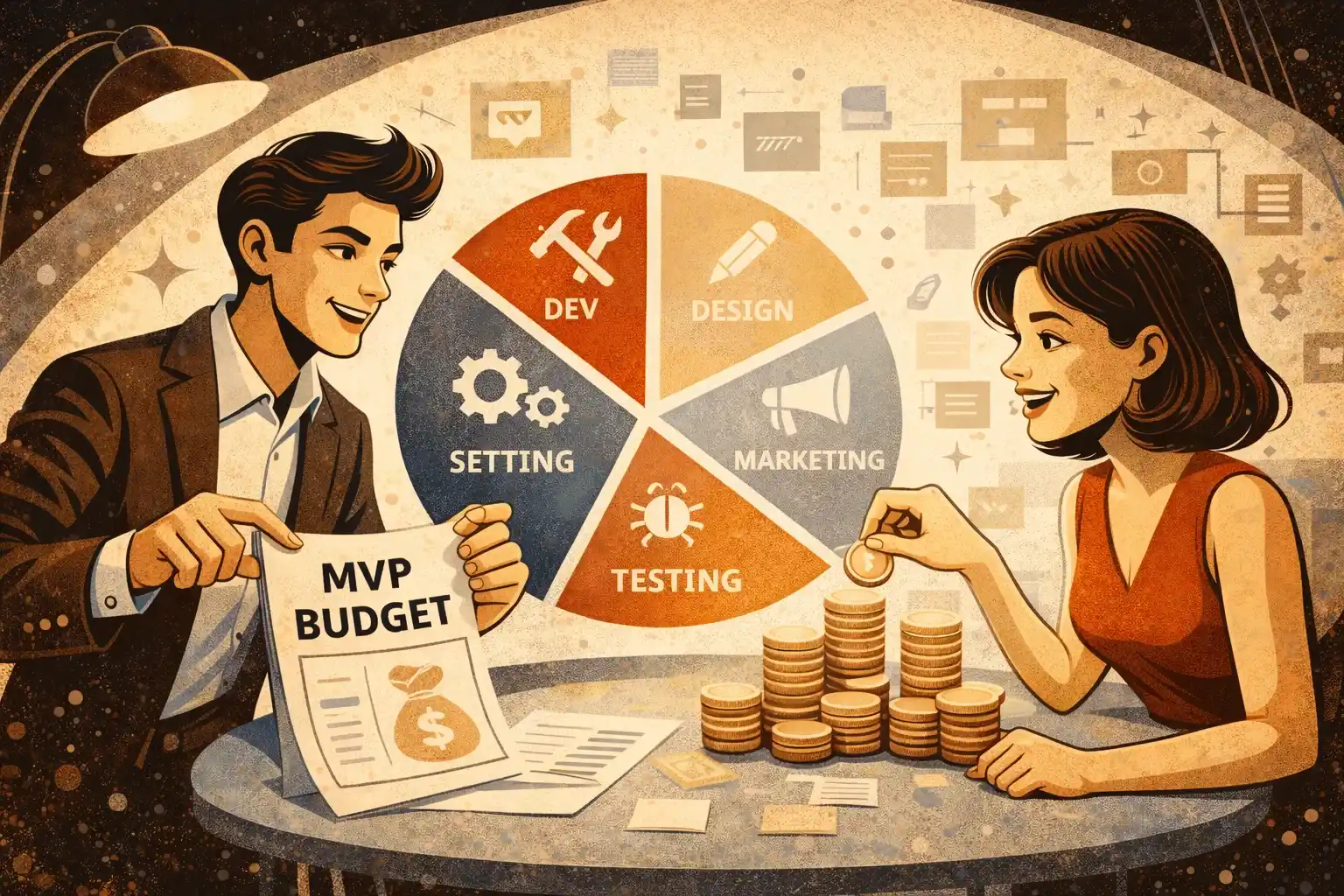
If you’re bootstrapping and every week matters, Budget Planning for Startup MVPs in 2026 is a useful companion to avoid pricing decisions that drain runway.
A simple “good enough” pricing path
If you want a no-drama plan, use this:
- Define one buyer and one outcome.
- Pick one value metric.
- Offer one paid tier or one paid pilot.
- Collect 10–20 real pricing conversations.
- Adjust messaging before you adjust numbers.
Your first goal is not a perfect price.Your goal is first paying users — because they’ll teach you what to build next.
Thinking about building a paid MVP in 2026?
At Valtorian, we help founders design and launch modern web and mobile apps — including AI-powered workflows — with a focus on real user behavior, not demo-only prototypes.
Book a call with Diana
Let’s talk about your idea, scope, and fastest path to a usable MVP.
FAQ
When should I start charging for an MVP?
As soon as users can reach a real outcome. If people get value, you can test willingness to pay — even with a simple pilot or call-based offer.
Should I start with subscriptions or one-time payments?
Pick what matches the value. If the outcome repeats monthly, subscriptions fit. If it’s a one-off result, start with one-time or paid setup.
Do I need a full paywall to validate pricing?
No. You can validate pricing with paid pilots, deposits, call-based sales, or structured pricing conversations.
What’s the easiest pricing model for a non-technical founder to start with?
One paid tier with a clear outcome and a clear “who it’s for.” Add complexity only after you see retention and repeat usage.
What if users say they’ll pay, but nobody pays?
Treat it as a signal: either the value isn’t clear, the buyer is wrong, or there’s a trust gap. Fix messaging and the offer before adding features.
How do I avoid underpricing early?
Don’t start by copying competitors. Start by anchoring to the outcome and testing with real buyers. Underpricing often creates low-quality demand.













































.webp)




.webp)