.webp)
MVP Testing in 2026: What to Validate First
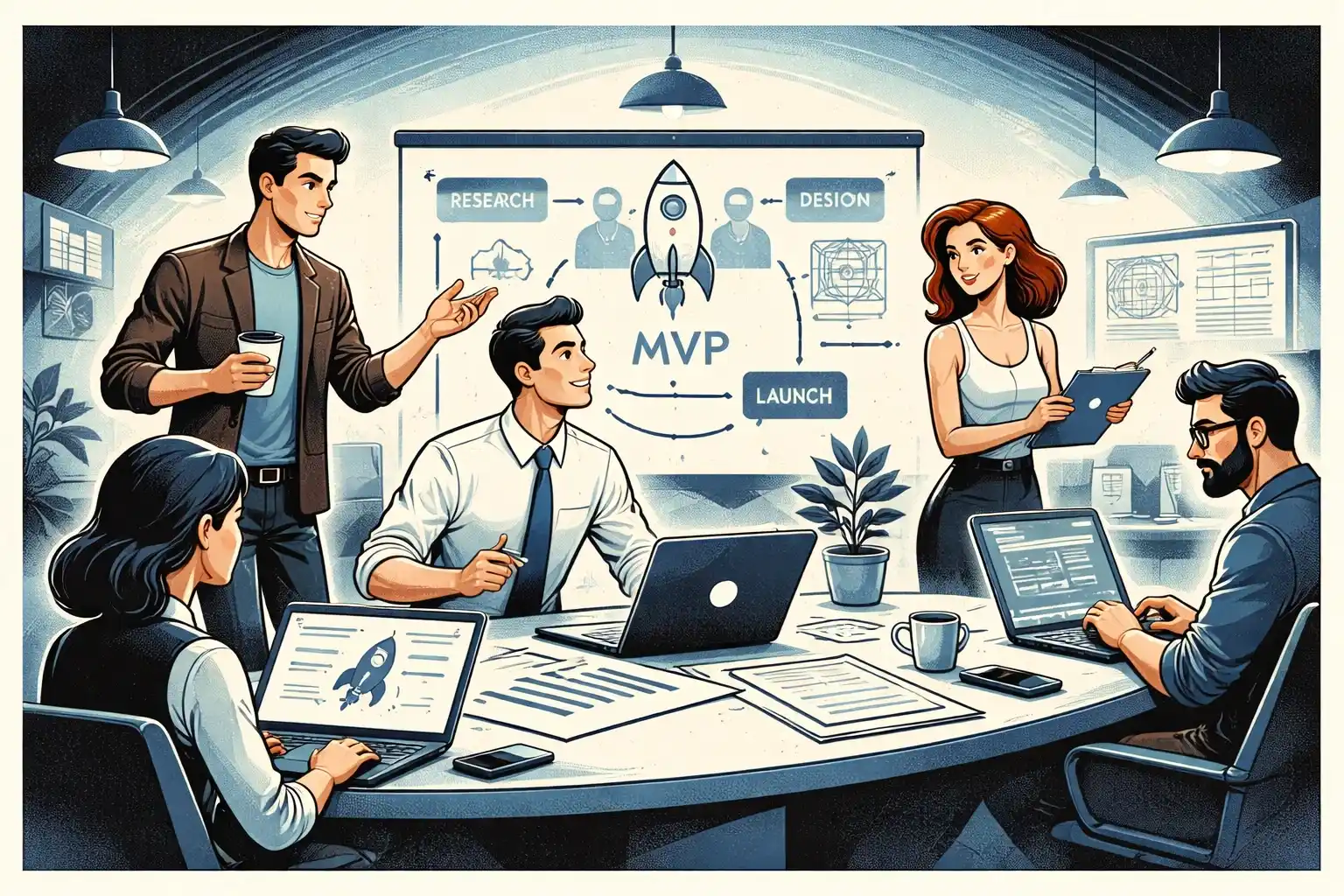
“MVP testing” isn’t QA. It’s about proving (or killing) assumptions before you spend months building. In 2026, the fastest startups don’t test more — they test the right things in the right order, and make clear go/no-go decisions. This guide breaks down what to validate first (problem, audience, channel, workflow, and willingness to pay), which experiments work best for non-technical founders, and what signals actually count. You’ll also get a simple testing cadence you can run in weeks.

TL;DR: Validate demand before you validate features: test the problem, the audience, and the channel first.Then test one core workflow end-to-end, define your success thresholds, and only build what reduces uncertainty.
MVP testing vs QA: don’t confuse the two
QA answers: “Does it work?”MVP testing answers: “Should it exist—and will anyone use (or pay for) it?”
If you’re spending most of your “testing time” clicking through screens looking for bugs, you’re optimizing the wrong risk. Bugs matter, but the bigger risk is building something nobody wants.
If you want a practical list of mistakes founders keep repeating, read MVP Development for Non-Technical Founders: 7 Costly Mistakes.
The order that saves you the most money
A useful rule: validate the most expensive-to-be-wrong assumption first.
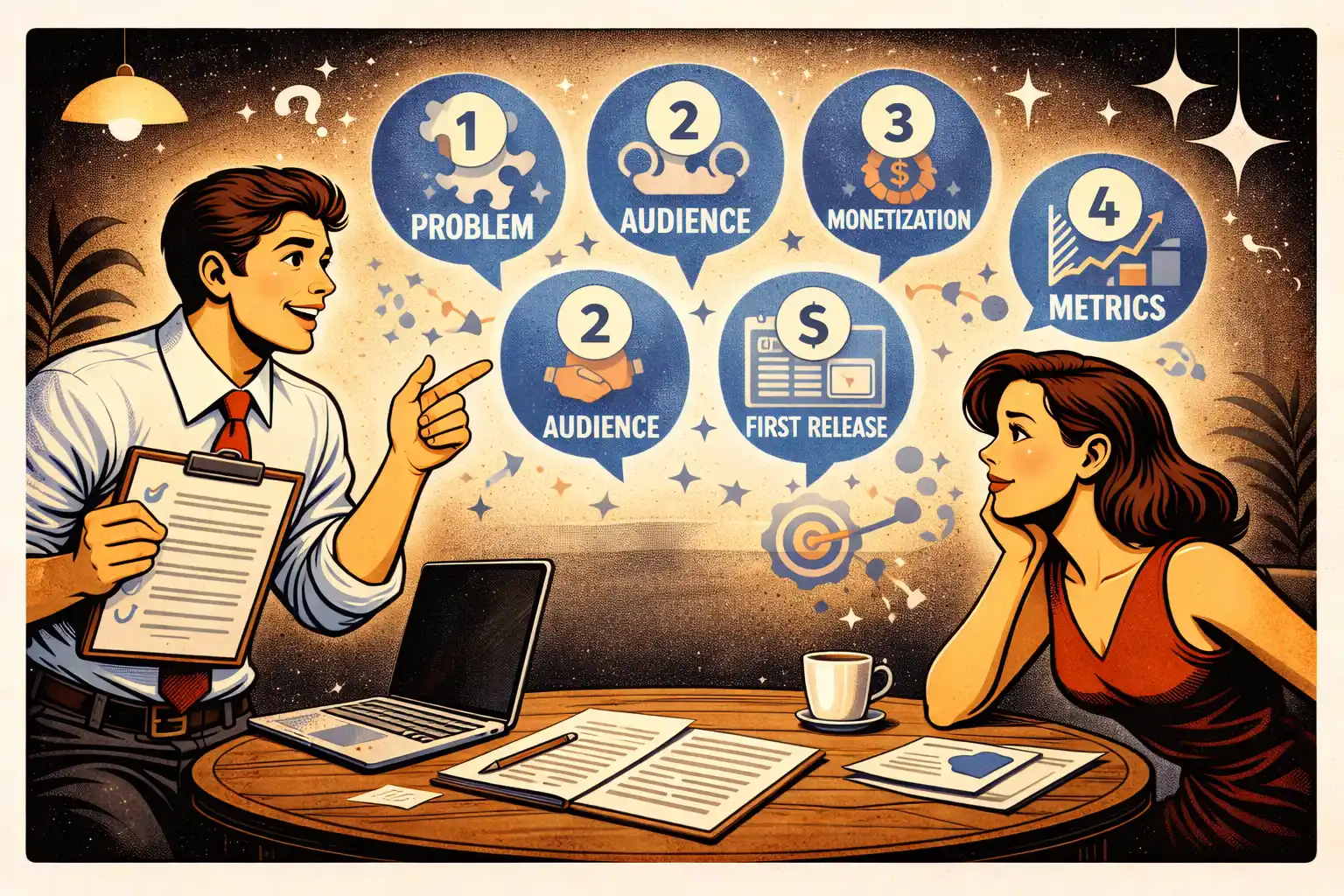
For most MVPs, that order looks like this:
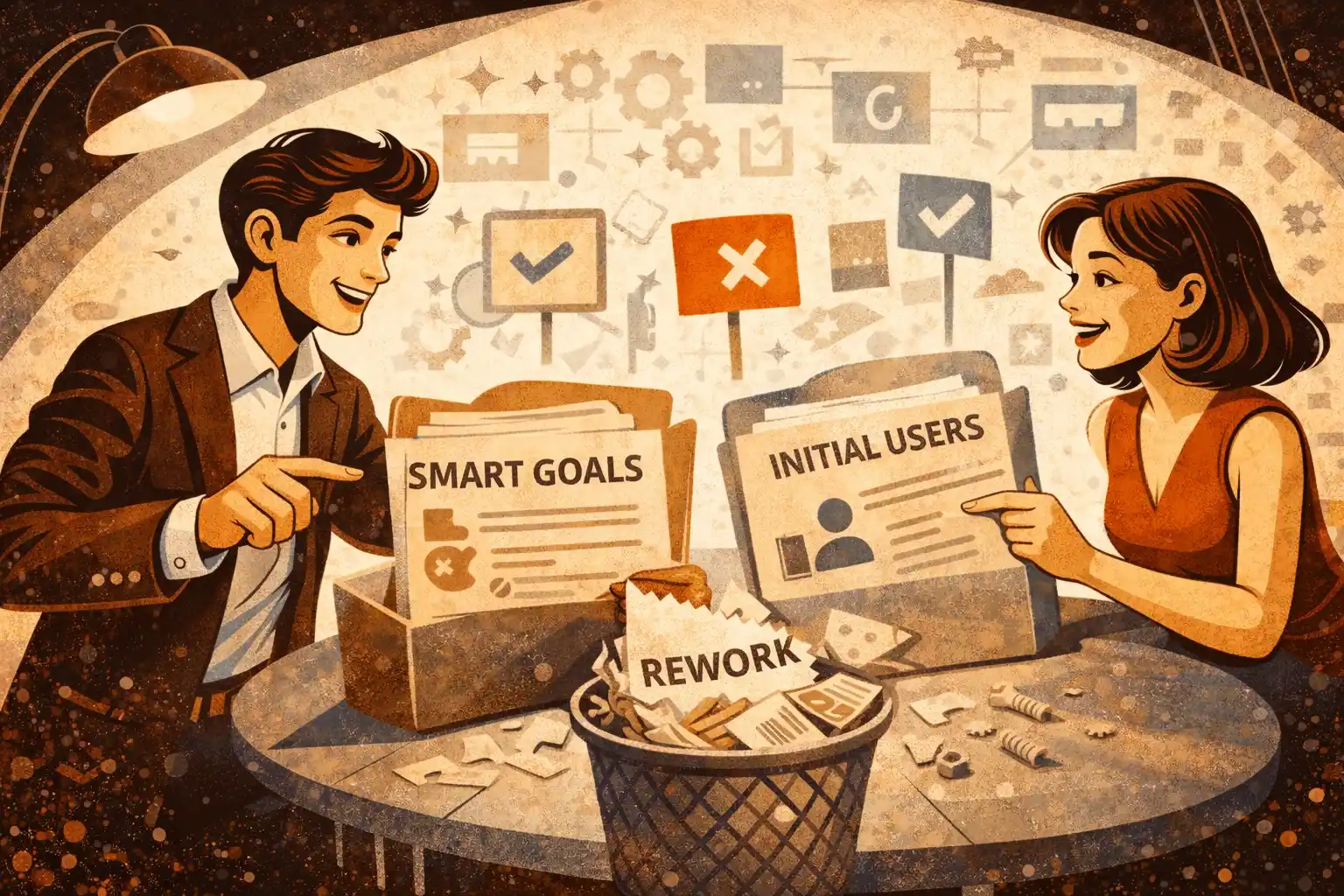
1) The problem is real (and urgent)
Before you test screens, test pain.
Validate:
- people experience the problem often
- it costs them time, money, or stress
- they already try to solve it (even badly)
A simple pass signal: in 10–15 conversations, you hear the same pain in similar words, and people describe workarounds.
2) You can reach the audience
A product can be “wanted” and still fail if you can’t reliably reach the people who want it.
Validate:
- where the audience hangs out
- what message gets a response
- what makes them take the next step
If you don’t have this, you’ll ship into silence.
3) The value proposition is clear in one sentence
If it takes five minutes to explain, your conversion will suffer.
Validate:
- the “before - after” outcome
- who it’s for (one primary user)
- why now (what triggers the need)
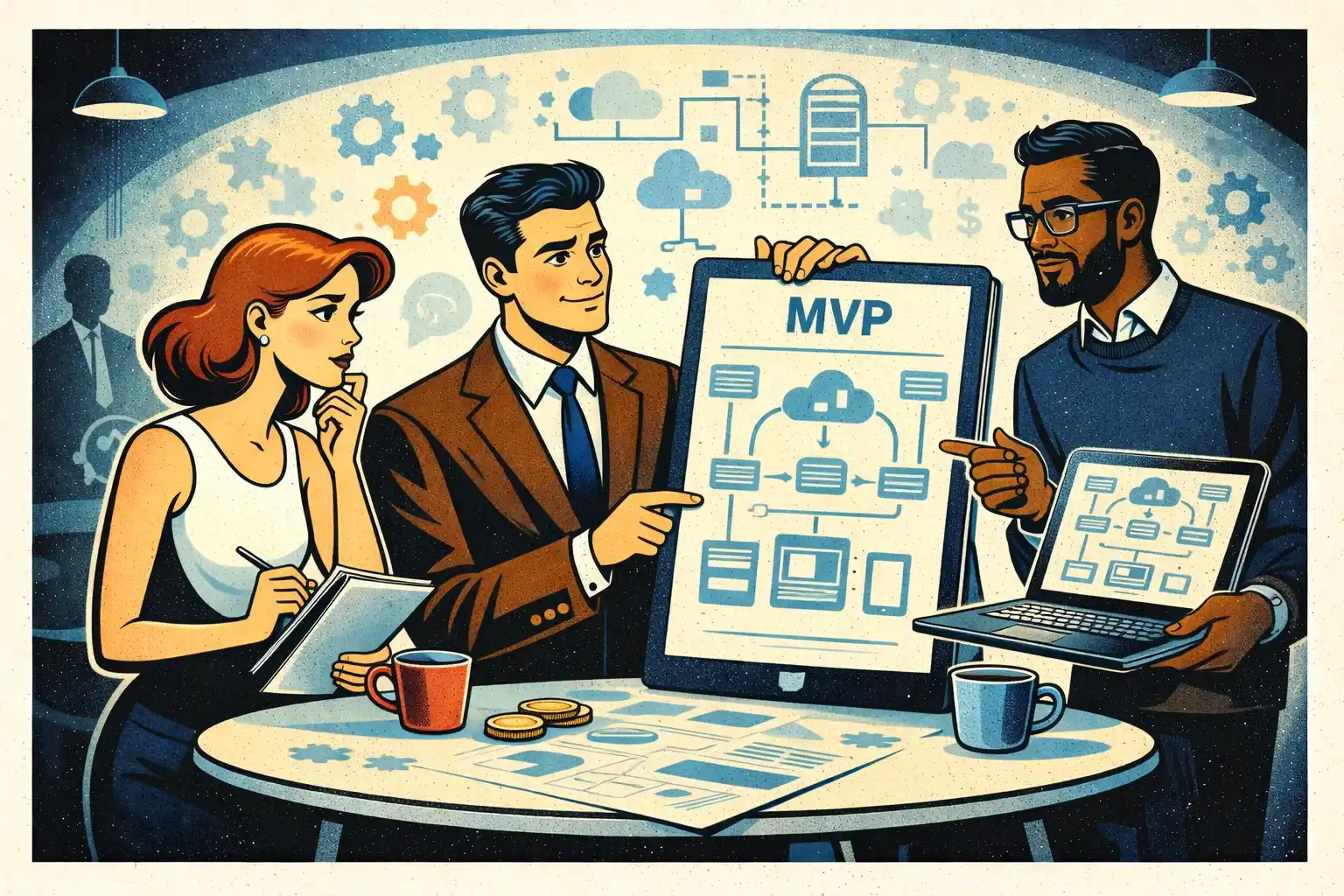
4) One core workflow works end-to-end
This is your MVP’s heart: the smallest loop that creates value.
Validate:
- users can complete the primary action without hand-holding
- they understand what to do next
- the outcome feels worth the effort
If you’re building a broader MVP scope, make sure it still stays focused. What a Good MVP Looks Like in 2026 can help you sanity-check that.
5) You can get a retention signal
Retention doesn’t have to be “they use it forever.” Early retention can be:
- they come back within 7 days
- they complete the workflow a second time
- they invite someone / share
- they ask for a feature that implies continued use
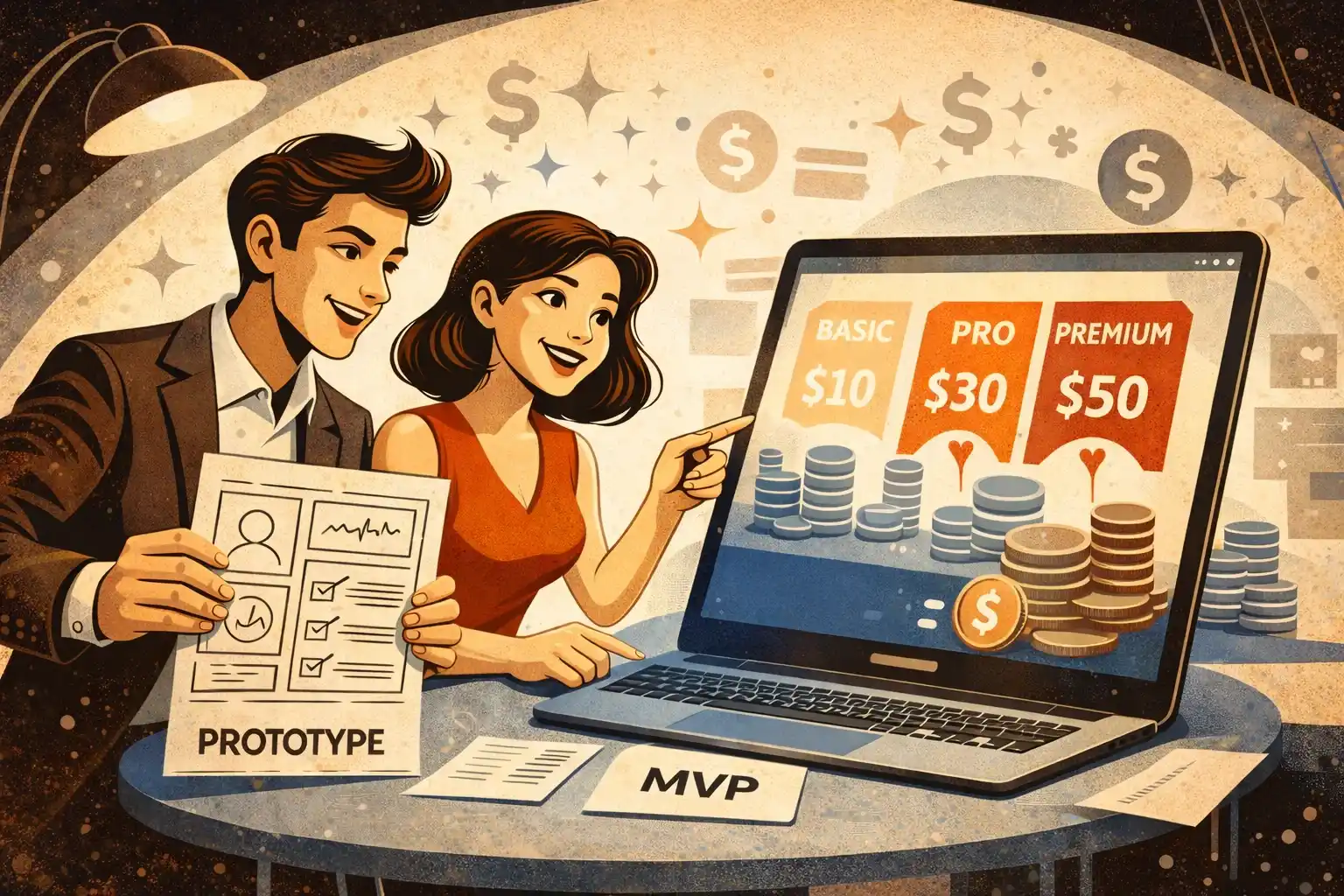
6) People will pay (or commit)
Pricing tests don’t need a perfect paywall.
Validate one of:
- pre-orders / deposits
- paid pilot
- “book a call” with qualified intent
- a clear willingness-to-pay range
If you’re unsure what to test before you build, Validate a Startup Idea Before Development: 5 Experiments That Work is a good starting point.
The 6 experiments that cover most MVPs
You don’t need 30 experiments. You need 6 done well.
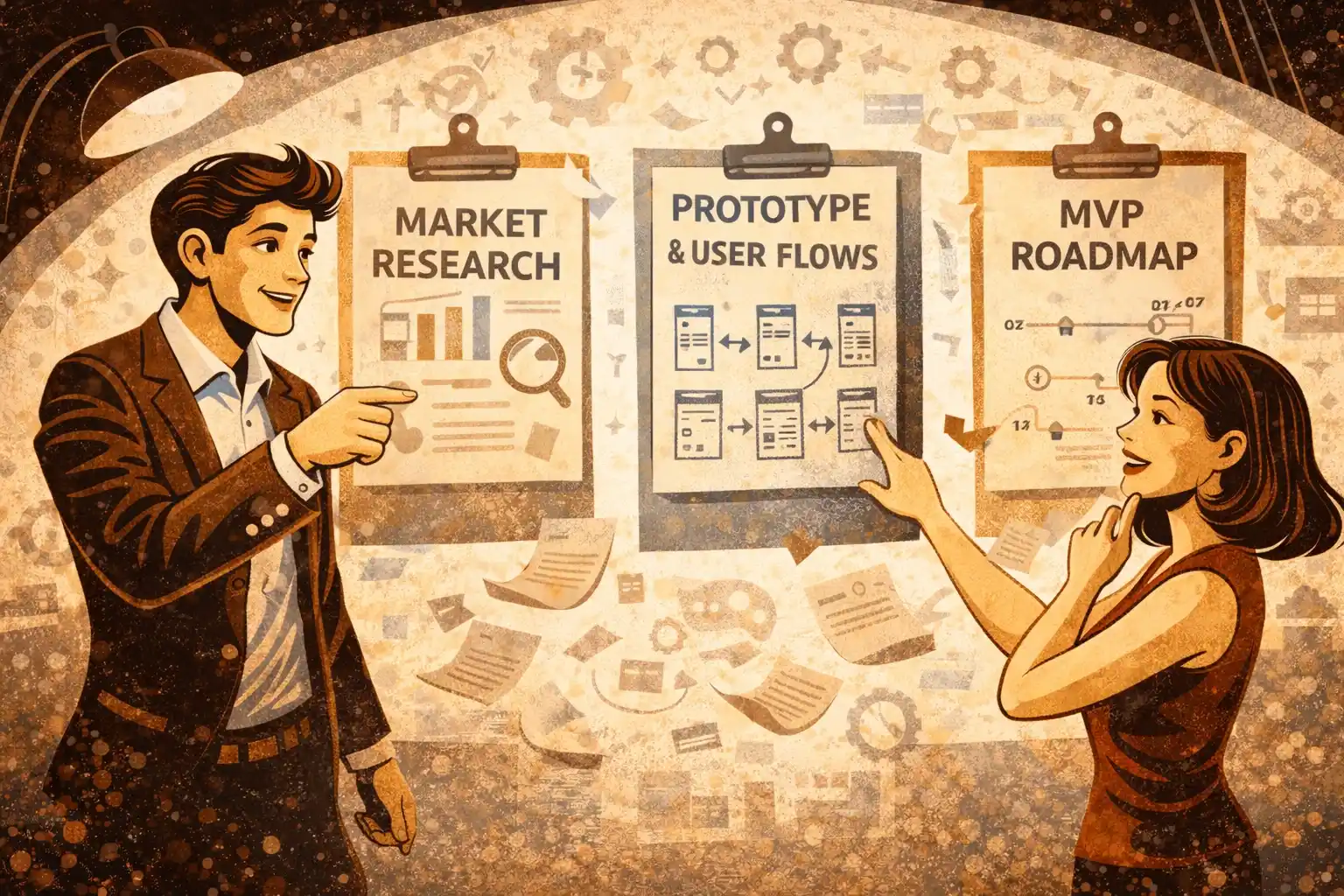
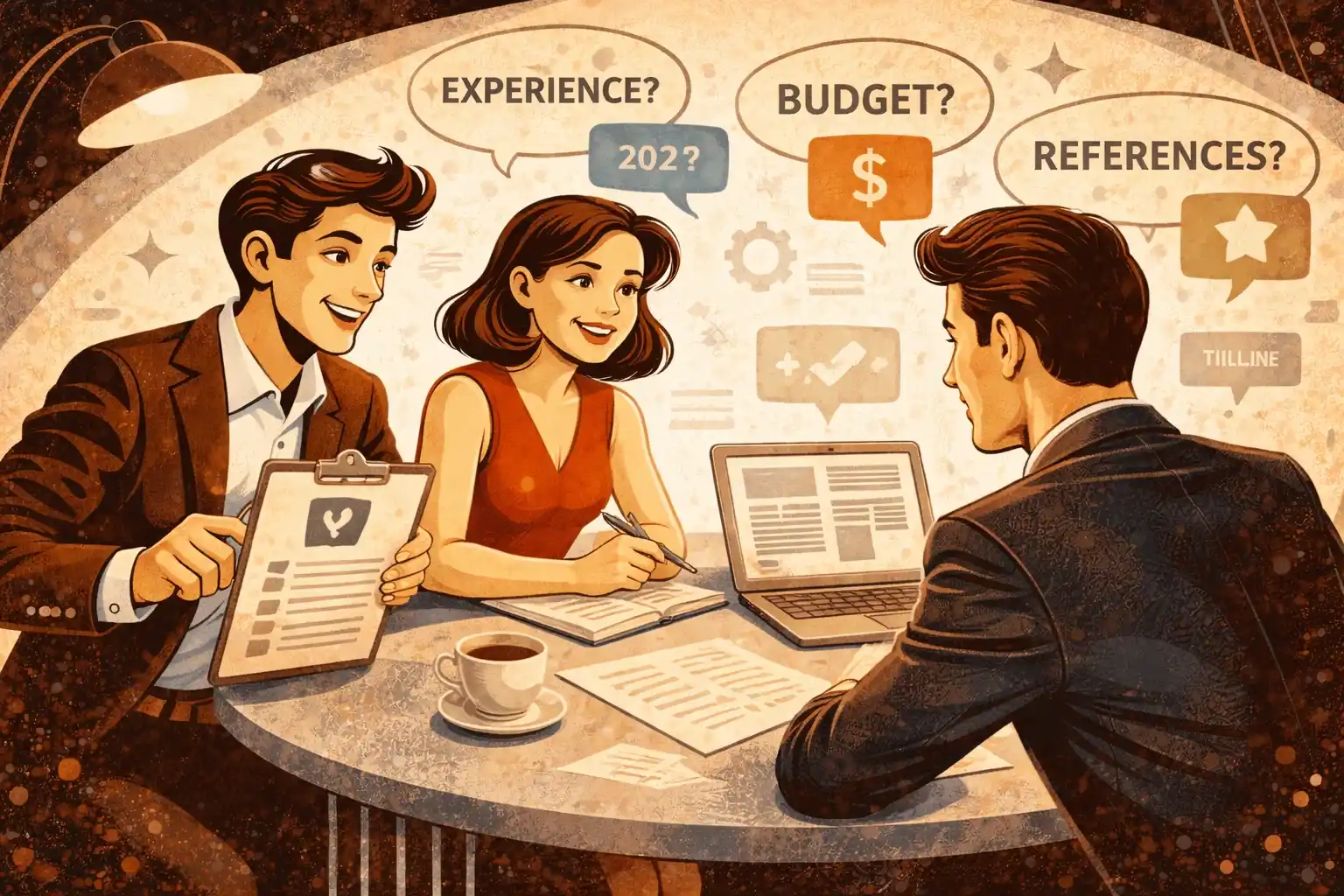
1) Problem interviews (with decision rules)
Do interviews with a strict goal: confirm pain, urgency, and triggers.
Tip: write your pass/fail criteria before the first call.
2) Landing page + next-step commitment
A landing page is not validation by itself.Validation is the next step:
- waitlist with a strong intent question
- “request access” + short form
- “book a call” for B2B
3) Fake-door test
Put a “feature” button in a prototype or early build. Track clicks.
If people don’t click, don’t build it.If they do click, ask what they expected next.
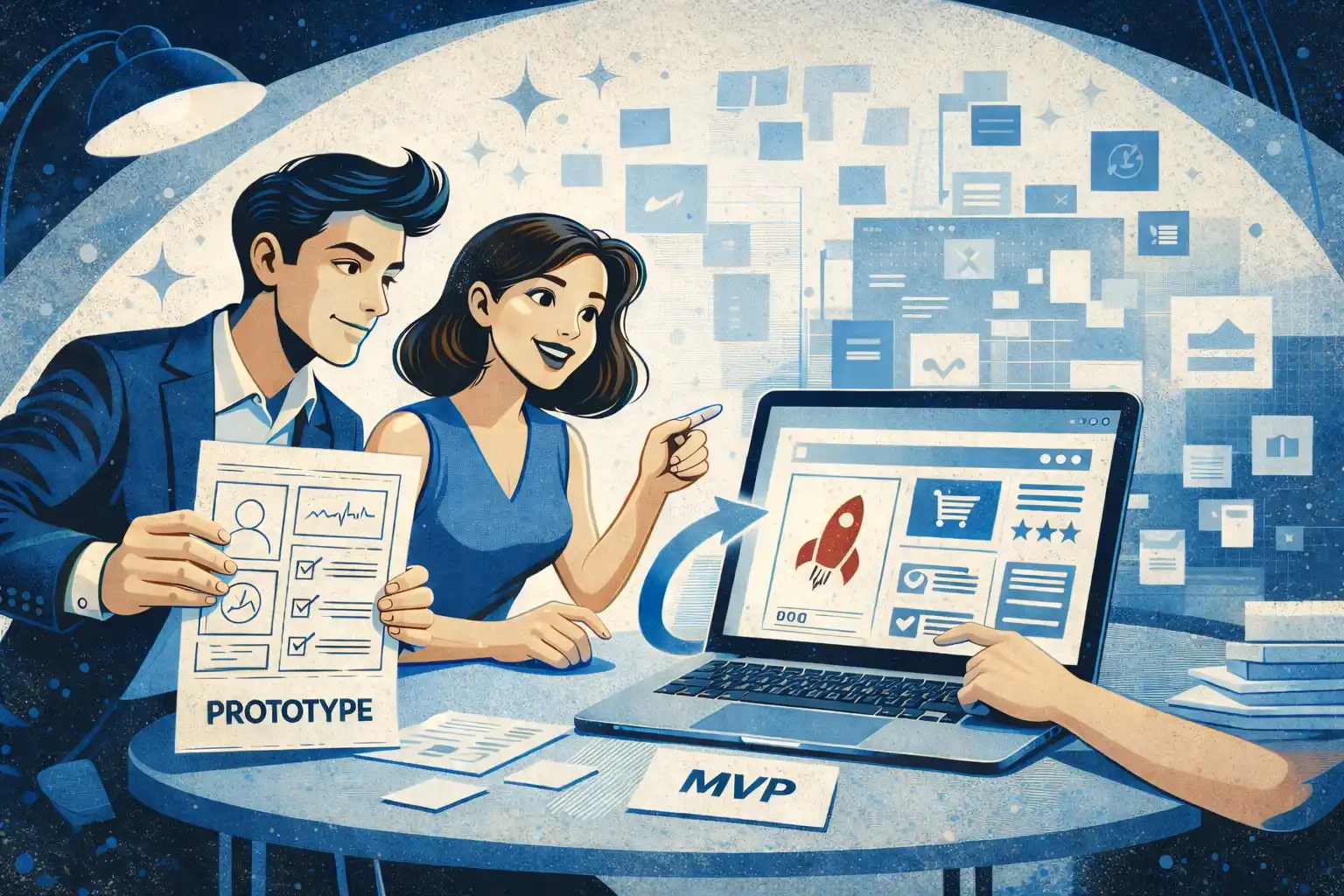
4) Clickable prototype usability test
Test comprehension and flow before real development.
Measure:
- time to complete the primary task
- where people hesitate
- what they misunderstand
5) Concierge / manual fulfillment
Deliver the outcome manually behind the scenes.
This validates:
- the outcome is valuable
- the workflow is realistic
- what needs automation first
6) Tiny live MVP with analytics
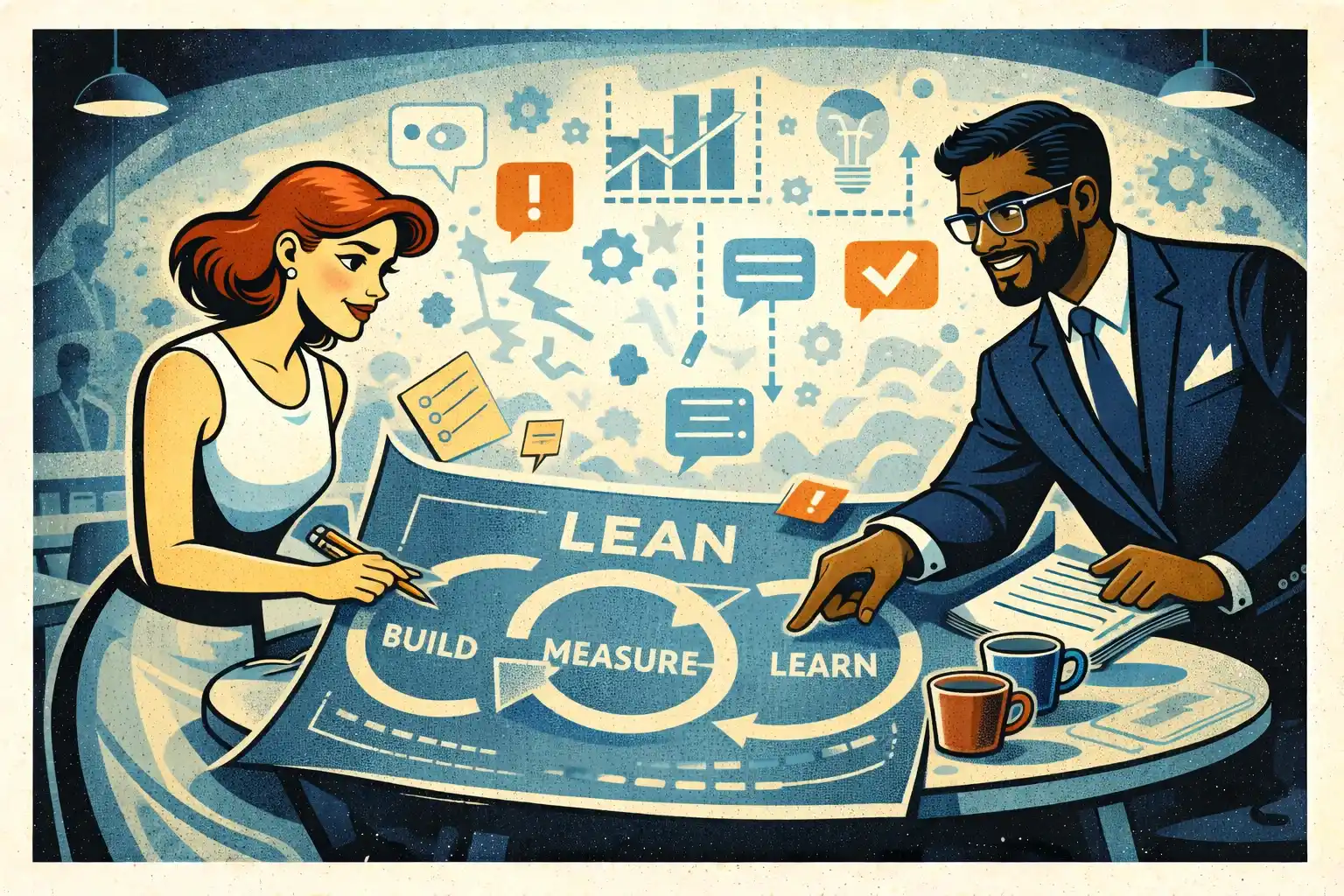
Ship the smallest loop and track it properly.
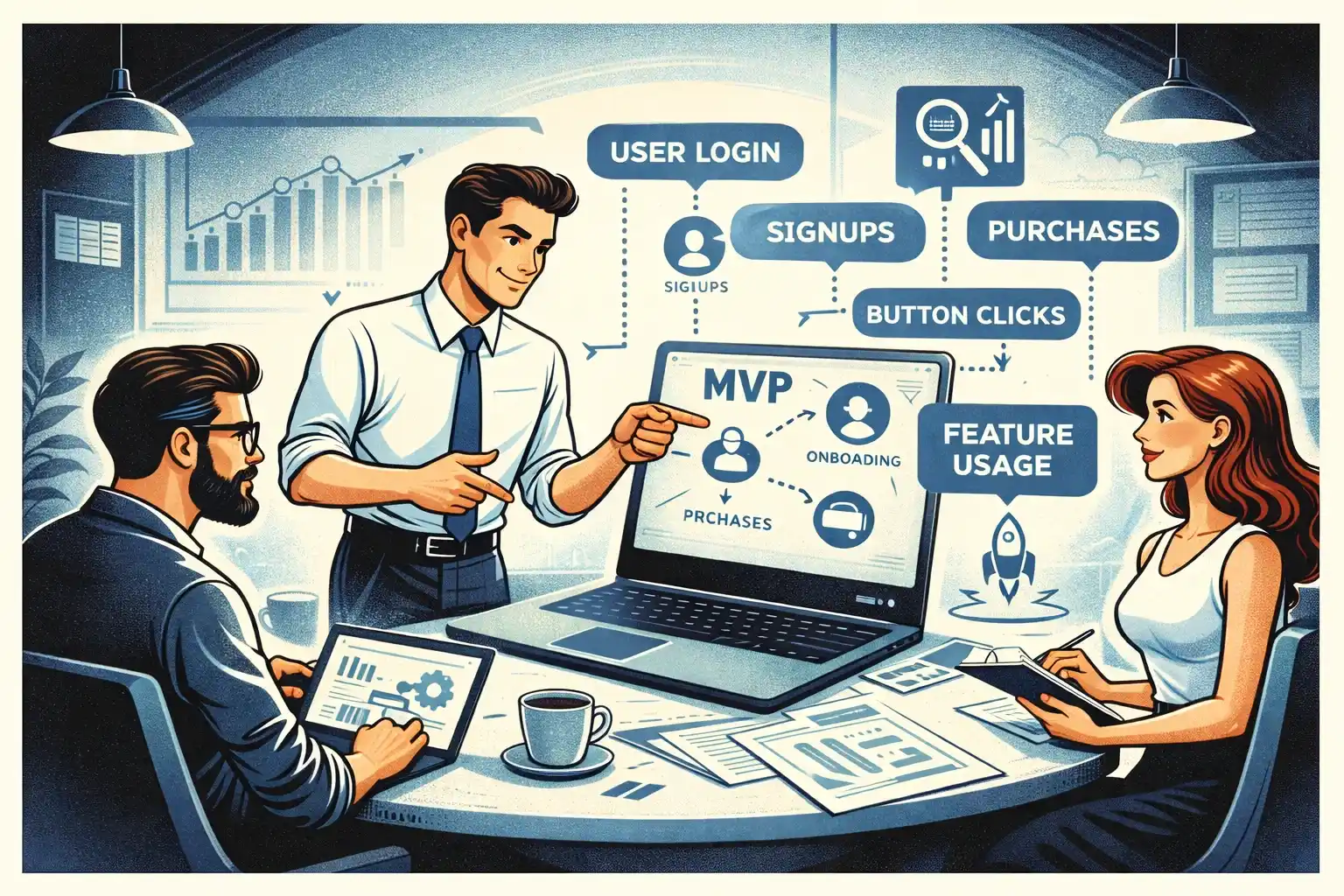
Start with basic events:
- signup / onboarding completion
- first success action
- second success action
- drop-off points
If you want a simple dashboard approach that investors and founders both understand, see Your First Product Metrics Dashboard: What Early-Stage Investors Want to See.
What to measure (without drowning in analytics)
Early-stage teams don’t fail because they track too little.They fail because they track noise.
Start with three buckets:
- Activation: do users reach the first “aha” moment?
- Engagement: do they repeat the core action?
- Conversion: do they commit (pay, book, invite, request access)?
Write one sentence for each:
- “We believe X. We’ll know it’s true when Y happens.”
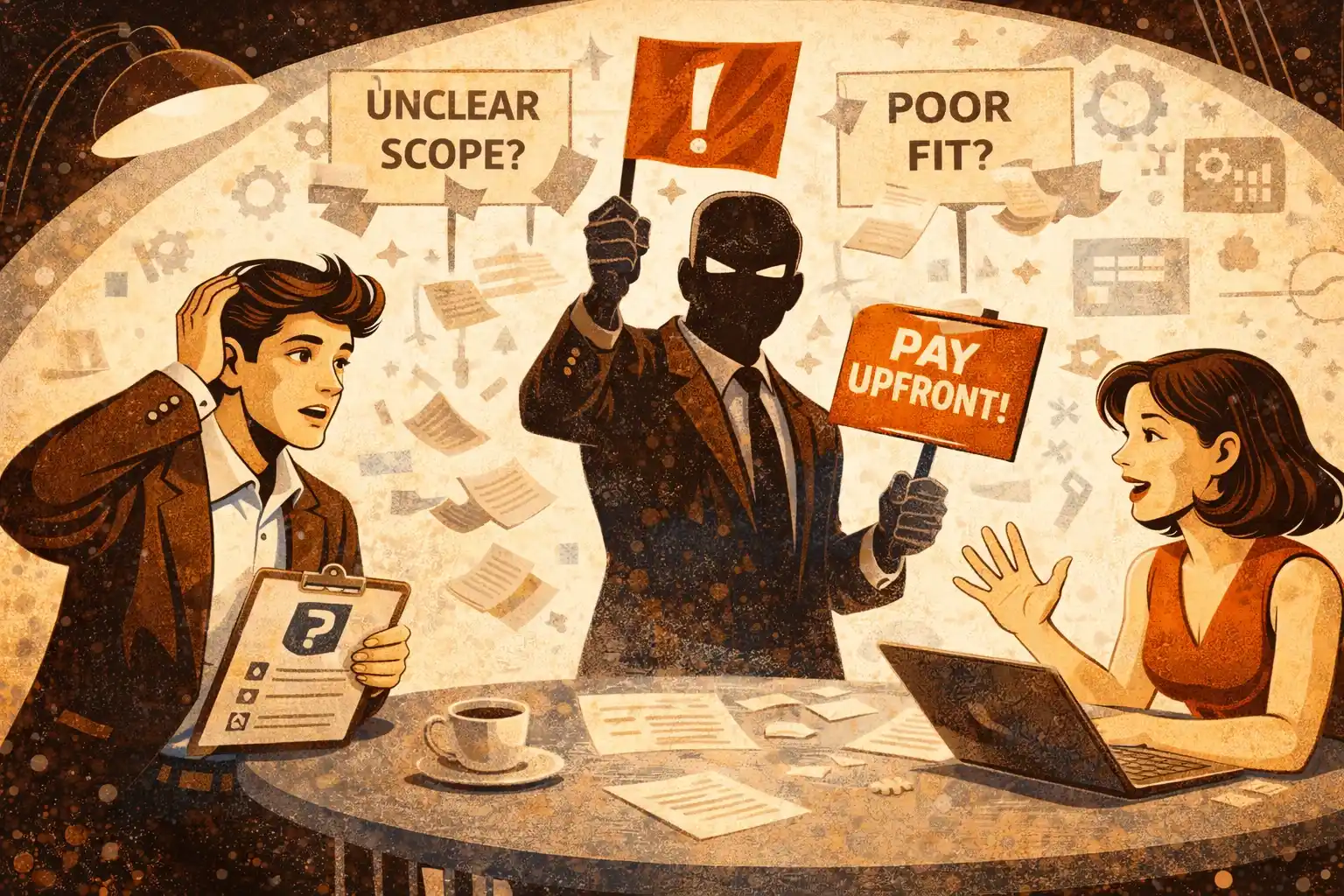
Red flags that mean you’re testing the wrong thing
- you’re testing feature polish before demand
- you can’t explain your pass/fail criteria
- your “validation” is likes, views, or generic compliments
- you keep adding scope to avoid shipping
- you collect feedback but never make a decision
If you feel stuck in endless iteration, Launching an MVP the Right Way in 2026 will help you reset the loop.
Thinking about building a startup MVP in 2026?
At Valtorian, we help founders design and launch modern web and mobile apps — including AI-powered workflows — with a focus on real user behavior, not demo-only prototypes.
Book a call with Diana
Let’s talk about your idea, scope, and fastest path to a usable MVP.
FAQ
What should I validate first: the idea or the UI?
Validate the problem and the audience first. UI tests matter later, once you know you’re solving something real.
How many interviews are “enough” to validate demand?
Often 10–15 good interviews are enough to see patterns. You’re looking for repeated pain, urgency, and real workarounds.
What’s a strong validation signal for an early MVP?
A real commitment: pre-orders, paid pilots, booked calls, or repeat usage of the core workflow.
Do I need to build a full product to test willingness to pay?
No. You can test pricing with pre-orders, deposits, paid pilots, or “request access” flows tied to a clear offer.
What’s the biggest MVP testing mistake in 2026?
Testing features before demand — then mistaking compliments for validation.
How do I avoid endless testing and actually ship?
Set pass/fail criteria upfront, time-box experiments, and commit to shipping one end-to-end loop for a small cohort.
























.webp)



.webp)