.webp)
Pre-Seed MVP Development for Unfunded Startups on a Budget
Building an MVP before raising funding is one of the hardest challenges for startup founders. Budgets are limited, risk tolerance is low, and every wrong decision costs time and momentum. This guide explains how unfunded and pre-seed startups can approach MVP development on a budget — what to focus on, what to cut, and how to validate a product idea without burning runway. The goal is not perfection, but learning fast and cheaply.

TL;DR: Pre-seed MVPs are not about building a “real product.” They are about proving that a problem exists and that users care enough to engage. The most successful unfunded startups build the smallest possible MVP, choose flexible tech, and avoid long-term commitments until validation. Budget discipline is a strategic advantage — not a limitation.
Why pre-seed MVPs are different
At pre-seed stage, you usually have:
- no funding
- limited time
- incomplete information
Your MVP is not meant to scale. It’s meant to answer questions.
Common pre-seed questions include:
- Do users actually want this?
- Will they use it more than once?
- Is the problem painful enough?
If your MVP tries to solve everything, it’s already too expensive.
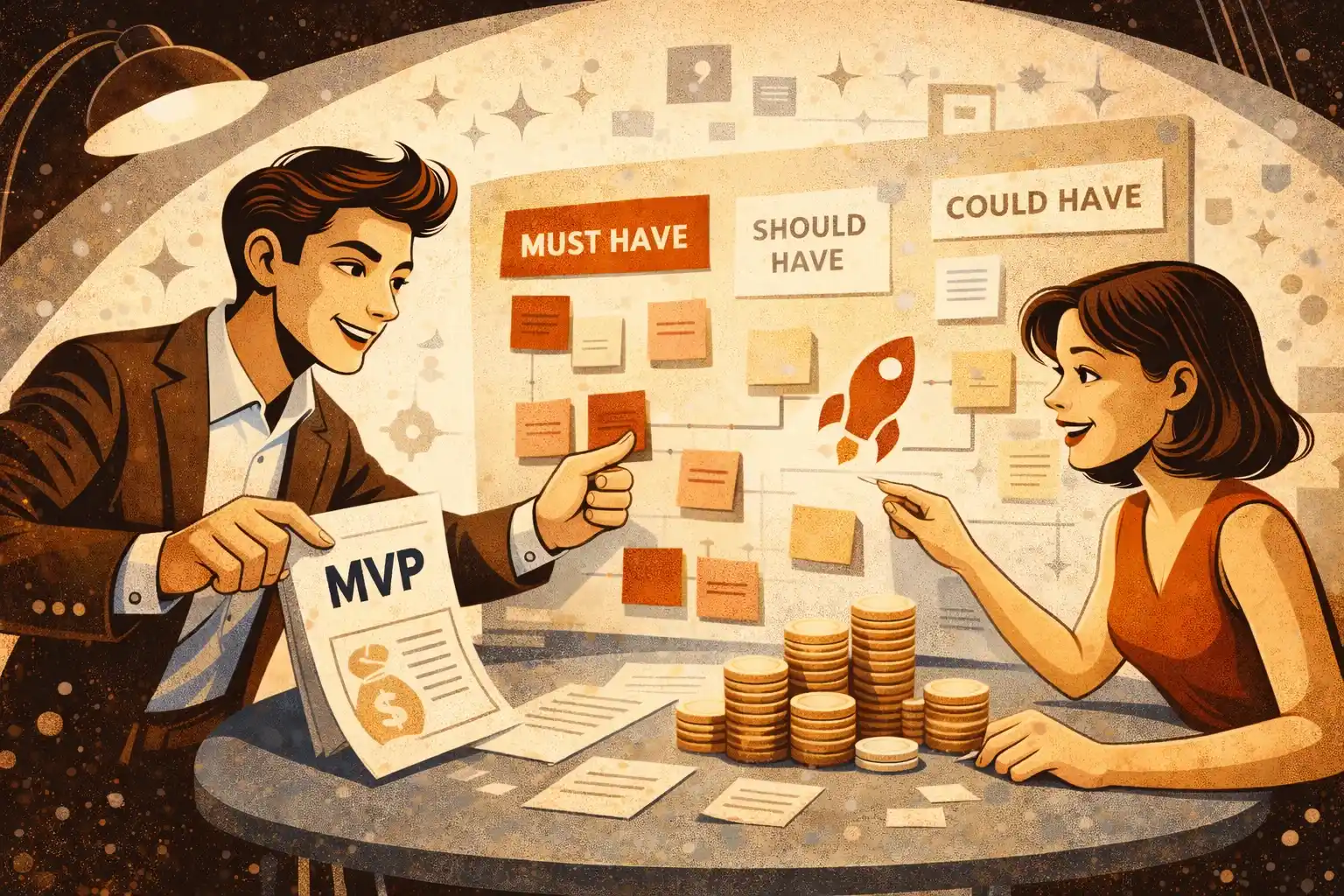
What a budget-friendly pre-seed MVP should focus on
A good pre-seed MVP usually has:
- one core user role
- one primary flow
- minimal automation
- no complex edge cases
Anything beyond that is a distraction.
If you’re unsure what belongs in v1, “MVP Development Services for Startups: What’s Actually Included” helps set realistic boundaries.
Where pre-seed founders waste the most money
1. Overbuilding features
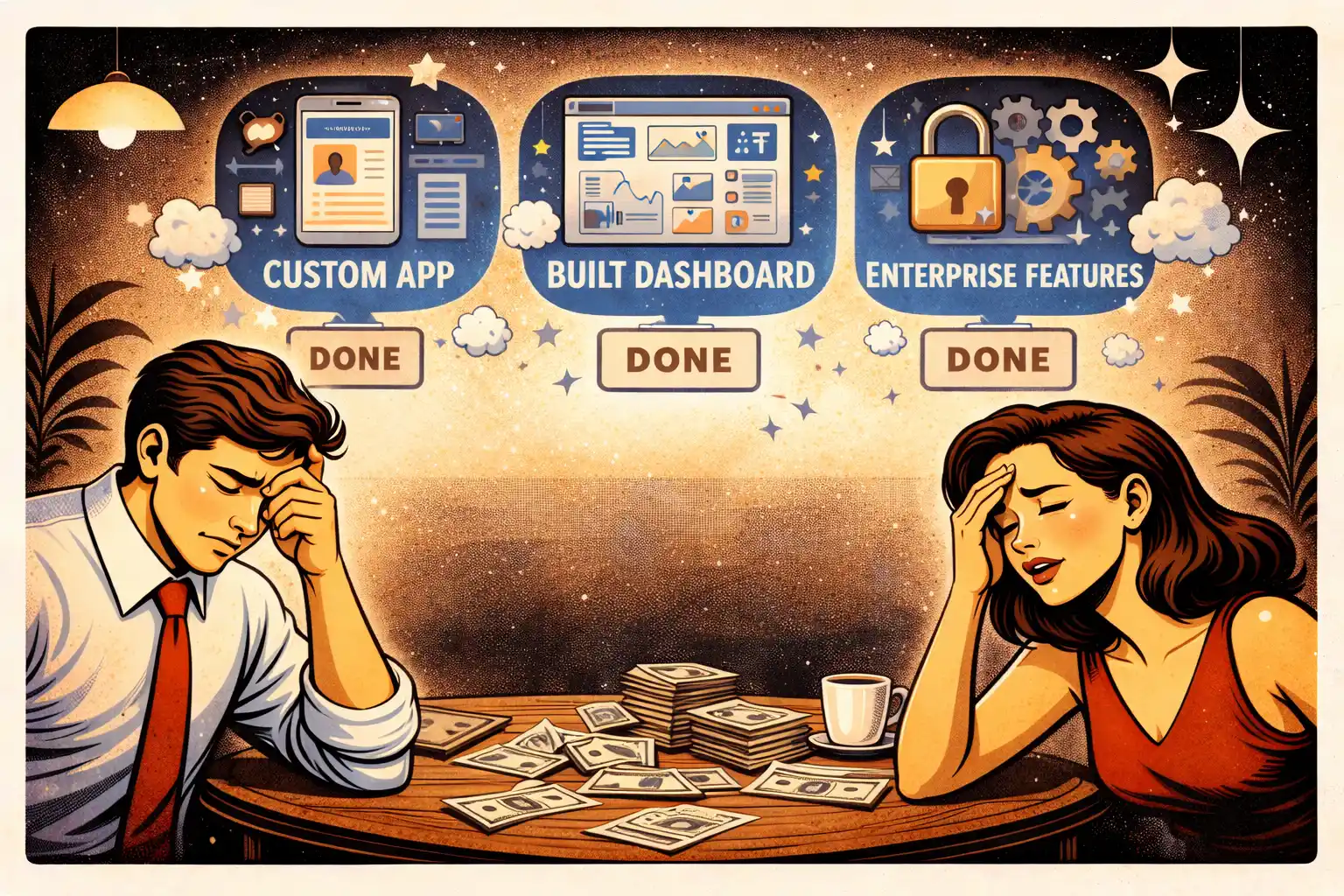
Dashboards, advanced settings, notifications, and customization rarely matter before validation.
2. Hiring too early
Building a team before traction creates fixed costs you can’t sustain.
3. Choosing rigid technology
Early tech decisions should enable change, not lock it out.
These mistakes are common among first-time founders and are explored further in “MVP Development for Non-Technical Founders: Common Mistakes”.
Smart ways to cut MVP costs without cutting learning
Reduce scope, not quality
A smaller, well-built MVP beats a large, unstable one.
Use existing services
Third-party tools can replace months of custom development at pre-seed stage.
Delay anything that requires scale
Performance optimization, advanced analytics, and automation can wait.
For architecture decisions that keep things flexible, “Web App Development for Startups: Architecture Basics for Non-Tech Founders” is a useful primer.
Choosing the right development setup on a budget
At pre-seed stage, founders usually choose between:
- freelancers
- small MVP studios
- doing part of the work themselves
Each has trade-offs.
If you’re unsure which path fits your situation, “Startup App Development Company vs Freelancers vs In-House Team” breaks this down clearly.
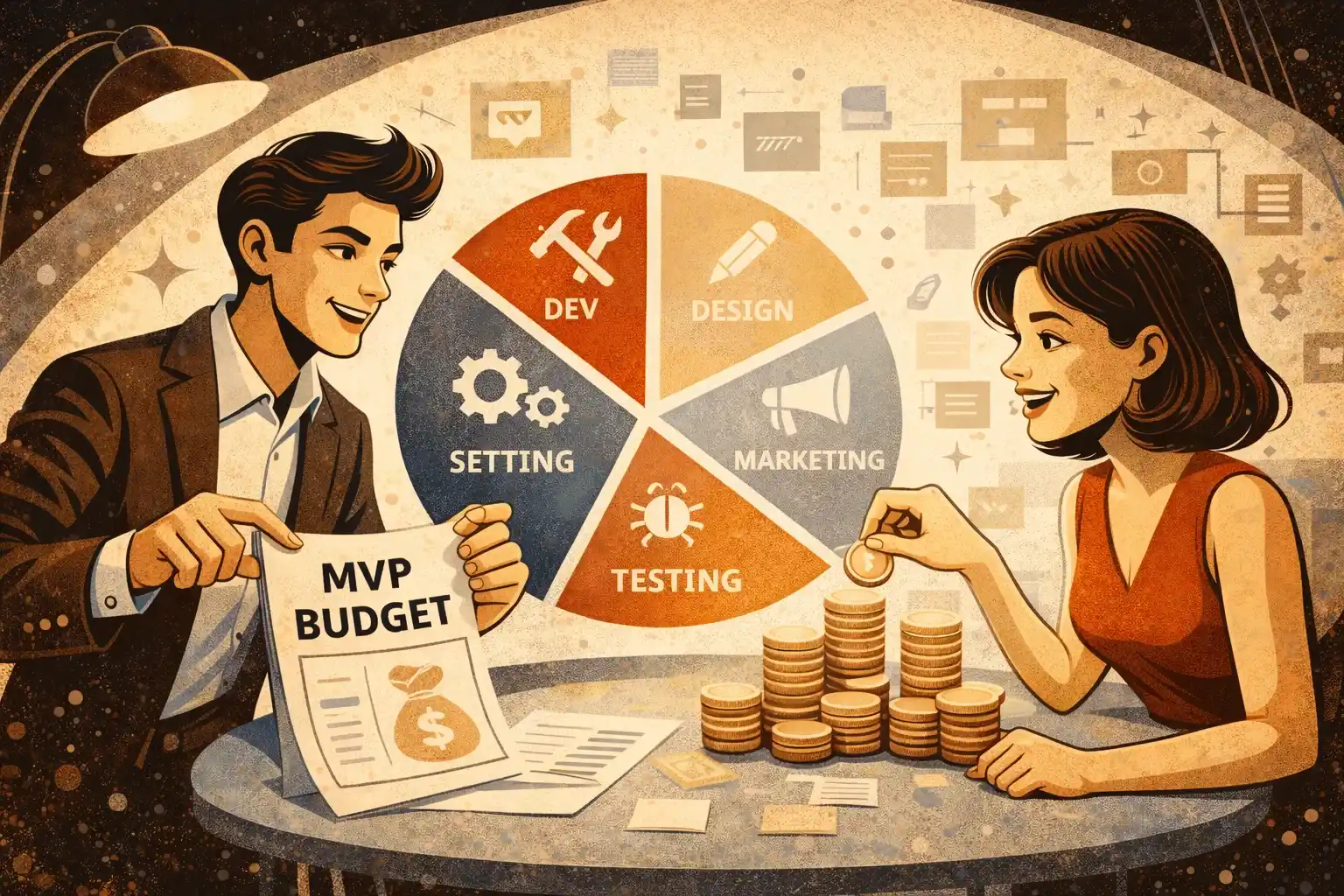
Cost expectations for pre-seed MVPs
Budget MVPs don’t mean cheap work — they mean focused work.
Costs depend on:
- backend complexity
- number of integrations
- product clarity
For realistic benchmarks, “MVP Development Cost in 2025: How Much Does It Really Cost?” provides helpful context.
How AI can help pre-seed startups save money
Used correctly, AI can:
- speed up prototyping
- reduce repetitive coding
- improve early testing
Used poorly, it increases technical debt.
For a realistic view, “AI-Powered MVP Development: Save Time and Budget Without Cutting Quality” explains where AI actually helps.
What investors expect from a pre-seed MVP
Investors rarely expect:
- perfect UX
- scalable architecture
- full feature sets
They do expect:
- evidence of user interest
- clarity of problem
- ability to iterate quickly
Your MVP should support your story — not overshadow it.
What investors expect from a pre-seed MVP
Investors rarely expect:
- perfect UX
- scalable architecture
- full feature sets
They do expect:
- evidence of user interest
- clarity of problem
- ability to iterate quickly
Your MVP should support your story — not overshadow it.
Trying to build an MVP before raising funding?
At Valtorian, we help pre-seed founders design lean MVPs that maximize learning while minimizing cost — without locking you into bad decisions.
Book a call with Diana
Get a clear MVP plan that fits your budget.
FAQ — Pre-Seed MVP Development
Can I build an MVP with almost no budget?
Yes — if you scope aggressively and focus on learning.
Should I raise money before building an MVP?
Often no. A small MVP improves fundraising.
Is no-code a good option at pre-seed stage?
Sometimes, but it has limits.
How long should a pre-seed MVP take?
Usually 3–6 weeks.
What’s the biggest pre-seed MVP mistake?
Trying to impress instead of validate.
Should I hire developers or a studio?
Depends on scope and management capacity.
When should I stop cutting costs?
When cost-cutting blocks learning.




















































.webp)




.webp)