.webp)
Fintech and Healthcare MVP Development: How Compliance Changes the Plan
Fintech and healthcare startups cannot approach MVP development the same way consumer apps do. Compliance, data privacy, security standards, and industry‑specific risks fundamentally reshape timelines, scope, architecture, and even design decisions. This article explains how regulations like KYC/AML, PCI DSS, and HIPAA/GDPR change your MVP roadmap — what must be included in version one, what can wait, and how founders can move fast without exposing themselves to legal or operational risk.

TL;DR: Compliance forces fintech and healthcare MVPs to slow down in some areas (security, architecture, data flow) but speed up in others (scope clarity, documentation, early risk analysis). You can't skip KYC/AML in fintech, and you can't ignore PHI protection in healthcare — so the MVP must include compliance‑critical flows from day one. This doesn’t make development impossible; it means the plan changes. With the right process, you can still launch in 6–10 weeks.
Why regulated MVPs are fundamentally different
If you're building for finance or healthcare, you are not building a typical MVP. You’re building a product inside an environment with:
- strict security expectations
- legal consequences for mistakes
- mandatory audits or documentation
- higher data‑sensitivity
- additional user verification workflows
And before you choose your tech stack or define screens, you must define what regulations apply.
If you haven’t yet clarified the core flows of your MVP, start with “App Development for Non-Technical Founders: A Step-by-Step Guide” — it's much easier to plan compliance when your flows and user roles are clear.
Fintech MVPs: Why compliance comes first
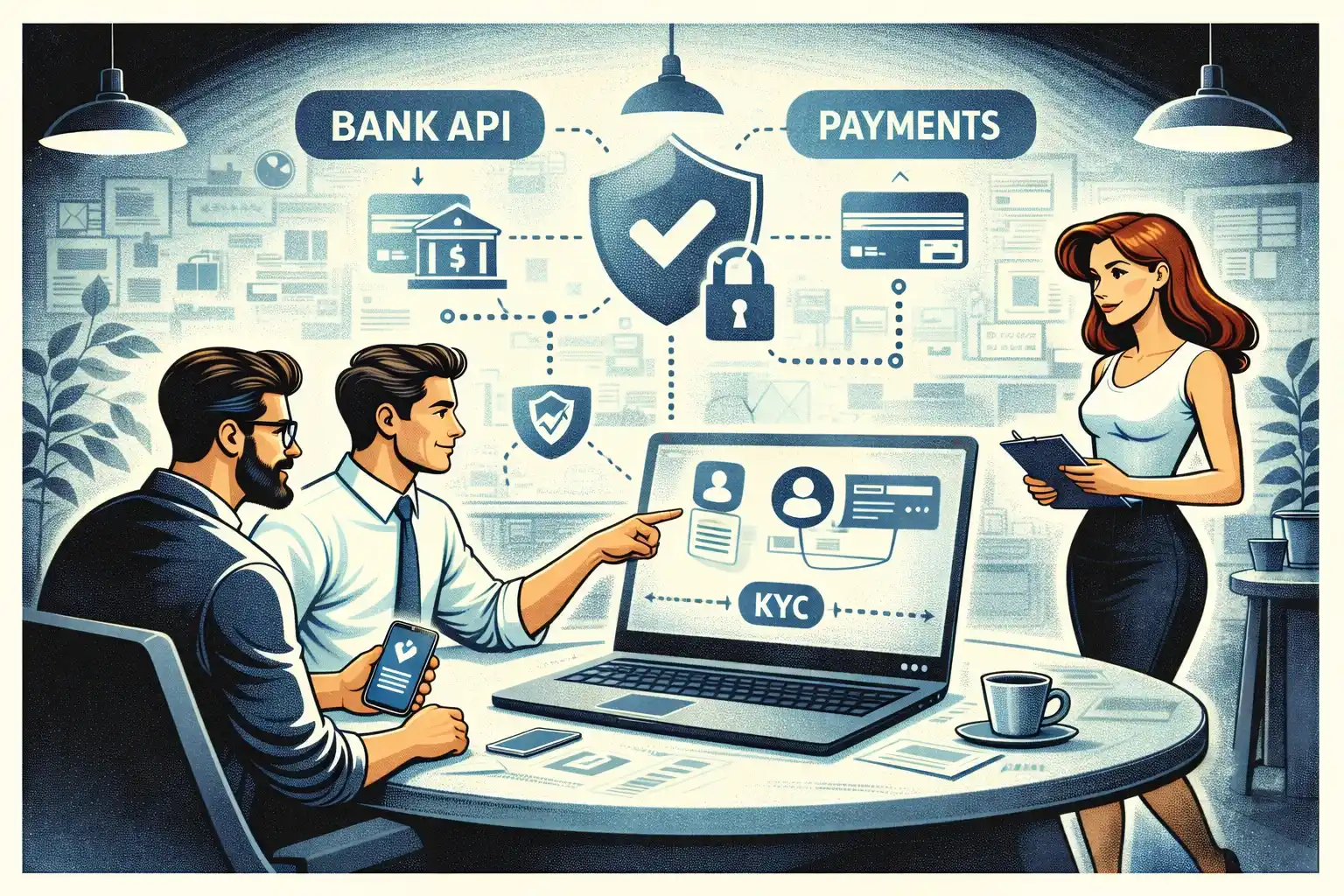
Fintech products deal with money, transactions, and identity. This automatically triggers compliance requirements such as:
- KYC (Know Your Customer)
- AML (Anti-Money Laundering)
- PCI DSS when handling card information
- SOX / internal audit controls (depending on region)
These requirements change your MVP plan significantly.
Impact on MVP speed and cost
MVP speed
- With a good team, both React Native and Flutter can deliver an MVP in 4–8 weeks, depending on scope.
- Flutter can be faster for complex UI because many components and effects are built-in.
- React Native can be faster when a team reuses existing packages and patterns from previous projects.
MVP cost
- React Native devs may be slightly cheaper or more available in many markets simply due to JavaScript popularity.
- Flutter devs might be a bit harder to find, but often are strongly motivated and specialized in mobile.
- Overall cost, however, is impacted more by your scope and clarity than by RN vs Flutter.
What fintech MVPs must include in v1 (non-negotiable)
1. Identity verification (KYC)
This may include:
- ID document upload
- Selfie verification
- Third-party provider integration (Onfido, Persona, Sumsub)
2. Transaction monitoring logic (AML)
Even a simple MVP must:
- log transactions
- flag suspicious patterns
- provide audit-ready records
3. Secure data architecture
You cannot store sensitive data casually.Encryption, segregated environments, and access control are part of MVP v1.
4. Customer support flow for compliance events
Fintech apps need:
- manual review dashboard
- escalation workflows
- secure export of compliance logs
If you're evaluating total MVP cost with these compliance layers, refer to “MVP Development Cost in 2025: How Much Does It Really Cost?” — compliance adds cost, but clarity keeps it manageable.
What fintech MVPs can delay until later
You don't need in v1:
- full EHR/EMR integration
- advanced scheduling automation
- analytics dashboards for clinicians
- custom reporting engines
- complex medication workflows
If the MVP proves real demand, you build layers gradually.
How compliance reshapes your MVP roadmap
Compliance changes scope, architecture, and timelines.
1. Scope becomes narrower but deeper
In consumer apps, version one includes “as many features as possible.”In regulated apps, version one includes only what is legally permissible + necessary for audits.
2. Architecture must be intentional from day one
You can't "refactor later" if PHI or financial data is already stored incorrectly.Security decisions for fintech and healthcare MVPs must be made before development begins.
3. Documentation actually matters
Founders often ignore documentation for speed — in regulated spaces, it saves you.You need:
- data-flow diagrams
- architecture notes
- access policies
- a privacy matrix (who sees what)
4. Third-party integrations become essential
Fintech and healthcare startups rarely build everything custom.They rely on:
- ID verification tools
- AML transaction services
- HIPAA compliant communication APIs
- secure file storage (e.g., AWS S3 with PHI policies)
These integrations influence cost and timeline.
How compliance impacts cost and time
A normal MVP may take 4–6 weeks.A fintech or healthcare MVP may take 6–12 weeks, depending on:
- number of compliance flows
- required integrations
- documentation scope
- complexity of data access rules
Compliance doesn’t mean you move slowly — it means you move correctly.And correct MVP planning prevents months of rework.
Founder mistakes in regulated MVP development
Mistake 1: Treating fintech/healthcare like a consumer app
You can move fast — but not recklessly.
Mistake 2: Skipping compliance in v1
It will cost you exponentially more to fix later.
Mistake 3: Wrong team
You need a partner who understands both product and compliance thinking.
Mistake 4: Assuming compliance blocks speed
In reality, it clarifies scope and reduces waste.
Building a fintech or healthcare MVP and unsure how compliance affects your plan?
At Valtorian, you work directly with the founders — a designer and a developer who have shipped regulated MVPs and understand the balance between speed, safety, and realistic scope.
If you want clarity on what must be included in v1, what can wait, and how to launch safely in 6–10 weeks — let’s talk.
We’ll review your idea, map compliance-sensitive flows, and outline the fastest safe path to launch.
FAQ — Compliance for Fintech & Healthcare MVPs
Does compliance make MVP development slower?
A bit — but it mostly makes planning more structured. With the right team, fintech/healthcare MVPs can still launch in 6–10 weeks.
Do I need full compliance audits before launching an MVP?
Not always. You need compliant architecture and workflows. Full certification often happens post-MVP.
Can I skip KYC/AML or PHI protection in early versions?
No. These are legal requirements, not “nice-to-haves.”
Which industries are stricter: fintech or healthcare?
Healthcare is stricter about data; fintech is stricter about identity and transactions.
Does compliance make MVPs much more expensive?
It increases cost, but predictable scoping keeps budgets reasonable.
Do I need a compliance officer for MVP development?
Not always — but you need an MVP team that understands compliance constraints.
Which tech stack is best for regulated MVPs?
It depends on flows, data sensitivity, and infrastructure — not the framework alone.






























































.webp)




.webp)