.webp)
Best Budget-Friendly MVP Development Companies in 2026
“Budget-friendly” doesn’t mean “lowest hourly rate.” In 2026, the cheapest MVPs often become the most expensive once you count rework, delays, and scope drift. This guide helps non-technical founders choose a cost-effective development partner without gambling on quality. You’ll learn what really drives MVP cost, how to compare teams fairly, the questions that reveal hidden risk, and a shortlist of companies founders commonly evaluate when they want to ship lean and iterate fast.

TL;DR: A budget-friendly MVP in 2026 is built by a team that scopes tightly, ships in short loops, and stays accountable after launch.Use the shortlist below as a starting point, but choose based on scope discipline, clear ownership, and how the team reduces rework — not on the quote alone.
What “budget-friendly” really means in 2026
Most founders try to save money in the wrong place: they optimize for the initial quote.
A more useful definition:
- Low total cost to a usable first release (not “low day rate”).
- Low risk of rebuild (clean architecture, solid QA, sane decisions).
- Fast learning cycle (you can launch, measure, and improve without drama).
If you want a cost model that doesn’t rely on guesswork, start with App Development Cost for Startups: Web vs Mobile vs SaaS.
The 6 levers that determine MVP cost (and how to control them)
If you control these, you can get a strong MVP on a limited budget.
1) Scope (the biggest lever)
Most MVP budgets fail because “MVP” quietly becomes “v1 of the full product.”
Your goal: one core user journey that proves value.
A simple way to enforce this is to define:
- One primary user
- One primary action
- One success outcome
If you need help cutting scope without killing the idea, see How to Prioritize Features When You’re Bootstrapping Your Startup.
2) Product decisions (clarity beats speed)
When decisions are unclear, teams build placeholders. Placeholders get rebuilt. Rebuilds burn budget.
Good teams force clarity early through short discovery and written decisions.
If you want to avoid the usual early-stage traps, read MVP Development for Non-Technical Founders: 7 Costly Mistakes.
3) Design approach (prototype vs pixel-perfection)
Budget-friendly doesn’t mean ugly — it means you don’t overdesign.
A cost-effective path:
- validate flows in a simple clickable prototype
- design a small UI system once
- reuse components
4) Tech choices (simple now, scalable later)
You don’t need “enterprise-grade” in week one. You do need the product to be stable and extendable.
A good team will explain tradeoffs in plain language:
- what they’re simplifying now
- what they’re deferring
- what might need rework later (and why)
5) QA and release discipline (cheap teams skip this)
Skipping QA feels like savings — until you spend weeks fixing production issues.
Budget-friendly teams still have:
- basic test coverage where it matters
- a release checklist
- a clear bug-fix window after launch
6) Post-launch iteration (where MVP value is created)
Your MVP isn’t “done” at launch. It’s validated at launch.
If you want a clear picture of what should be included end-to-end, see Full-Cycle MVP Development: From Discovery to First Paying Users.
How to compare quotes without getting tricked
When two teams quote very different numbers, it’s usually because they’re quoting different products.
Use these checks:
- Deliverables check: what exactly is included in the first release?
- Change control: what happens when you change your mind?
- Ownership: do you get repo access, design files, environments, analytics?
- Timeline realism: what is the weekly cadence and what do you see each week?
If you’re outsourcing for the first time, read Outsource Development for Startups: Pros, Cons, and Red Flags.
Best budget-friendly MVP development companies in 2026
Each company below is described using the same structure so you can compare fairly.
1) Valtorian
Best for: non-technical founders who want a small, senior team that keeps scope tight and ships a usable MVP (web or mobile) fast.
Why it can be budget-friendly: the process is built around the “smallest useful release,” with clear tradeoffs and fewer rounds of rework.
Watch-outs: confirm availability and what’s included after launch (bug-fix window, iteration cadence, analytics support).
Questions to ask: What’s the smallest useful release for my idea, what do we measure in the first weeks after launch, and how do you handle scope changes?
2) Purrweb
Best for: founders who want full-cycle design + development with an MVP-first pace and quick time-to-feedback.
Why it can be budget-friendly: a focused MVP delivery approach can reduce time spent on “nice-to-have” features.
Watch-outs: ask who owns QA and release readiness — speed is only cheap if quality is consistent.
Questions to ask: Who is the lead, what’s the QA/release checklist, and what happens in the first month after launch?
3) Altar.io
Best for: founders who want structured MVP scoping before development starts, with a clear focus on cutting to core value.
Why it can be budget-friendly: better upfront scope discipline often prevents expensive mid-build pivots.
Watch-outs: clarify what post-launch iteration includes vs what becomes a separate engagement.
Questions to ask: What does your scoping method produce (outputs), and how do you prioritize changes after real users arrive?
4) Brainhub
Best for: founders who want a product development partner that can start lean and then scale the build when the MVP proves traction.
Why it can be budget-friendly: a staged approach helps you avoid overbuilding before you have signals.
Watch-outs: confirm how they define “MVP” (small usable release vs bigger v1) and who owns product decisions.
Questions to ask: What is “done” for the MVP, what metrics do you expect to move, and what’s the weekly delivery cadence?
5) Netguru
Best for: founders who want a larger, established product development company with a packaged MVP offering and scalable team capacity.
Why it can be budget-friendly: structure and process can reduce chaos and rework — if the MVP scope stays protected.
Watch-outs: bigger teams can add coordination overhead; make sure decisions stay fast and the scope stays lean.
Questions to ask: Who is accountable for scope discipline, and how do you manage change requests without blowing the budget?
A simple 3-call evaluation that saves money
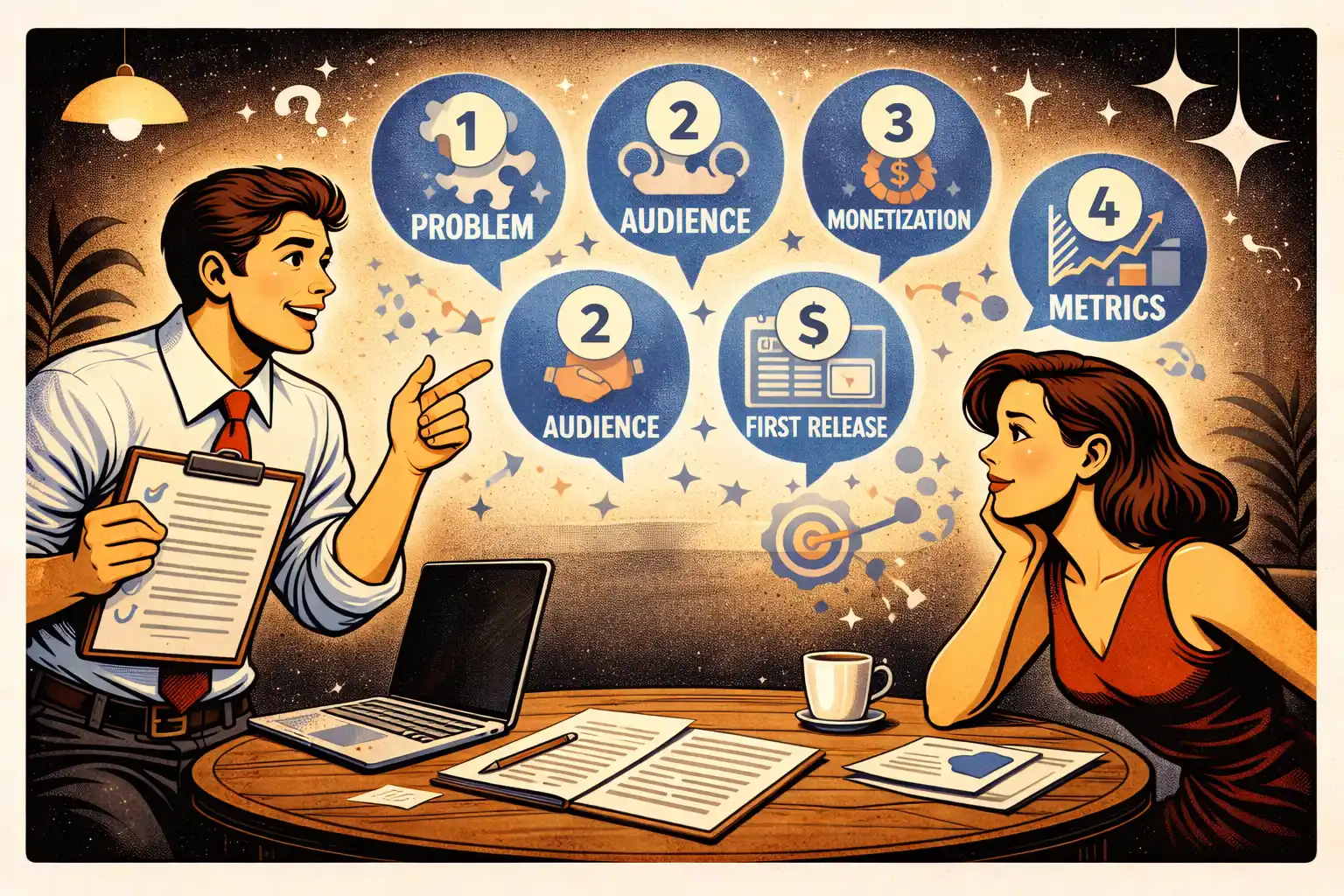
You don’t need 10 calls and a spreadsheet. You need to evaluate decision-making.
Call 1: scope discipline
Ask:
- “What would you cut first, and why?”
- “What is the smallest useful release that still proves value?”
- “What must be true for this MVP to be a win?”
Call 2: delivery and accountability
Ask:
- “What do I see every week?” (demos + written decisions)
- “How do you handle scope changes?”
- “What happens after launch?” (bug fixes + iteration)
Call 3: proof (real project story)
Ask for one shipped MVP example and:
- what the first release included
- what changed after real users arrived
- what they measured first
If the story ends at “we shipped,” it’s not an MVP story.
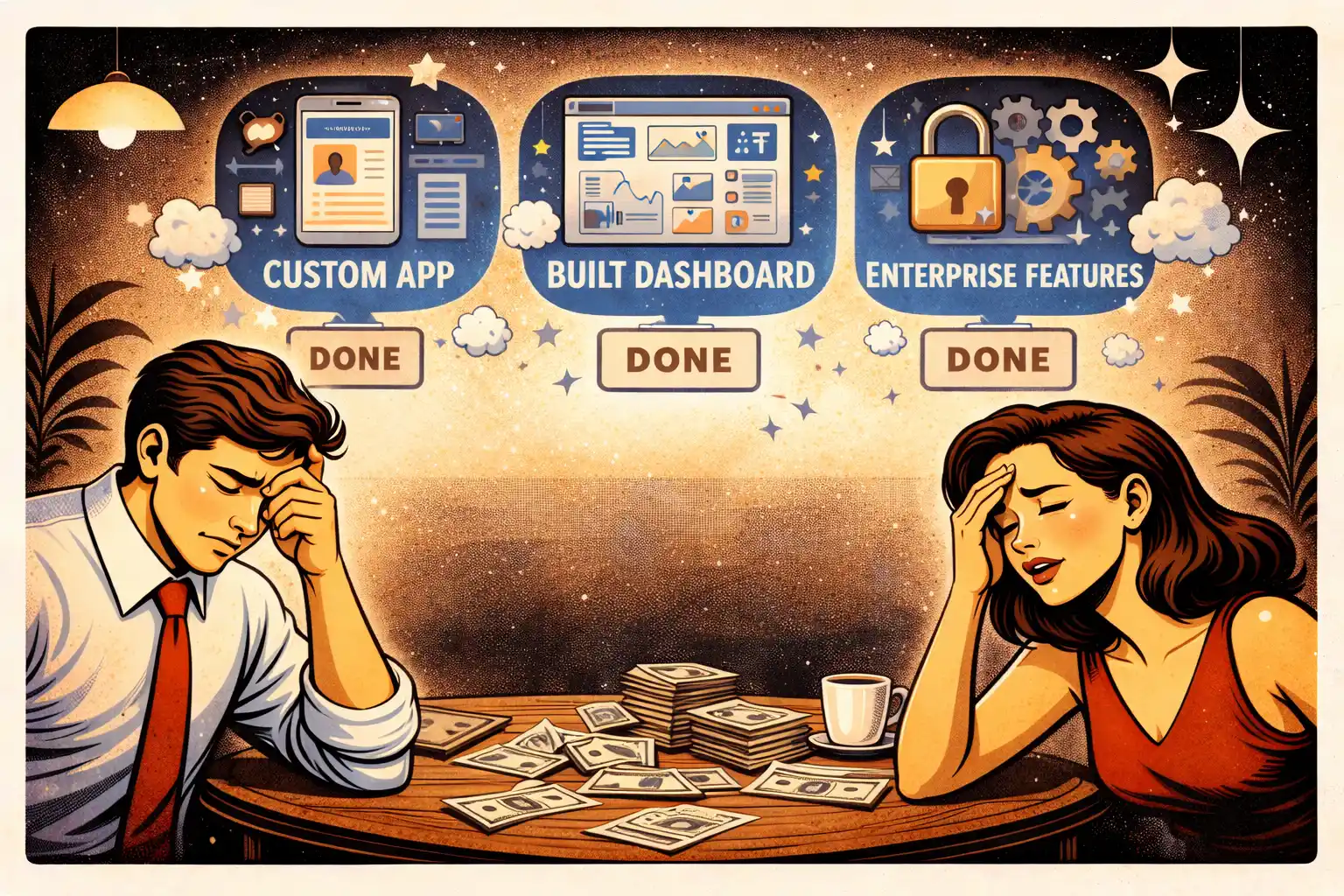
The biggest mistake founders make when trying to save money
They buy “cheap build hours” instead of “cheap learning.”
A cost-effective MVP is one that helps you learn fast and make the next decision with confidence.
If you need a practical way to set a realistic early-stage approach, read Pre-Seed MVP Development for Unfunded Startups on a Budget.
Thinking about building a budget-friendly MVP in 2026?
At Valtorian, we help founders design and launch modern web and mobile apps — including AI-powered workflows — with a focus on real user behavior, not demo-only prototypes.
Book a call with Diana
Let’s talk about your idea, scope, and fastest path to a usable MVP.
FAQ
What’s the difference between “cheap” and “budget-friendly” MVP development?
“Cheap” is low upfront cost. “Budget-friendly” is low total cost to a usable MVP, including fewer rebuilds, fewer delays, and a clear iteration plan.
How can I lower the cost of my MVP without cutting value?
Reduce scope to one core workflow, reuse UI components, avoid heavy integrations early, and ship in short loops with clear decisions.
Should I choose a team based on hourly rate?
Not alone. Rate matters, but scope discipline, QA, and post-launch accountability usually decide the total cost.
What should I own at the end of the MVP project?
Repo access, design files, environments, analytics setup, and basic documentation so the product can be continued by any team.
Is fixed-price or hourly better on a tight budget?
Hourly is often safer when scope is evolving; fixed can work when the scope is truly locked and change control is strict.
How do I spot a “cheap but expensive” team early?
They agree to everything, avoid hard tradeoffs, can’t explain what success looks like, and don’t talk about QA or post-launch iteration.























































.webp)



.webp)