.webp)
I Have a Startup Idea but No Developer: What to Do Next
Many founders have great startup ideas but get stuck at the same point: “I don’t have a developer.” The good news is you don’t need a technical cofounder to start building. This guide walks you through the first steps — validating the idea, defining your MVP, choosing the right development model, and avoiding costly mistakes — all in plain language. By the end, you’ll know exactly how to move from idea to working product without writing code yourself.

TL;DR: You don’t need a developer to start — and you definitely don’t need a technical cofounder yet. Begin with validation, define a lean MVP, choose the right development approach (often a compact senior studio), and avoid overbuilding. You can fully launch a production-ready MVP without hiring a developer full-time.
Step 1 — Validate the Problem Before Anything Else
Most non-technical founders feel “blocked” because they think they must start with development.
You shouldn’t.
Your first step is validation, not coding.
Ask:
- Who has this problem?
- How severe is it?
- What are they doing today instead?
- Would they switch to your solution?
- Would they pay for it?
If you’re not sure how to structure early validation, read “App Development for Non-Technical Founders: A Step-by-Step Guide” — it shows exactly how to shape your idea before talking to developers.
Validation saves months of wasted effort.
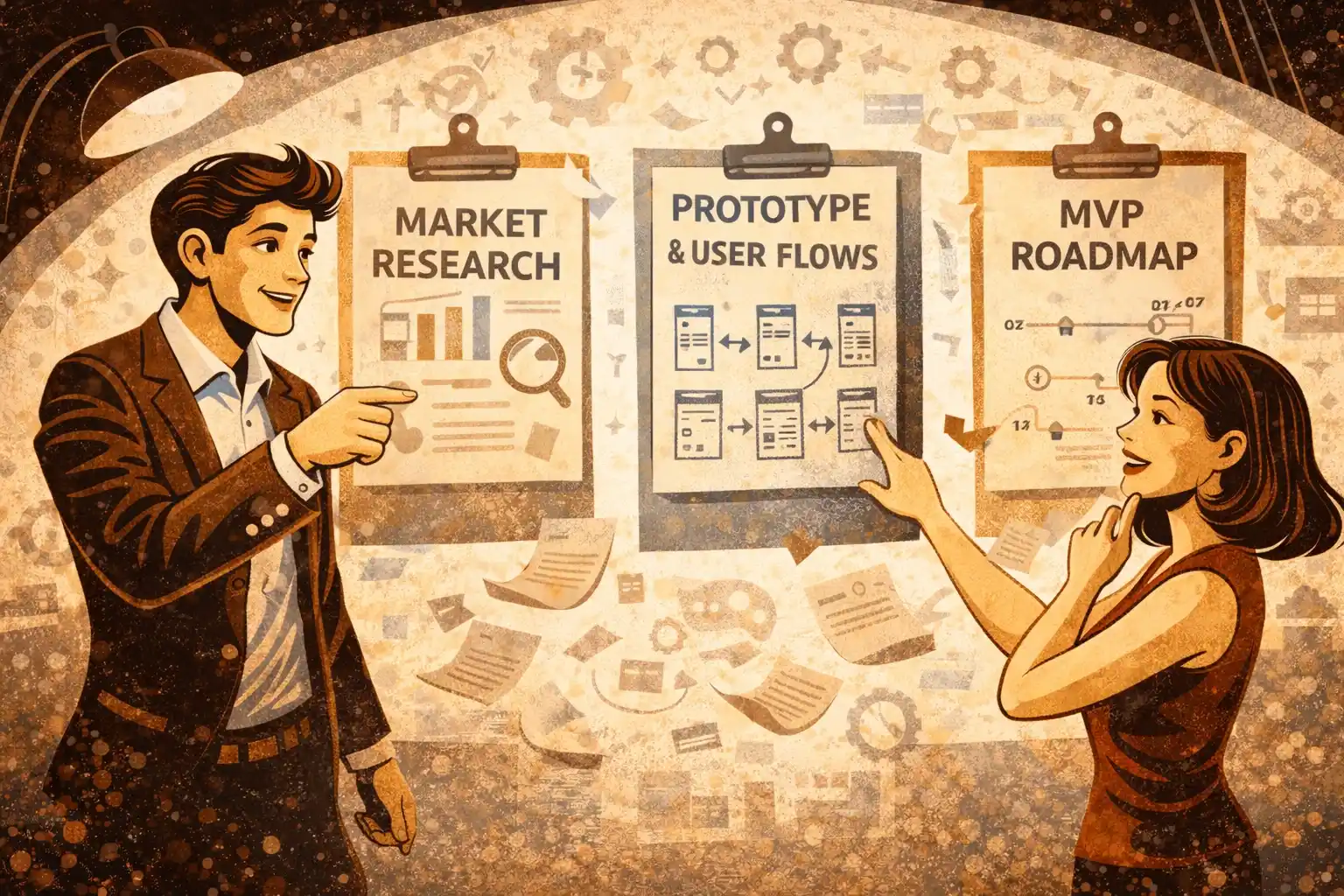
Step 2 — Convert Your Idea Into a Clear Product Outline
Investors and developers don’t work with ideas — they work with clarity.
You need to define:
- one core user
- one main problem
- one main flow
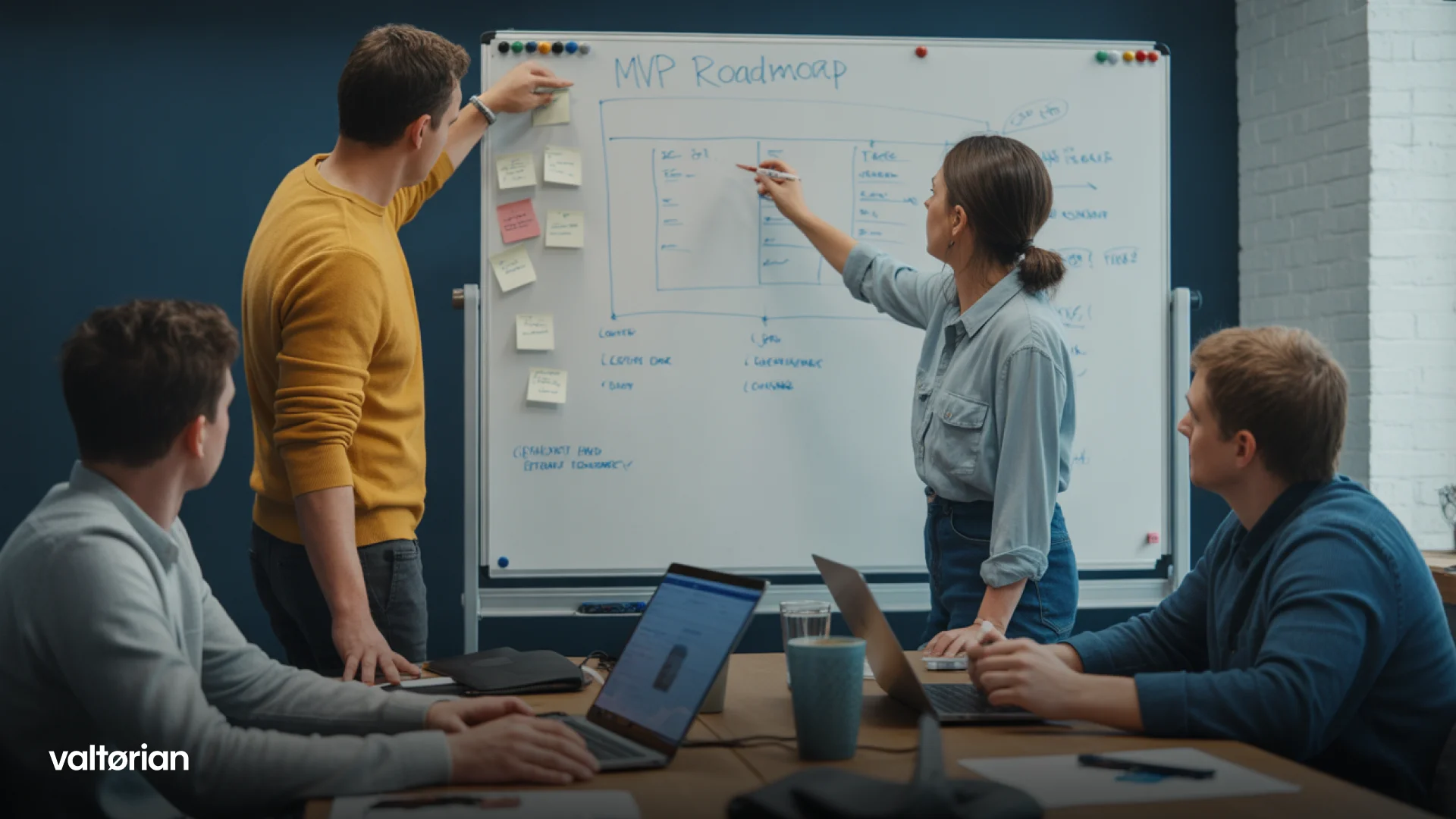
- the smallest version of the product
This becomes your “MVP outline.”
If you want deeper guidance on what belongs in an MVP, “MVP Development Services for Startups: What’s Actually Included” breaks down the full structure in simple language.
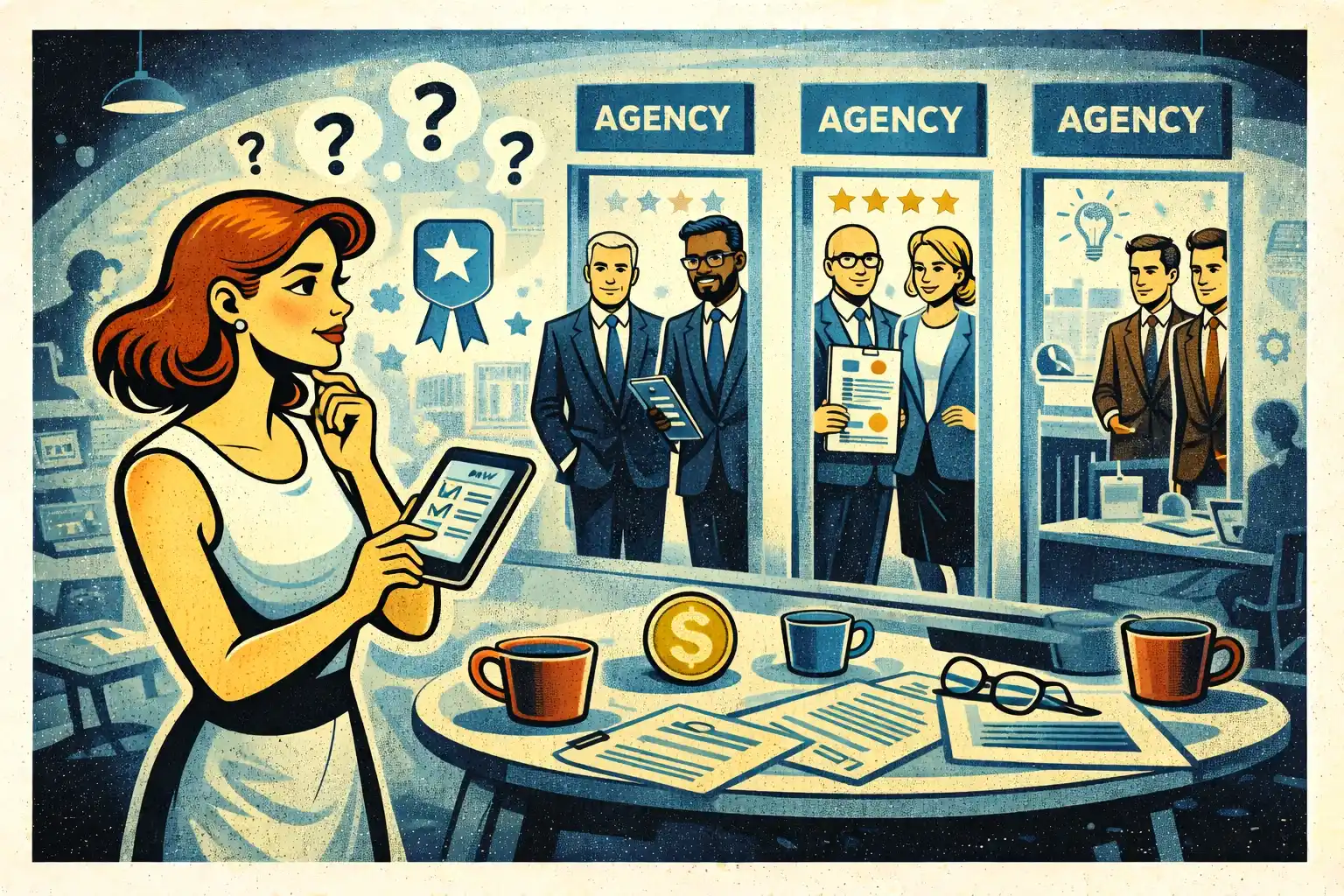
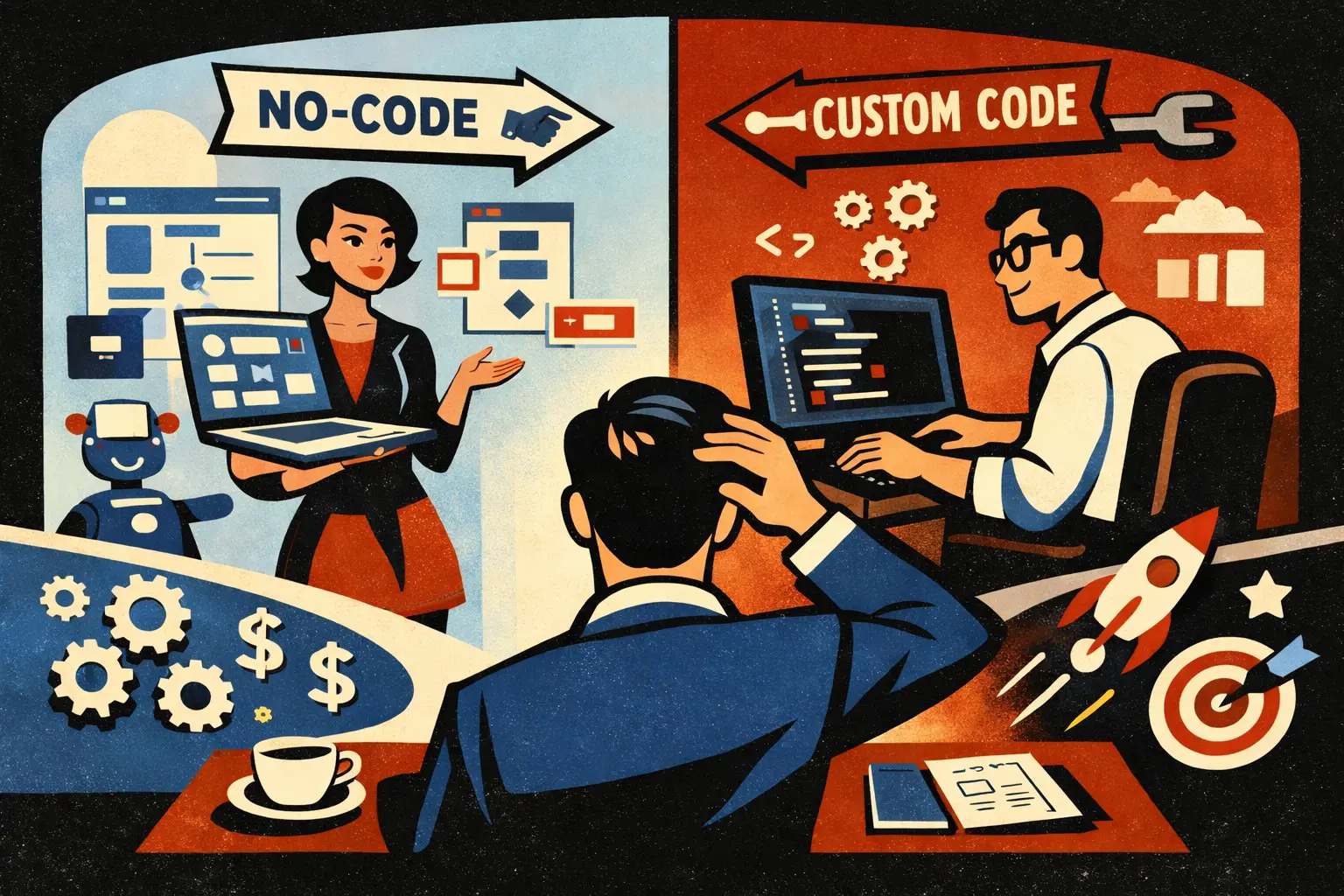
Step 3 — Choose the Right Development Path
At this stage, most founders panic:
“I need a CTO.”
“I need a full-time developer.”
“I can’t build without a technical cofounder.”
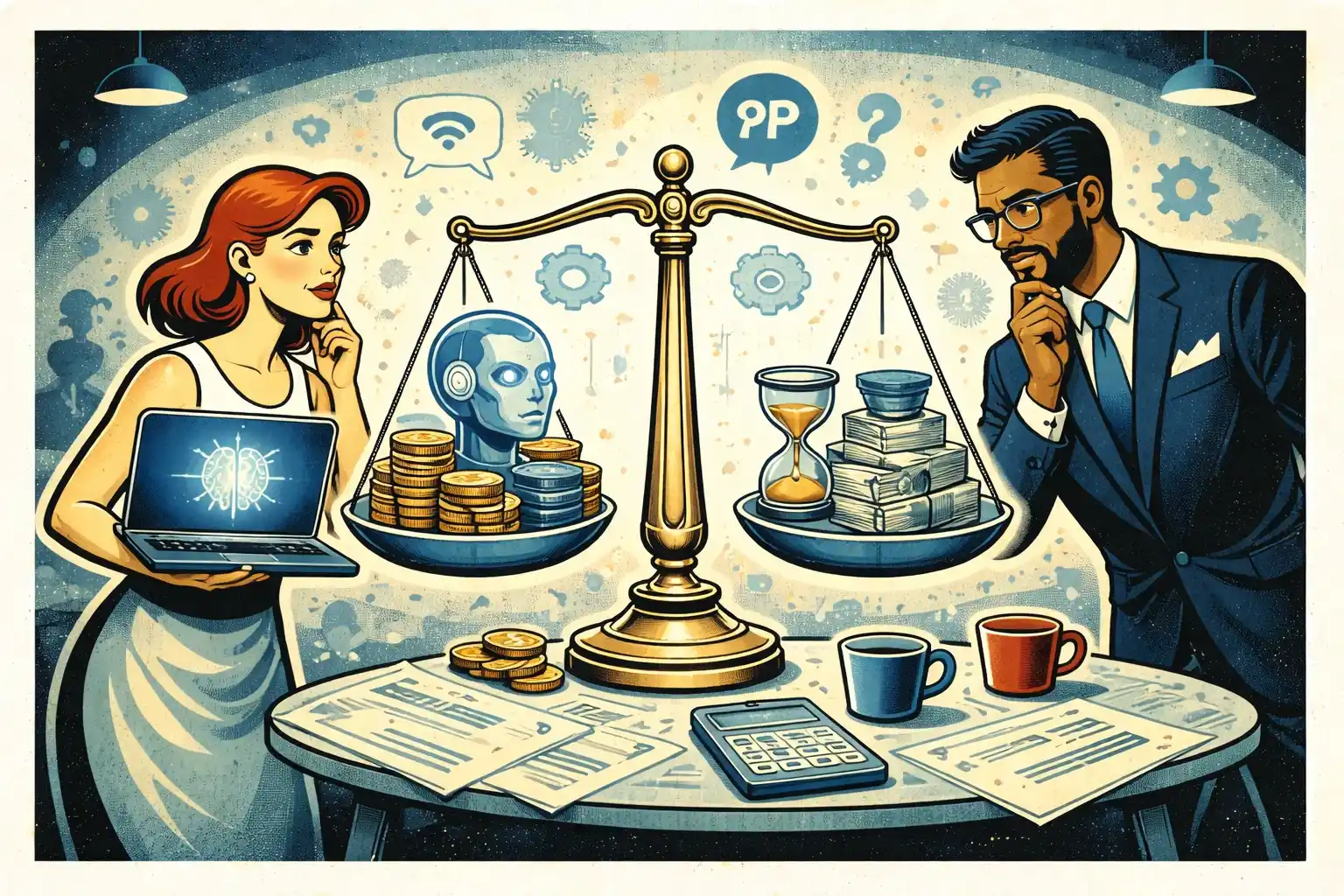
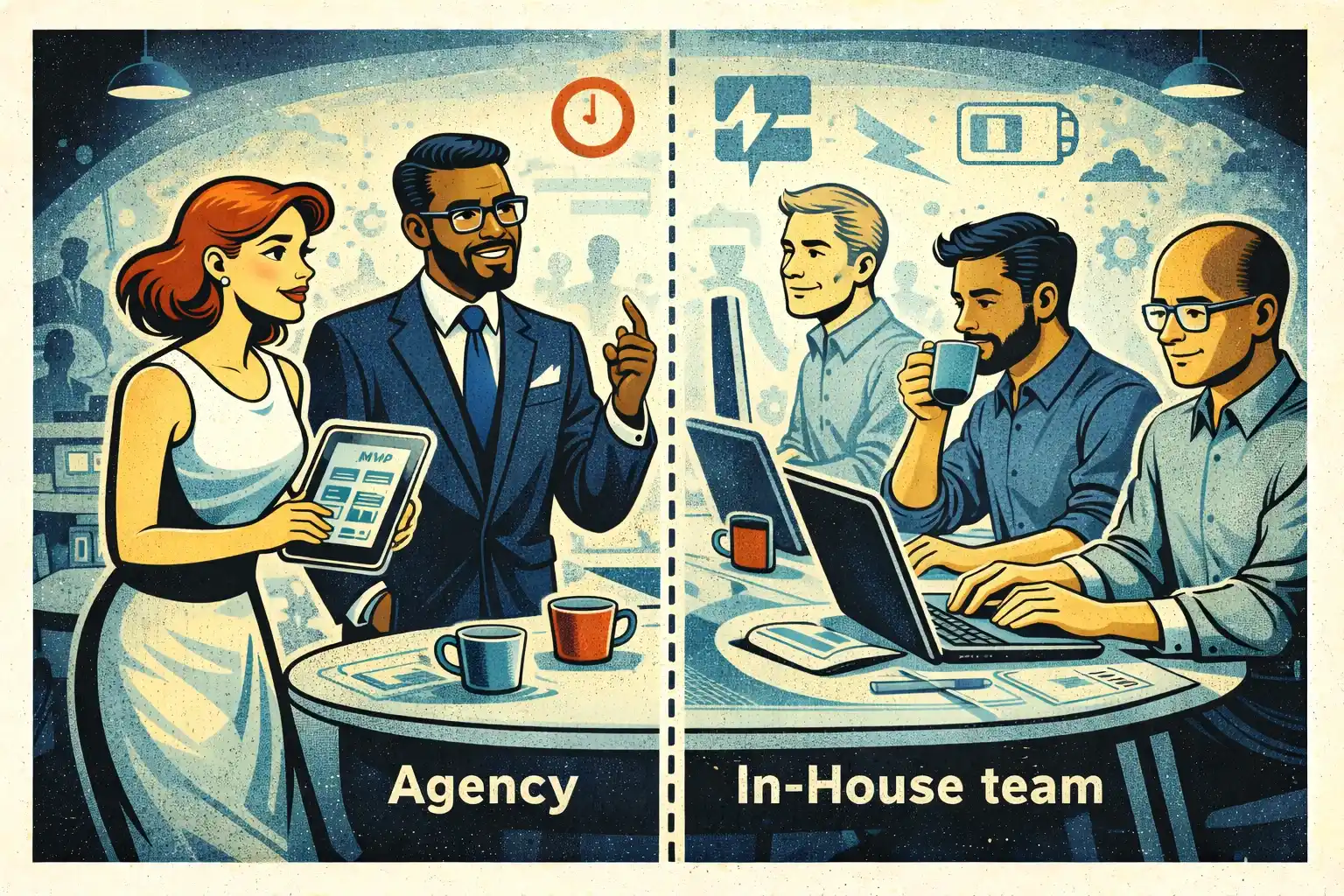
But you have three options, and only one of them requires hiring.
Option A — Freelancers
Risky for full MVPs, good for tiny prototypes.
Option B — In-house developer
Too expensive and slow for pre-traction startups.
Option C — Boutique MVP studio (best option)
A small senior team that handles:
- UX
- UI
- backend
- frontend
- QA
- launch
This model is ideal for founders without technical backgrounds.
If you’re exploring outsourcing, “Outsource Development for Startups: Pros, Cons, and Red Flags” explains how to choose a safe and reliable partner.
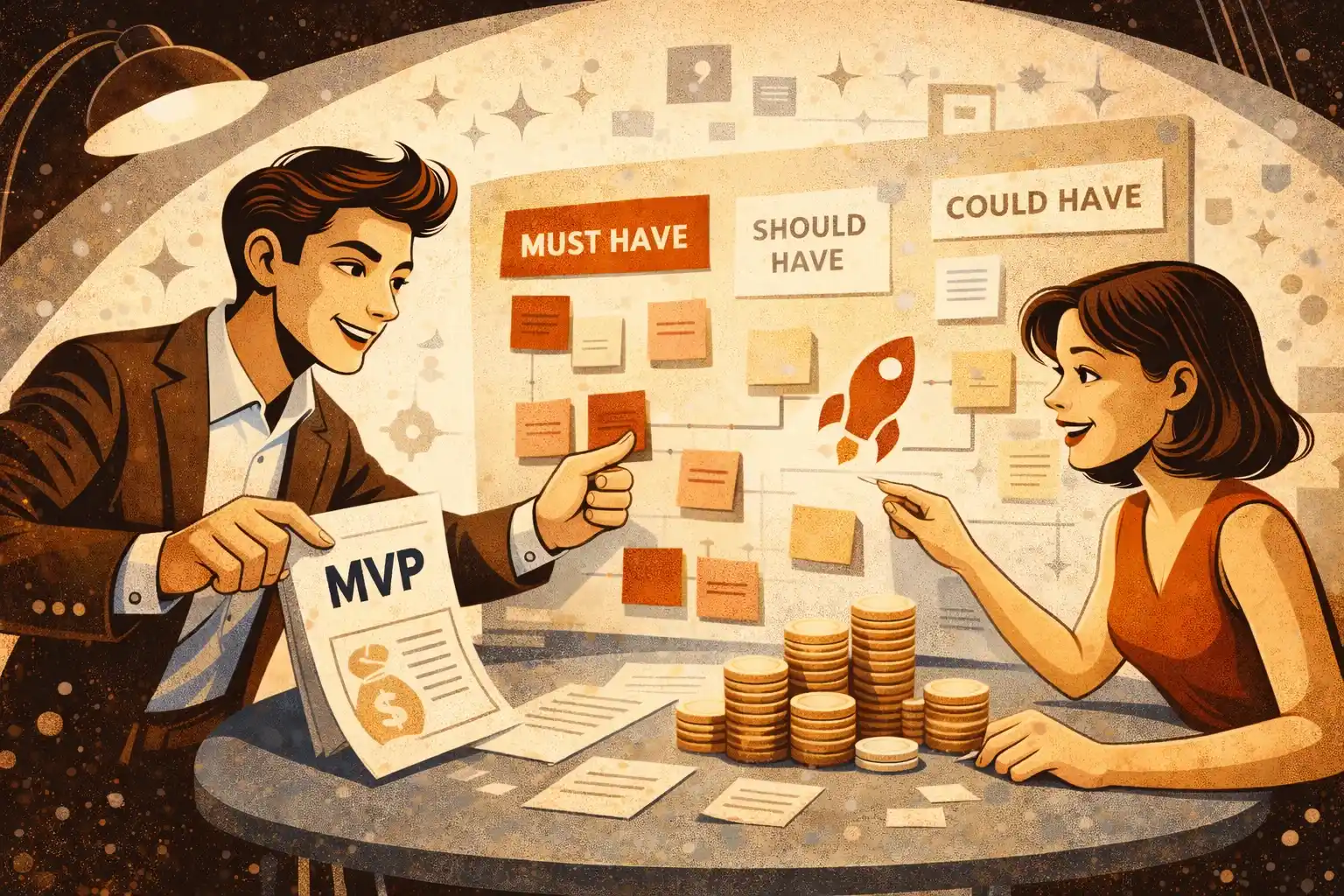
Step 4 — Don’t Overbuild Your First Version
Non-technical founders often try to add:
- dashboards
- multiple user roles
- messaging
- advanced filtering
- notifications
- payment automation
- analytics
- custom onboarding flows
But these rarely belong in v1.
Focus only on:
- a single user
- one main flow
- one meaningful outcome
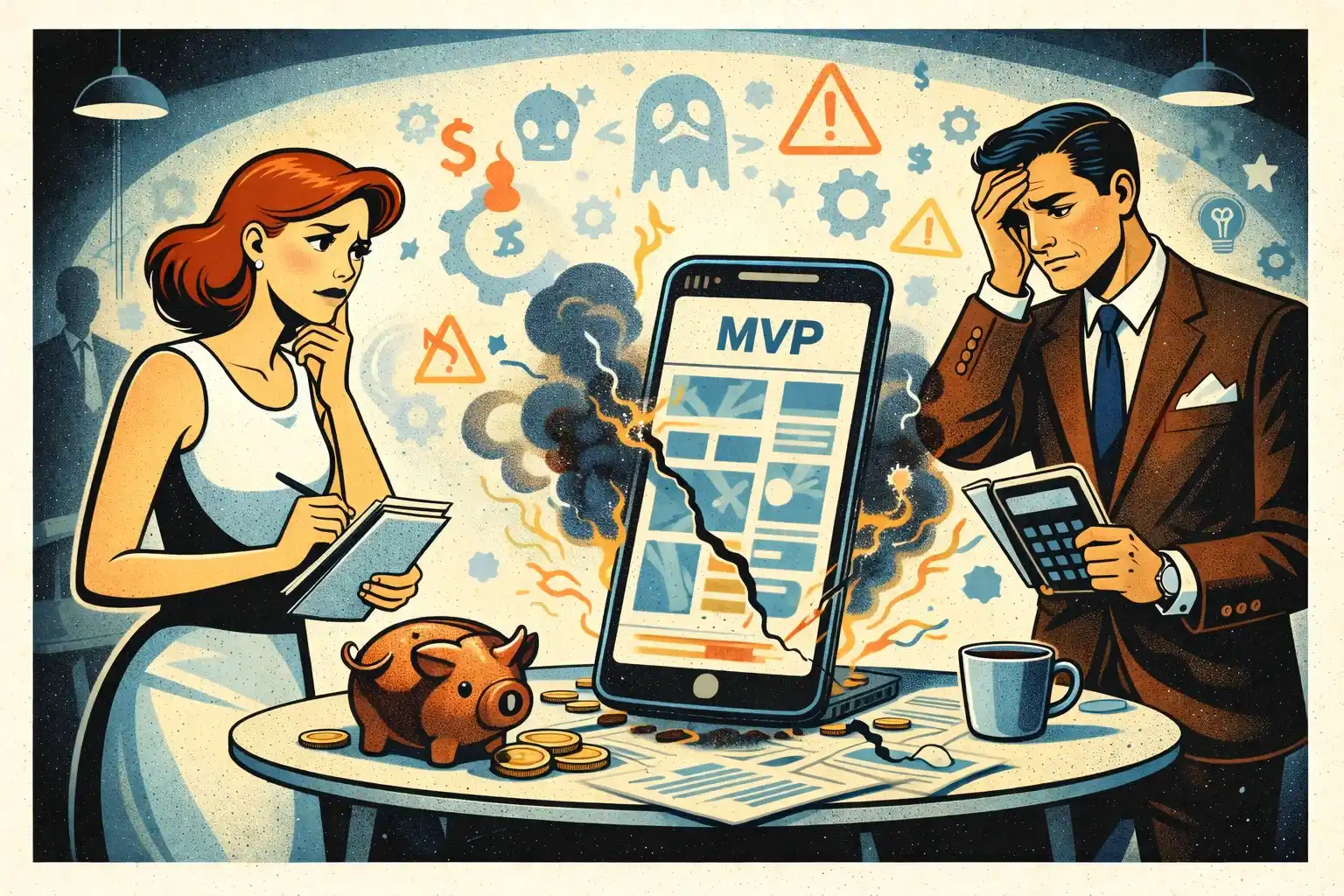
To avoid common pitfalls, see “MVP Development for Non-Technical Founders: 7 Costly Mistakes” — especially the parts about overbuilding and unclear scope.
Step 5 — Understand Your Tech Options (Simply)
You don’t need to know how to code.
But you do need to make informed choices.
For example:
- Web apps - fastest and cheapest to build
- Mobile apps - more expensive due to platform-specific work
- SaaS - requires the most backend architecture
If you want a simple explanation of web architecture, “Web App Development for Startups: Architecture Basics for Non-Tech Founders” breaks it down in plain English.
Step 6 — Know What Affects Cost and Timelines
The biggest cost drivers are not aesthetics — they’re architecture.
Cost depends on:
- number of flows
- backend complexity
- integrations
- compliance
- role management
- design scope
For realistic pricing expectations, read “MVP Development Cost in 2025: How Much Does It Really Cost?” — it’s one of the most important reads for early founders.
Step 7 — Build the MVP and Validate With Real Users
Once your scope is clear, development can begin.
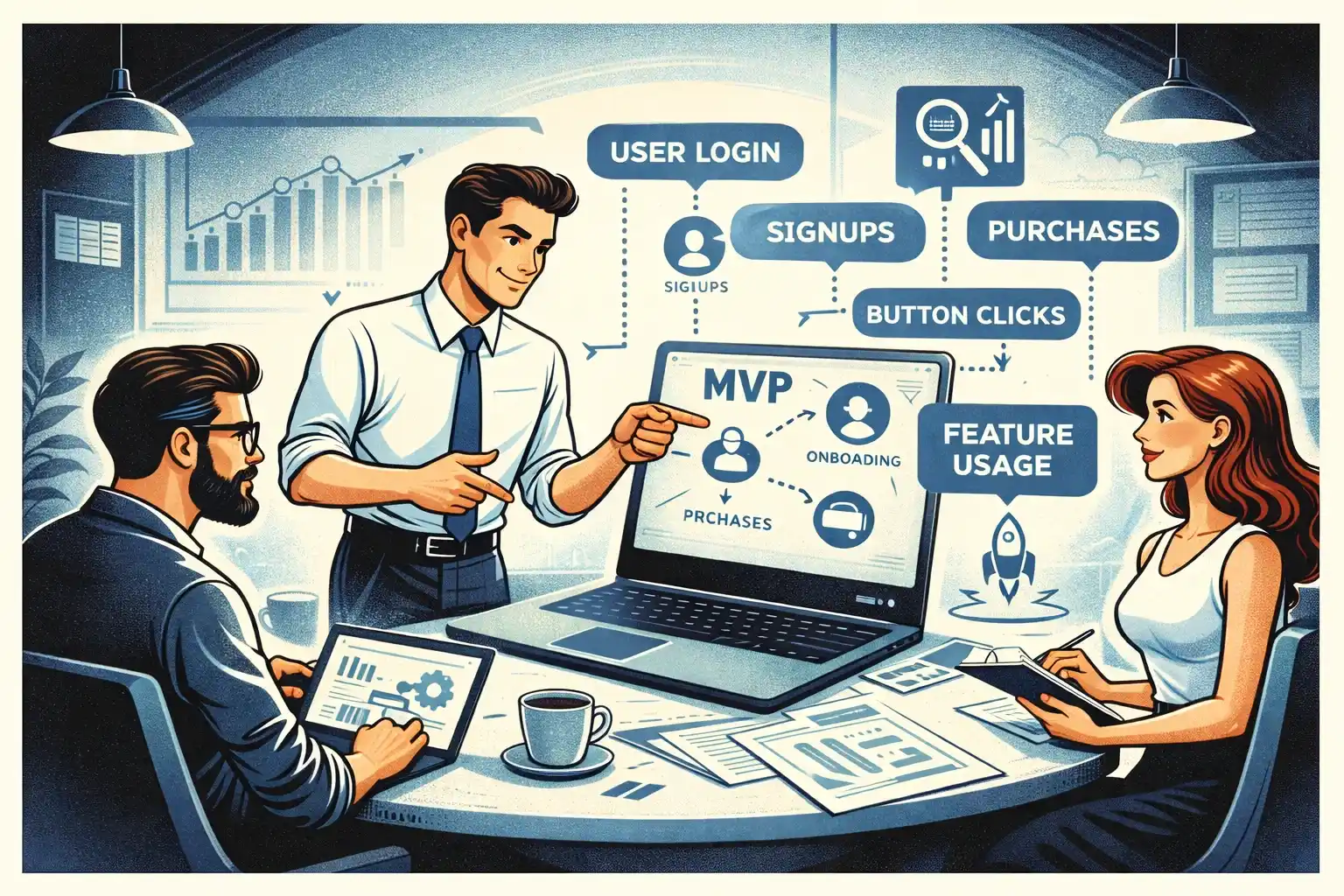
But don’t wait for perfection — launch early and analyze:
- activation
- retention
- engagement
- willingness to pay
If you plan to pitch investors, you’ll also need smart early metrics.
See “Your First Product Metrics Dashboard: What Early-Stage Investors Want to See” for a guide on tracking what matters.
Step 8 — Decide Whether You Actually Need a Technical Cofounder
You only need a technical cofounder when:
- you have traction
- you know the long-term direction
- the product requires ongoing complexity
- you have funding for expansion
Before that, a cofounder is often premature and costly in equity.
Founders often underestimate how much progress they can make without one.
The real truth: You’re not stuck — you’re just early
You don’t need:
- a perfect idea
- a developer on payroll
- a technical cofounder
- a 50-page spec
- a complex architecture
You only need:
- validation
- a clear MVP
- the right execution partner
- willingness to iterate
That’s enough to build a real product.
Have an idea but no developer? We turn ideas into real products.
At Valtorian, you work directly with the founders — a designer and a developer who’ve built 70+ MVPs for non-technical founders. We help you validate, scope, design, and launch your product without hiring an internal team or giving away equity.
Book a call with Diana
Get clarity, a roadmap, and a real plan to bring your idea to life.
FAQ — What to Do if You Have an Idea but No Developer
Do I need a technical cofounder to start?
No. You can validate and build an MVP without one.
Should I hire a freelancer or a studio?
Studios are safer for multi-flow MVPs; freelancers work for tiny prototypes.
Can I launch a real product without learning to code?
Yes — with the right team and scope.
What if I only have a basic idea?
Start with validation and create a simple MVP outline.
How much will it cost to build an MVP?
Depends on scope and backend complexity. See the related cost article.
When should I actually bring on a CTO?
After MVP traction — not before.
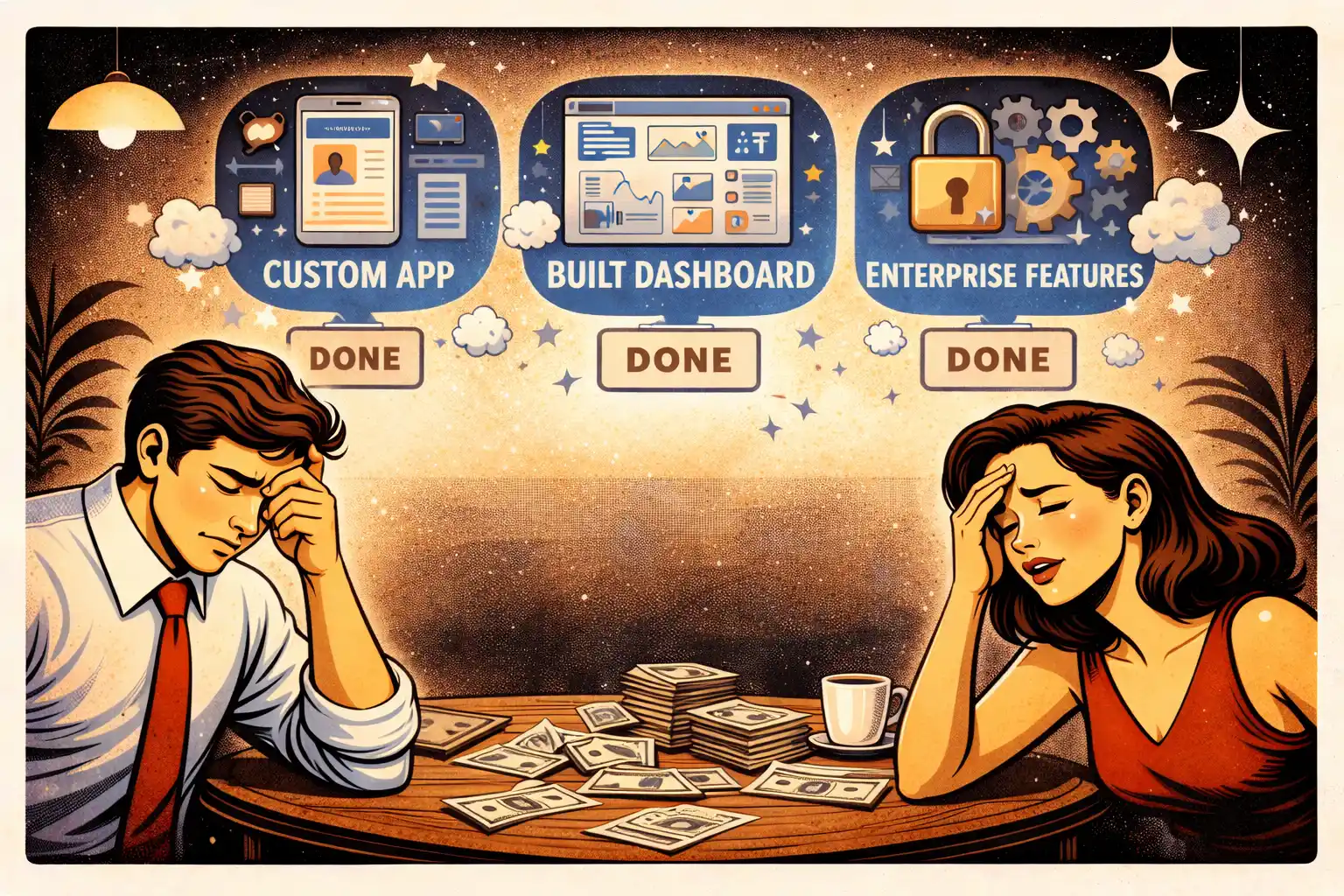
What’s the biggest mistake founders make at this stage?
Overbuilding or trying to hire too early.















































.webp)




.webp)