.webp)
Choosing an MVP Development Company as a Non-Technical Founder
For non-technical founders, choosing the right MVP development company is one of the most important early decisions. The wrong team leads to wasted budget, unclear communication, and months of delay. The right team becomes your temporary product partner — helping you scope your idea, design it, build it, and launch it quickly. This guide breaks down how non-technical founders should evaluate agencies, what red flags to avoid, which questions to ask, and how to choose a company that delivers outcomes, not excuses.

TL;DR: Non-technical founders should choose companies that prioritize clarity over code, design before development, weekly demos, and transparent communication. The best MVP partners are small, senior, founder-led studios — not big agencies or disconnected freelancer teams. Look for process, not promises; alignment, not complexity; and outcomes, not technical jargon.
Why choosing an MVP company feels overwhelming (and why it shouldn't)
If you’re not technical, agencies can easily overwhelm you with:
- tech jargon
- long proposals
- vague timelines
- unclear promises
- inflated scope
But here’s the truth:
You don’t need to understand the technology.
You need a partner who can translate the technology into clear decisions.
If you're still defining your product idea or first flow, start with “App Development for Non-Technical Founders: A Step-by-Step Guide” — it gives you the foundation you need before evaluating any company.
Understand what a real MVP company actually does
A real MVP development company is not “developers for hire”.
It’s a team that guides:
- discovery
- UX
- UI
- development
- QA
- launch
- early iterations
If you want to see a complete breakdown of what a proper MVP service includes, read “MVP Development Services for Startups: What’s Actually Included” — it explains the entire lifecycle and what you should expect.
Most non-technical founders run into problems because they assume the agency “knows what to build” — but if discovery is weak, development will collapse.
Choose process, not technology
Many founders incorrectly evaluate agencies based on:
- tech stack
- number of developers
- buzzwords
- size of the company
- branding of their website
The real evaluation criteria should be:
How they help you define the scope
How they communicate
How they handle trade-offs
How they prevent overbuilding
How predictable their delivery is
Technology matters far less than clarity.
If you're unsure how scope impacts cost and delivery, check “MVP Development Cost in 2025: How Much Does It Really Cost?” — it explains how smart planning reduces budget dramatically.
Make sure they think in flows, not features
A red flag:
“Sure, let’s list all features and estimate them.”
A good MVP partner asks:
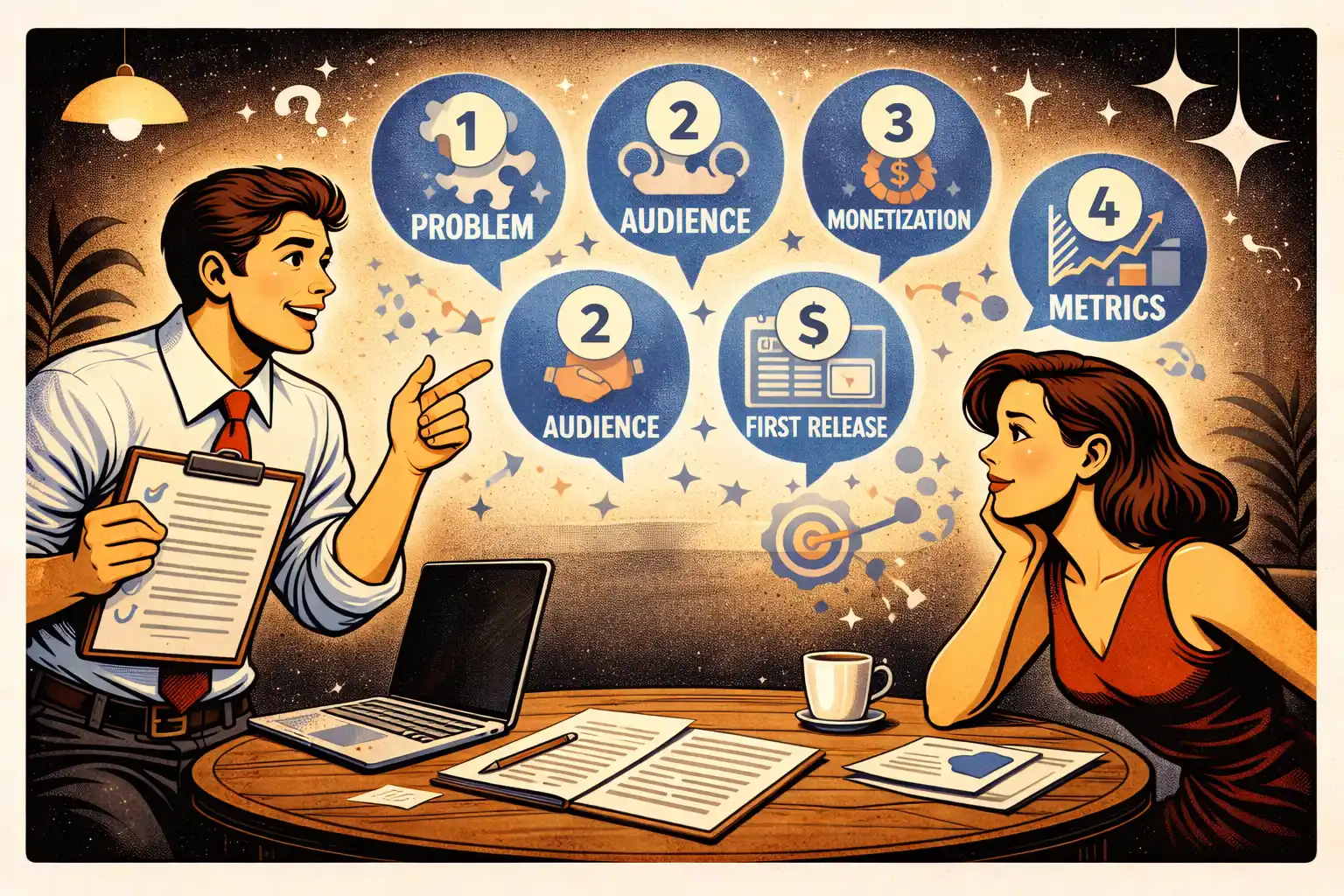
- What problem are we solving?
- What is the smallest useful version?
- What is the core end-to-end workflow?
- Who will use this first?
- What can wait for v2 or v3?
They reduce the product, not inflate it.
They help you avoid burning money on complexity that early users don’t need.
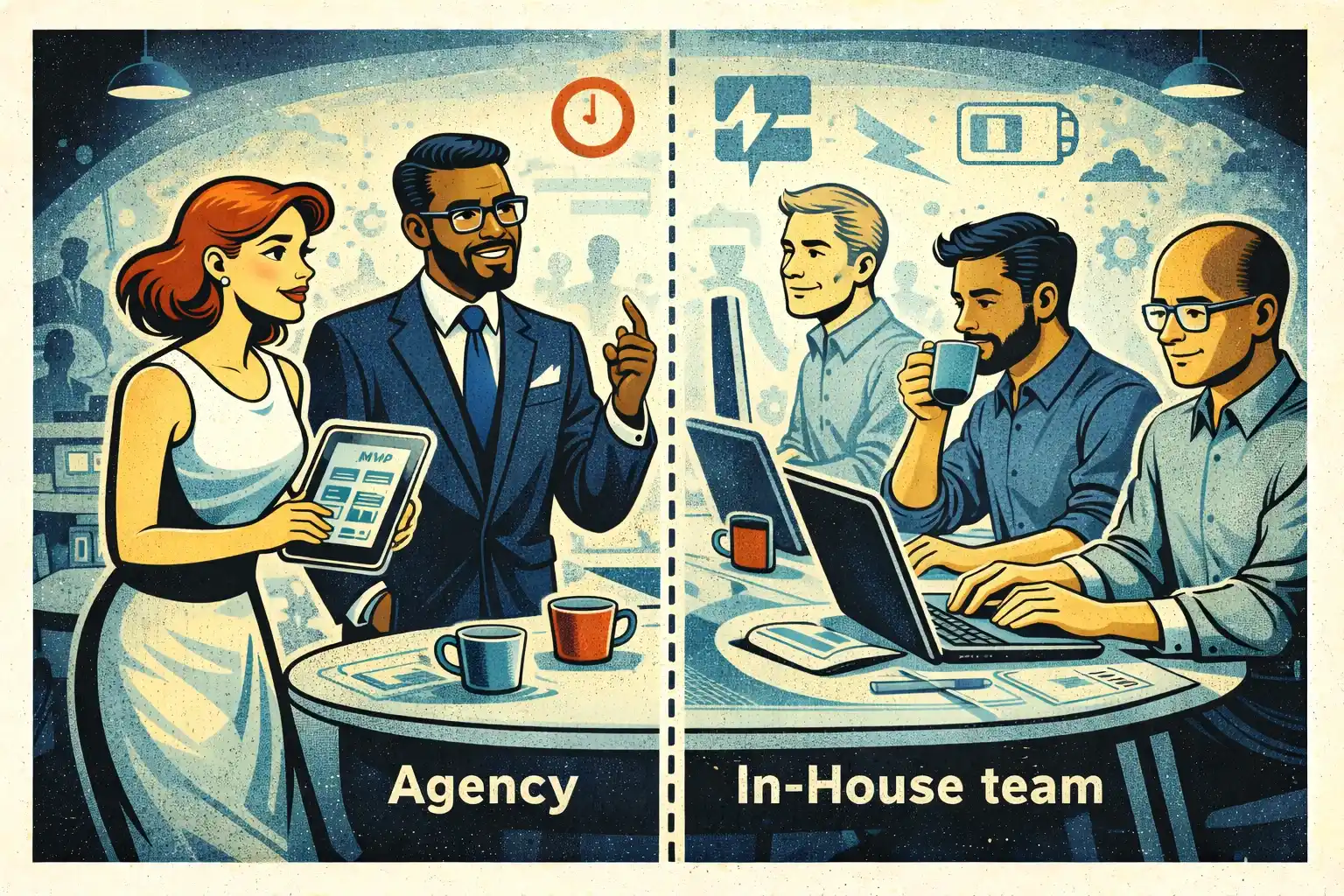
Choose senior, small, founder-led teams (they outperform big agencies)
Why small senior teams win:
- you work directly with decision-makers
- fewer handoffs
- faster feedback loops
- fewer misunderstandings
- deeper product involvement
- better communication
- more accountability
Big agencies optimize for structure.
Startup MVPs optimize for speed + clarity.
If you're curious how compliance affects your MVP if you're in fintech or healthcare, read “Fintech and Healthcare MVP Development: How Compliance Changes the Plan” — not all MVP agencies understand regulated environments.
The questions every non-technical founder MUST ask
Ask these questions on your first call:
1. “What does your MVP process look like from discovery to launch?”
Their answer should be clear, structured, and simple.
2. “Who will I work with day-to-day?”
If you're speaking with a salesperson now but a junior PM later — red flag.
3. “How do you prevent scope creep?”
A good company protects your timeline more than your wish list.
4. “What do you include in MVP v1 and what do you exclude?”
You want intentionality, not “we can build anything”.
5. “How do you handle weekly updates?”
You should see progress every week.
6. “Do you provide QA, analytics, and launch support?”
Many companies exclude these — which means disaster for non-technical founders.
Red flags that mean “don’t work with this agency”
They can’t explain their process in simple language
If they confuse you now, they’ll overwhelm you later.
They promise extreme speed (“We’ll build your SaaS in 1–2 weeks”)
This means corners will be cut everywhere.
No UX or UI included
MVP without design = chaos.
Proposal is mostly technical jargon
Proposals should be understandable even if you’ve never coded.
They don’t push back on your ideas
Good teams challenge you. Weak teams say yes to everything.
Selecting based on fit, not features
Your MVP partner should:
- understand your industry
- understand early-stage constraints
- understand how to keep things simple
- understand how to use constraints to your advantage
You're not choosing an “IT vendor”.
You’re choosing a temporary cofounder for 4–8 weeks.
When to switch from an external team to hiring engineers
You hire internal engineers when:
- the product gets traction
- your roadmap stabilizes
- you need continuous iteration
- you understand your technical direction
Before that, external teams are faster, cheaper, and safer.
What if you're in a regulated industry?
Fintech and healthcare founders must plan compliance-first MVPs.
That means:
- KYC/AML
- HIPAA/GDPR
- audit logs
- data encryption
- secure architecture
If your MVP involves sensitive data, revisit “Fintech and Healthcare MVP Development: How Compliance Changes the Plan” — it explains how regulations reshape scope and timelines.
Want help choosing the right MVP development partner for your startup?
At Valtorian, you work directly with the founders — a designer and a developer who’ve launched 70+ MVPs for non-technical founders. We help you define your scope clearly, avoid unnecessary complexity, and build a working product in 4–6 weeks without hiring a tech team.
Book a call with Diana
We’ll discuss your idea, outline the right MVP strategy, and determine whether we're the right partner for your startup.
FAQ — Choosing an MVP Development Company
Do I need a technical cofounder before choosing a development agency?
No. Many founders build MVPs without a technical cofounder. You can bring one in after traction.
How do I know if a company understands MVPs?
They talk about flows, not features; scope, not buzzwords; clarity, not code.
Should I choose the cheapest developer?
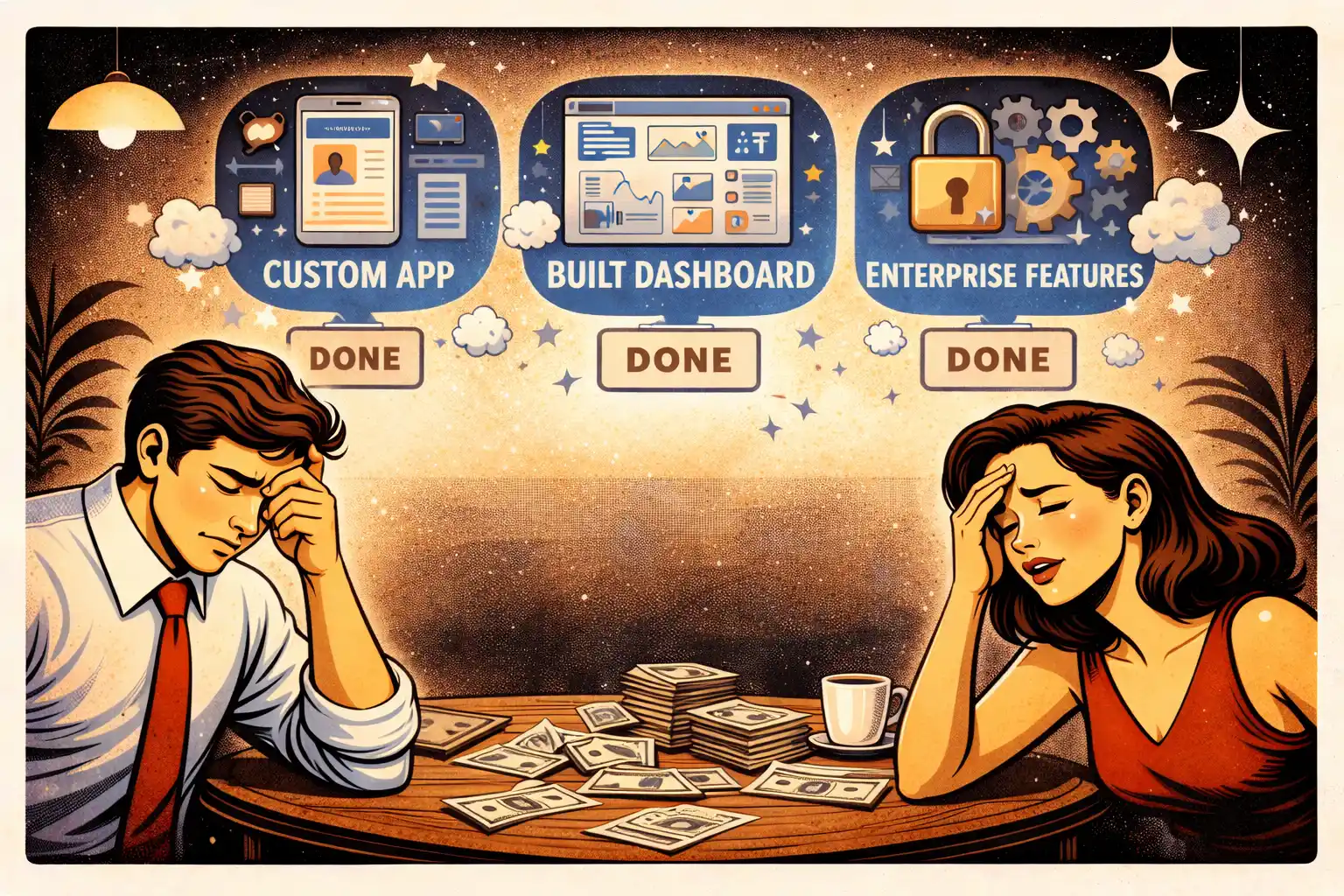
Cheap MVPs are expensive later — poor architecture and missing UX create massive rework.
What’s the ideal team size for an MVP?
3–4 senior specialists: product/PM, designer, developer(s), QA.
How long should a good MVP company take?
4–8 weeks for a properly scoped MVP.
Can I switch companies mid-project?
Yes, but it slows you down. Better to choose correctly from the start.
What if my product requires fintech or healthcare compliance?
Choose a company with regulated MVP experience. Compliance must shape architecture from day one.

























































.webp)




.webp)