.webp)
MVP Timelines in 2026: What Slows Teams Down
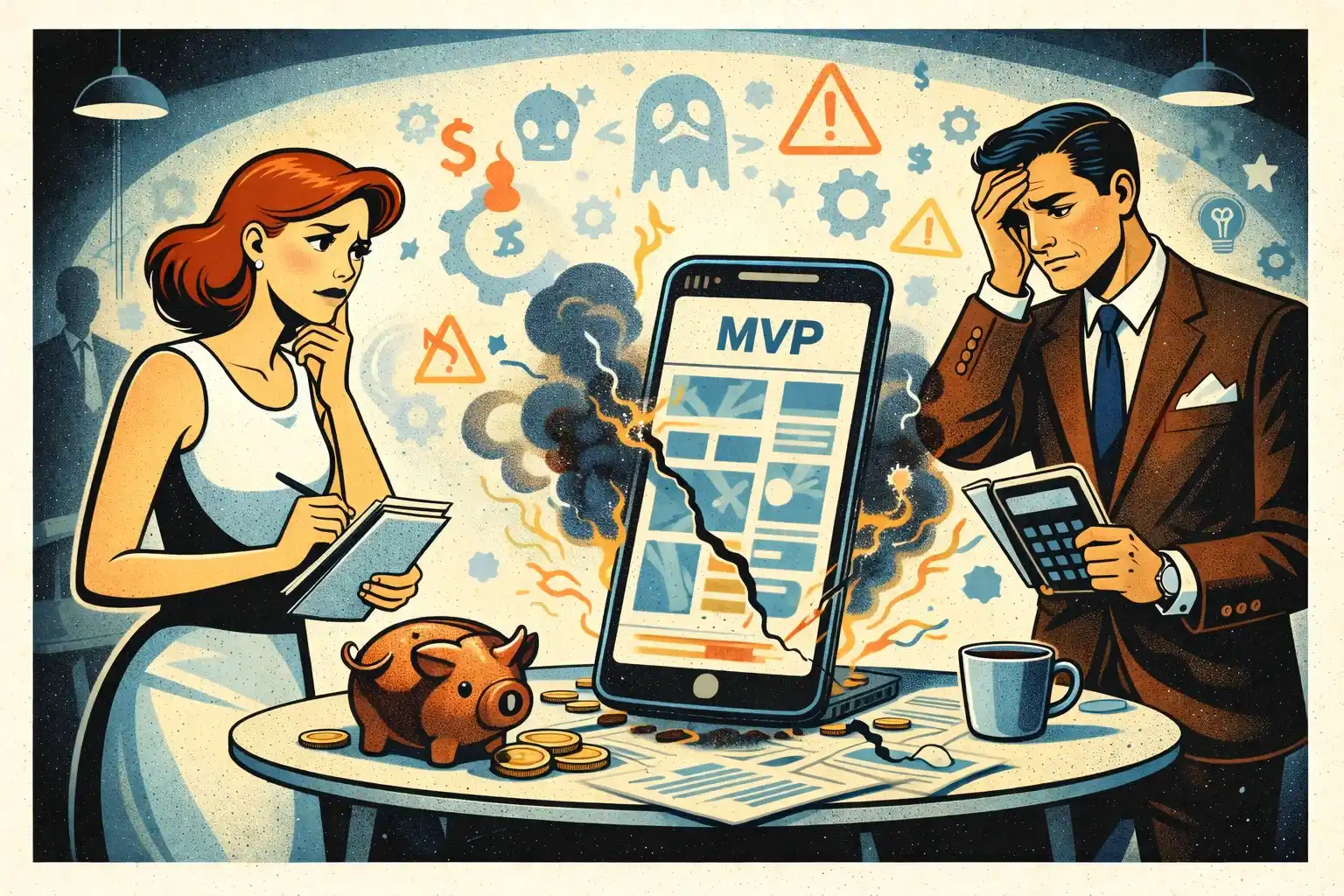
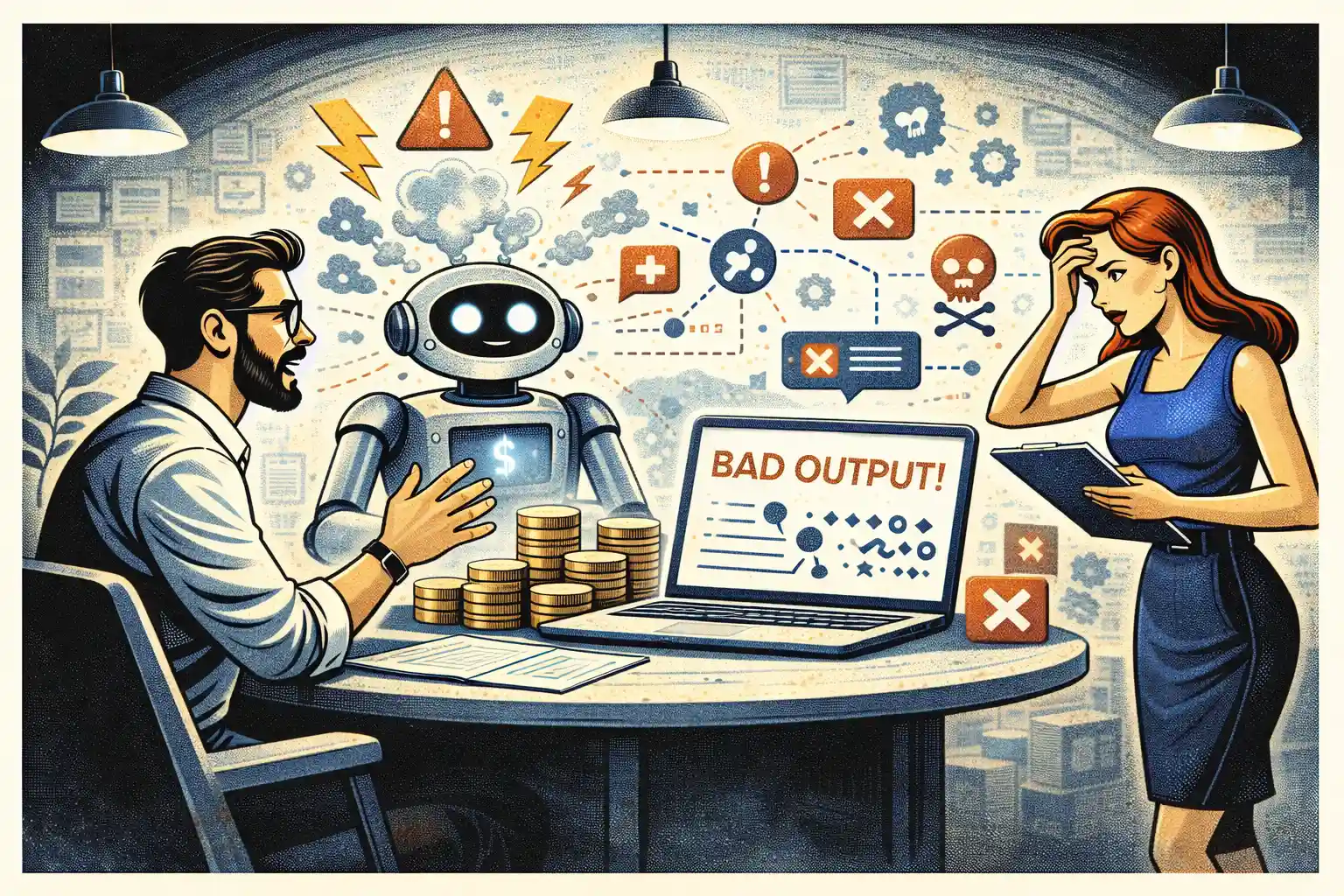
In 2026, building tools are faster, but MVP timelines still slip for the same human reasons: unclear scope, too many roles, late decisions, and constant rework. Founders often blame “development speed,” when the real bottlenecks are alignment, missing requirements, QA debt, and integration surprises. This article breaks down what actually slows teams down, how to spot timeline risks early, and how to structure your MVP so progress stays steady — without turning the project into a rigid enterprise process.
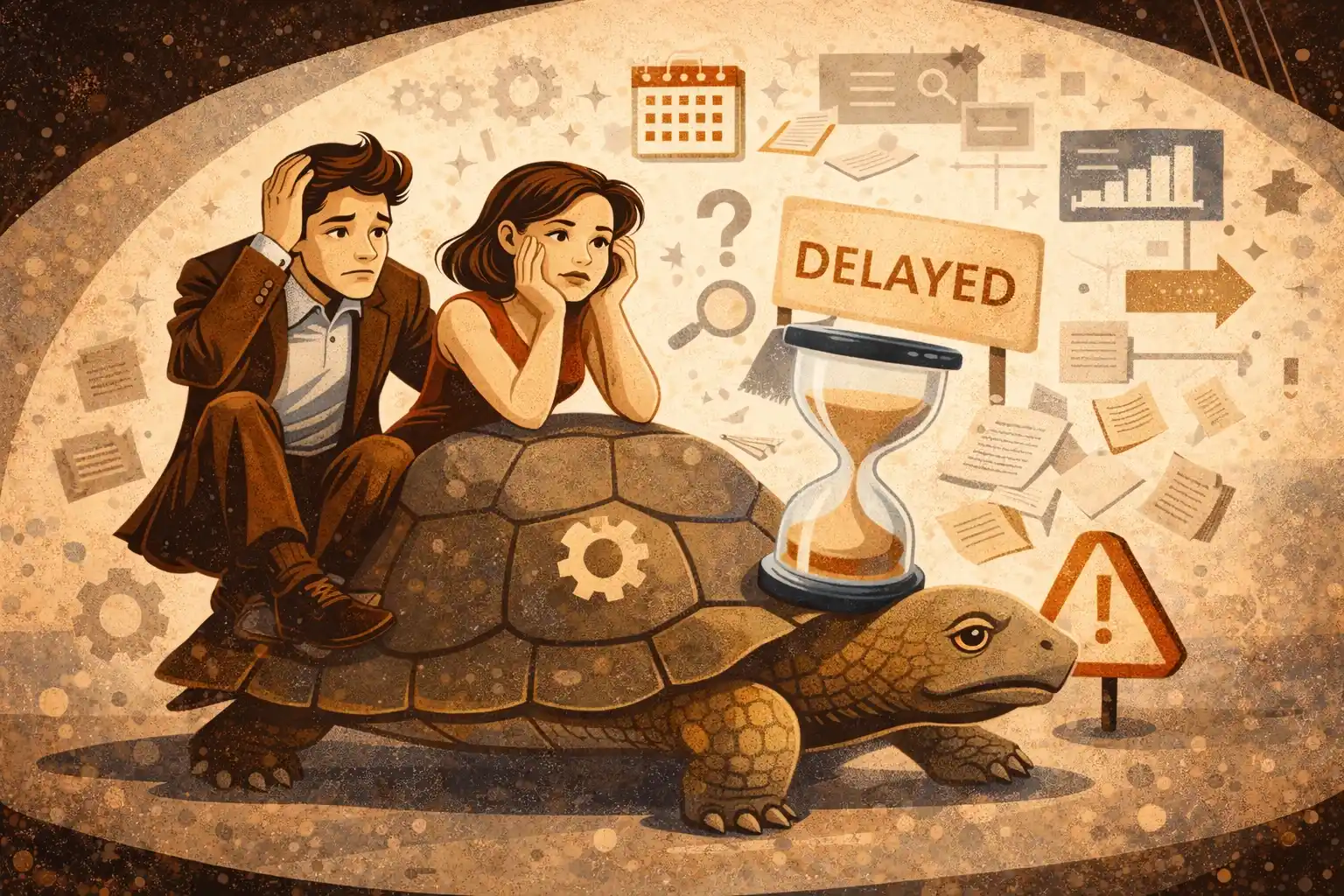
TL;DR: Most MVP delays come from scope instability, late decisions, and hidden work (QA, edge cases, integrations), not from “coding being slow.”If you lock a single core loop, keep changes controlled, and budget for the unglamorous parts, your timeline becomes predictable.
The biggest misconception: “A faster team fixes the timeline”
A stronger dev team helps, but it doesn’t solve the most common timeline killers:
- unclear requirements
- constant scope changes
- multiple stakeholders pulling in different directions
- late decisions on product logic
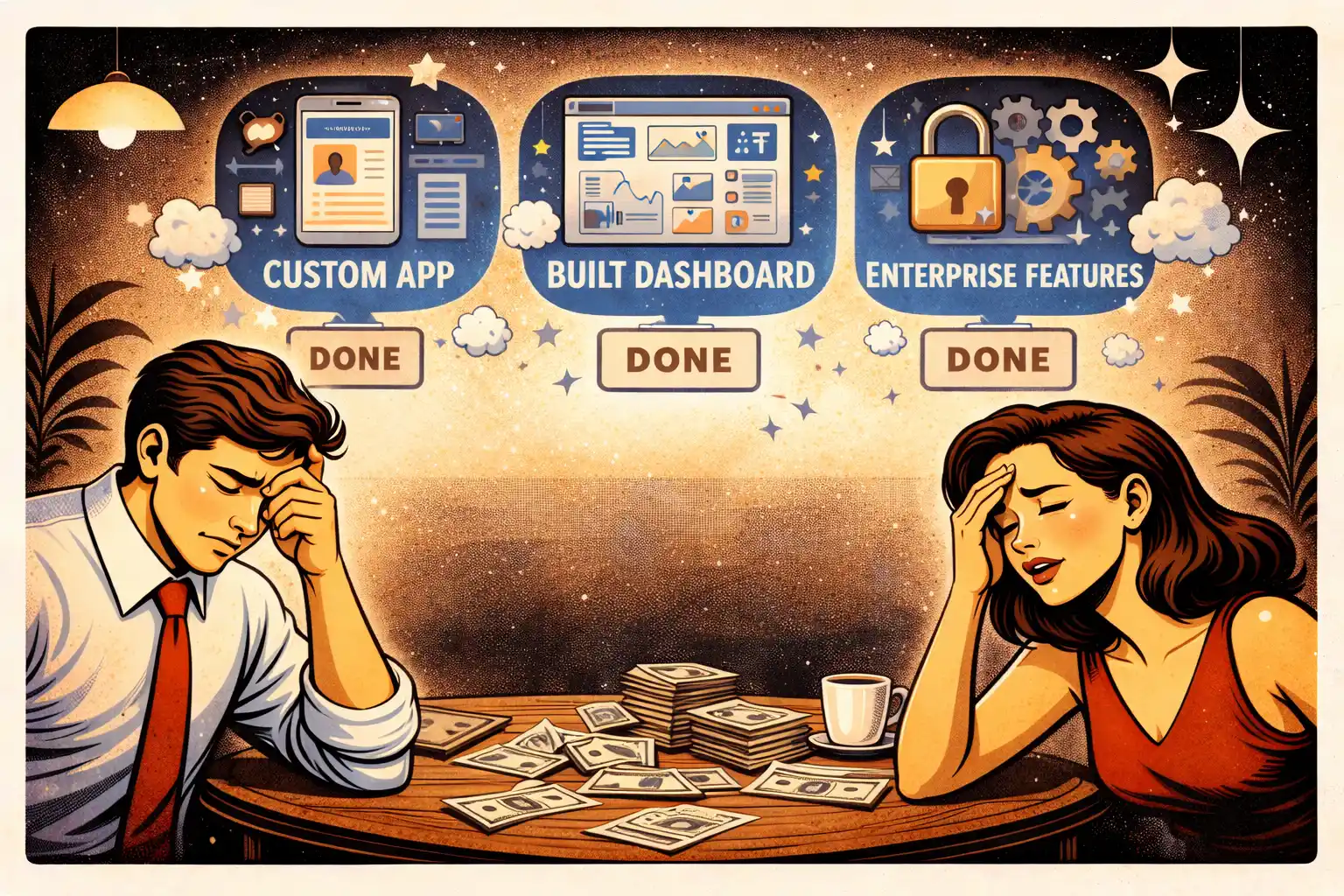
In many projects, the slowest part isn’t coding — it’s choosing.
If you’re still defining what the MVP should be, anchor on What a Good MVP Looks Like in 2026.
What really slows MVP teams down in 2026
Below are the patterns we see most often. These are not “theoretical.” They show up in real projects weekly.
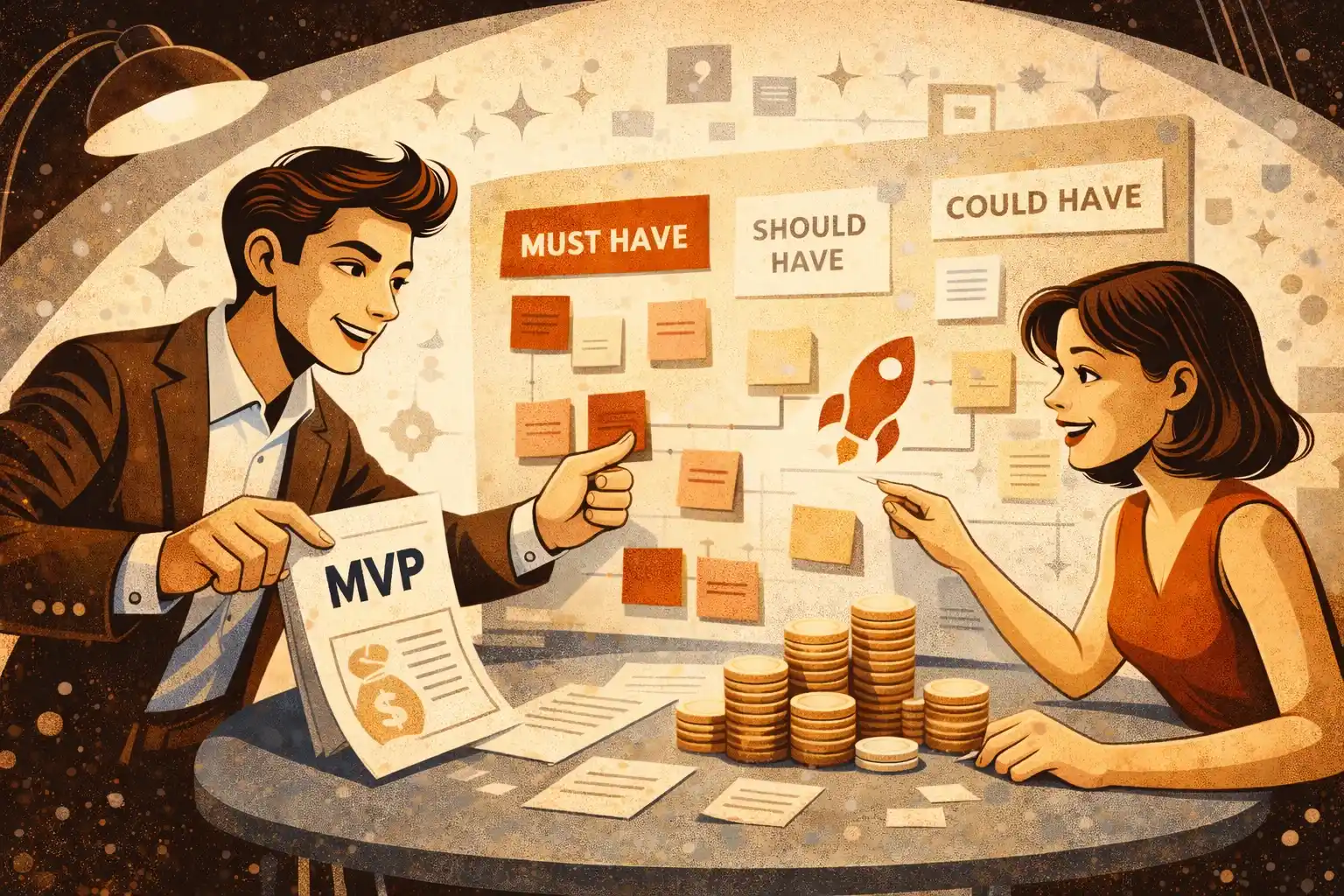
1) The scope is a wishlist, not a loop
Teams move fast when they’re building one repeatable outcome.They move slowly when they’re building “everything users might want.”
Symptoms:
- feature list grows every week
- nobody can explain the core workflow in one sentence
- design expands into dozens of optional flows
Fix:Define one core loop, then protect it.If scope keeps growing, reset using MVP Scope and Focus in 2026.
2) Too many roles and permissions in v1
Multiple roles multiply complexity:
- different dashboards
- permissions logic
- edge cases
- testing matrix
A simple “two-sided” product often becomes three-sided by accident (admin + user A + user B).
Fix:Start with one primary role reaching value first.
3) Decisions happen too late (or never)
Founders often delay decisions because they want “more data.”But a project can’t move without constraints.
Late decisions commonly include:
- pricing model
- onboarding steps
- what data is required vs optional
- what’s manual vs automated in v1
Fix:Time-box decisions and write down what you’re not doing.If you’re still deciding whether to build now or prototype first, use Prototype vs MVP in 2026: When to Start Building.
4) Design is treated as a parallel track (instead of a delivery tool)
When design and build are not aligned, teams ship:
- screens that don’t match real data
- flows that miss edge cases
- UI that looks good but can’t be implemented quickly
Fix:Design must reflect the real loop and real constraints.
5) Hidden work is ignored
This is the #1 “surprise” for non-technical founders.
Hidden work includes:
- QA and regression testing
- empty states and error handling
- analytics instrumentation
- deployments and environment setup
- account edge cases (password reset, verification, invites)
Fix:Budget time for hidden work upfront.A good way to scope it is Estimating MVP Scope in 2026: A Simple Method.
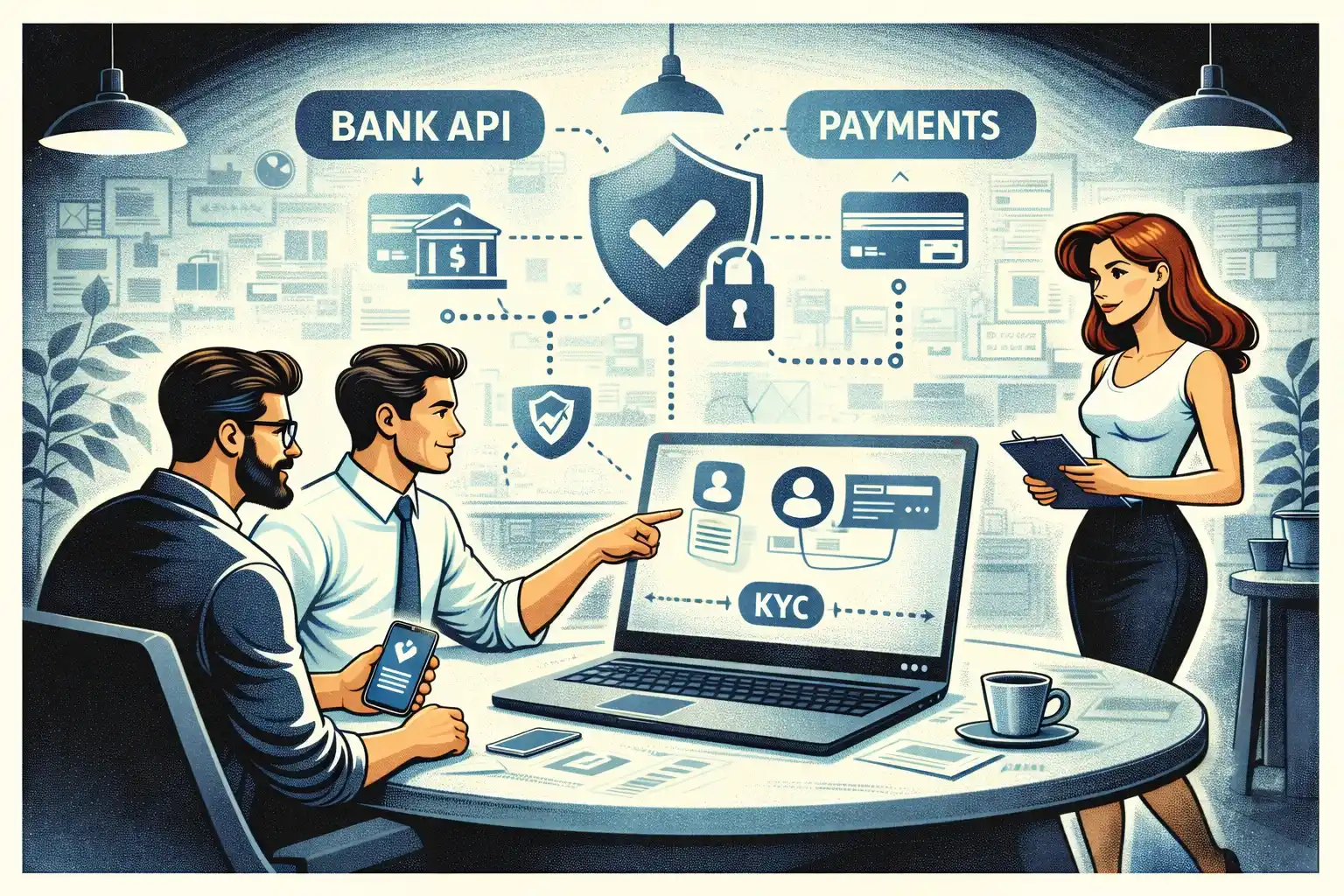
6) Integrations are treated as “simple”
Integrations are rarely simple in the first version.Typical issues:
- auth and permissions
- inconsistent API responses
- rate limits
- webhooks failing silently
- sandbox vs production differences
Fix:Minimize integrations in v1. If you must integrate, plan buffer time.
7) QA is delayed until the end
When QA becomes a final phase, bugs pile up and the team starts “fixing the fix.”
Fix:Test the critical path weekly. Treat QA as part of delivery, not a separate event.
If you want to understand why “fast and cheap” often ends in a rebuild, read Why Cheap MVPs Fail in 2026.
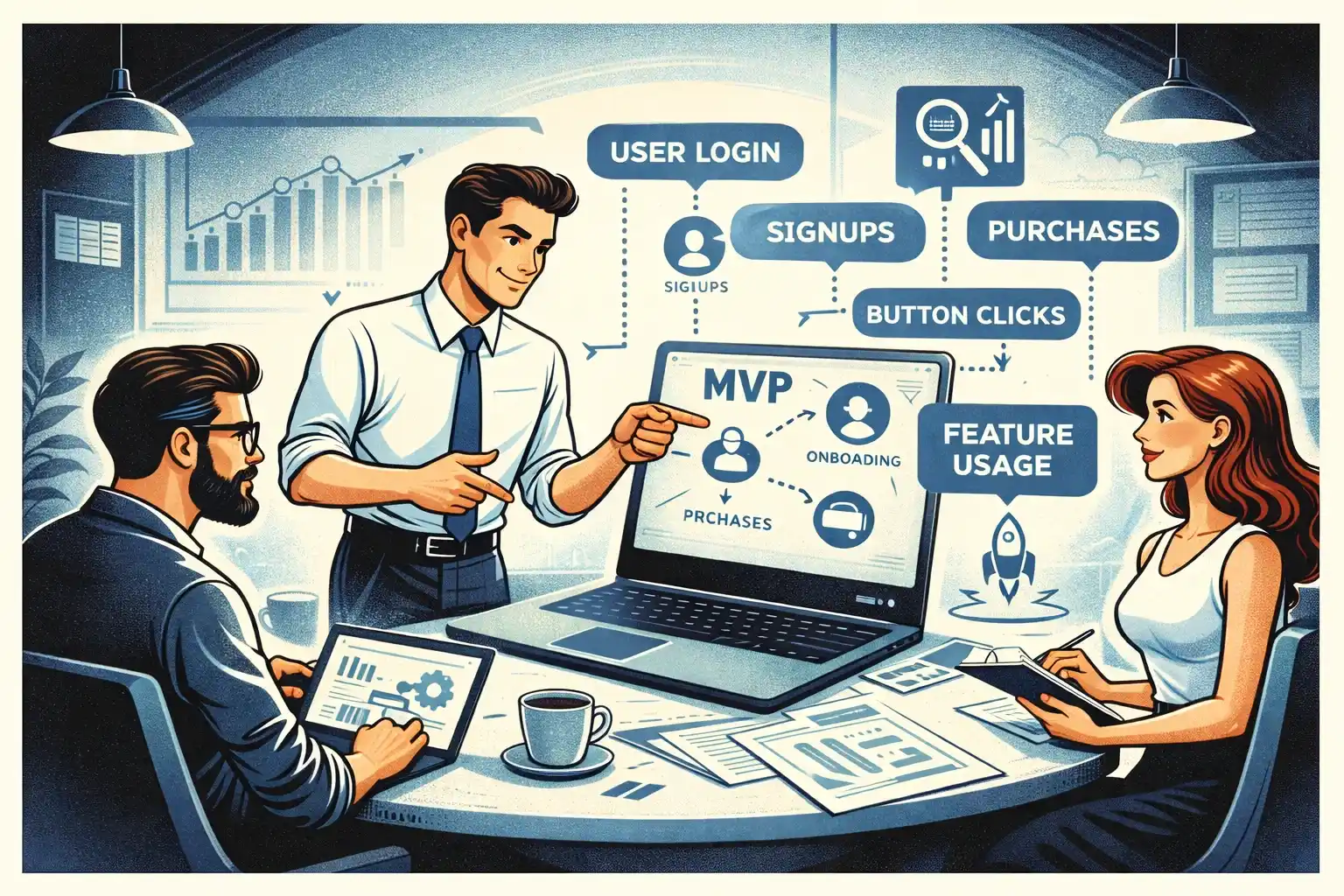
8) No measurement plan, so work becomes opinion-based
When you don’t know what you’ll measure after launch:
- priorities change daily
- every feature feels equally important
- stakeholders argue instead of learning
Fix:Define activation + retention signals before you ship.A simple starting point is Your First Product Metrics Dashboard: What Early-Stage Investors Want to See.
The timeline accelerators that actually work
You can’t “hack” timelines with pressure. You can accelerate them with clarity.
1) Lock the core loop
One user. One primary workflow. One outcome.
2) Make changes expensive (on purpose)
Use a simple change rule:If you add something, you must:
- remove something, or
- accept time/budget increase, or
- move it to v2
3) Ship in small slices
Deliver the loop end-to-end early.Then improve it.
4) Keep “nice-to-haves” in a weekly review
Don’t debate them every day.Collect them, rank them, review once per week.
5) Budget for launch friction
Even if the build finishes, release can still slip because of:
- app store review delays
- domain/hosting setup
- configuration mistakes
- missing copy/legal pages
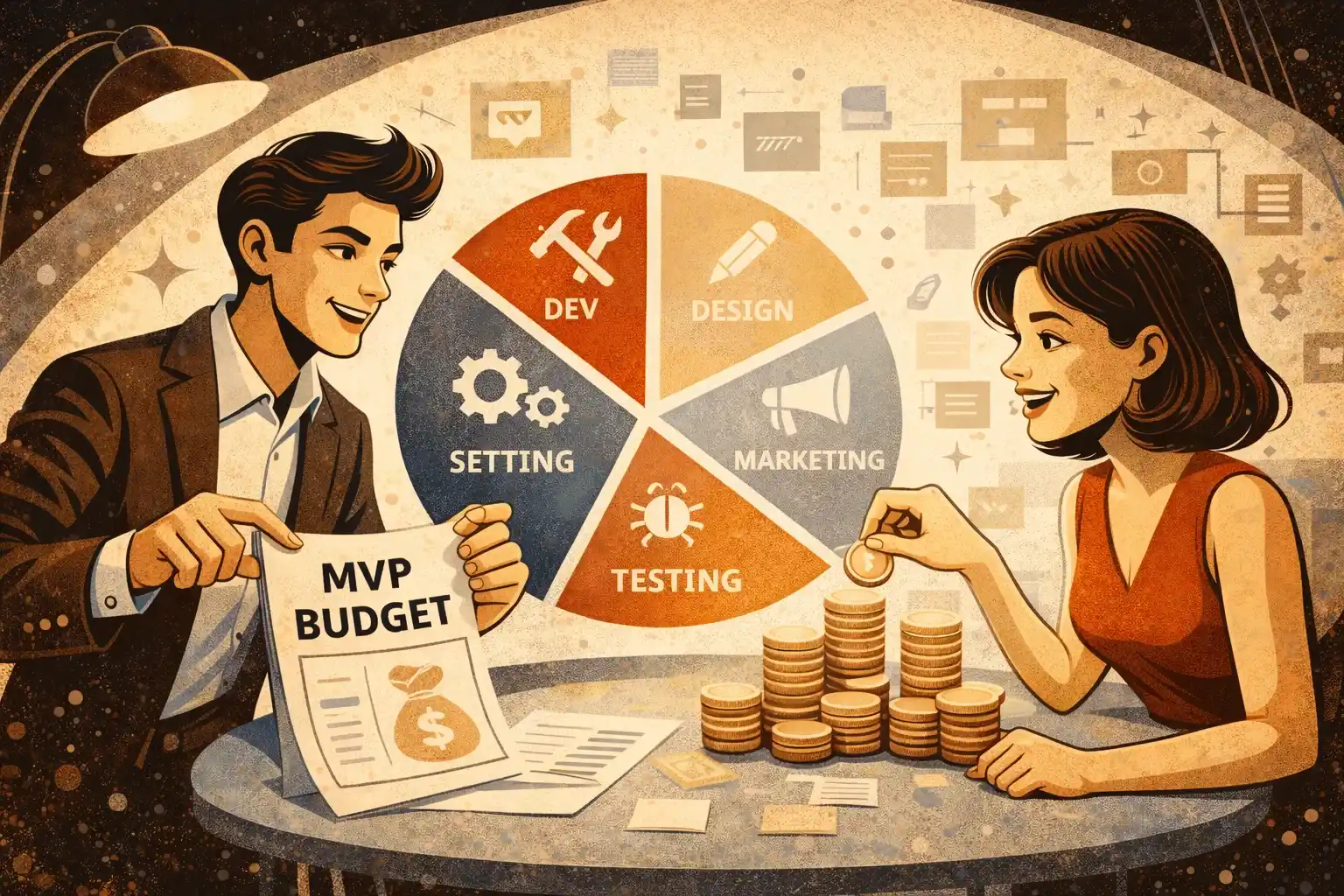
If you want a practical approach to budgeting for launch-related work, see MVP Budget in 2026: Where Money Should Go.
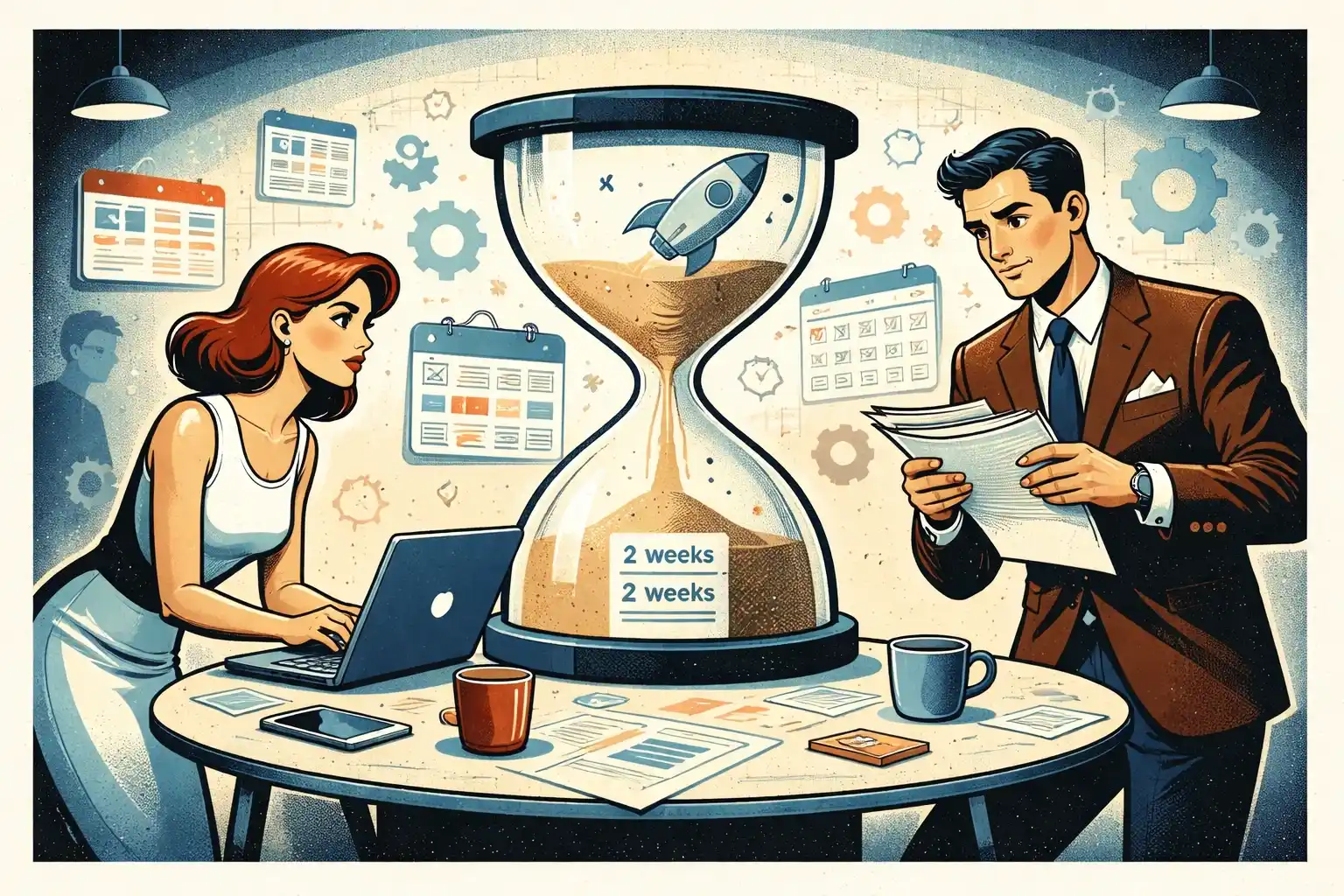
A realistic MVP timeline expectation in 2026
Timelines vary, but a founder-friendly way to think about it is:
- Fast: only possible with tight scope, one role, minimal integrations, and fast decisions.
- Normal: most MVPs, with some edge cases and a small amount of rework.
- Slow: multiple roles, complex integrations, moving requirements, weak QA.
If you want to structure expectations and reduce misunderstandings with a team, start by aligning on what “included” really means in MVP work: MVP Development Services for Startups: What’s Actually Included.
Thinking about building a startup MVP in 2026?
At Valtorian, we help founders design and launch modern web and mobile apps — including AI-powered workflows — with a focus on real user behavior, not demo-only prototypes.
Book a call with Diana
Let’s talk about your idea, scope, and fastest path to a usable MVP.
FAQ
Why do MVP timelines slip even with good developers?
Because most delays come from unclear scope, late decisions, integrations, QA debt, and rework — not raw coding speed.
What’s the fastest way to shorten an MVP timeline?
Reduce scope to one core loop and one primary role, minimize integrations, and lock a change rule that prevents daily scope creep.
Are multiple user roles always a bad idea in v1?
Not always, but they multiply complexity fast. If you can prove value with one role first, you’ll ship sooner and learn faster.
How much time should I allocate to QA?
Enough to test the critical path weekly. If QA is delayed to the end, timelines often explode due to compounded bugs.
What should I decide before development starts?
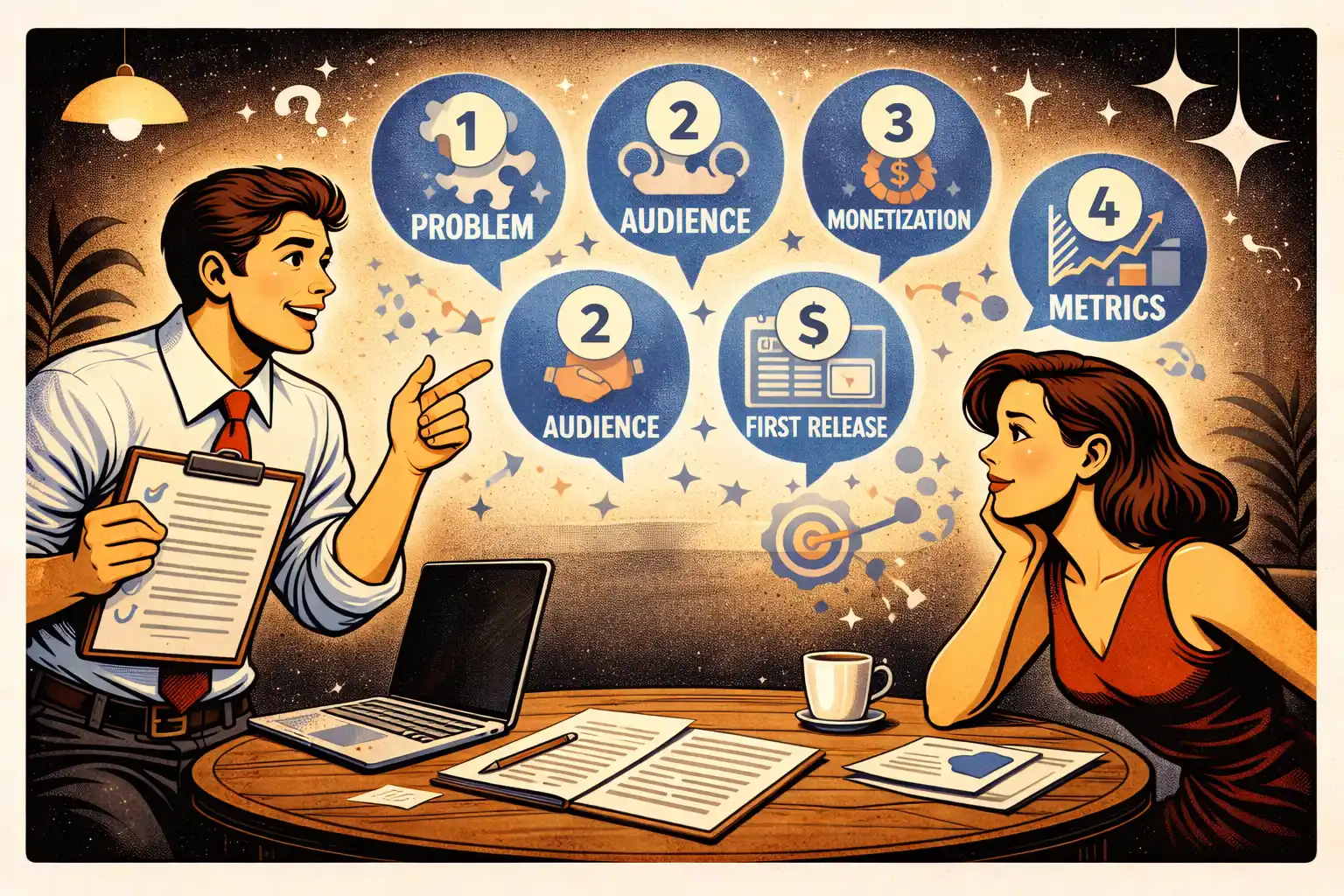
Primary user, core loop, what’s required vs optional, the first success metric, and what’s explicitly out of scope.
How do integrations affect timelines?
They add unknowns: auth, rate limits, sandbox differences, webhooks, and edge cases. If integrations are required, plan buffer time.






















































.webp)




.webp)