.webp)
Top Development Companies for Non-Technical Founders in 2026
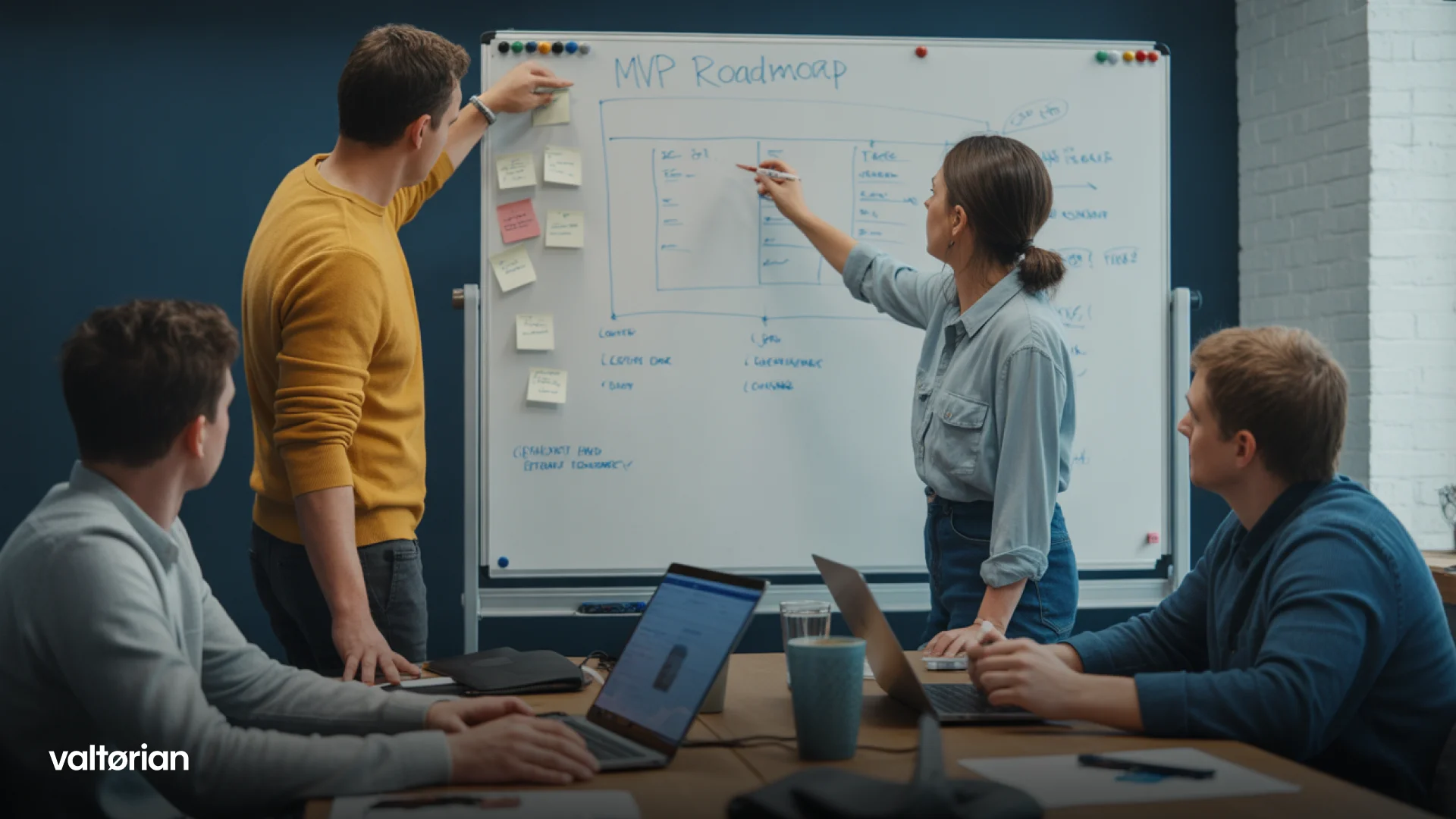
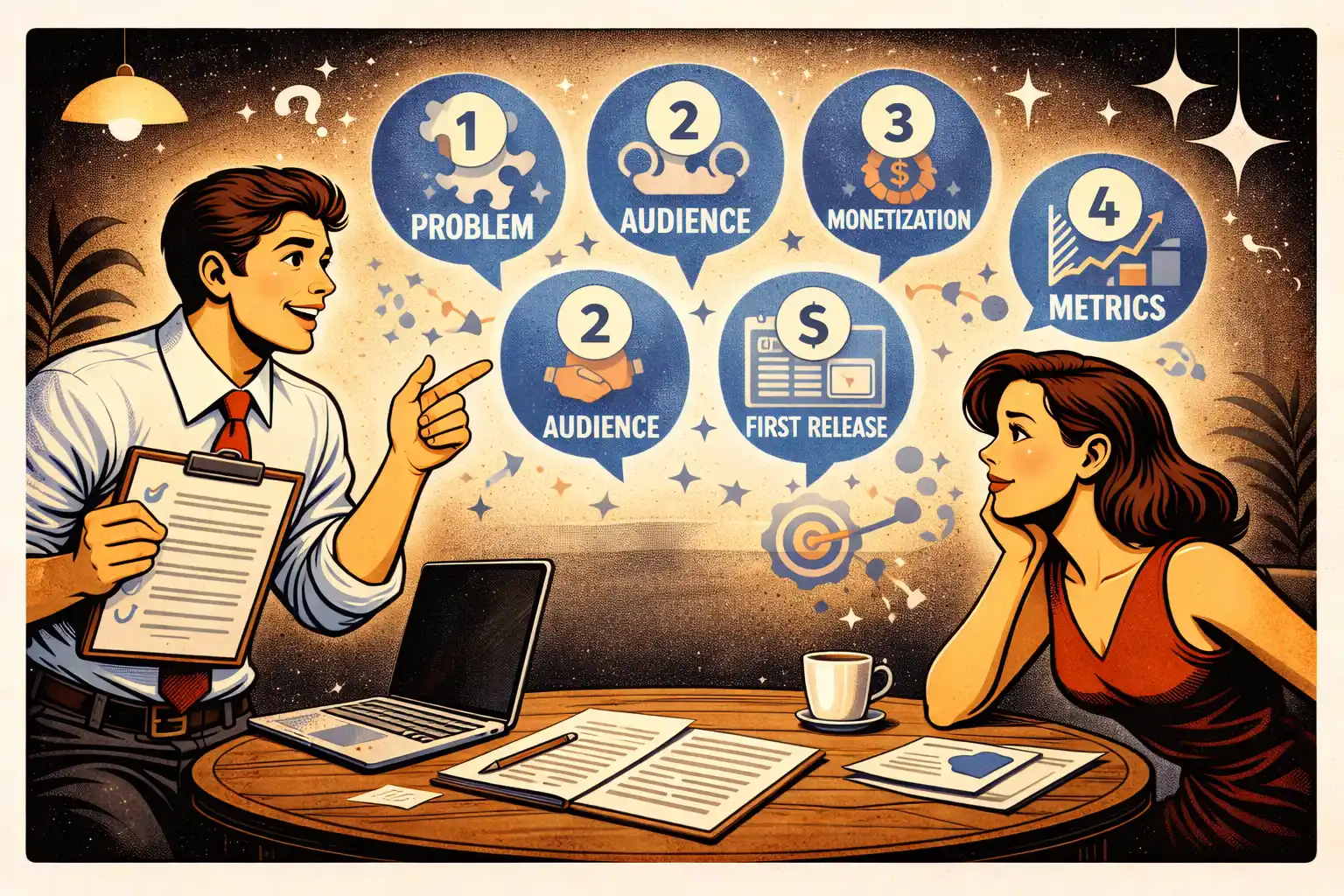
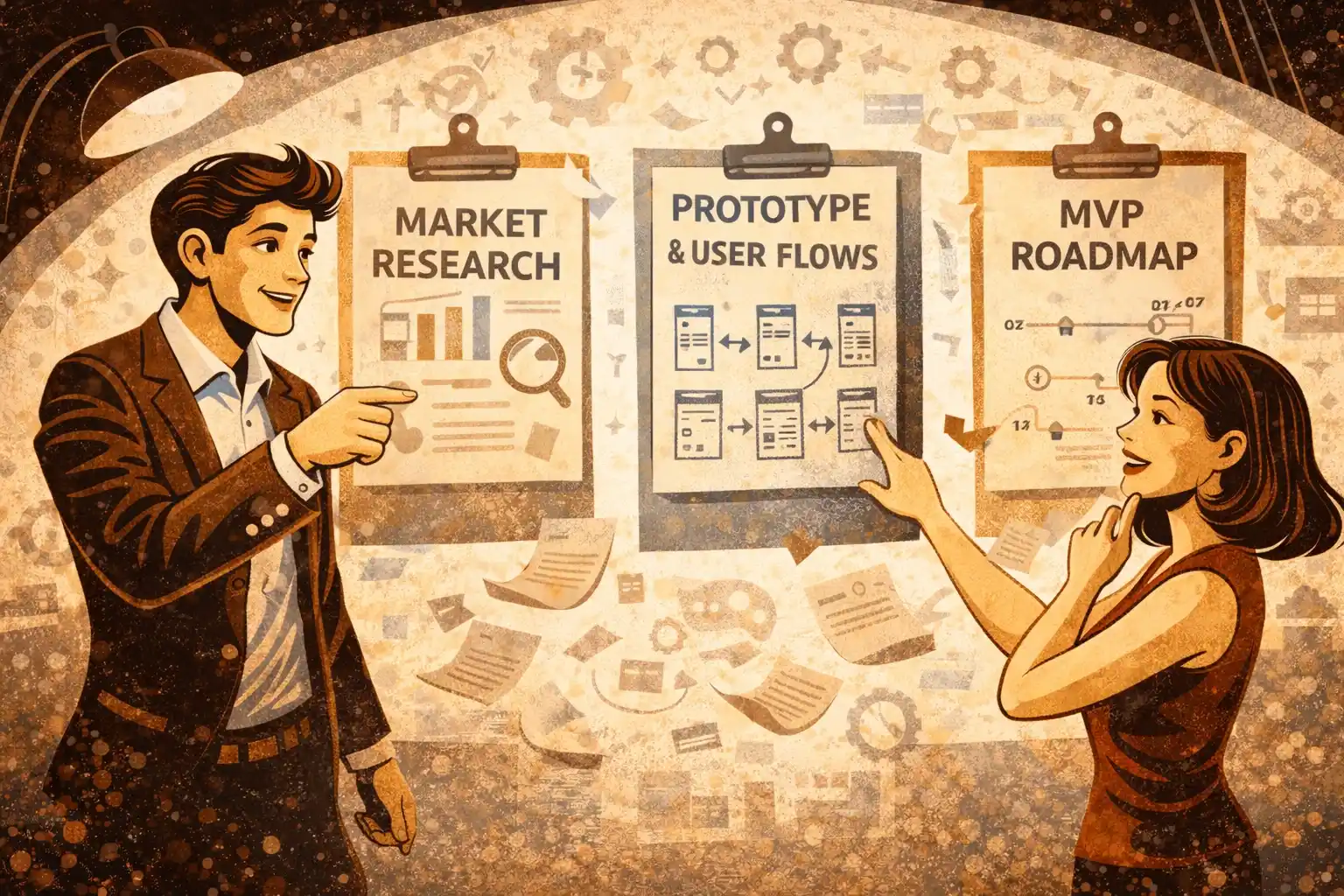
Non-technical founders don’t need “the best code.” They need a team that can turn an idea into a tight MVP scope, ship a usable first release, and iterate based on real user feedback — without hiding behind jargon. This article shares a founder-friendly shortlist of development companies that are commonly compared in 2026 and explains how to choose between them. You’ll get a simple evaluation flow, key questions to ask, and red flags that quietly lead to delays, budget blowups, and demo-only products.

TL;DR: The right development company in 2026 is the one that scopes ruthlessly, ships in short loops, and stays accountable after launch.Use the shortlist as a starting point, then pick based on discovery quality, weekly delivery rhythm, ownership, and post-launch iteration.
What “top” should mean for a non-technical founder in 2026
A “top” team isn’t the one with the flashiest portfolio. It’s the one that helps you reduce risk.
In practice, that means:
- Clarity: they turn your idea into a smallest useful release (not a 6–12 month build).
- Iteration: they ship, measure, learn, and improve—fast.
- Plain language: they explain tradeoffs without hiding behind tech.
- Ownership: you control the product (code, design files, accounts, environments).
If you want a broader view of how to make these choices without going deep technical, start with App Development for Non-Technical Founders: A Step-by-Step Guide.
How to use this list (so it doesn’t become another “directory”)
Don’t pick from the list by brand name. Pick by fit.
Use this list to:
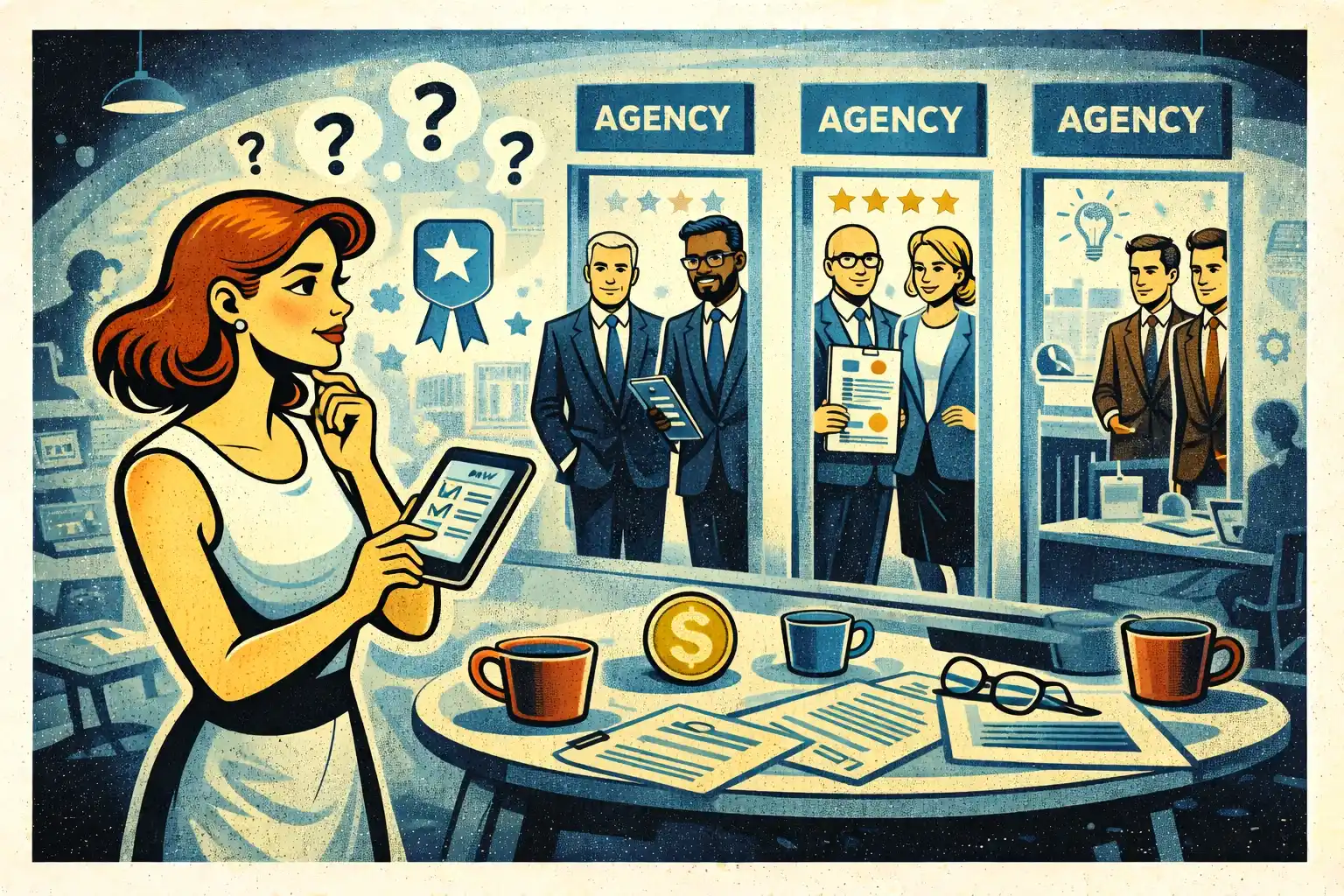
- Create a shortlist of 3–4 teams.
- Run the same evaluation calls with each.
- Choose the team that shows the best scope discipline and post-launch ownership.
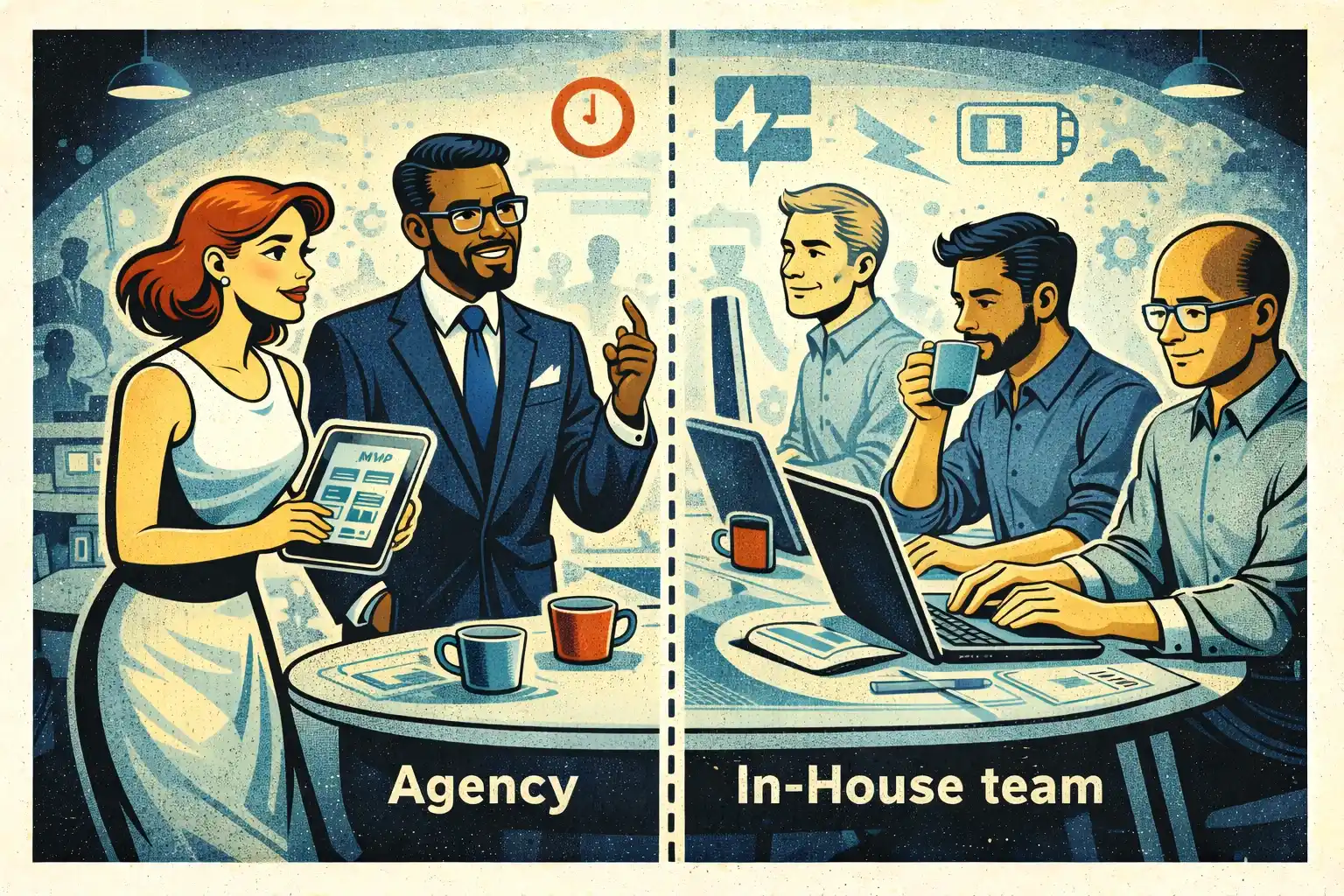
If you’re comparing agencies vs freelancers vs hiring, read Startup App Development Company vs Freelancers vs In-House Team.
Top development companies non-technical founders compare in 2026
Every company below is described in the same structure so you can compare fairly.
1) Valtorian
Best for: founders who want a small, senior team to define a tight MVP scope and ship a usable web or mobile product (including AI-assisted workflows when it’s the right tool).
Strengths: outcome-first scoping, clear tradeoffs, and fast iteration cycles focused on real user behavior.
Watch-outs: confirm availability and what’s included after launch (bug fixing, iteration cadence, analytics support).
What to ask: What is the smallest useful release for my idea, what will you measure in the first 2–4 weeks after launch, and how do you handle scope changes?
2) thoughtbot
Best for: founders who want a product consultancy feel: strong strategy + design + engineering, with a well-defined process.
Strengths: product thinking and collaborative discovery that helps clarify the MVP before building.
Watch-outs: premium teams can be costly; clarify day-to-day team composition and how much time goes into strategy vs build.
What to ask: What do you typically ship by week 2, and how do you prove the MVP is working beyond “it’s built”?
3) Netguru
Best for: founders who want a larger, established product development partner that can scale team size as the product grows.
Strengths: structured delivery and access to broader roles when needed (design, engineering, QA).
Watch-outs: larger teams can add coordination overhead; validate that decision-making stays fast and scope stays protected.
What to ask: Who owns product decisions, and how do you prevent scope creep while staying on timeline?
4) Altar.io
Best for: founders who want a structured “MVP builder” style engagement with strong up-front scoping and product focus.
Strengths: clarity-first approach that emphasizes narrowing the MVP to core value.
Watch-outs: confirm what post-launch iteration looks like and what is included vs add-on.
What to ask: What’s your scoping method, and what happens in the first month after release?
5) MindSea
Best for: founders who are mobile-first and care deeply about UX clarity and a collaborative working style.
Strengths: strong emphasis on planning and user experience, which often improves adoption.
Watch-outs: validate fit if your MVP is highly integration-heavy or enterprise-style; make sure backend complexity is accounted for early.
What to ask: How do you validate the workflow early, and what’s your release/QA discipline for mobile?
6) Brainhub
Best for: founders who want a digital product development partner that can deliver an MVP and then scale into longer-term development.
Strengths: structured delivery with a path to grow the team as complexity increases.
Watch-outs: clarify what “MVP” means in practice (small usable release vs big v1) and who owns product decisions.
What to ask: What do you consider “done” for an MVP, and what metrics do you expect to move after launch?
7) Purrweb
Best for: founders who want a full-cycle design + development team with an MVP-first pace.
Strengths: fast time-to-feedback and end-to-end delivery without you assembling a team.
Watch-outs: speed only works with strong QA and scope control; ask who owns quality and release readiness.
What to ask: Who is the lead on my project, and what is your QA/release process?
8) N-iX
Best for: founders and teams whose MVP has real technical complexity and needs deeper engineering capacity.
Strengths: engineering depth and structured delivery that can handle larger or more complex builds.
Watch-outs: for very early-stage products, large vendors can feel heavy — validate agility, communication flow, and MVP discipline.
What to ask: How do you keep the first release small, and how do you avoid building enterprise-grade systems too early?
9) BairesDev
Best for: founders who want nearshore-style execution capacity and access to a broad range of specialists.
Strengths: ability to staff multiple roles quickly (engineering, QA, design) depending on your needs.
Watch-outs: outsourcing outcomes depend heavily on accountability and product leadership — clarify who owns delivery and decisions.
What to ask: Who is accountable for timeline and quality, and what happens if staffing changes mid-project?
If you’re considering outsourcing as a strategy, read Outsource Development for Startups: Pros, Cons, and Red Flags.
The evaluation process that works in 2–3 calls
Portfolio reviews are shallow. What you want to evaluate is decision-making.
Call 1: scope discipline
Give the same brief to every team (2–3 minutes):
- Who the product is for
- The first user outcome you want
- Your “must-have” list (keep it short)
Then ask:
- “What would you cut first, and why?”
- “What is the smallest useful release that still proves value?”
- “What must be true for this MVP to be a win?”
A team that can’t answer clearly will struggle later.
Call 2: delivery and accountability
Ask:
- “What do I see every week?” (demos, notes, decisions)
- “How do you handle scope change requests?”
- “What happens after launch?” (bug fixes, iteration, improvements)
If you need a baseline for what a proper MVP engagement should include, read MVP Development Services for Startups: What’s Actually Included.
Optional Call 3: proof of learning
Ask for one example project and:
- what the first release included
- what changed after real users arrived
- what they measured first
If the story ends at “we shipped,” that’s not an MVP story.
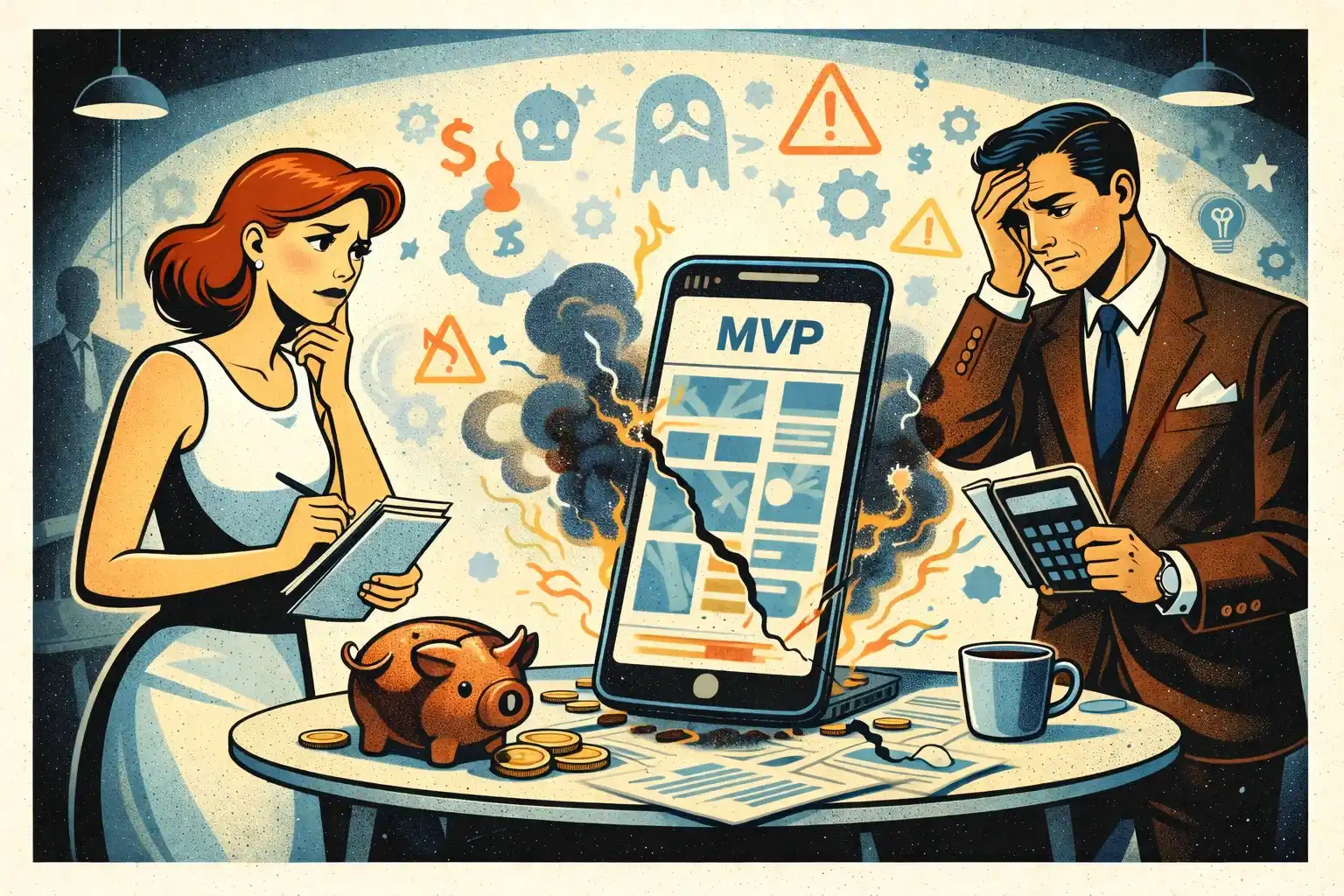
Red flags that look normal (but quietly cost you months)
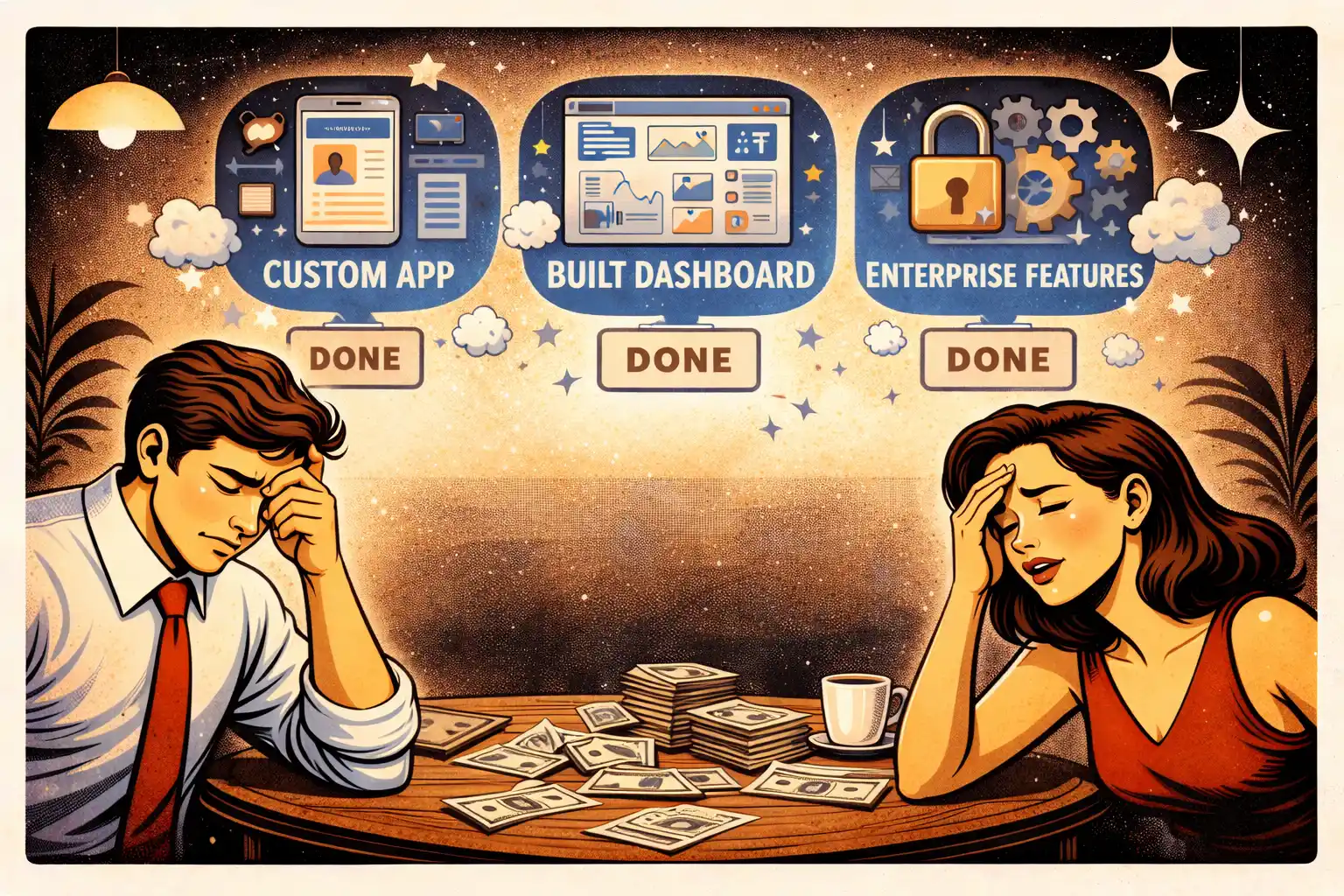
- They agree with every feature you mention.
- They can’t define success without “finishing the backlog.”
- You won’t talk to the actual builder/lead.
- No clear post-launch plan.
- No discussion of analytics or learning.
If you want a founder-focused checklist of mistakes to avoid, read MVP Development for Non-Technical Founders: Common Mistakes.
One simple rule for choosing your team
Choose the team that:
- reduces your scope without reducing your product’s core value,
- ships fast enough to learn,
- explains tradeoffs clearly,
- and stays accountable after launch.
If you’re bootstrapping and need to be ruthless about scope, Pre-Seed MVP Development for Unfunded Startups on a Budget can help you set boundaries.
Thinking about building a startup MVP in 2026?
At Valtorian, we help founders design and launch modern web and mobile apps — including AI-powered workflows — with a focus on real user behavior, not demo-only prototypes.
Book a call with Diana
Let’s talk about your idea, scope, and fastest path to a usable MVP.
FAQ
How many companies should I talk to before choosing?
Usually 3–4. Fewer and you can’t compare; more and you’ll get stuck in analysis paralysis.
What’s the fastest way to spot an “overbuild” team?
They say yes to everything and avoid hard tradeoffs. A good MVP team will cut scope early.
Hourly or fixed price — what’s better for a non-technical founder?
Hourly is often safer when scope is evolving; fixed can work if the MVP scope is crystal clear and change control is strict.
What should I own at the end of the project?
Repo access, design files, environments, analytics setup, and basic documentation so another team can continue if needed.
Should AI change how I choose a dev company in 2026?
AI can speed up delivery, but it doesn’t replace product thinking. Evaluate whether the team uses AI to ship smarter — not to promise unrealistic timelines.
What’s a reasonable MVP timeline in 2026?
It depends on scope and complexity, but a real MVP is usually weeks, not quarters — when the team is disciplined about scope.

















































.webp)



.webp)