.webp)
Bootstrapped MVP Strategy in 2026: Ship Faster
Bootstrapping is a constraint, not a weakness — if you use it to force clarity. In 2026, AI and modern tools can compress build time, but bootstrapped founders still lose months by overbuilding, chasing perfect UX, or delaying launch until everything is “ready.” This article gives a practical strategy to ship faster with limited runway: what to decide first, what to cut, how to structure sprints, and how to validate with real users early. You’ll also get a lightweight weekly loop for progress without burnout.
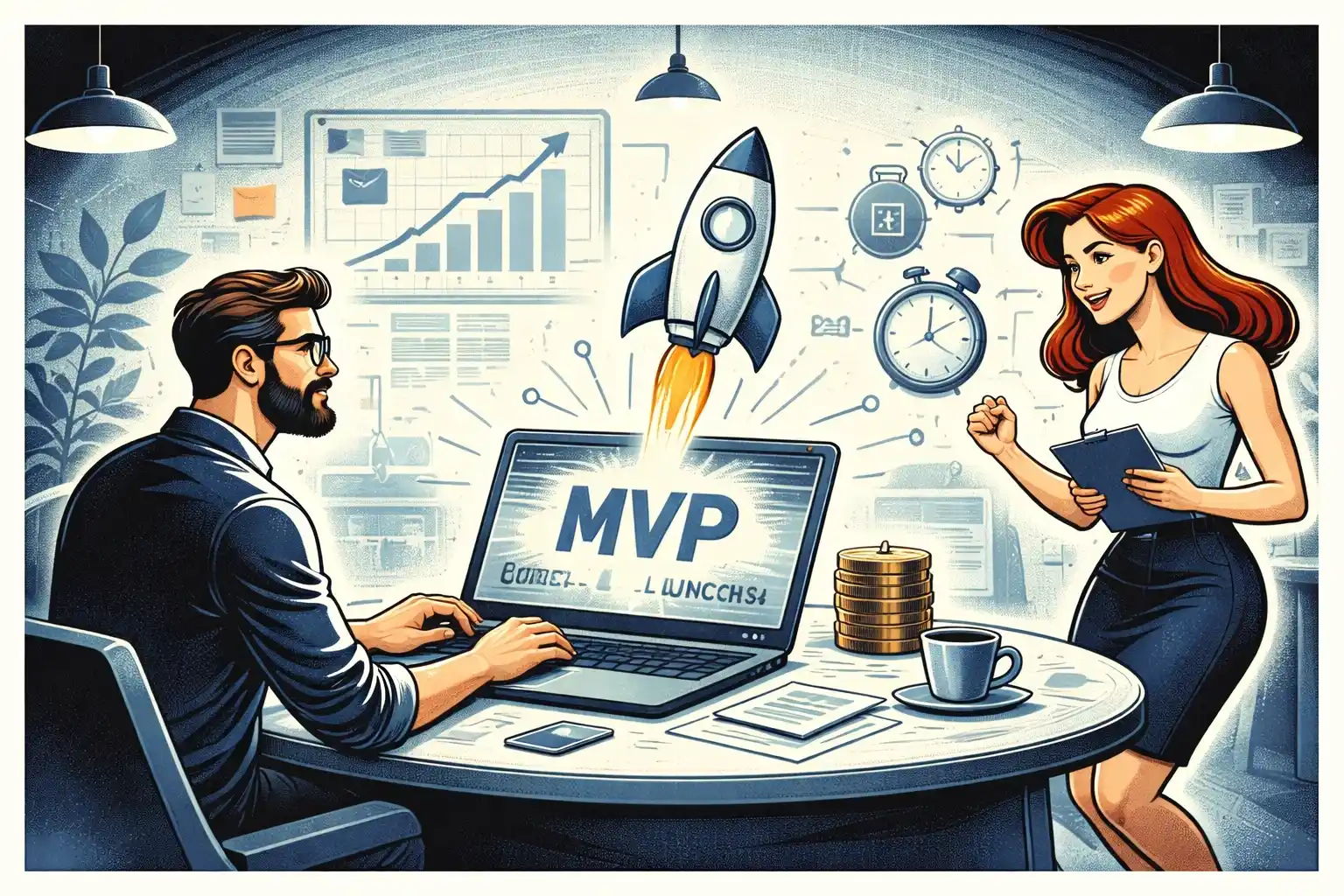
TL;DR: Bootstrapped MVP speed comes from ruthless focus, not heroic coding. Define one core user outcome, ship the smallest useful version in weeks, instrument a few events, and iterate from real behavior. In 2026, the biggest advantage bootstrappers have is agility — use it to learn faster than funded teams.
Bootstrapped doesn’t mean “small ambition”
Bootstrapped means you can’t afford waste.
The temptation in 2026 is that building feels cheaper:
- AI generates scaffolding
- templates are everywhere
- “MVP in days” is a common pitch
But speed without direction is just faster failure.
The bootstrapped MVP goal: reach real users before you run out of energy
Your MVP doesn’t need to impress the internet.
It needs to:
- deliver one clear outcome
- prove users care (behavior, not compliments)
- give you the next decision with confidence
If you want a clear “what to cut” lens, read MVP Development for Non-Technical Founders: 7 Costly Mistakes.
Step 1: Pick one outcome, not one product
Bootstrappers often describe their MVP as a “platform.”
Platforms are expensive.
Instead, define one outcome:
- “User generates X in under 3 minutes.”
- “User completes Y without assistance.”
- “User gets Z result and wants to repeat it.”
This outcome becomes your scope boundary.
Step 2: Define the smallest useful version (not the smallest possible)
“Smallest possible” often creates something unusable.
“Smallest useful” means:
- it solves the core problem end-to-end
- it’s stable enough to be used twice
- it includes basic trust and support paths
This is a key idea in our positioning: ship a realistic first release with clear scope and next steps — then stay close after launch.
If you need the founder-friendly process framing, see Full-Cycle MVP Development: From Discovery to First Paying Users.
Step 3: Cut scope using the “runway math” rule
Bootstrapped founders don’t run out of ideas.
They run out of runway.
Use a simple rule:
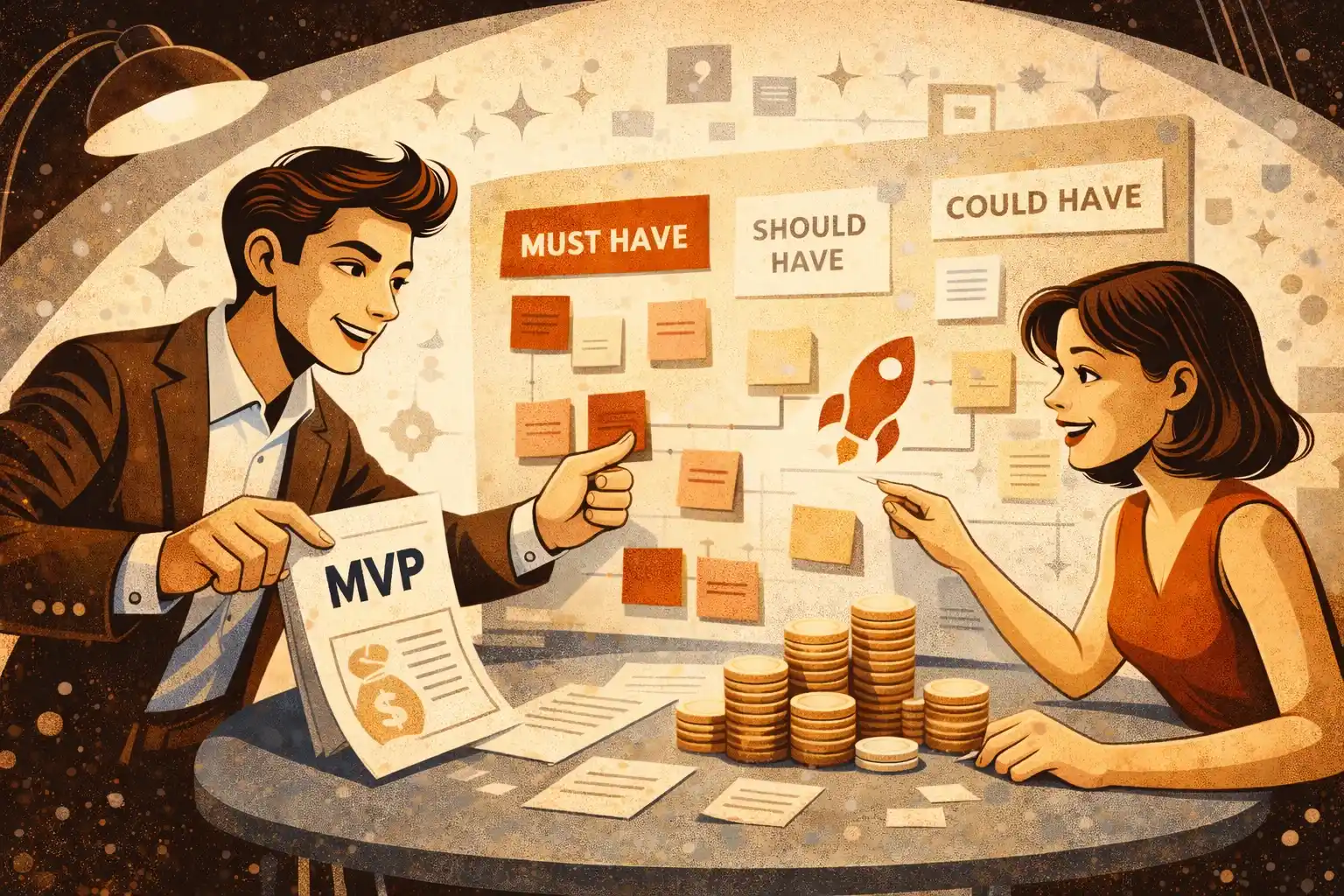
- If a feature doesn’t change the first user outcome, cut it.
- If a feature doesn’t reduce a real risk, cut it.
- If a feature exists “because competitors have it,” cut it.
If you’re stuck cutting features, this helps: How to Prioritize Features When You’re Bootstrapping Your Startup.
Step 4: Choose web vs mobile based on distribution, not preference
Bootstrappers often pick mobile because it “feels more real.”
But web can be faster to iterate and easier to distribute.
Use a founder framework:
- If discovery is link-based (SEO, communities, outbound), web-first often wins.
- If the product is habit-driven with native needs (push, camera, offline), mobile-first can be necessary.
If you want the full decision logic, see Web vs Mobile First in 2026: A Founder Framework.
Step 5: Don’t build your stack twice
Bootstrapping hates rebuilds.
Two common rebuild triggers:
- messy data model
- weak permissions / access rules
For many MVPs, a clean backend foundation matters more than fancy UI.
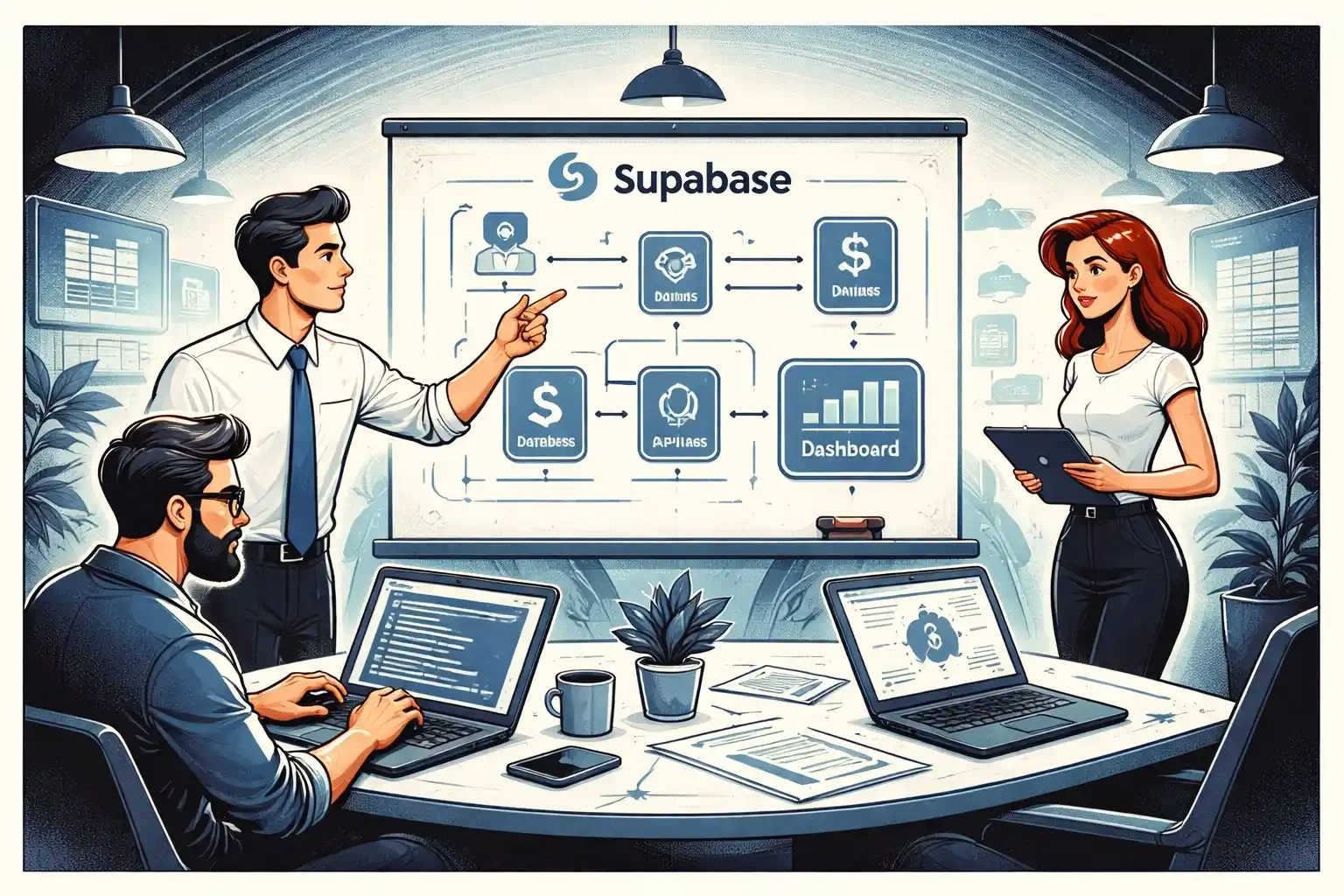
If you’re using Supabase, avoid “quick hacks” that later force rewrites. This guide covers practical patterns: Supabase MVP Architecture in 2026: Practical Patterns.
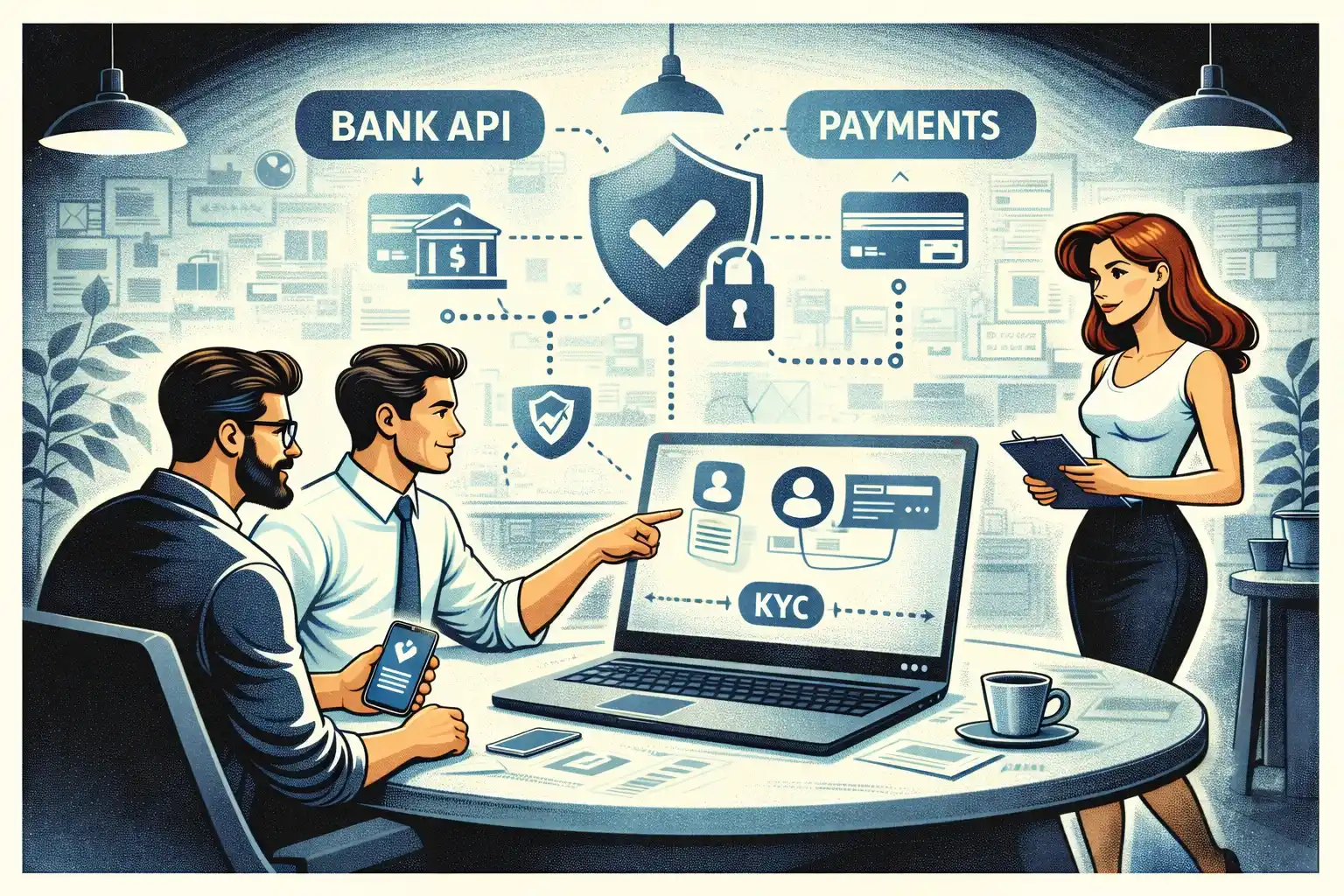
Step 6: Add payments only if they validate something real
Bootstrapped speed improves when you validate willingness to pay early.
But don’t overbuild billing.
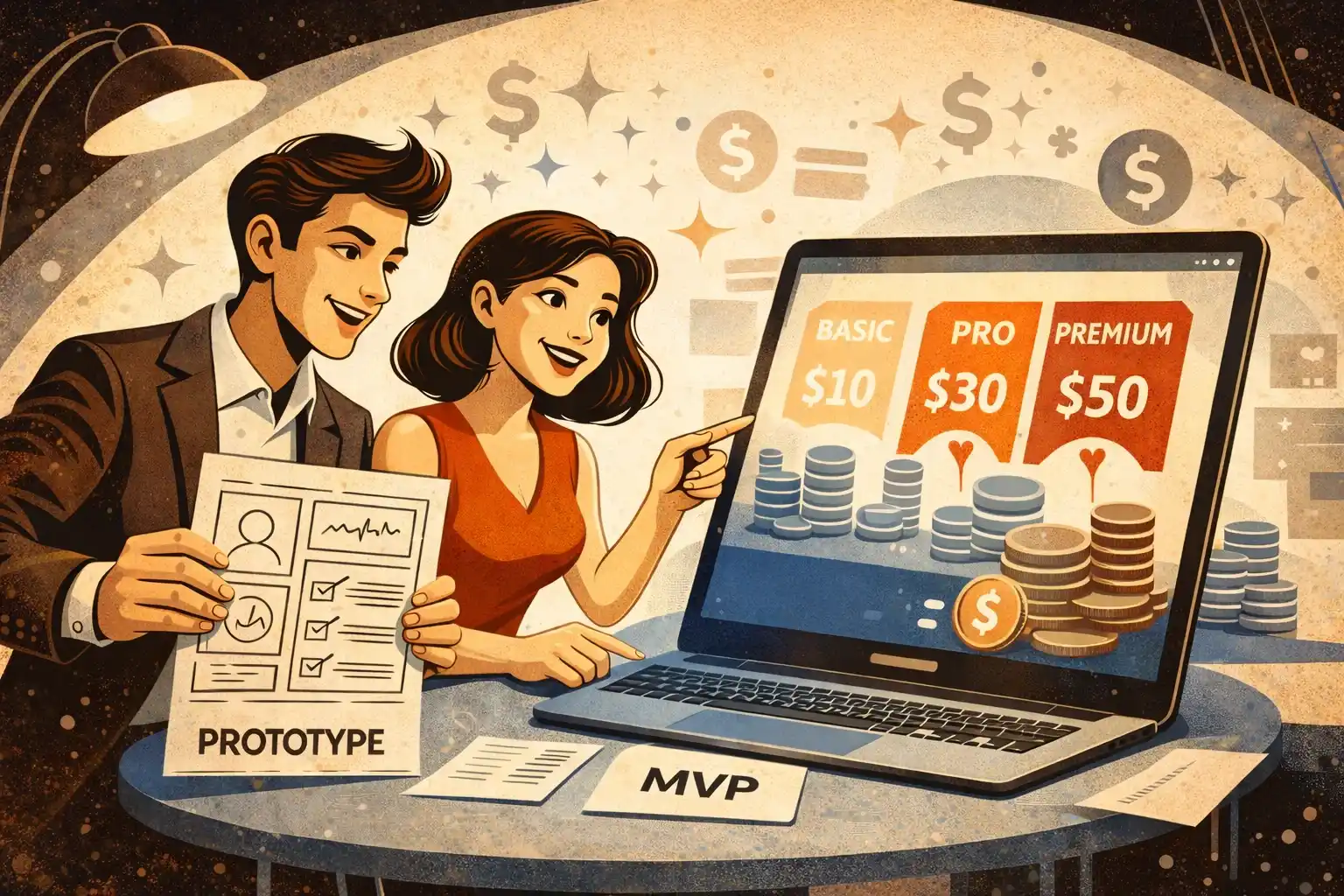
MVP payment rule:
- One model (one-time or subscription)
- One price (or two at most)
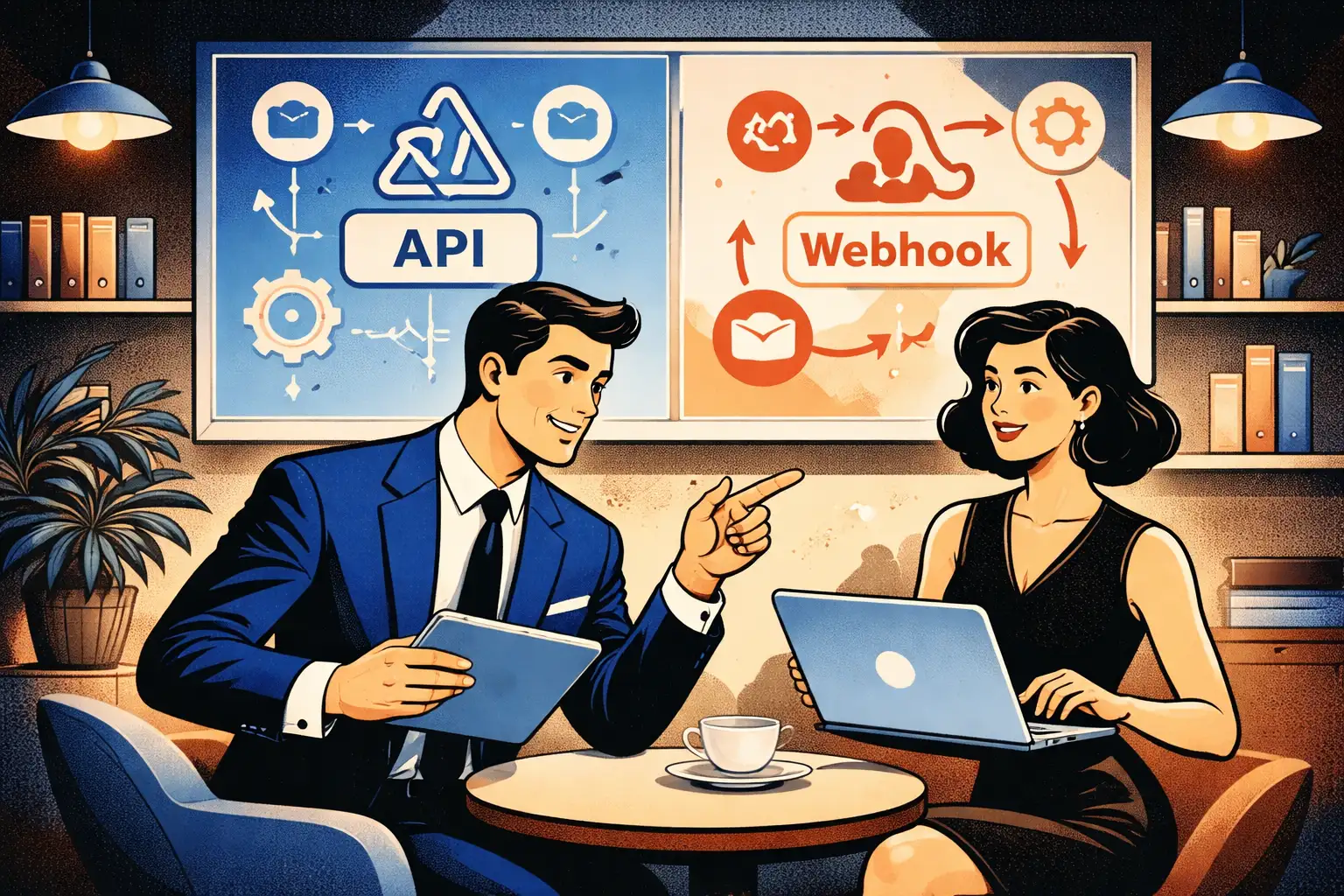
- Reliable access rules + webhooks
If you’re using Stripe, keep it boring and correct: Payments for MVPs in 2026: Stripe Decisions That Matter.
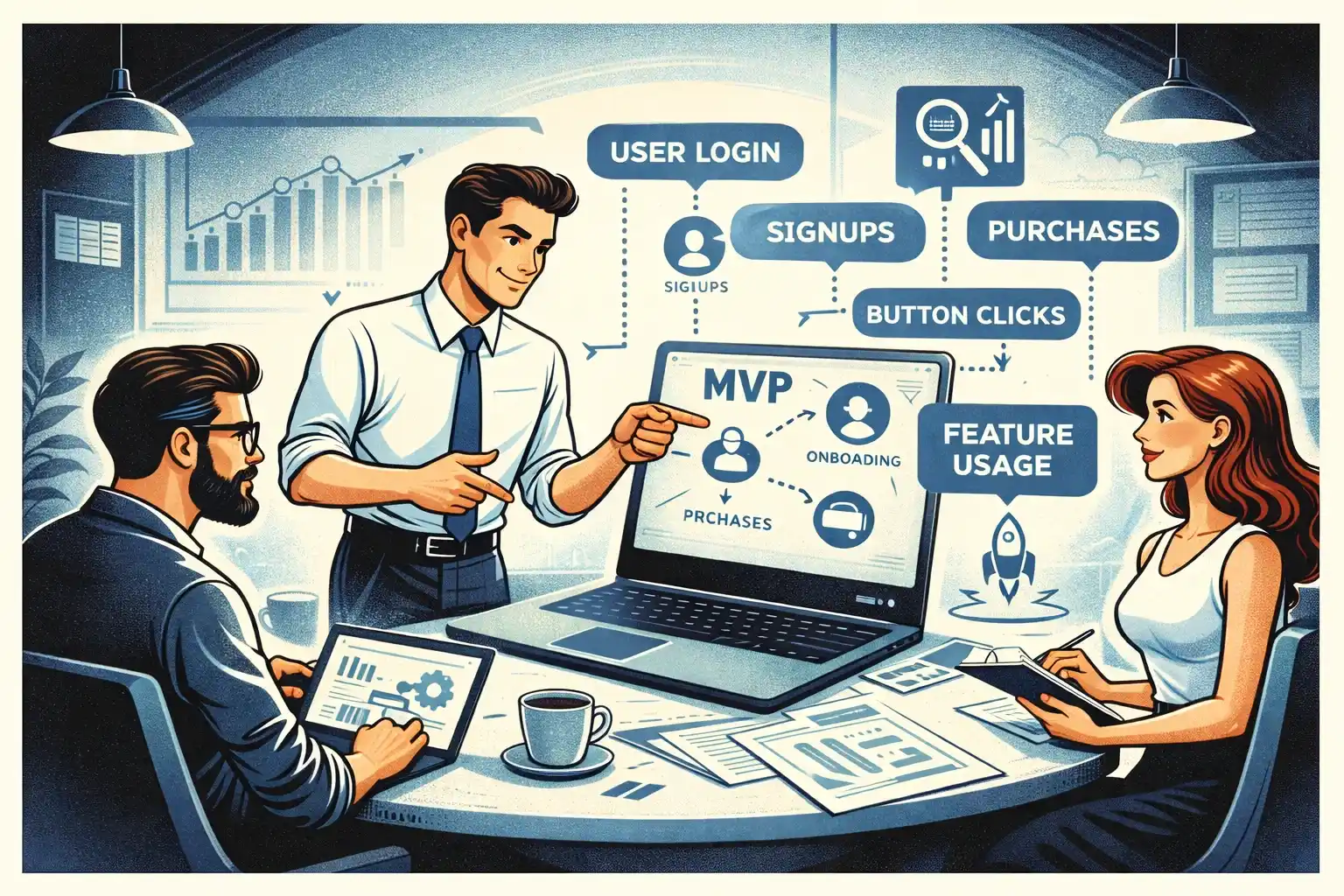
Step 7: Track the few events that help you decide
Analytics is not a “later” feature.
It’s how you avoid building in the dark.
For a bootstrapped MVP, track:
- activation (first value moment)
- core action
- retention proxy
- revenue signal (or intent)
Then add only the events that explain drop-offs.
This is the clean early-stage event plan: MVP Analytics in 2026: Events to Track Early.
Step 8: Run a weekly loop that forces progress
Bootstrapped founders need a rhythm that prevents “infinite building.”
A simple weekly loop:
- Ship one improvement that affects the core outcome
- Talk to 3–5 users (or watch recordings)
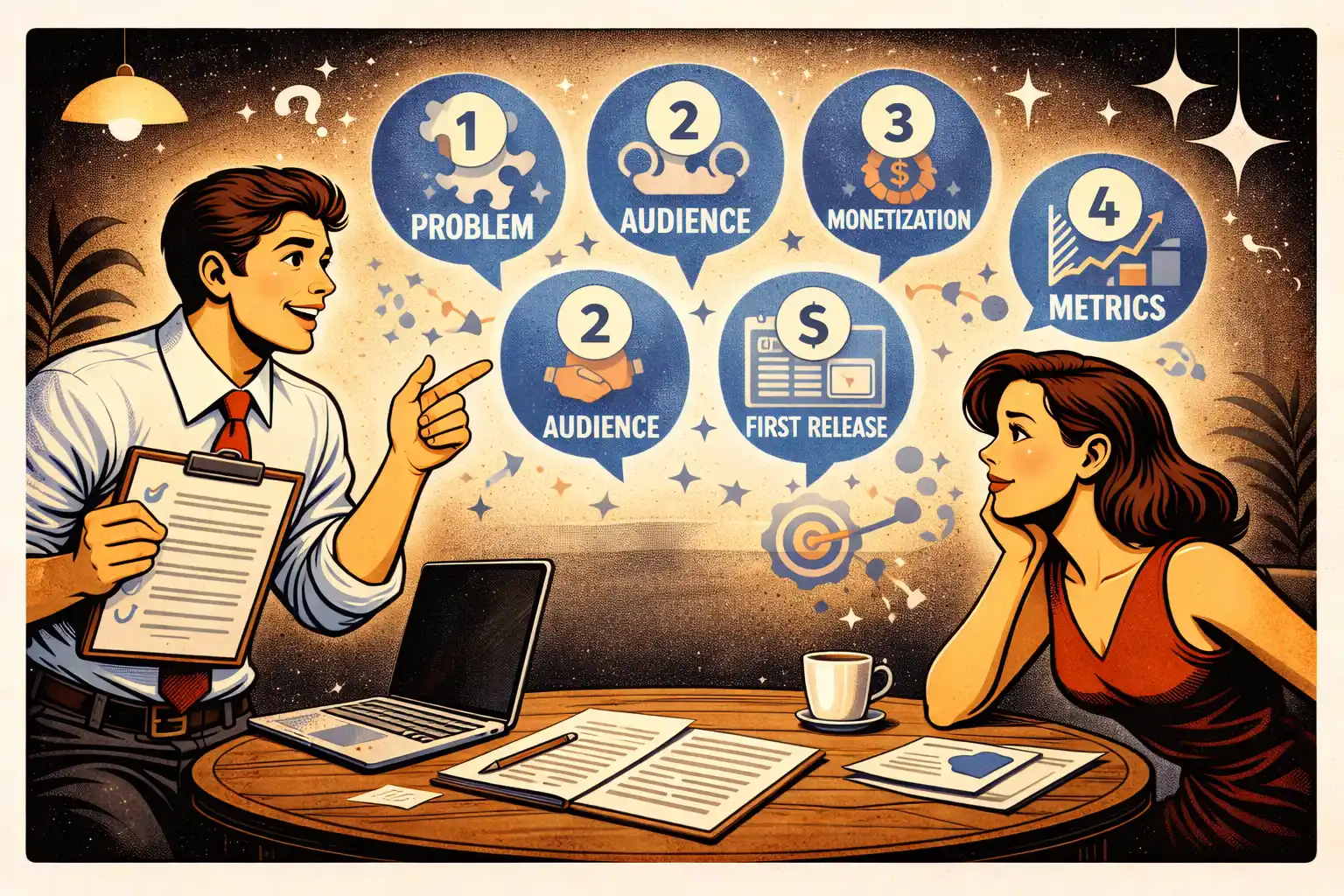
- Review the 4 pillar metrics (activation/core/retention/revenue)
- Decide the next week’s single focus
If your week ends with “we built more,” you didn’t learn.
Step 9: Use AI like a multiplier, not a manager
AI should speed up repeatable work:
- scaffolding UIn- drafting copy and docs
- generating tests
- summarizing user feedback
AI should not:
- define your MVP scope
- choose your monetization model without context
- ship unreviewed code to production
If you want the founder-friendly truth about AI and quality, see AI-Powered MVP Development: Save Time and Budget Without Cutting Quality.
The biggest bootstrapped MVP traps
Trap 1: “Let’s build the full version, then market it”
Bootstrapped founders can’t afford delayed feedback.
Trap 2: “We need perfect design first”
You need clarity and usability first.
Trap 3: “We’ll track analytics later”
Later becomes never.
Trap 4: “We’ll figure out pricing after we launch”
Even if you don’t charge, you need an intent-to-pay signal.
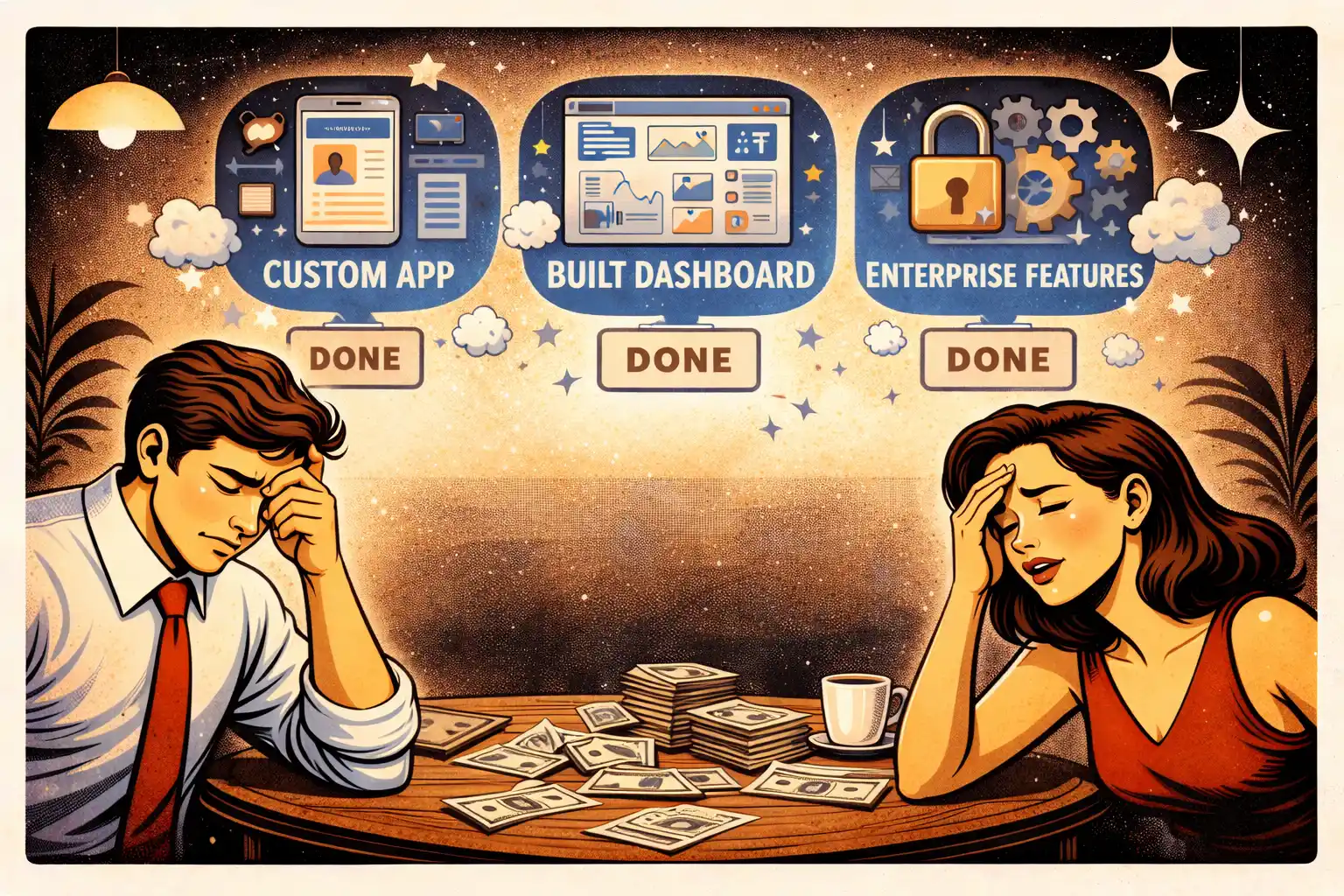
If this feels familiar, it’s normal — bootstrapping amplifies every mistake. That’s why the strategy is ruthless clarity, not speed for speed’s sake.
Thinking about building a bootstrapped MVP in 2026?
At Valtorian, we help founders design and launch modern web and mobile apps — including AI-powered workflows — with a focus on real user behavior, not demo-only prototypes.
Book a call with Diana
Let’s talk about your idea, scope, and fastest path to a usable MVP.
FAQ
What’s the fastest way to ship a bootstrapped MVP?
Define one user outcome, cut everything else, ship end-to-end with basic analytics, then iterate weekly based on real behavior.
How small should a bootstrapped MVP be?
Small enough to ship in weeks, but complete enough to deliver a real outcome end-to-end. “Unusable small” doesn’t validate anything.
Should bootstrapped founders start with web or mobile?
Start with the platform that matches distribution and core behavior. Web is often faster for validation; mobile is necessary when native capabilities drive the core loop.
When should I add payments?
When payment validates value. Start simple with Stripe Checkout and correct webhooks; don’t build complex billing until retention is proven.
How many metrics should I track early?
A few: activation, core action, retention proxy, and a revenue signal (or intent). Add more only when they change decisions.
How do I avoid rebuilding the MVP later?
Design your data model and access rules early, keep backend clean, and avoid hacks that bypass permissions. Rebuilds come from messy foundations, not from missing features.
What’s the biggest mistake bootstrapped founders make in 2026?
Using AI to build faster without using it to think clearer. You still need scope discipline, user feedback, and decision-ready metrics.











































.webp)




.webp)