.webp)
Low-Code in 2026 for Startup Founders
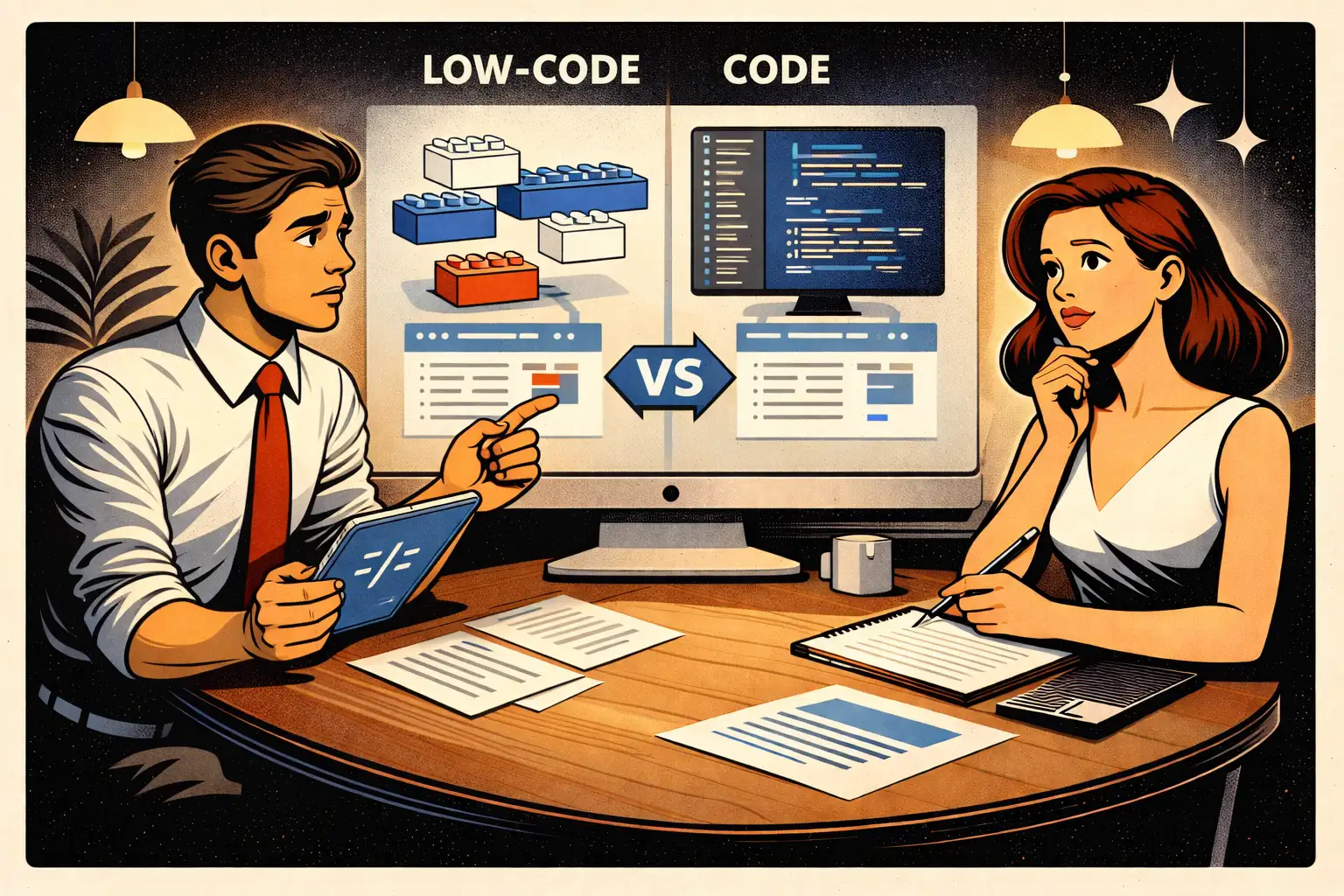
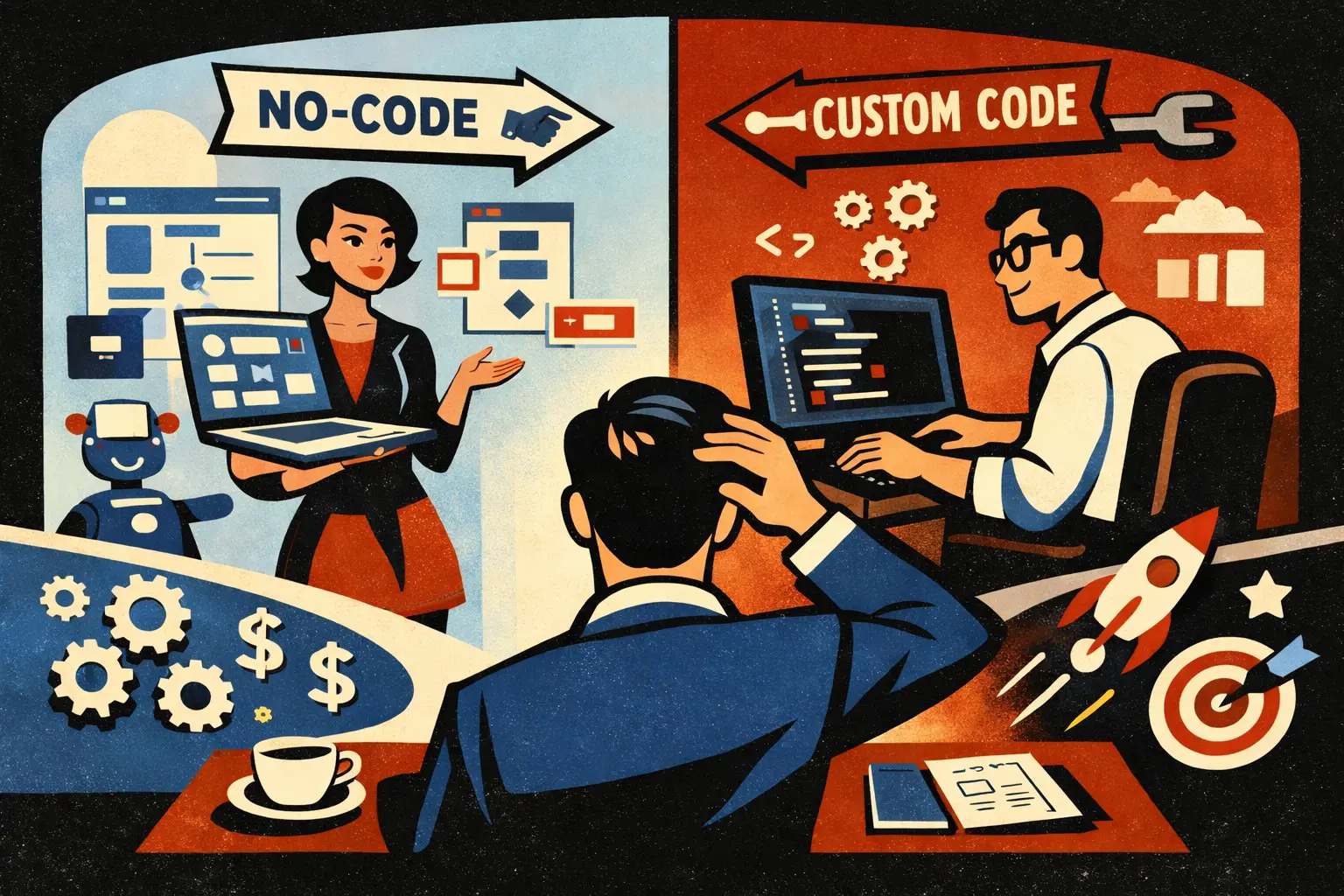
Low-code is still part of startup conversations in 2026, but founders should look at it very differently now. A few years ago, low-code was often framed as the practical middle ground between no-code and full custom development. Today, that argument is weaker because AI-assisted code development has changed the speed equation. This article looks at where low-code can still help startup founders, where it creates false confidence, and why code is now often the better recommendation for products that need room to grow.
TL;DR: Low-code can still make sense in 2026 for some internal tools, operational products, and tightly scoped MVPs where the workflow is structured and the goal is quick validation.
Why founders still ask about low-code
Founders still ask about low-code for one simple reason: they want progress without unnecessary heaviness.
That instinct makes sense. Early-stage startups want a first version in front of users quickly. They want something they can test, show, or sell without building an entire in-house team too early.
For a long time, low-code sounded like the practical compromise. Not as rigid as no-code. Not as heavy as custom code. Fast enough to launch, flexible enough to grow.
In 2026, that middle-ground story needs more scrutiny. The old assumption behind it was that code would be slower. That assumption is no longer safe. Small teams using AI-assisted code workflows can now build surprisingly fast, which means founders should stop treating low-code as the automatic shortcut.
Where low-code still makes sense
Low-code still makes the most sense when the product is narrow, the workflow is relatively structured, and the startup benefits from getting something operational quickly without needing deep custom behavior right away.
That can include internal business tools, admin-heavy systems, lightweight portals, data-driven operational products, and some MVPs where the main job is to validate a process rather than support a richer long-term product experience.
It can also make sense when the startup is building something that is clearly temporary or stage-based. If the founder knows this first version exists mainly to test adoption, user behavior, or workflow logic, a low-code path can still be reasonable.
The important thing is to choose it consciously as a stage decision, not as a default technical identity.
If you are still defining what version one should even contain, What a Good MVP Looks Like in 2026 is the better place to begin.
Where low-code usually disappoints founders
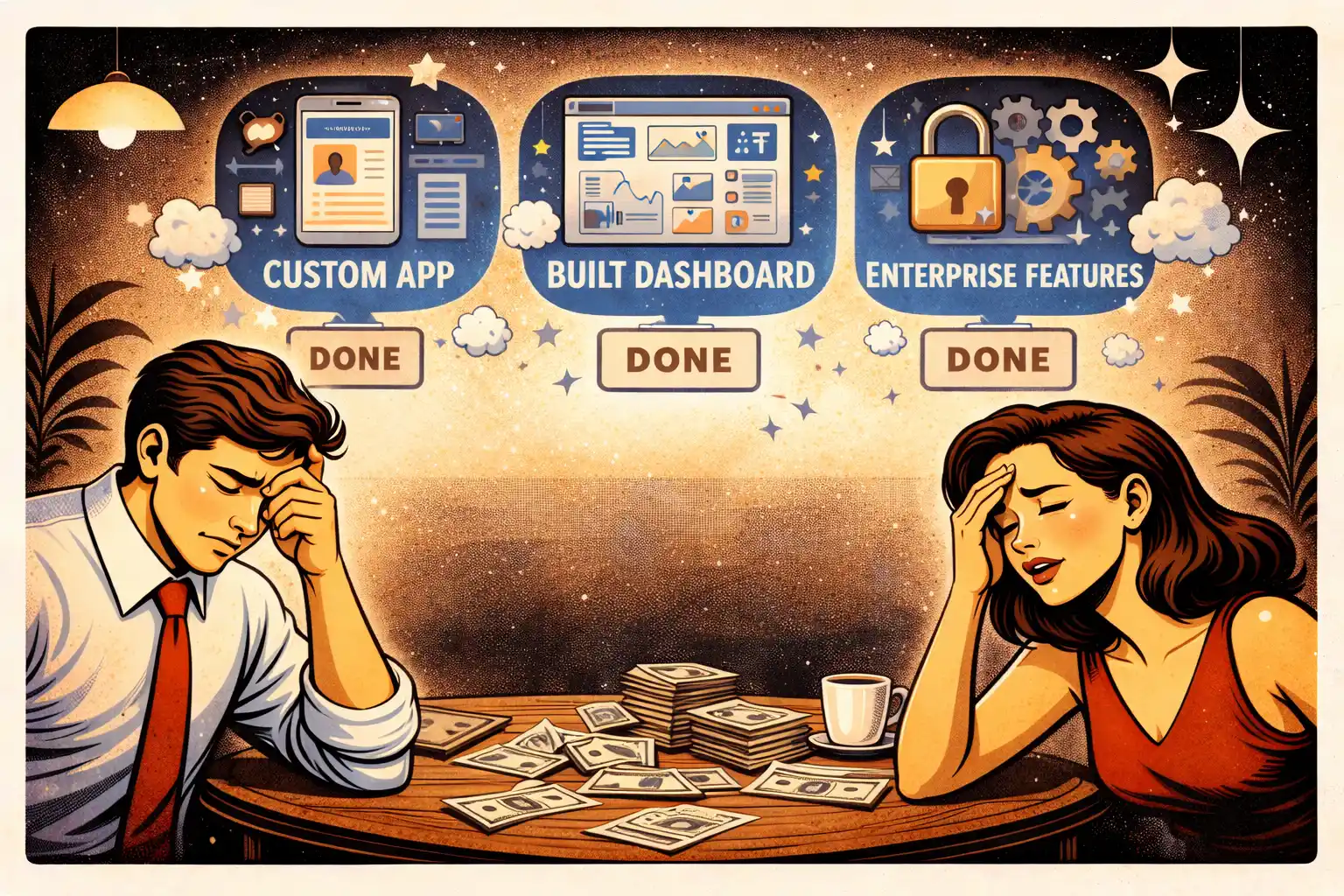
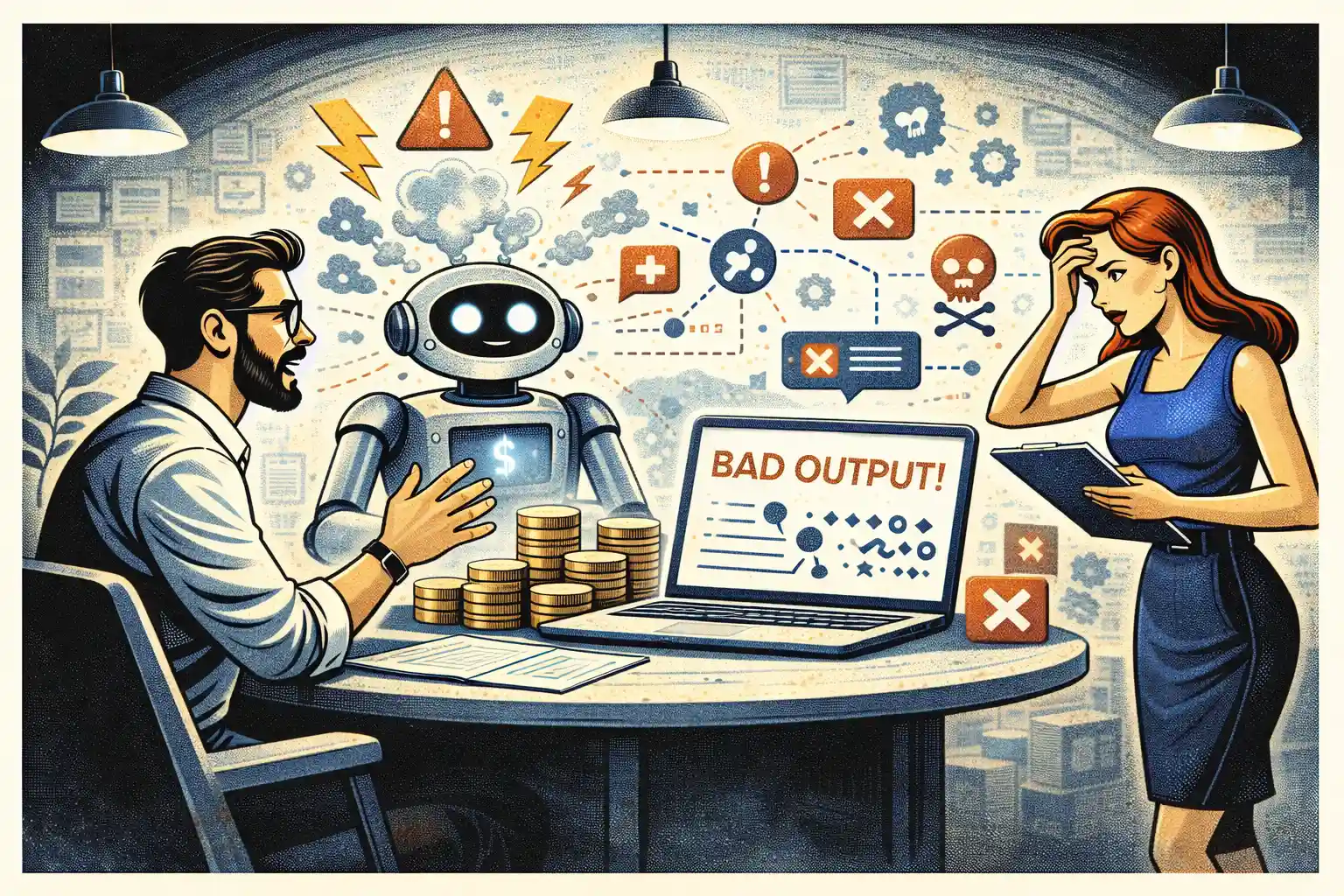
The disappointment usually starts when a founder expects the tool to keep solving the same problem forever.
Low-code can feel efficient early because it removes some setup and accelerates the first version. But once the product needs more tailored UX, deeper product logic, stronger integrations, or a cleaner long-term architecture, the limits become more visible.
Another problem is that founders often confuse “faster to assemble” with “better for the product.” Those are not the same thing. A setup that feels efficient on day one may create friction later if it starts shaping the product around the platform’s boundaries instead of the user’s needs.
There is also a psychological trap. Once a founder gets momentum from a low-code stack, it becomes emotionally harder to step back and admit that the product now needs something else.
That is why the wrong low-code choice is rarely about the tool alone. It is about timing, scope, and whether the founder is still asking the right question.
This connects well with No-Code vs Custom Development in 2026: A Founder’s Decision Framework.
Why low-code no longer owns the speed argument
This is the biggest change.
A few years ago, low-code often won comparisons simply because it looked like the fastest practical route. That argument is weaker now. AI-assisted code development changed the baseline.
A focused team building with code can now move much faster than founders used to expect. In many startup cases, the code path is no longer meaningfully slower than the low-code path. Once that happens, the founder has to compare more than launch speed. They also have to compare flexibility, rework risk, product control, and what happens when the first version gets traction.
That is where low-code loses its old automatic advantage.
The question is no longer “Can low-code get me live faster?” The better question is “If code can get me there in a similar timeframe, why would I choose more platform-shaped limits?”
When code is now the better path
Code is usually the better path when the founder already knows the product will need stronger UX, heavier product logic, more tailored flows, deeper integrations, or a better foundation for growth after launch.
It is also the better path when version one is not just a disposable test, but a serious first release meant to support retention, monetization, investor conversations, or ongoing iteration without early rebuilding pressure.
That does not mean low-code is useless. It means the founder should stop assuming it is safer or smarter by default.
If a small AI-assisted code team can now deliver a focused MVP in a comparable timeframe, the code path often becomes much more attractive because it leaves fewer product limits behind.
That is why How Much Architecture an MVP Needs in 2026 and Reducing MVP Rework in 2026: Key Decisions matter here.
How founders should evaluate low-code honestly
Do not compare low-code to code as an abstract philosophy. Compare outcomes.
How fast can each path get you to a usable first version?
How much product flexibility do you keep if the MVP works?
How likely are you to hit structural limits early?
How much rework are you likely to create?
And if AI-assisted code can now deliver the same milestone in a similar timeframe, what are you still actually gaining from low-code?
Those questions are much more useful than asking whether low-code is “good.”
That is why Tech Decisions for Founders in 2026 belongs in this conversation.
A practical founder framework
Choose low-code only when the workflow is structured enough, the first version is clearly narrow enough, and the business goal truly benefits from a temporary faster operational setup.
Be much more careful when the product already depends on differentiated UX, custom product logic, more complex data handling, or a stronger base for future iterations.
And before choosing low-code, ask one 2026 question first: could a small AI-assisted code team now build the same first version just as fast while leaving fewer technical constraints behind?
In many startup cases, the answer is yes.
Final thought
Low-code still has a place in 2026, but it is no longer the easy default for startup founders.
It still makes sense for some stage-specific products and tightly scoped MVPs. But it no longer owns the speed story, and that changes the recommendation.
For many real startup products, code is now the stronger path — not because low-code stopped working, but because AI reduced the old speed gap that used to justify it.
Thinking about the right technical path for your MVP in 2026?
At Valtorian, we help founders choose the smartest build approach and launch modern web and mobile products with clear scope, real user focus, and fewer expensive detours.
Let’s look at your idea, your product stage, and what it would take to launch without unnecessary rework.
FAQ
Is low-code still relevant in 2026?
Yes, in some cases. It can still work for internal tools, structured workflows, and narrowly scoped MVPs.
Is low-code still faster than code?
Not automatically. In many startup cases, AI-assisted code development can now move just as fast.
When does low-code make the most sense?
When the workflow is clear, the first version is limited in scope, and the founder mainly needs fast operational validation.
When should founders avoid low-code?
When the product already needs stronger UX, deeper logic, heavier integrations, or a better long-term base.
What is the biggest founder mistake with low-code?
Treating it as a universal startup shortcut instead of a stage-based tool with clear limits.
Is low-code better than no-code?
Sometimes, but not as a universal rule. Both depend on the product, the stage, and whether code can now achieve the same first milestone with fewer tradeoffs.
What should founders compare first?
Not just tool features, but launch speed, flexibility, rework risk, and whether AI-assisted code can now deliver the same MVP in a similarly fast way.

























































.webp)




.webp)