.webp)
Internal Tool or Real Product in 2026?
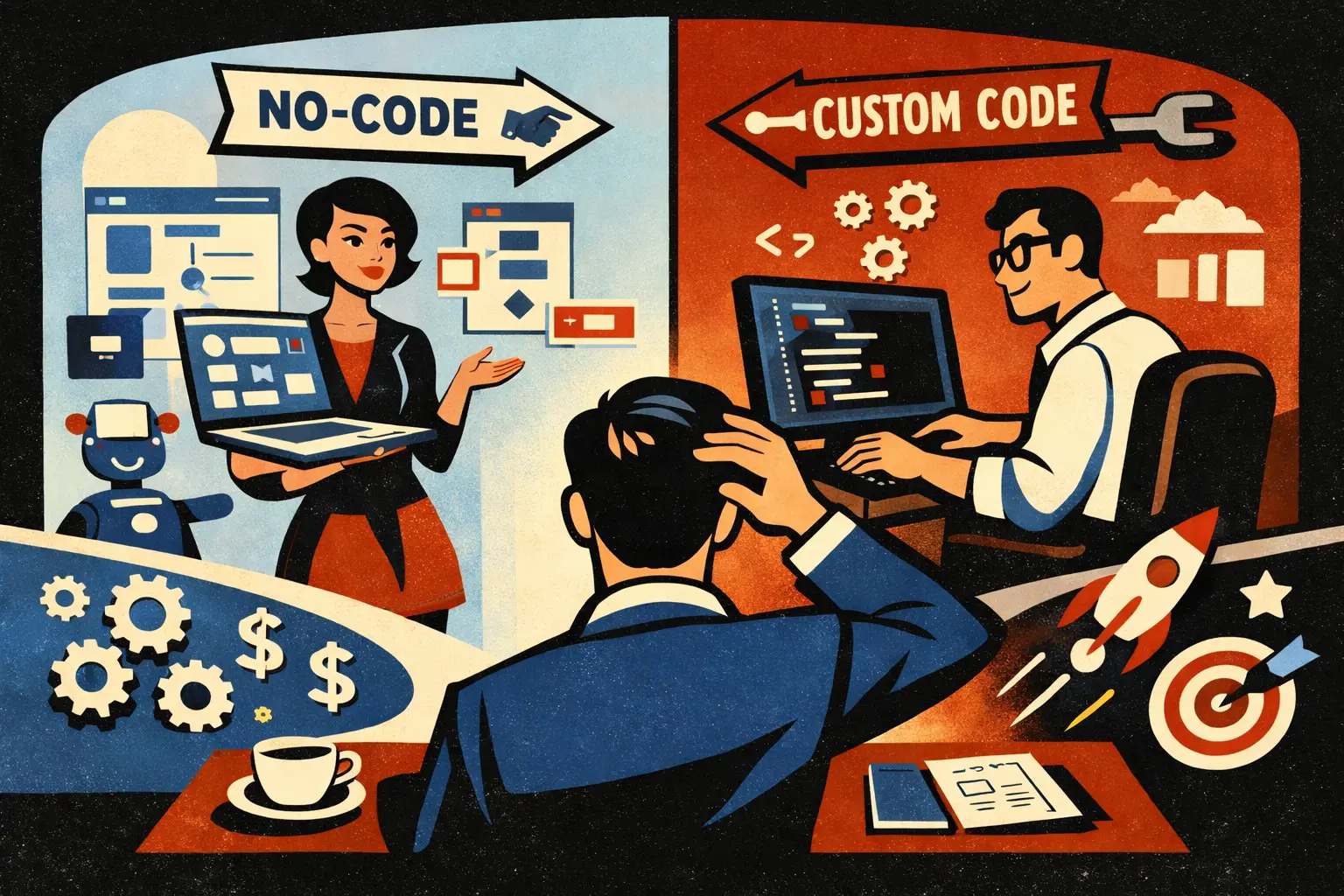
Many founders say they are building a product when they are actually building an internal tool with startup branding around it. Others dismiss a strong product opportunity because the first version still looks operational or manual. In 2026, this distinction matters more than it seems because it changes what you should validate, how much software you need, and what version one should actually do. This article explains how to tell whether you are building an internal tool or a real product, why founders confuse the two, and what to do next in each case.

TL;DR: A real product creates value directly for an external user or buyer. An internal tool creates value mainly by helping your team deliver, manage, or operate something behind the scenes.
Why founders confuse internal tools with products
This confusion happens because early-stage startups often look messy from the inside.
A founder may imagine a polished SaaS product, marketplace, or workflow platform, but the first working version is really just a structured internal process with a lightweight interface on top. That can feel disappointing, so teams start adding product-looking layers too early.
The opposite also happens. A startup may have a real product opportunity, but because the first version relies on manual operations or back-office steps, the founder underestimates how much user-facing value already exists.
The core mistake is the same in both directions: deciding what to build before understanding where the value is actually created.
What makes something an internal tool
An internal tool mainly helps your own team do work better.
It organizes operations, manages records, tracks workflows, supports decisions, or reduces repetitive internal effort. The main user is inside the business, even if the end customer benefits indirectly.
That does not make it less valuable. Some startups should absolutely begin with internal tools. But they should name them honestly.
If the first version mainly helps your team coordinate, match, review, approve, monitor, or manually deliver the value, then you are probably building an internal tool first.
That can still be the right decision. It just leads to a different roadmap and a different validation logic.
This connects naturally to What Founders Should Automate First in 2026.
What makes something a real product
A real product creates value directly in the hands of an external user.
The user logs in, takes an action, gets an outcome, and would notice the absence of the product itself — not just the absence of your team behind it.
That does not mean everything must be automated. A product can still have manual components behind the scenes. What matters is whether the customer experiences direct product value rather than just receiving the output of your operations.
If users are interacting with the software itself as the main source of utility, then you are much closer to a real product.
This is why some startups that look operational at first are still product businesses. The question is not whether humans are involved. The question is where the user feels the value.
That fits well with What to Build First in 2026: Website, MVP, or Manual Service.
The easiest test: where does the value really happen?
Ask a simple question.
If you removed the software layer, would the startup still create the core value mostly through people and process?
If yes, you may still be operating an internal tool plus service layer, not a real product yet.
Now ask the reverse.
If you removed the internal team’s active handling, would users still get the core value mainly through the software experience?
If yes, then you are much closer to a real product.
This test is not perfect, but it helps founders stop confusing the interface with the value engine.
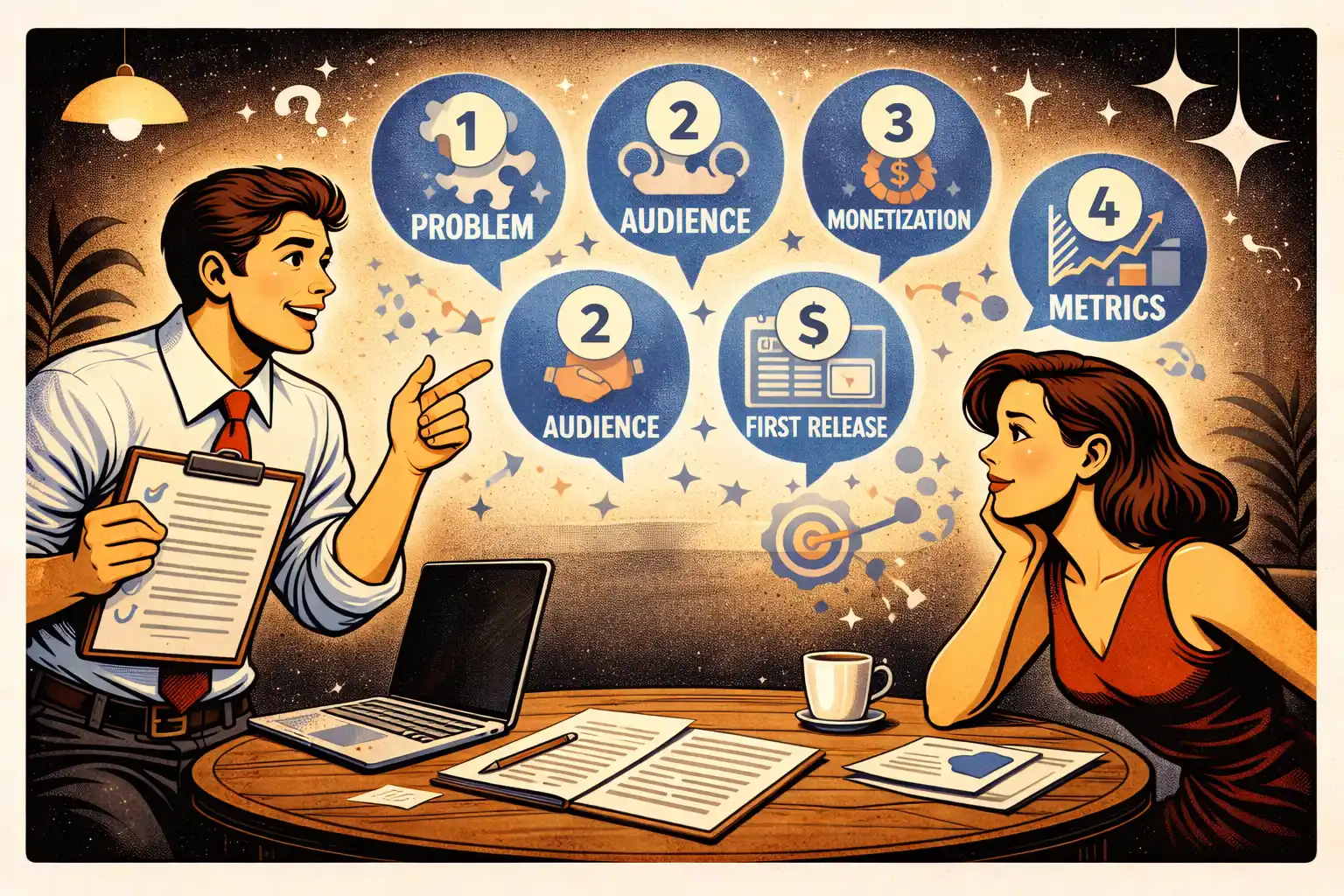
That is why The First 5 Product Decisions in 2026 belongs in the same conversation.
Why this distinction changes your MVP
If you are building an internal tool, version one should usually focus on operational clarity, workflow speed, and team efficiency. It does not need product theater.
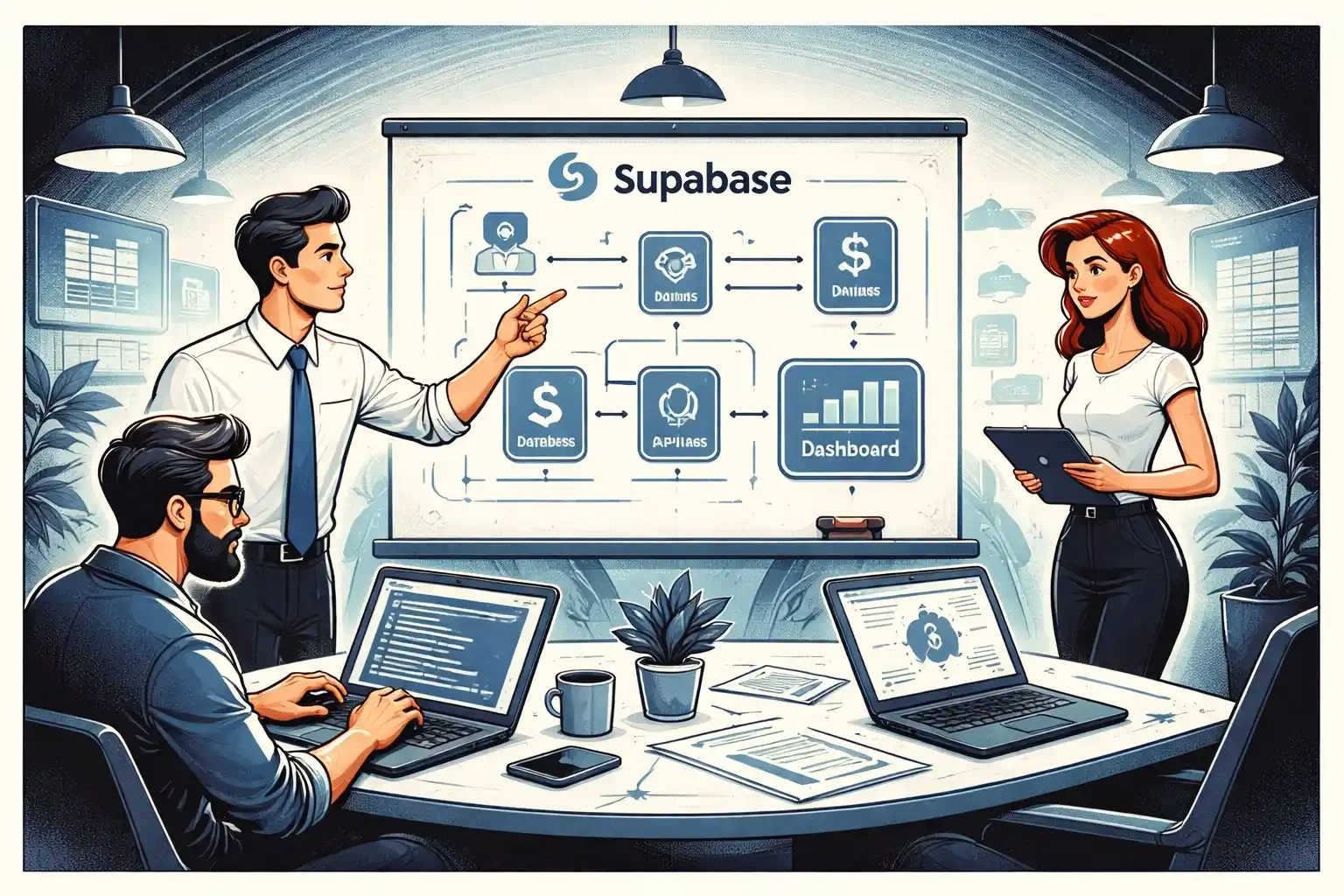
It may need a basic dashboard, admin controls, simple status views, internal actions, and enough structure to help your team deliver value consistently.
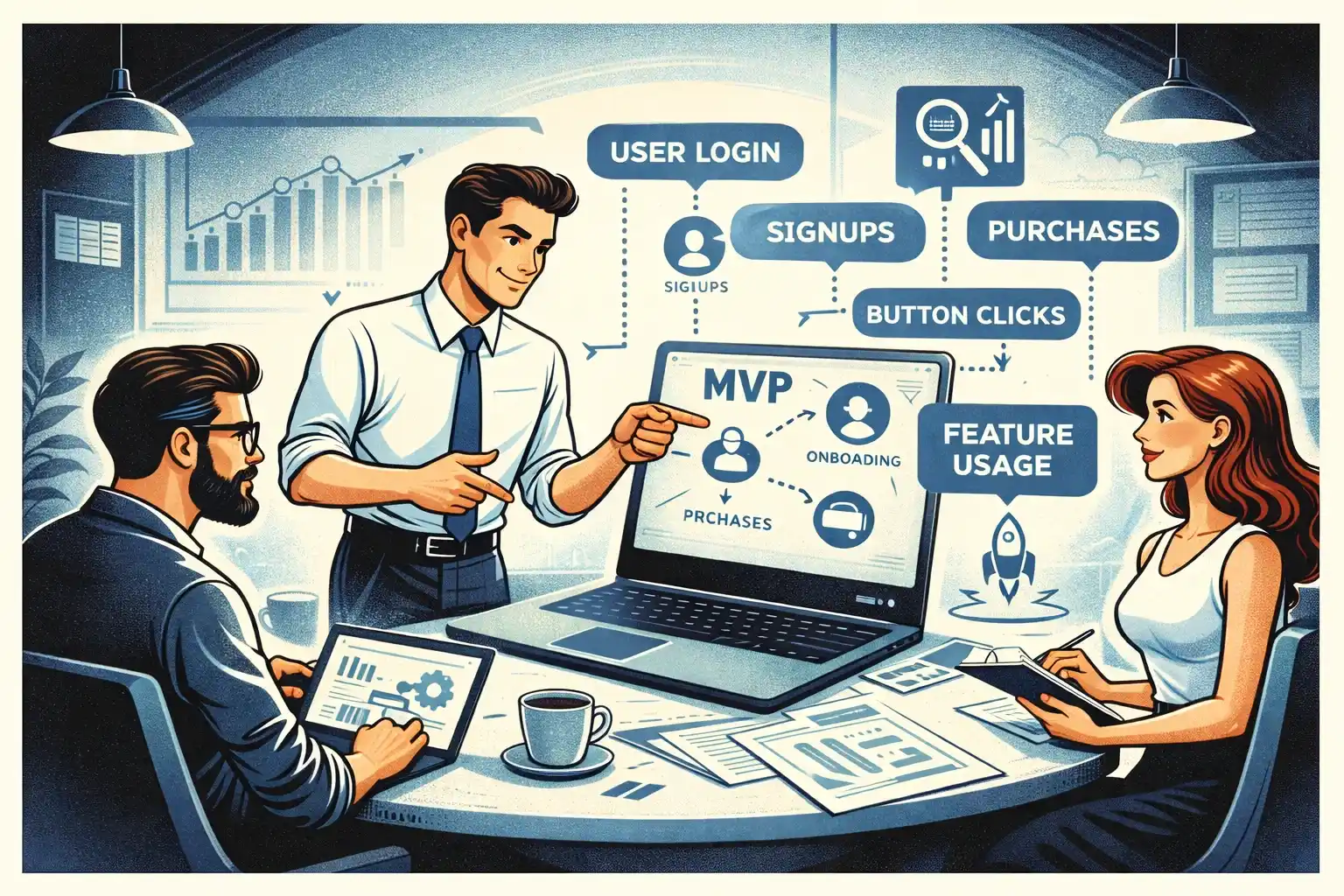
If you are building a real product, version one should focus much more on the external user path: onboarding, activation, first valuable outcome, repeat usage, and product clarity.
The mistake is mixing both at full weight from the start.
Founders often try to build a mature internal ops system and a mature user-facing product at the same time. That is one of the fastest ways to overscope an MVP.
This overlaps directly with How to Know Your MVP Is Too Big in 2026.
When an internal tool is actually the smartest first step
Sometimes the smartest first build really is an internal tool.
That is common when the startup is still testing a service-backed workflow, marketplace operations, manual matching model, fulfillment process, or back-office-heavy product where the team still needs to learn what should later become customer-facing software.
In these cases, building internal tooling first can be much smarter than pretending the product is already self-serve.
It helps the team reduce operational chaos, observe repeated patterns, and identify which part of the workflow truly deserves to be externalized later.
That is exactly where When to Stay Manual Before Building Software in 2026 and The Leanest Way to Test a Startup Workflow in 2026 become useful companion reads.
When founders should stop hiding behind the internal-tool phase
An internal-tool-first phase can be smart. But it can also become a hiding place.
If the startup already understands the workflow, already sees repeated user demand, and already knows what external users need to do directly, then staying too internal for too long can slow down real product learning.
At that point, the founder may not need more back-office control. They may need a real product surface that exposes the value to users more directly.
This is where many teams hesitate because internal tooling feels safer. It gives control. It keeps the team in the loop. But eventually the startup has to test whether the product can stand more on its own.
The roadmap should be different for each one
If it is an internal tool, optimize for operator speed, reduced friction, simple visibility, and repeatable process.
If it is a real product, optimize for user understanding, clear value delivery, onboarding, activation, and product retention signals.
If it is somewhere in between, be honest about that too.
Many startups begin as internal-tool-heavy systems with a growing external product layer. There is nothing wrong with that. The problem starts only when the roadmap pretends both sides need full maturity at once.
That is how founders end up building dashboards, permissions, user roles, analytics, settings, and customer-facing complexity far earlier than the business has earned.
This is why Does Your Startup Need a Dashboard in 2026? and What Founders Regret Building Too Early in 2026 fit naturally here.
A practical founder filter
Ask these questions.
Who gets the direct value first: the customer or our internal team?
If the software disappeared, would people and process still create most of the result?
Are we building this to help users directly, or to help ourselves deliver the service better?
Is version one supposed to validate user-facing behavior or operational feasibility?
Those answers usually make the category much clearer.
Final thought
In 2026, “internal tool or real product?” is not a branding question. It is a product strategy question.
Both can be valid. Both can create value. But they require different MVP decisions, different validation goals, and different levels of software maturity.
The smartest founders do not force an internal tool to look like a product too early, and they do not ignore real product value just because operations still exist behind it.
They figure out where the value lives first. Then they build the layer that deserves to exist now.
Not sure whether you are building an internal tool, a real product, or something in between?
At Valtorian, we help founders define what version one should actually do, cut scope that belongs later, and shape MVPs around real user or operational value instead of assumptions.
Let’s look at your workflow, your users, and which layer of the product deserves to be built first.
FAQ
What is the difference between an internal tool and a real product?
An internal tool helps your own team operate better. A real product creates value directly for an external user or buyer.
Can a startup begin as an internal tool and later become a product?
Yes. Many startups start that way. The important part is being honest about the stage you are actually in.
Is building an internal tool first a bad idea?
No. It can be the smartest first step when the team still needs to learn the workflow before exposing more of it to users.
How do I know if users are getting direct product value?
Ask whether they would still feel meaningful value from the software itself if the team were less involved behind the scenes.
Why do founders confuse the two?
Because early-stage startups often have manual operations, and founders mistake interface polish for product maturity.
Should the MVP include both internal ops and full user-facing product layers?
Usually not. Trying to mature both sides at once is one of the fastest ways to overscope version one.
What should I build first if I am not sure?
Start with the layer that creates the clearest proof now — either operational value for the team or direct value for the user.




















































.webp)




.webp)