.webp)
Bubble Costs in 2026
Bubble still comes up in startup conversations because founders associate it with faster MVP delivery, lower upfront cost, and less dependence on a full engineering team. But in 2026, the real cost discussion is more complicated than that. The main question is no longer just whether Bubble is cheaper to start with. The better question is what Bubble actually costs once you include product scope, rework risk, operational limits, and the fact that AI-assisted code development has narrowed the old speed gap. This article breaks down what really drives Bubble costs now.

TL;DR: Bubble can still look cheaper at the start, especially for narrow validation-stage web products. But the real cost is rarely just the monthly plan or the first build. In 2026, founders need to think about Bubble costs as a mix of build cost, platform constraints, product rework, and how soon the product may need a stronger technical base. In many cases, code is no longer meaningfully slower, which changes the cost comparison more than founders expect.
Why founders still ask about Bubble costs
Founders ask about Bubble costs because they are trying to reduce risk.
That instinct makes sense. If you are pre-seed, bootstrapped, or just trying to validate an idea without wasting months and too much cash, Bubble still sounds like a reasonable shortcut. It promises a product faster, with less upfront heaviness, and without needing a traditional in-house engineering setup.
But the 2026 version of this question is different from the old one. It is no longer enough to ask, “How much does Bubble cost?” The founder also has to ask, “Compared to what?”
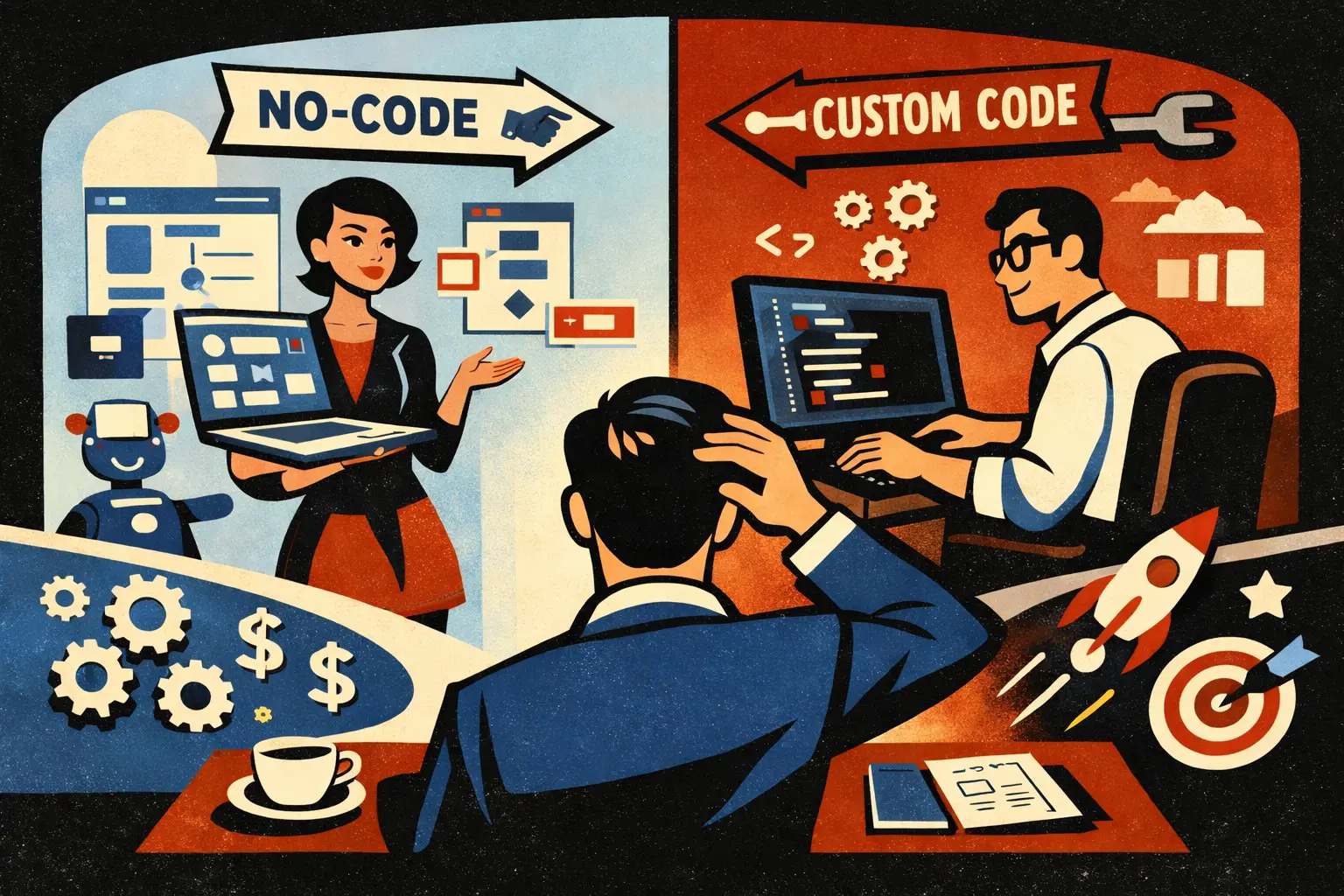
Compared to an old model of custom development, Bubble may still look attractive. Compared to a focused AI-assisted code team moving quickly, the answer is less obvious. That is why this is no longer just a platform-pricing question. It is a startup decision about scope, timing, and what kind of product you are actually building.
What founders usually mean when they ask about cost
Most founders are not actually asking about the platform subscription.
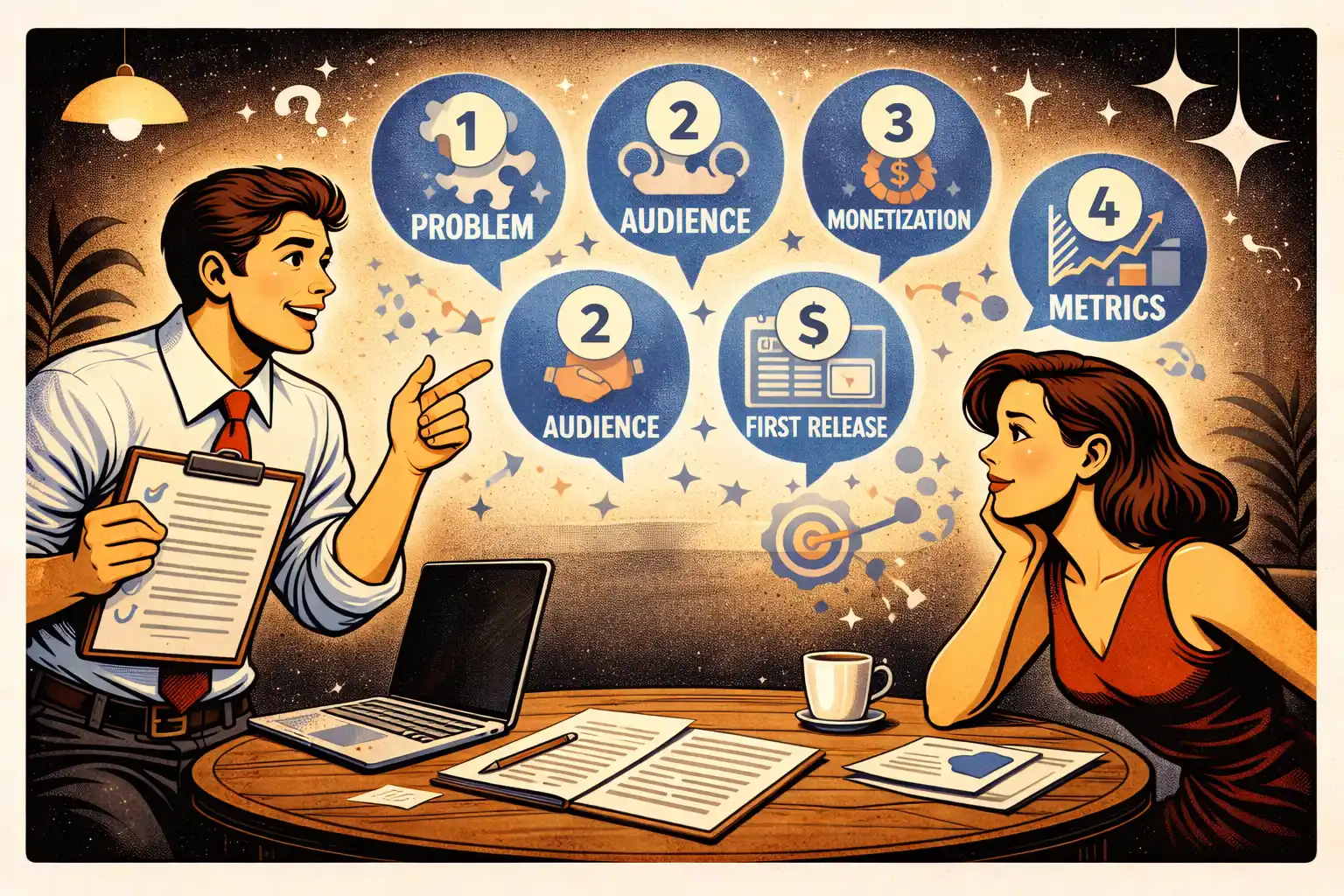
They are asking four different questions at once.
How much will it cost to get version one live?
How much will it cost to keep the product running?
How much will it cost if the MVP works and needs to evolve?
And how much money could be wasted if Bubble turns out to be the wrong path for this product?
That is why a simple “Bubble is cheaper” answer is not good enough anymore. The platform cost is only one layer. The larger cost question is whether the product still fits the assumptions that make Bubble efficient.
If you are still deciding whether Bubble is even the right category for your product, Bubble in 2026 for Startup Validation is the better starting point.
What actually drives Bubble costs
The first cost driver is scope. The broader the MVP, the more the Bubble build starts becoming expensive — not only because of build time, but because complexity compounds faster than founders expect.
The second cost driver is workflow heaviness. A simple operational flow may stay affordable. A more layered product with more conditions, more user states, more permissions, and more custom behavior becomes much less “cheap” very quickly.
The third cost driver is maintenance. Founders often assume Bubble will stay easy after launch because the first version came together quickly. But once the product starts changing, maintaining and extending the same setup can become more expensive than the initial build suggested.
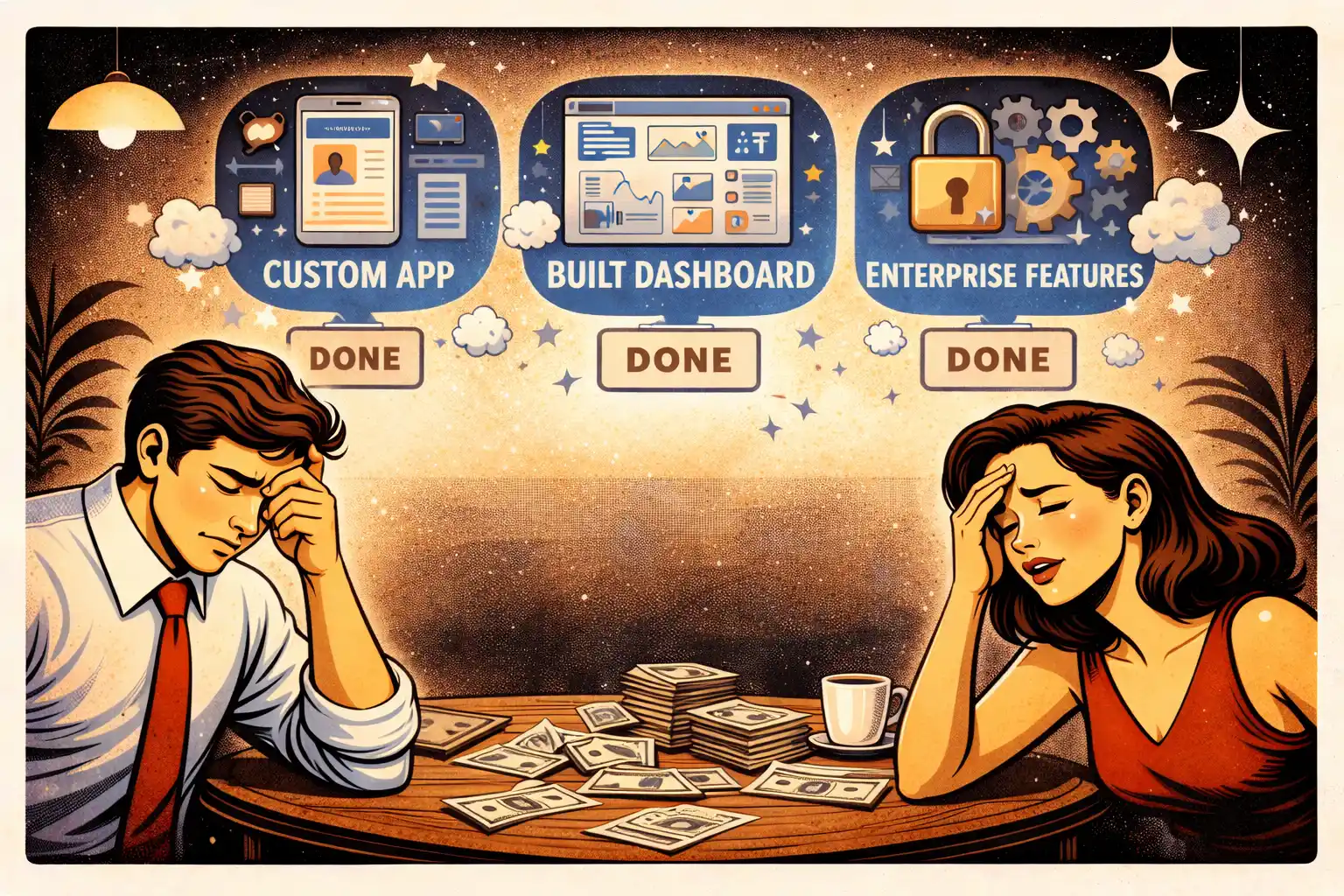
The fourth cost driver is rework. This is usually the biggest hidden one. If Bubble was chosen for speed but the product soon outgrows the path, the founder may pay for the first version and then pay again to rebuild more seriously.
That is why the real cost question is never just the tool itself. It is what the tool causes or delays later.
This connects directly to MVP Development Costs in 2026 and Hidden App Development Costs in 2026.
Why Bubble can still look cheap at first
Bubble still looks attractive at the start for one simple reason: it can still help founders get something live without the full feeling of a code-heavy process.
If the startup needs a web-first validation surface, an operational prototype, a simple marketplace flow, a directory, a portal, or a narrow workflow MVP, the upfront spend can still feel lighter than a broader custom build.
That is why Bubble remains relevant for certain validation-stage situations.
The problem starts when founders confuse a lower entry cost with a lower total cost.
That difference matters a lot more in 2026 than it used to.
This is where When No-Code Still Makes Sense in 2026 becomes important.
Why the old cost logic is weaker now
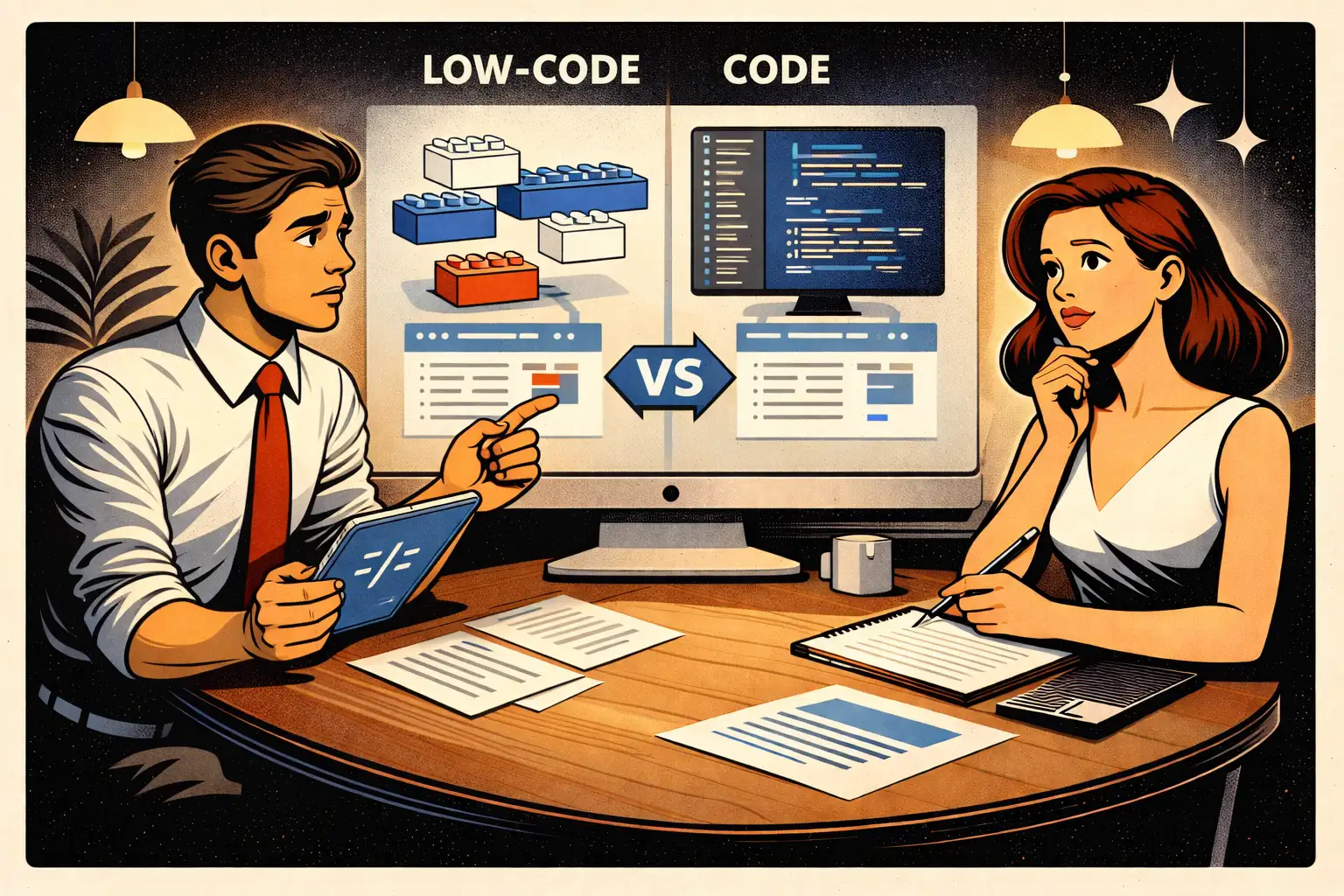
For years, the basic founder logic sounded simple: Bubble costs less because Bubble is faster, and Bubble is faster because custom code is slower.
That logic is weaker now.
AI-assisted code development changed the comparison. Small teams building in code can now move much faster than founders used to expect. In many startup cases, the old speed gap is no longer large enough to justify choosing Bubble by default.
Once that happens, the cost comparison also changes. If code can launch in a similar timeframe, then the founder has to compare not just day-one build cost, but also long-term flexibility, rework risk, and whether the first technical path makes the next stage more expensive.
When Bubble is still a cost-effective choice
Bubble is still a cost-effective choice when the product is narrow enough, the validation goal is clear enough, and the founder is realistic enough about what the first version is meant to do.
If the main question is “Will users engage with this web workflow at all?” and the product can stay simple for long enough to answer that question, Bubble can still be financially sensible.
It can also make sense when the founder wants a temporary validation layer and is comfortable treating the first build as exactly that: a stage-based experiment rather than a forever foundation.
That logic overlaps with What a Good MVP Looks Like in 2026 and Validate a Startup Idea Before Development: 5 Experiments That Work.
When Bubble becomes expensive in the wrong way
Bubble becomes expensive in the wrong way when it is chosen for the wrong stage.
If the product already needs differentiated UX, deeper product logic, heavier integrations, more complex user roles, stronger performance expectations, or a healthier long-term base, then Bubble may stop being a “cheaper path” and start becoming a more expensive detour.
This is the part founders often miss. The platform may still work technically. But if it creates early rework, architectural tension, or expensive growth friction, then the total cost story changes.
That is why some founders do not lose money because Bubble is expensive upfront. They lose money because they optimize the wrong path efficiently.
This fits with Reducing MVP Rework in 2026: Key Decisions and How Much Architecture an MVP Needs in 2026.
What founders should compare before deciding
Do not compare Bubble only against an old picture of custom development.
Compare it against a modern code-based option built with focused scope and AI-assisted execution.
How much does Bubble cost to launch?
How much does it cost to maintain?
How much flexibility do you lose if the product works?
How likely are you to rebuild?
And if a code path can now deliver the same first milestone in a similar timeframe, what are you really still saving?
That is the comparison founders should be making in 2026.
That is why Tech Decisions for Founders in 2026 belongs in this conversation.
Final thought
Bubble costs in 2026 are not just about subscriptions or the first build estimate.
They are about what the product needs now, what it will likely need next, and whether Bubble still gives a real speed advantage big enough to justify the limits that may come with it.
Bubble can still be cost-effective for the right validation-stage products. But for many real startup products in 2026, code is now the stronger cost decision — not because Bubble stopped working, but because AI reduced the old speed gap that made the Bubble path feel obviously cheaper.
Thinking about the smartest path to launch your MVP in 2026?
At Valtorian, we help founders choose the right build approach and launch modern web and mobile products with clear scope, real user focus, and fewer expensive detours.
Let’s look at your idea, your product stage, and what it would take to launch without paying twice for the wrong path.
FAQ
Is Bubble cheaper than code in 2026?
Not automatically. It can still be cheaper for some narrow validation-stage products, but in many startup cases AI-assisted code can now move in a similar timeframe.
What is the biggest hidden Bubble cost?
Usually rework. Founders often pay not because the first build is too expensive, but because the product outgrows the path sooner than expected.
When is Bubble still cost-effective?
When the product is web-first, the workflow is narrow, and the main goal is fast validation rather than building a long-term technical base.
When does Bubble become expensive in the wrong way?
When the product already needs deeper logic, stronger UX, more complex integrations, or a more serious next-stage foundation.
Should founders compare Bubble only to other no-code tools?
No. In 2026 the better comparison is often Bubble versus a focused AI-assisted code path.
Is the monthly Bubble plan the main cost?
Usually no. Scope, maintenance, product complexity, and rework risk often matter much more.
What should founders compare first?
Not just the first build cost, but launch speed, maintenance, flexibility, rework risk, and whether code can now achieve the same first milestone without the same constraints.






















































.webp)




.webp)