.webp)
What to Build Before Hiring a Product Team in 2026
Many founders assume the next smart move is hiring a product team as soon as the idea feels real. In practice, that often happens too early. In 2026, founders get better outcomes when they build a few key things before they start hiring: problem clarity, audience focus, workflow understanding, proof of demand, and a realistic version-one scope. This article explains what is worth building before you hire a product team, why skipping these steps creates expensive confusion, and how to know when you are actually ready for outside product help.

TL;DR: Before hiring a product team in 2026, founders should build clarity before they build headcount. That usually means a clear problem statement, a narrow first audience, a simple validation path, a defined version-one scope, and some evidence that the workflow or demand is real.
Why founders hire too early
Hiring feels like momentum.
Once the idea becomes emotionally real, founders often want a team around it as fast as possible. A product manager, designer, developers, maybe even growth support. It sounds like the startup is becoming serious.
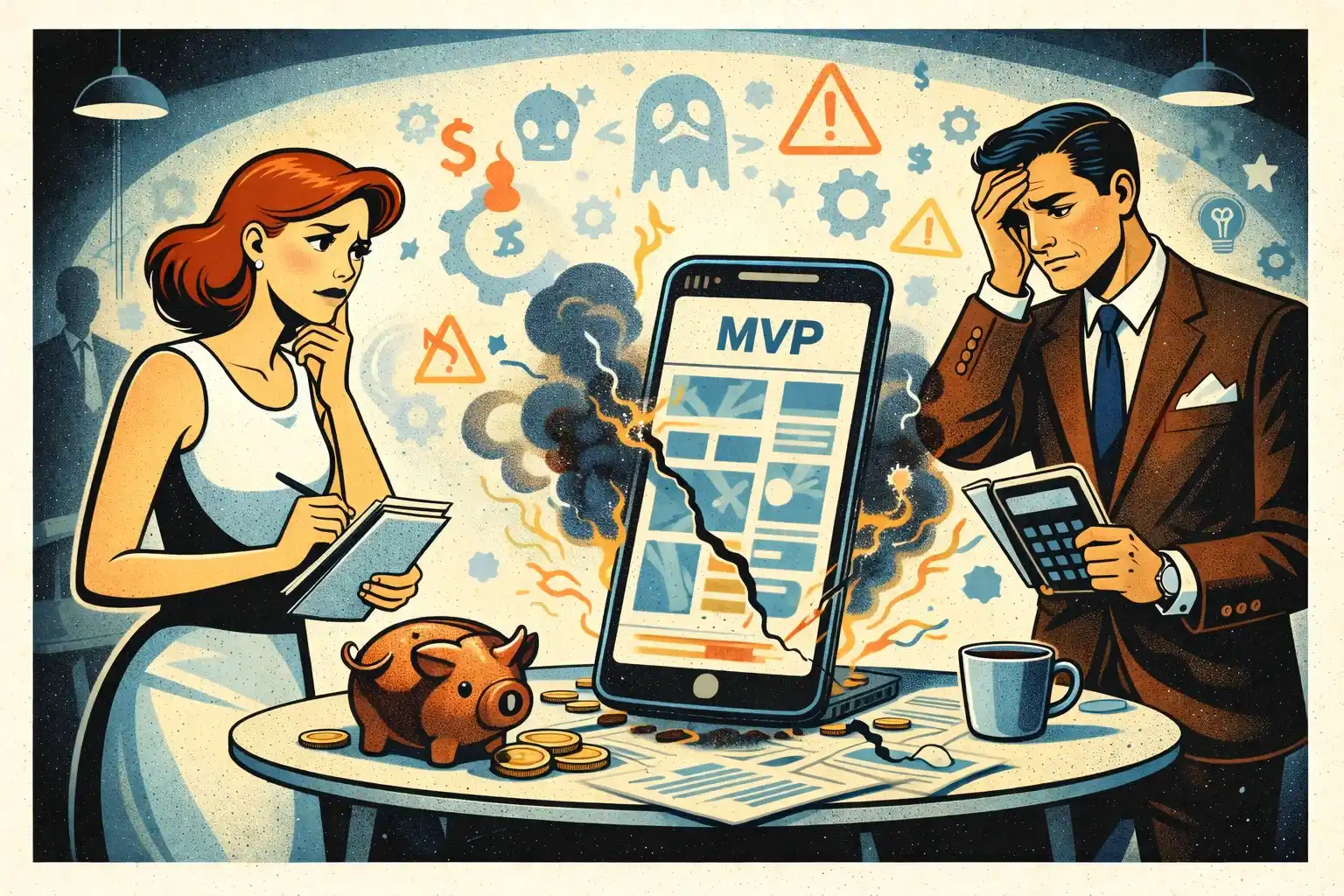
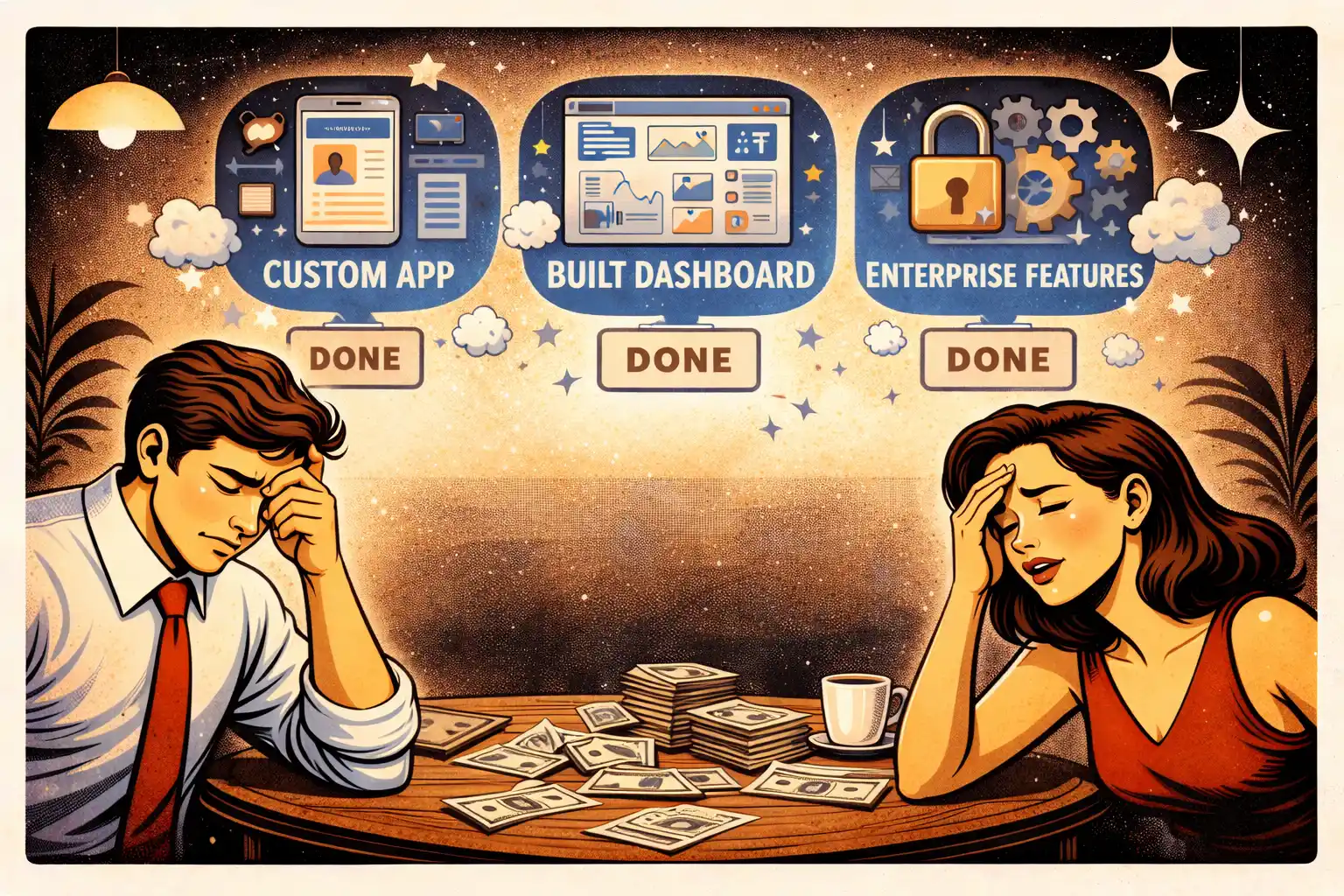
But early hiring does not solve unclear product thinking. It usually amplifies it.
If the founder cannot explain the problem clearly, define the first user group, or describe what version one should prove, then the team will spend time interpreting uncertainty instead of building useful progress. That is one of the most expensive early-stage mistakes because unclear startups can burn budget while still looking busy.
Build problem clarity first
Before hiring a product team, the founder should be able to explain the problem in plain language.
Not the category. Not the market story. The actual problem.
What situation is the user in?
Why is it painful?
What happens today instead?
Why does the current workaround fall short?
If those answers are still vague, the team will end up debating solutions before the startup has even named the right problem clearly enough.
This is why one of the most valuable things a founder can build before hiring is a sharper problem definition.
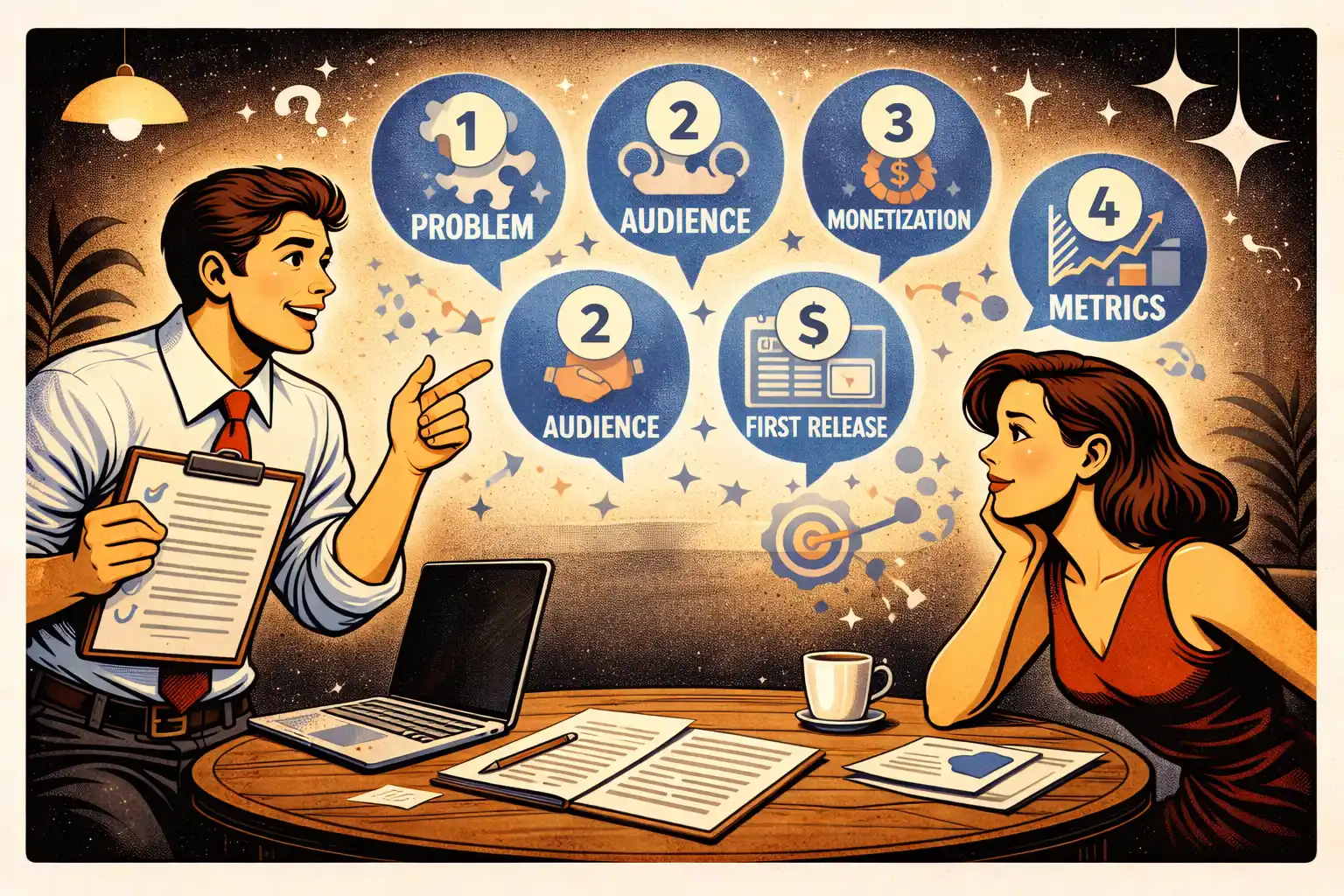
That connects naturally to The First 5 Product Decisions in 2026.
Build a narrow first audience
A team becomes much more useful when the founder already knows who version one is for.
Early-stage founders often describe their audience too broadly. They want the product to work for multiple customer types, multiple use cases, or several business models at once. That makes hiring feel necessary because the product starts sounding bigger than it should be.
But version one usually gets stronger when the founder narrows the first audience before the team arrives.
A clear first user group gives every later decision more shape: features, UX, messaging, validation method, and launch priorities.
Without that, the product team may spend more time resolving ambiguity than building progress.
Build proof before you build org complexity
The founder should also know what kind of proof matters before hiring.
Do you need people to sign up?
Book calls?
Pay for a manual version?
Complete a workflow?
Keep using the product?
These are different proof goals, and they lead to different first builds.
If the startup has no idea what evidence would justify the next step, then a product team may end up building toward an abstract hope instead of a specific proof milestone.
This is one reason small early teams often win by focusing on validation first rather than org design first.
That connects directly to What to Build First in 2026: Website, MVP, or Manual Service.
Build a simple workflow understanding
Before hiring, the founder should understand the workflow well enough to describe it simply.
What happens from first contact to first value?
What has to happen behind the scenes?
Where do users hesitate?
Where does the real outcome get created?
A founder does not need a perfect product spec. But they do need enough process clarity to know what the startup is actually trying to make easier, faster, or more valuable.
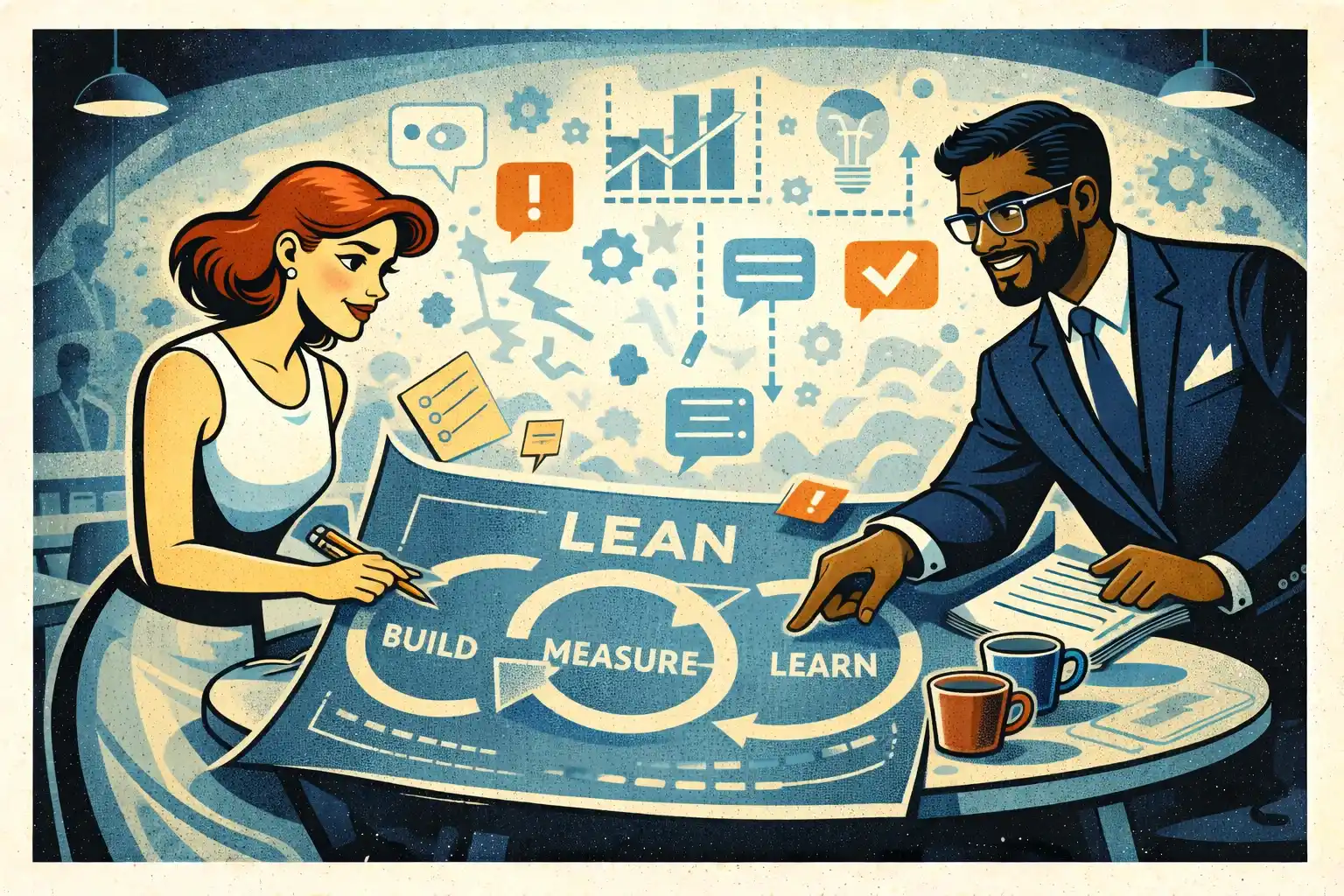
If the workflow is still a blur, a team may help uncover it — but that is often a more expensive way to learn what could have been tested more leanly first.
That is why The Leanest Way to Test a Startup Workflow in 2026 and When to Stay Manual Before Building Software in 2026 are such useful companion reads.
Build version-one scope before hiring specialists
A product team becomes much more effective when the founder has already decided what belongs in version one and what does not.
This does not mean the founder needs a full roadmap. It means they need a point of view.
If every feature still sounds equally important, every stakeholder voice still feels equally valid, and every future need is already entering version one, then the team will inherit a scope problem before they build anything useful.
That is why one of the most important things to build before hiring is a smaller first scope.
A smaller scope makes the startup easier to estimate, easier to prioritize, easier to launch, and easier to learn from.
This connects to How to Know Your MVP Is Too Big in 2026 and MVP Scope and Focus in 2026.
What founders can build without a product team
A founder can build more than they think before hiring.
They can build a sharper problem statement.
They can build a simple landing page.
They can build a waitlist.
They can build a manual workflow.
They can build early interviews.
They can build a pricing hypothesis.
They can build a rough prototype or process map.
They can build the first layer of proof that the problem and workflow are real enough to deserve a team.
None of this replaces a product team forever. It simply increases the odds that the eventual team will be pointed in the right direction.
When hiring becomes the right move
Hiring starts making more sense once the founder has enough clarity that the team can compound it.
That usually means the problem is clear, the first audience is clearer, the workflow is more understood, the proof goal is defined, and the founder already knows what version one is supposed to do.
At that point, the team is not being hired to invent the startup from scratch. They are being hired to help turn sharpened thinking into a real product faster and better.
That is where outside product help becomes much more valuable.
Whether the founder hires an agency, freelancers, or a lean internal team, the quality of the outcome still depends heavily on what was clarified before the hiring started.
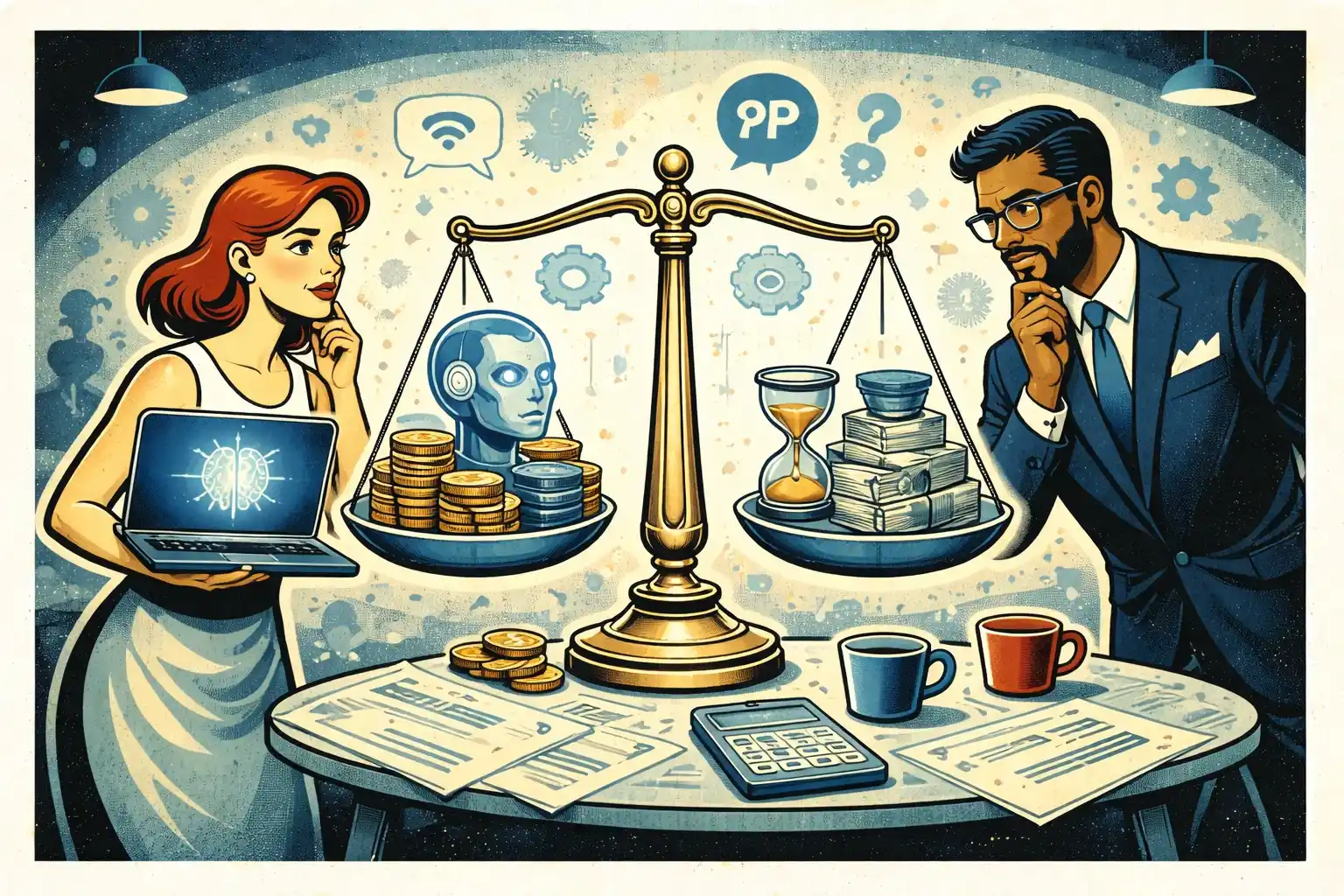
The biggest mistake: hiring to avoid decisions
Sometimes founders try to hire a product team not because they are ready, but because they hope the team will remove the discomfort of deciding.
What should we build first?
Who is it for?
What is the real problem?
What proof matters?
What can wait?
These are founder decisions first.
A good team can refine them, challenge them, and improve them. But if the founder is using hiring as a substitute for product judgment, the startup often becomes slower and more expensive before it becomes clearer.
That is also why What Founders Regret Building Too Early in 2026 fits this topic so well.
A practical founder filter
Before hiring, ask yourself five questions.
Can I describe the problem clearly?
Do I know who version one is for?
Do I know what proof I need first?
Can I describe the workflow simply?
Do I know what belongs in version one and what does not?
If most of those answers are still weak, the founder probably needs more clarity before more team.
Final thought
Before hiring a product team in 2026, founders should build enough clarity that the team has something strong to work with.
That does not mean doing everything alone. It means doing the early thinking that turns hiring into leverage instead of confusion.
The startups that move best are often not the ones that hire first. They are the ones that build enough proof, scope, and product clarity first, then bring in the right people at the right moment.
Thinking about hiring a product team but not sure whether you are ready yet?
At Valtorian, we help founders clarify what version one should prove, shape the smallest useful release, and decide whether the next smart move is validation, design, or development.
Let’s look at your idea, your current proof level, and what you should build before turning uncertainty into team cost.
FAQ
What should founders build before hiring a product team?
Usually problem clarity, a narrow first audience, a proof goal, a simple workflow understanding, and a realistic version-one scope.
Do I need a full prototype before hiring?
No. You need enough clarity that the team can work on the right problem, not a polished artifact for every detail.
Should I validate demand before hiring?
In many cases yes. Even light proof can make later hiring far more effective.
Can a founder test a workflow without a product team?
Yes. Many workflows can be tested manually or with lightweight tools before a full team is needed.
When is it the right time to hire?
Usually when the founder has enough clarity that the team can compound progress instead of spending most of its energy interpreting uncertainty.
What is the biggest mistake founders make here?
Hiring a team to avoid making early product decisions instead of using hiring to accelerate already clearer decisions.
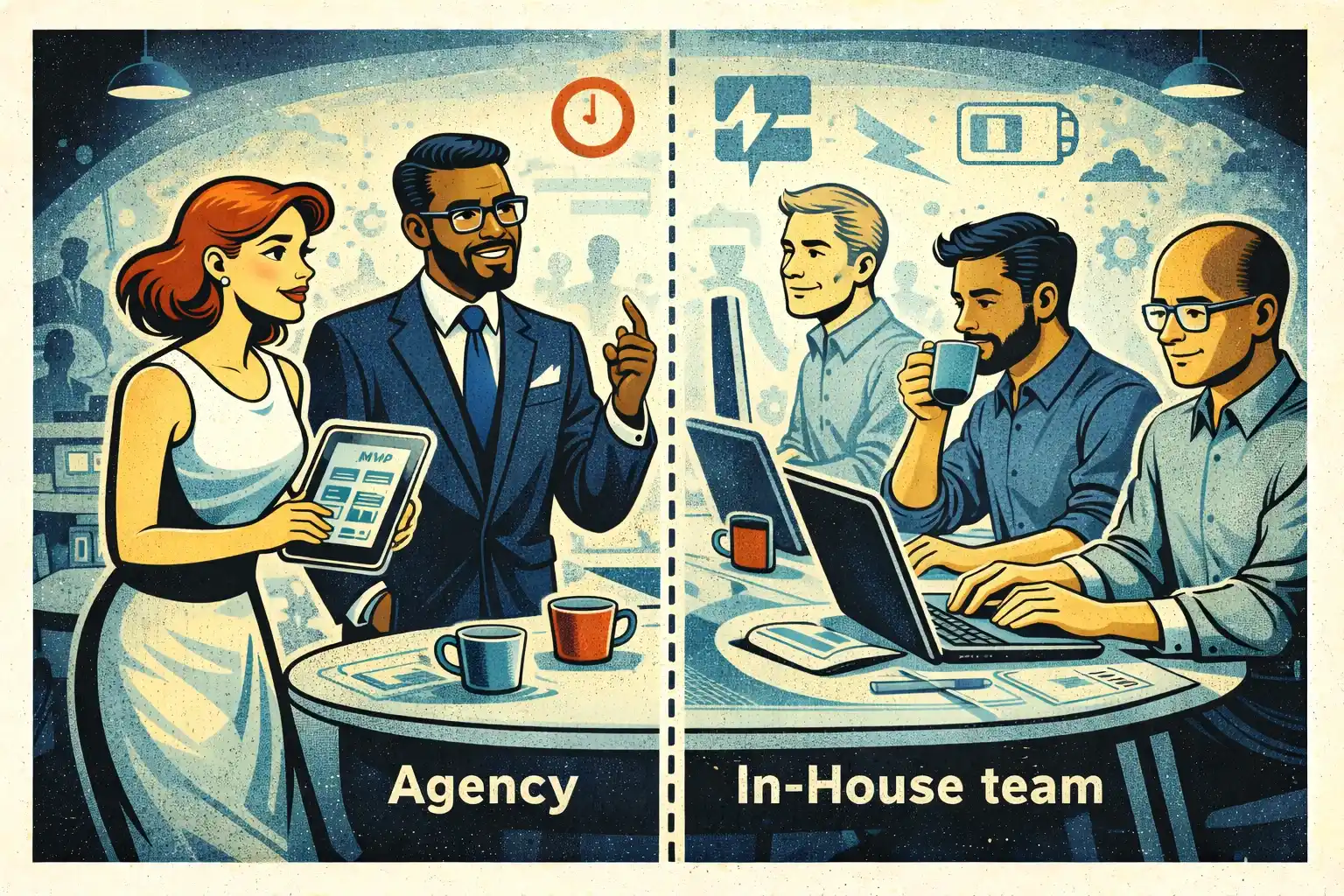
Is an agency better than hiring in-house first?
It depends on the stage, but for many early founders a lean external team makes more sense than building a full internal product org too early.




















































.webp)




.webp)