.webp)
When to Stay Manual Before Building Software in 2026
Many founders assume software is the default next step once they have a real idea. In practice, that is often too early. In 2026, one of the smartest product moves is still staying manual for longer when manual work helps you learn faster, spend less, and understand what users actually value. This article explains when founders should delay software, what kinds of manual workflows are still strategically useful, and how to tell the difference between healthy manual validation and simply avoiding product progress.

TL;DR: You should stay manual before building software in 2026 when the startup is still learning what users want, what they will pay for, and which part of the workflow actually creates value. Manual work is often smarter when the process still changes, the demand is still unproven, or the team is solving for assumptions instead of evidence.
Why founders rush into software too early
Software feels like progress.
It looks serious. It feels scalable. It gives the founder something concrete to show investors, teammates, or early supporters. That is why many early-stage teams jump into product design and development before they have really understood what the business needs to prove.
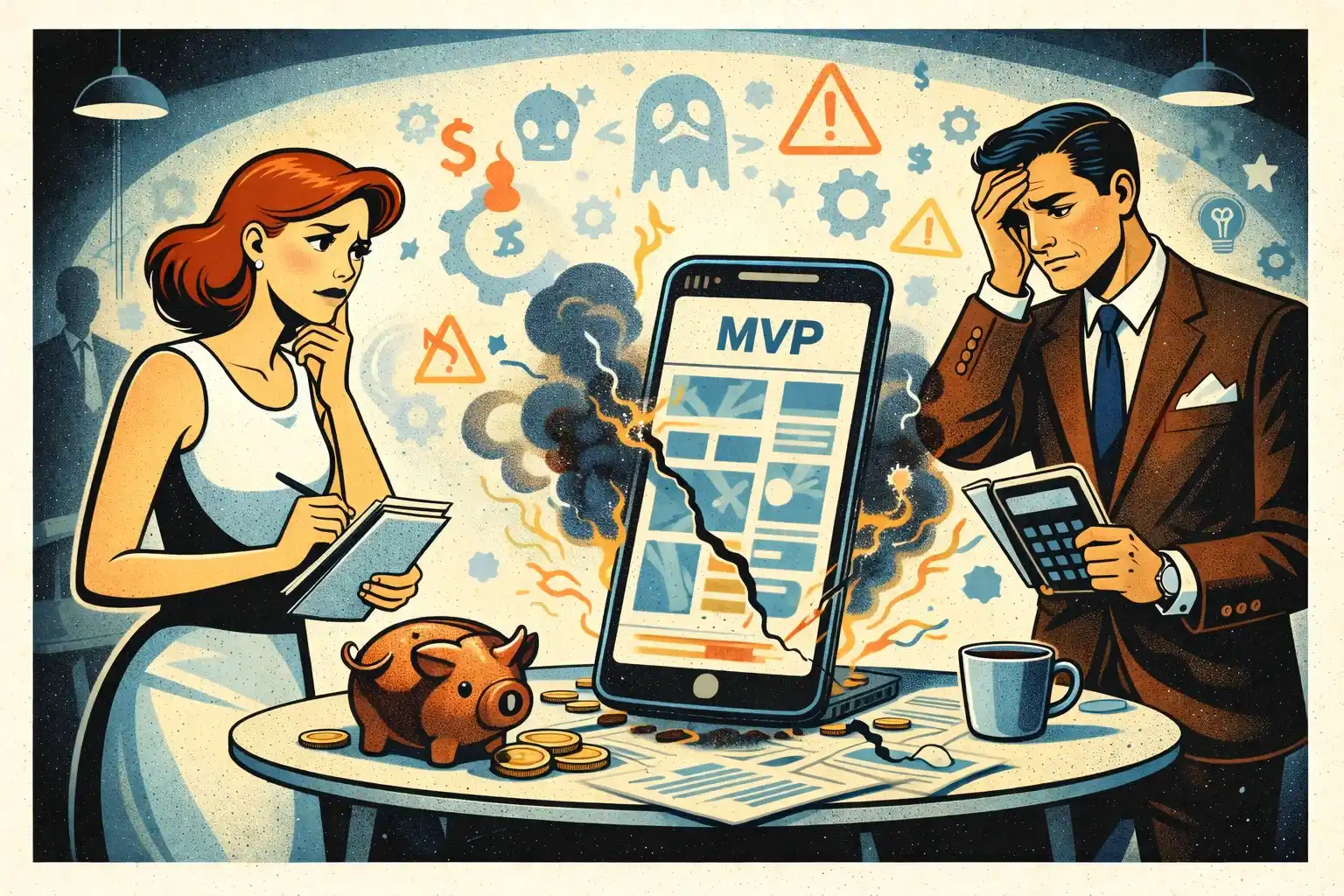
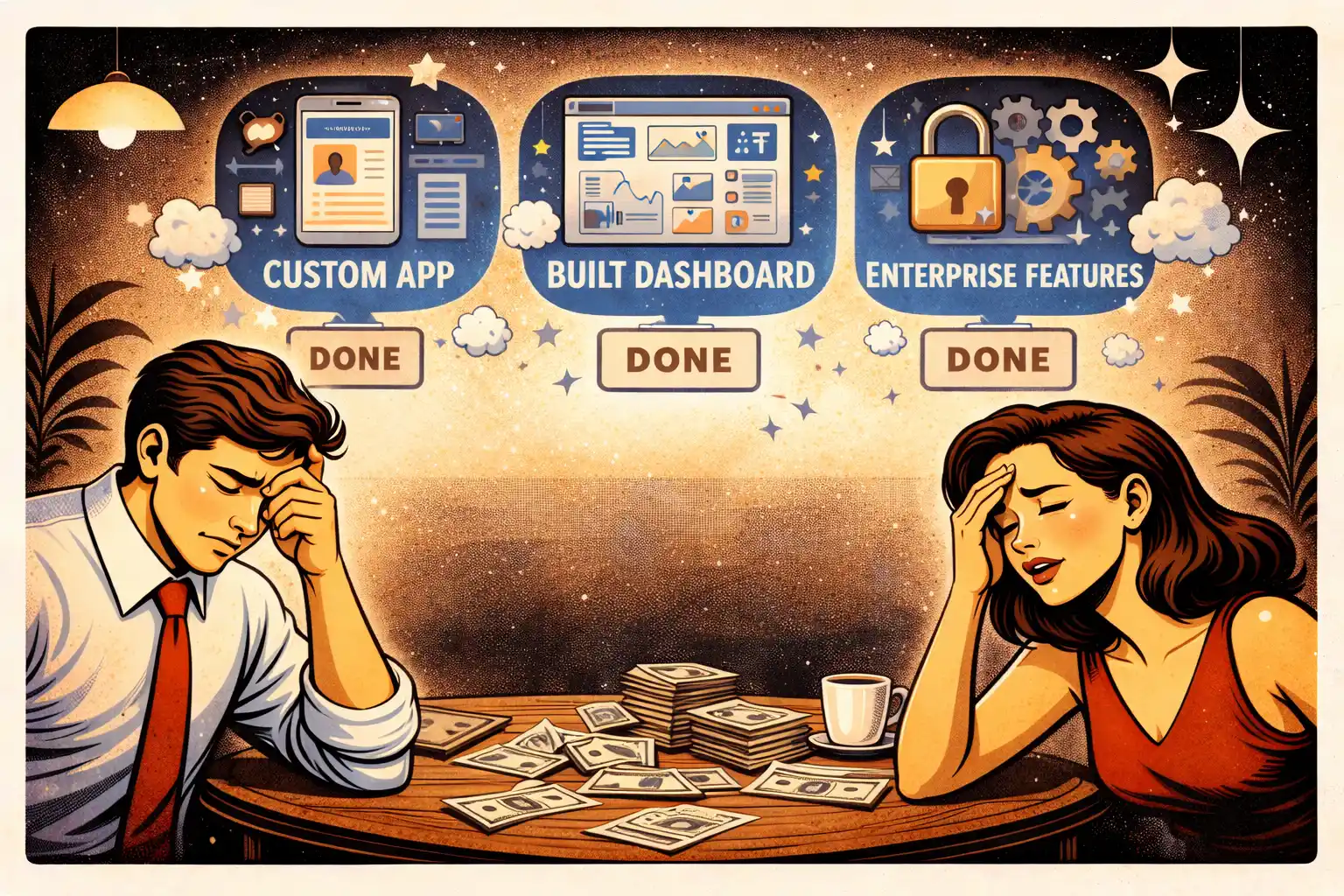
The problem is that software freezes decisions. Once the team starts building, assumptions become interfaces, workflows, and technical dependencies. If the startup is still learning basic things about the user, the problem, or the real source of value, software can make those weak assumptions more expensive.
That is why the better question is not “Can we build this?” It is “Have we learned enough to deserve building this yet?”
What “staying manual” actually means
Staying manual does not mean doing nothing.
It means delivering value without full product automation yet.
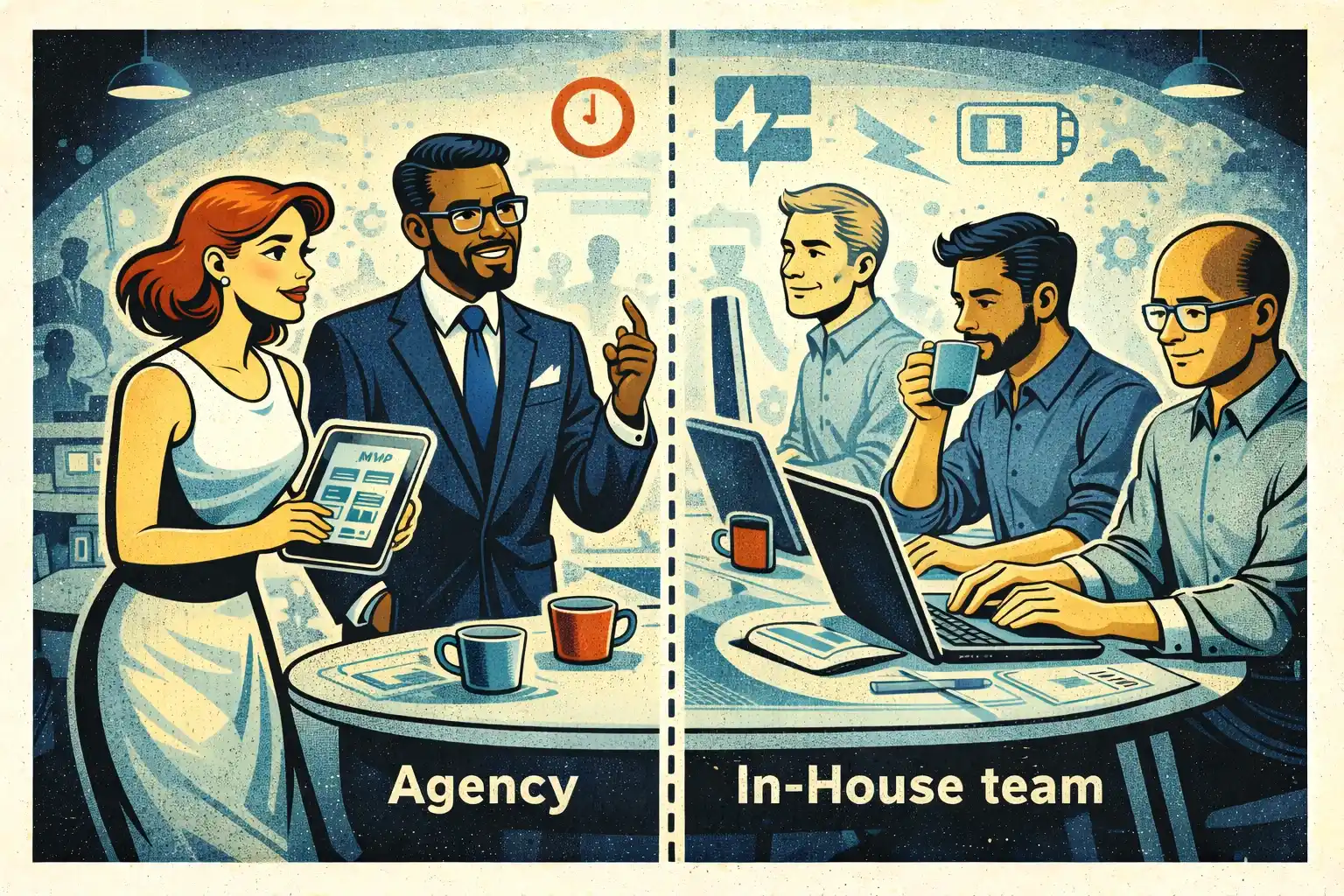
That could mean onboarding users personally, running workflows in spreadsheets, matching people by hand, sending reports manually, using simple tools behind the scenes, or operating the service yourself while learning what part truly deserves software later.
In some cases, the startup may have a public-facing website or lightweight interface, but the core engine behind it is still run by people. In others, the whole experience stays manual until demand, pricing, and workflow logic become clearer.
Manual-first is not anti-product. It is product sequencing.
That is why What to Build First in 2026: Website, MVP, or Manual Service is such a natural companion read.
Stay manual when the value is still unclear
The first strong reason to stay manual is that the startup still does not know what users actually care about most.
Maybe the founder understands the broad problem but not the exact outcome users will pay for. Maybe there are multiple possible workflows and the team does not know which one matters. Maybe users describe the pain one way, but behave differently once the solution is offered.
In that stage, manual delivery is powerful because it keeps the team close to reality. Every interaction teaches something. Every exception shows what the real workflow looks like. Every user hesitation becomes visible instead of being hidden inside product assumptions.
If the value is still unclear, software can make the wrong answer feel more convincing than it really is.
That is where Validate a Startup Idea Before Development: 5 Experiments That Work becomes very relevant.
Stay manual when willingness to pay is still unproven
Another strong reason to stay manual is that the startup has not yet proved people will pay.
A founder may hear that users like the idea. They may get positive calls, warm reactions, and even signups. But unless the startup has tested real willingness to pay, software may still be too early.
Manual delivery is often the fastest way to test that. If users are willing to pay for the result before automation exists, the startup learns something much more valuable than “they thought the app sounded interesting.”
This is especially important for founders with limited budget. If the business model is still soft, it often makes more sense to validate revenue behavior first and build later.
That connects well with MVP Pricing in 2026: Getting First Paying Users.
Stay manual when the workflow still changes often
A workflow that changes every week is usually not ready for software.
If the founder is still changing steps, adjusting logic, rewriting onboarding, rethinking user roles, or discovering new friction points in every conversation, then building software may only lock in unstable thinking.
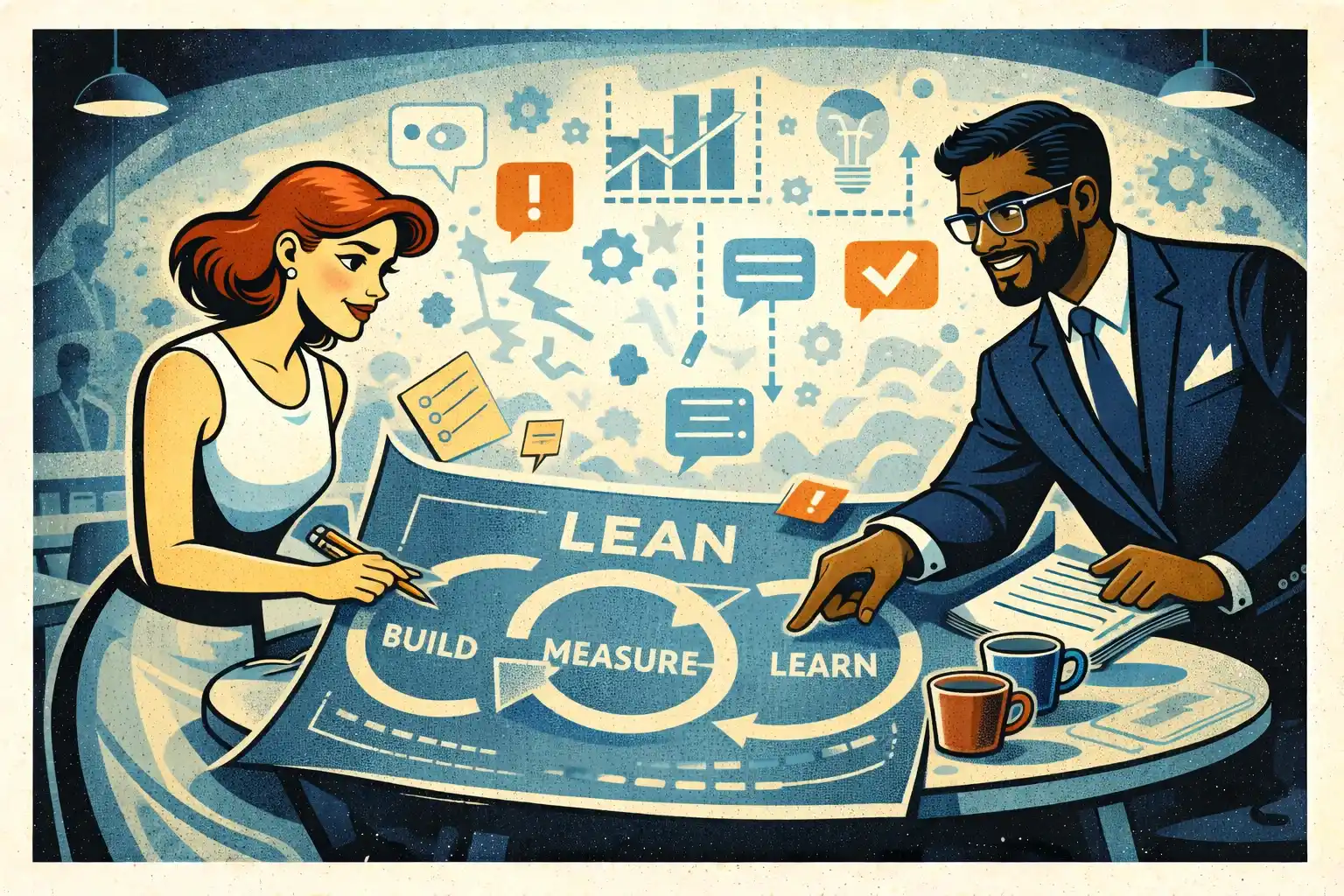
Manual work is more forgiving. It lets the team adapt without having to rebuild screens, logic, or architecture every time the process evolves.
This is one of the most common reasons manual-first startups learn faster. They are not wasting early energy encoding unstable workflows into product.
That also connects naturally to The First 5 Product Decisions in 2026.
Stay manual when users need human trust first
Some products depend on trust before they depend on software.
That can happen in service-heavy categories, expert-led products, marketplaces, healthcare-adjacent workflows, B2B onboarding, consulting-like models, or anything where users need reassurance before they are willing to rely on the product.
In those cases, staying manual longer can actually increase learning and conversion. The founder or team sees objections directly, hears language that can later improve positioning, and learns what kind of human support the product may eventually need to replace or preserve.
Not every business should rush to remove the human layer. Sometimes the human layer is exactly what reveals how the product should work.
That is why Founder-Led MVP Testing in 2026: A Practical Setup fits well here.
Stay manual when the product is really an operations system in disguise
Some founders think they need software when what they actually need is a repeatable internal process.
This is common in marketplaces, workflow businesses, internal tools, matching products, and service-backed platforms. The founder imagines a full system, but the early-stage version is really an operational engine that can still be run manually for a while.
The risk is building the whole operating system before proving that the demand, behavior, and economics justify it.
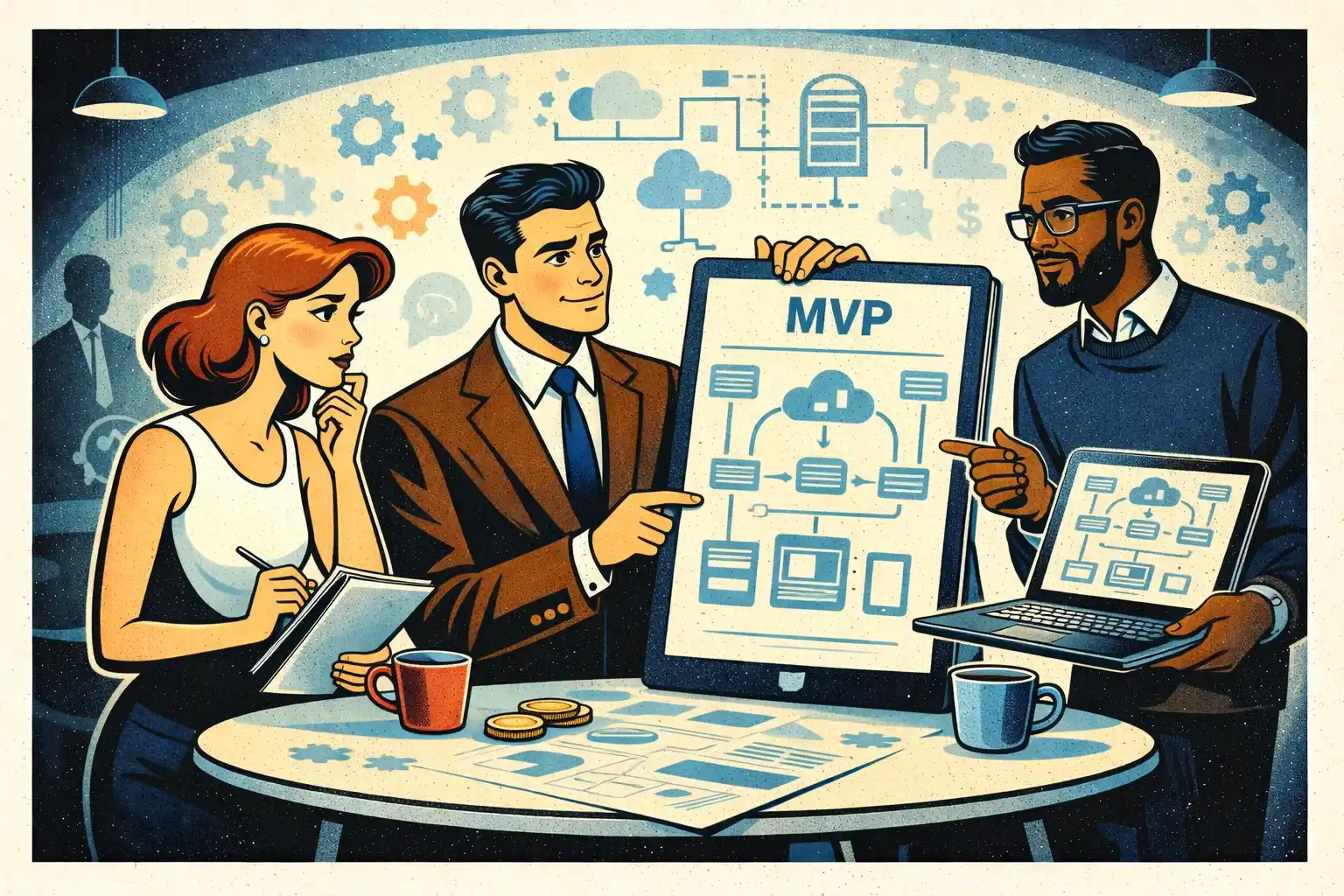
In many cases, the smarter move is to run the process manually, track the bottlenecks, and only build the parts that clearly deserve to exist in software.
That is also why What Founders Should Automate First in 2026 and Does Your Startup Need a Dashboard in 2026? are useful companion topics.
When staying manual becomes a mistake
Staying manual is not always the right move forever.
It becomes a mistake when the value path is already clear, the workflow is already repeated, users are already engaging consistently, and the manual layer is now the main thing slowing learning or delivery down.
It also becomes a mistake when the startup is using “manual” as a way to avoid making hard product decisions.
Manual-first should create clarity. If it is only creating delay, then the startup may already know enough to build.
The goal is not to stay manual for as long as possible. The goal is to stay manual until software becomes the smartest next step.
A practical founder filter
Ask yourself five questions.
Do we know what users actually value most?
Have we tested willingness to pay or meaningful engagement?
Does the workflow already repeat in a stable pattern?
Would software help us learn faster now, or just make our assumptions heavier?
Are we delaying software because it is not time yet, or because we are avoiding a real product decision?
Those questions usually make the answer much clearer.
Final thought
In 2026, staying manual before building software is not a sign that the startup is behind. Very often, it is a sign that the founder is thinking clearly.
Software is most valuable when it captures a workflow that already deserves to exist. Before that point, manual work can teach faster, cost less, and keep the startup closer to the truth.
The smartest founders do not rush to automate uncertainty. They stay manual long enough to understand what should become product and what should never have been built at all.
Not sure whether your startup should stay manual longer or start building now?
At Valtorian, we help founders figure out the smartest next step, define the smallest useful version, and launch products only when the timing and scope actually make sense.
Let’s look at your workflow, your proof goals, and whether software is the right next move or still too early.
FAQ
When should a startup stay manual before building software?
When the startup is still learning what users value, what they will pay for, and how the workflow actually needs to work.
Is manual-first a sign that the idea is weak?
No. Often it is the opposite. It means the founder is trying to learn before locking assumptions into product.
What kinds of startups benefit most from staying manual?
Service-backed startups, marketplaces, expert-led products, workflow businesses, and any early-stage idea with unclear demand or unstable process can benefit a lot.
When does software become the better next step?
When the value path is clear, the workflow repeats consistently, and the manual layer is now limiting growth or learning.
Can I have a website but still stay manual behind the scenes?
Yes. Many early startups do exactly that. The public experience can be simple while the core delivery still runs manually.
What is the biggest manual-first mistake?
Using manual work to avoid real product decisions instead of using it to gain clarity.
How do I know I am ready to stop staying manual?
Usually when you can clearly describe the value, the repeated workflow, the key user behavior, and what software should actually improve.
























.webp)




.webp)