.webp)
Webflow vs WordPress in 2026: Which One Makes More Sense for Founders
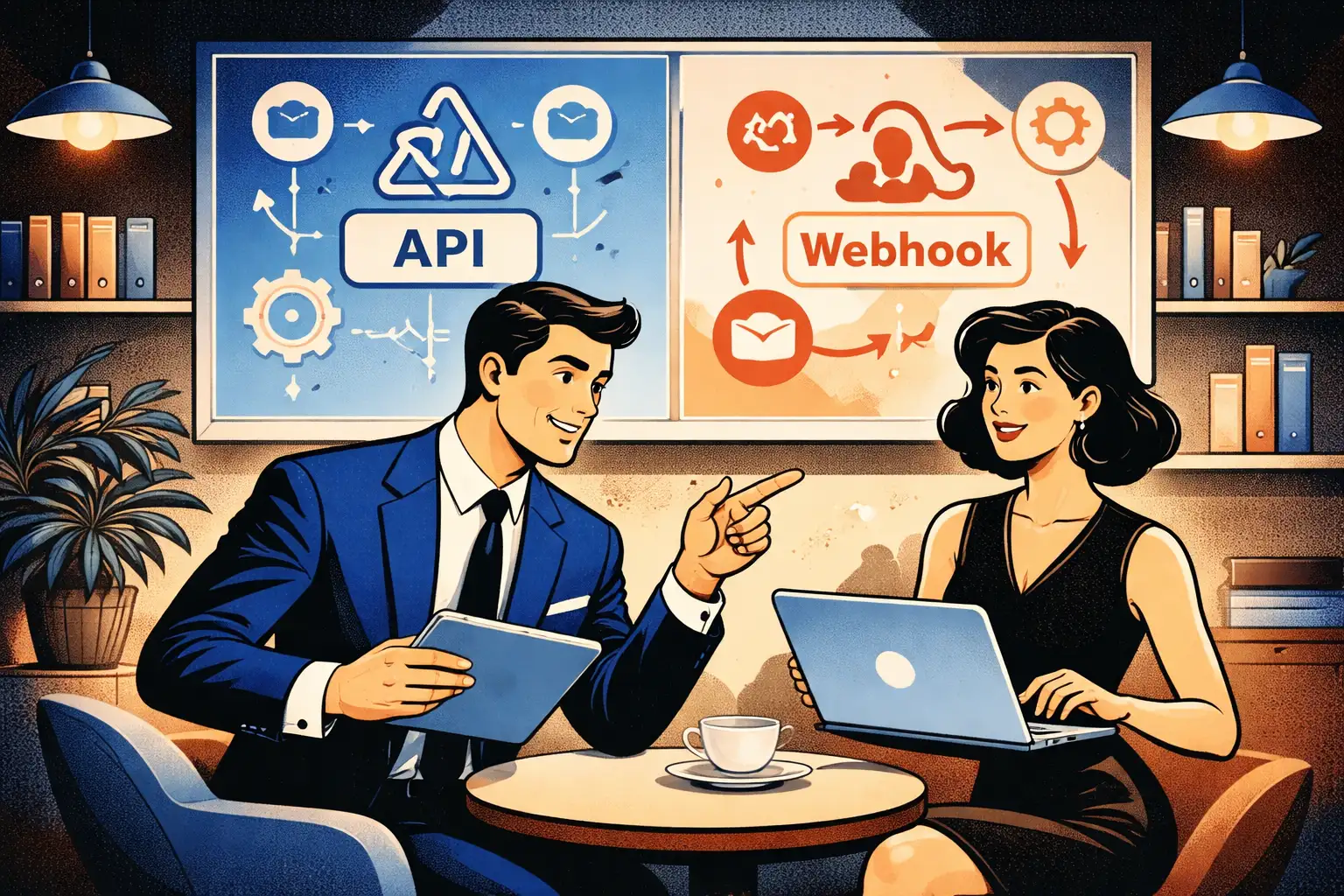
Webflow and WordPress are often compared as if one is simply “better” than the other. In reality, they solve different problems for founders at different stages. In 2026, both are still relevant, but the decision depends on how fast you need to launch, how structured your content is, and what role your website plays in your product. This article breaks down the choice from a founder perspective: speed, flexibility, maintenance, SEO, and what happens after your first version goes live.
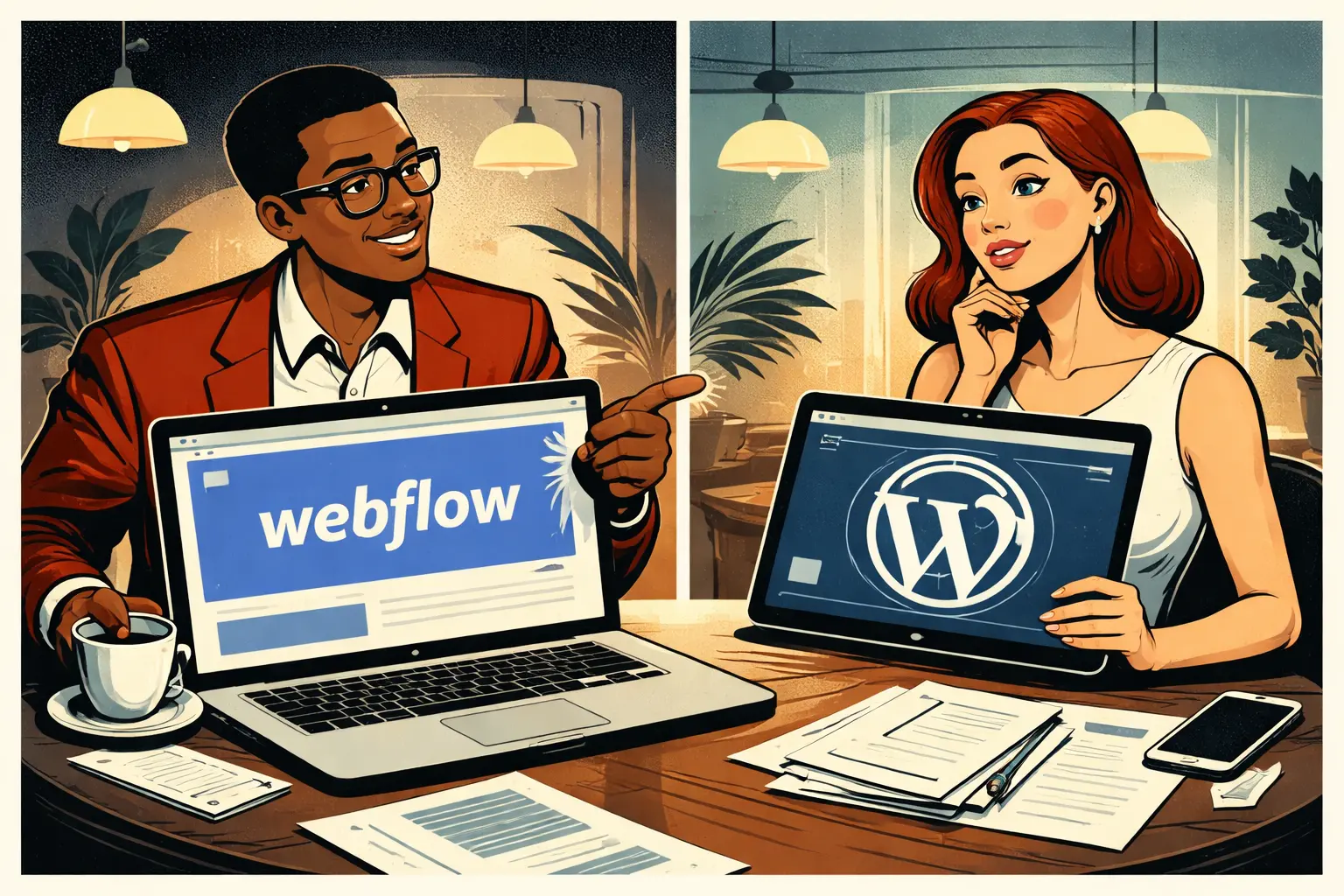
TL;DR: Webflow is usually the better choice for founders who want a fast, structured, and controlled marketing site without dealing with plugins or maintenance. WordPress makes more sense when flexibility, custom content setups, or long-term content scaling outweigh the need for simplicity and speed.
Why this decision matters more than it seems
At first, this feels like a simple platform choice. But for founders, it affects much more than design.
Your website is often the first real version of your product story. It is where users, partners, and investors form their first impression. It is also where early traction starts.
So the decision is not about tools. It is about what your website needs to do in the next 3–6 months.
If you are still figuring out whether you even need a website or a full product first, Startup Website or Web App in 2026: A Practical Launch Plan for Founders is the better starting point.
Where Webflow usually makes more sense
Webflow is often the better choice when the founder wants clarity, speed, and control without technical overhead.
It works well for structured marketing sites, landing pages, startup websites, and cases where the team wants to avoid dealing with plugins, updates, and technical maintenance.
One of the biggest advantages is predictability. The founder knows how the site behaves, how content is managed, and how changes are made without relying on a developer for every small update.
It also fits well when the site is part of a broader MVP launch. If the goal is to get a clean, controlled, and professional-looking presence live quickly, Webflow usually aligns better with that outcome.
This matches the idea behind How to Launch an App in Weeks: Fast MVP and First Version Launch Framework.
Where WordPress still makes sense
WordPress still makes sense when flexibility is more important than simplicity.
If the startup plans to publish a large volume of content, experiment with different content formats, or build a more complex content structure over time, WordPress can offer more freedom.
It is also useful when the founder is comfortable managing plugins or already has access to a developer who can maintain the setup.
WordPress is not inherently worse or outdated. It just requires more attention and more decisions. That trade-off can be worth it if the site is expected to grow into a more complex content system.
This is especially relevant when thinking about long-term growth and content-driven acquisition, which connects to From MVP to First Users in 2026.
The real difference: control vs flexibility
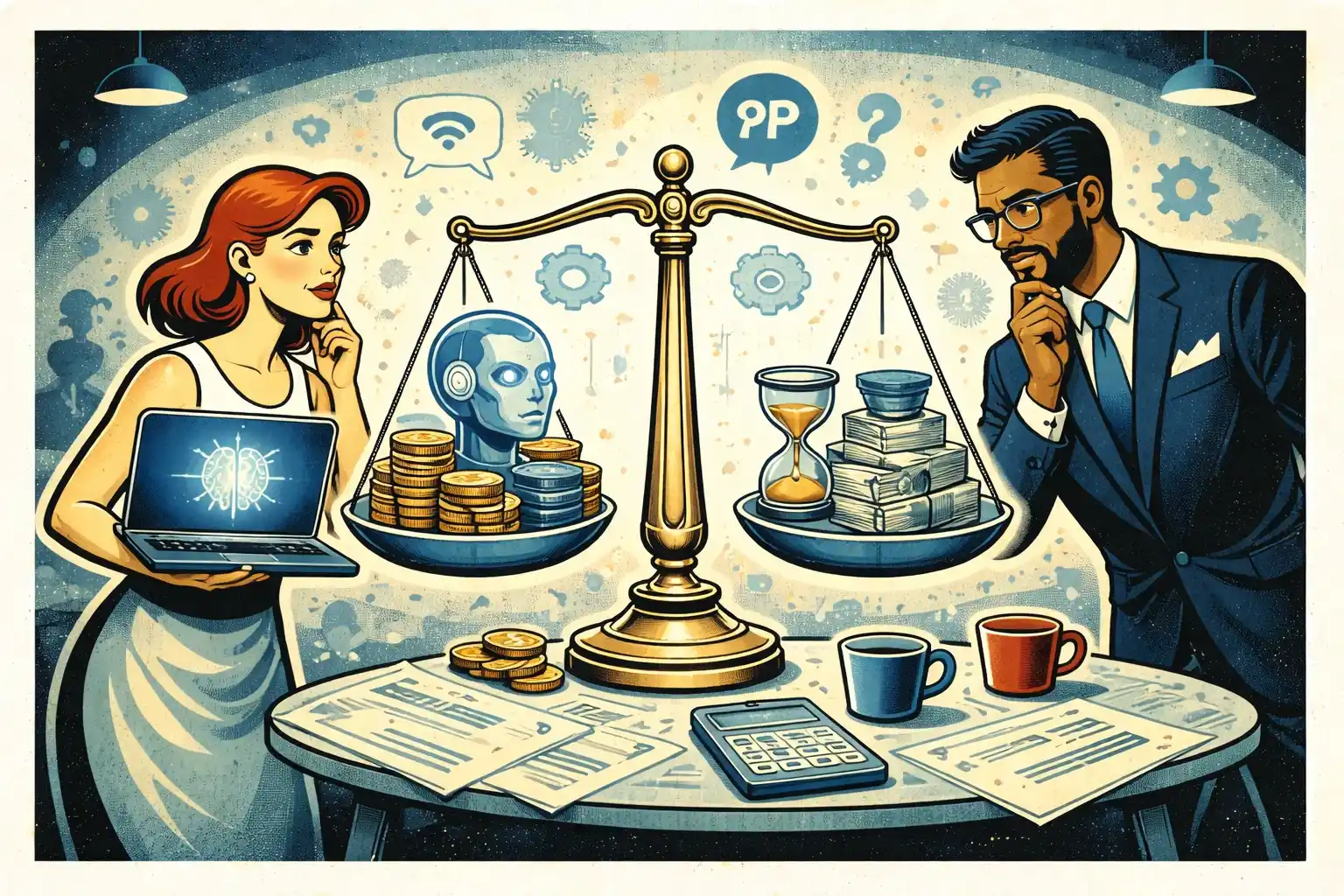
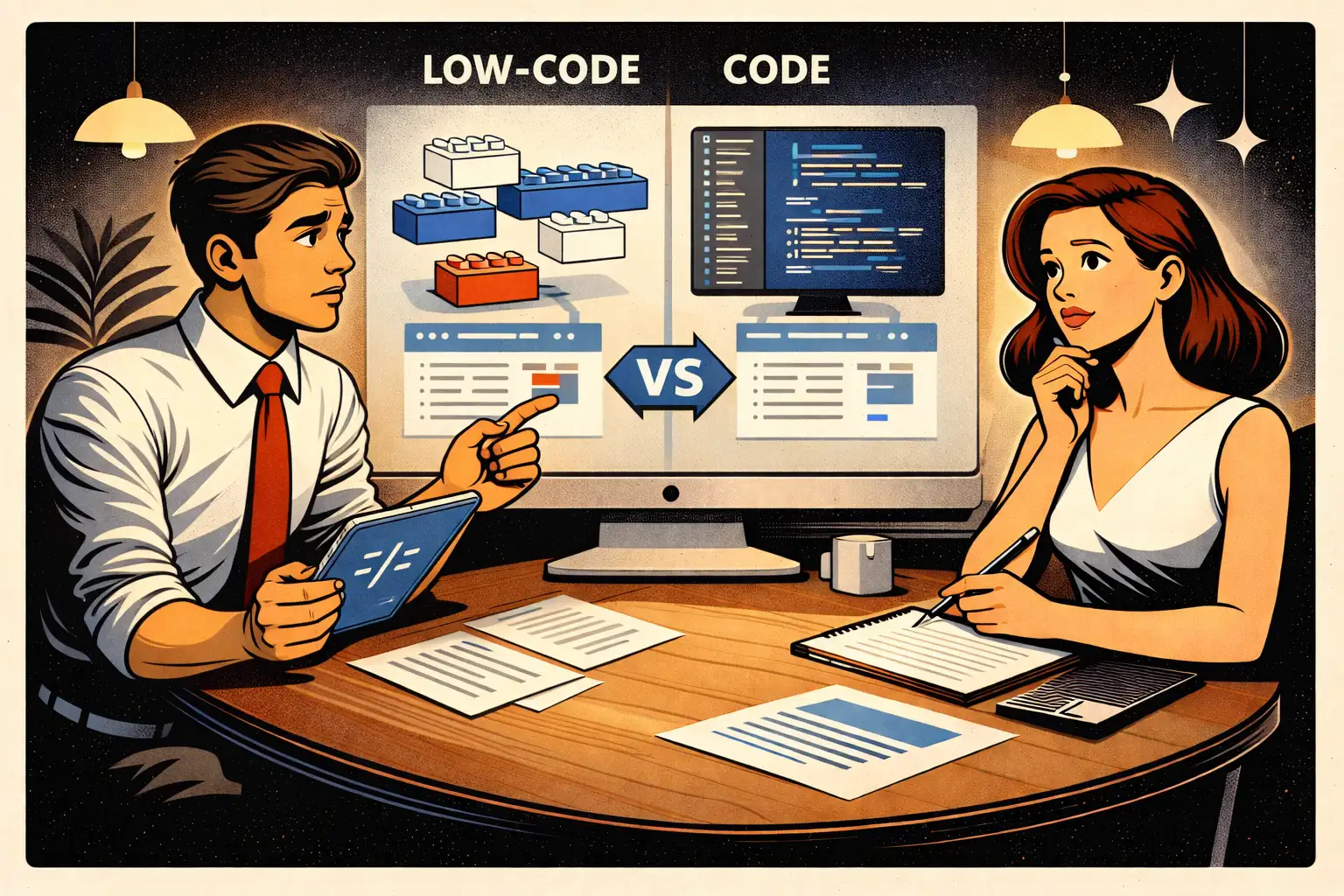
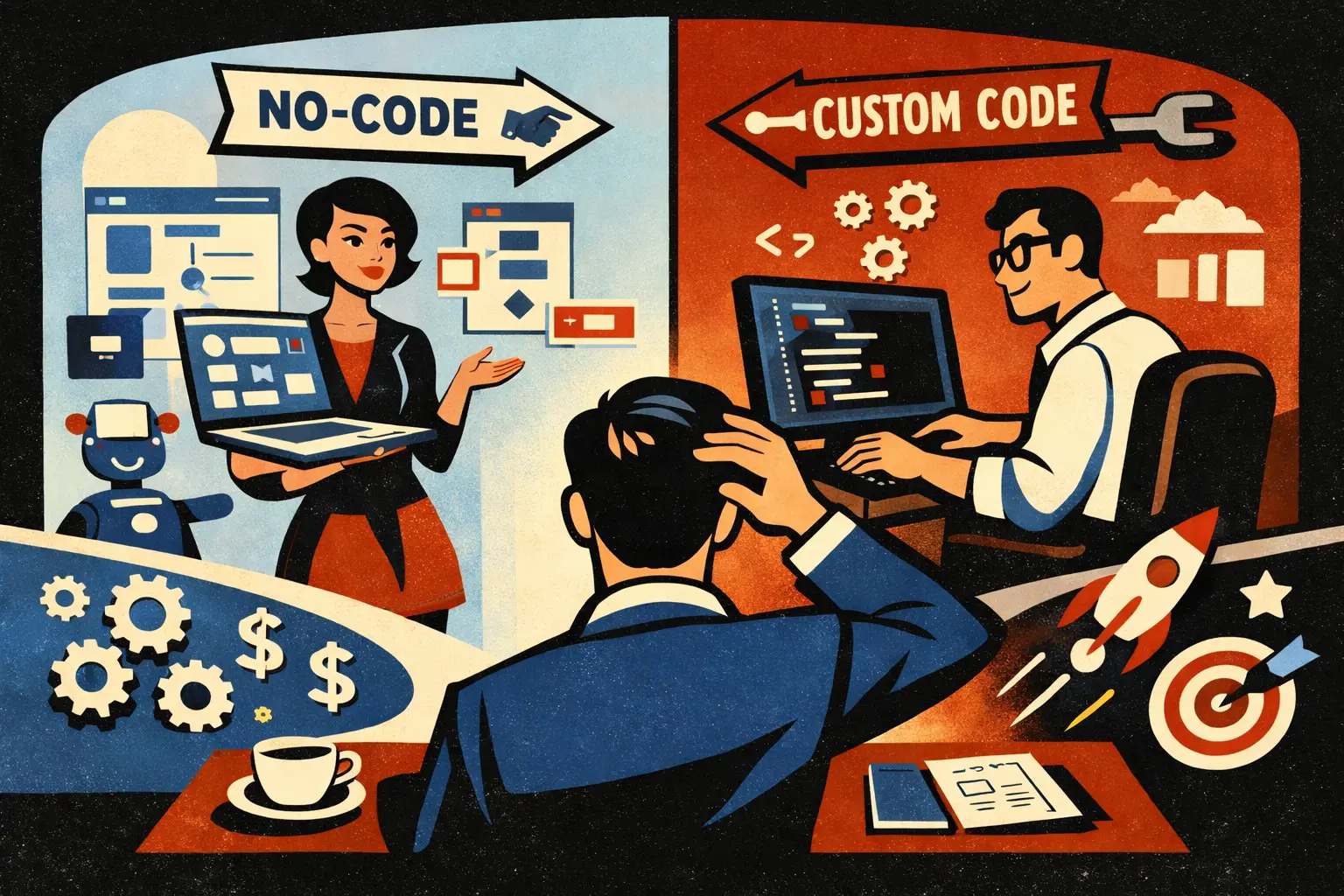
The core difference between Webflow and WordPress is not design quality or popularity. It is how much control versus flexibility you want early on.
Webflow gives you a more controlled environment. Fewer moving parts, fewer dependencies, fewer unexpected issues.
WordPress gives you more flexibility, but that flexibility comes with more responsibility. Plugins, updates, compatibility, and structure all require ongoing attention.
For many founders, the mistake is choosing flexibility before they actually need it.
That is why this decision fits into a broader pattern described in Tech Decisions for Founders in 2026.
What “fast launch” actually means here
Founders often say they want to launch fast, but that can mean different things.
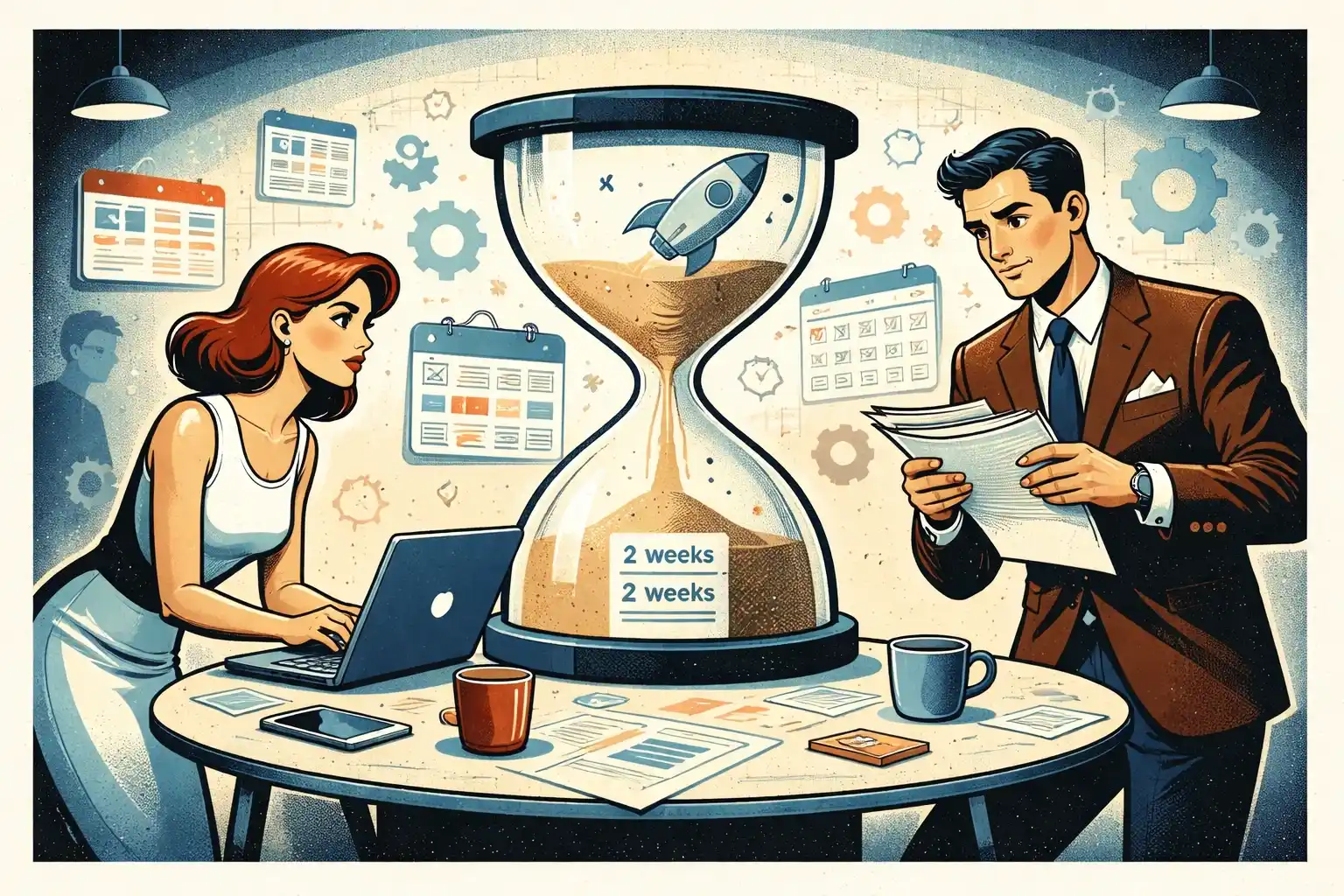
If fast means getting a clean site live quickly with minimal friction, Webflow usually wins.
If fast means building something that will not need restructuring later as content grows, WordPress can sometimes be the better long-term decision.
So the real question is not which platform is faster in general. It is which one reduces future friction based on your current plan.
That thinking aligns with Reducing MVP Rework in 2026: Key Decisions.
When founders choose the wrong one
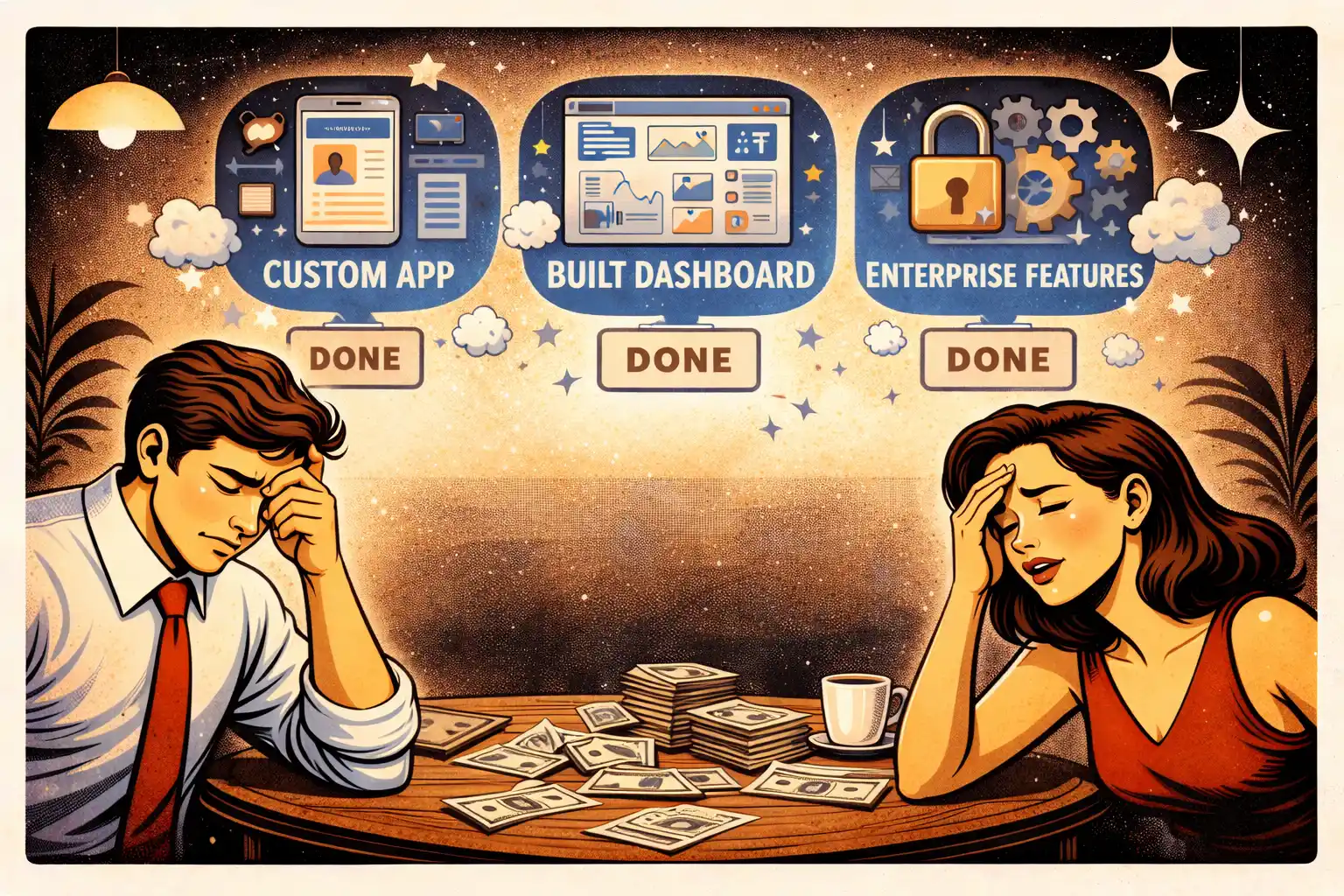
Most wrong decisions happen for the same reason: founders choose based on what looks easier or more popular, not based on what the site actually needs.
Some founders pick WordPress because it is “more powerful,” even though their site is simple and does not need that level of flexibility.
Others pick Webflow because it feels cleaner, even though they already know they will need complex content structures and scaling.
Both lead to unnecessary rework later.
The better approach is simple: define the job first, then pick the tool.
What non-technical founders should focus on
If you are a non-technical founder, this decision should feel simpler, not harder.
Focus on three things:
What is the main goal of your website right now?
How complex is your content structure?
How much control do you want without relying on developers?
If the goal is clarity, speed, and a controlled launch, Webflow is usually the safer choice.
If the goal is flexibility, experimentation, and long-term content scaling, WordPress can make more sense.
This aligns closely with Web Development for Non-Technical Founders: A Step-by-Step Guide.
A simple founder framework
Choose Webflow if your site is mainly a launch asset: clear messaging, structured pages, and fast updates without technical overhead.
Choose WordPress if your site is becoming a content engine: more articles, more formats, more experimentation, and more long-term flexibility.
If you are unsure, default to the simpler option that still supports your current goal.
Final thought
Webflow vs WordPress in 2026 is not about which platform is better overall. It is about which one helps you move faster without creating unnecessary complexity.
Webflow is often the better choice for clarity, speed, and controlled execution. WordPress is often the better choice for flexibility and long-term content growth.
The best founders do not optimize for features. They optimize for momentum.
Thinking about building a startup website or MVP in 2026?
At Valtorian, we help founders design and launch modern web and mobile apps — including AI-powered workflows — with a focus on real user behavior, not demo-only prototypes.
Book a call with Diana
Let’s talk about your idea, scope, and fastest path to a usable MVP.
FAQ
Is Webflow better than WordPress for startups?
Not always. Webflow is better for speed and simplicity, while WordPress is better for flexibility and complex content setups.
Which one is easier for non-technical founders?
Webflow is usually easier because it reduces technical setup and ongoing maintenance.
Is WordPress outdated in 2026?
No. It is still widely used, but it requires more management and technical decisions.
Which platform is better for SEO?
Both can work well. WordPress gives more flexibility, while Webflow offers more control with fewer moving parts.
Can I switch later?
Yes, but it may require rebuilding parts of the site. That is why choosing based on your near-term goal matters.
What is the biggest mistake founders make here?
Choosing based on features instead of the actual job the website needs to do.
What is the safest choice for early-stage startups?
Usually the simpler platform that lets you launch faster and learn from real users.















































.webp)




.webp)